



Written by Ambre Montespan on Mar 13, 2023 · Updated on Oct 15, 2026

Table of contents:
Thinking of treating yourself to a Full Moon Tibetan singing bowl? Already own a singing bowl and wondering whether it’s a moon bowl? What exactly is a full moon bowl?
I’ve been fascinated by Tibetan singing bowls for a little over 10 years, and Full Moon bowls are the ones that really drew me in. I’ve done a lot of research on them, so let me share everything there is to know about this mysterious Asian percussion instrument.
Tibetan Full Moon bowls are very similar to other more traditional singing bowls, except that they are only made on full moon nights, approximately every 29.5 days. They are therefore rarer and more expensive.
After reading this short article, you will know:
- Exactly what a Full Moon bowl is
- How to recognise a moon singing bowl
This way, you will always know if the instrument you are looking at is indeed a Tibetan Full Moon bowl, which affects not only its price but also the quality of the vibrations it produces.
Now, let’s start with a clear definition of a Tibetan moon singing bowl.
What is a Full Moon singing bowl?
To fully understand the subject, it is useful to first look at how Full Moon bowls are made, before examining their origins and finally discussing their special properties.

How is a Tibetan moon bowl made?
Tibetan bowls called "Full Moon" are considered among the best singing bowls currently on the market. These bowls are forged exclusively during full moon nights, which means artisans can only produce them a little less than once a month. In addition, the moon must be clearly visible on the night of manufacture, because the bowl must be hammered under its light. If clouds obscure the sky, the work is postponed until the following month.
Full Moon bowls, also called lunar bowls, are considered luxury items and command a noticeably higher price than standard Tibetan bowls of the same diameter. The metal alloy used to craft them is generally of higher quality, simply because artisans reserve their best materials for such an exceptional instrument. The sound of this kind of Tibetan bowl is richer, more powerful, and deeper. It also lasts longer, which means the bowl has greater sustain.
Traditionally, the manufacture of full moon singing bowls follows a specific ritual. First, the artisans purify their bodies by washing and dress in clean clothes. Then they gather to pray in the company of a lama, a teacher of Tibetan Buddhism, to clear their minds. At this point, the assembly chants the mantra of Chandra, the moon deity. More specifically, they use the mantra "Om Som Somaya Namah," which is used for moon meditation in hatha yoga. Only after this ceremony is complete does the actual forging begin.
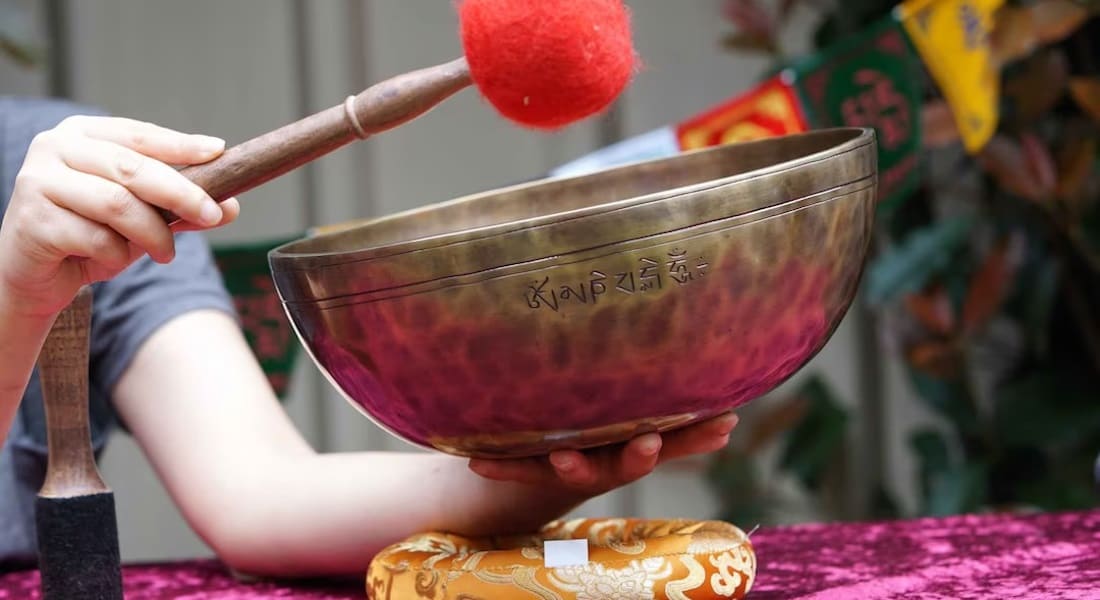
However, the entire process of making a singing bowl is not completed in a single night. In fact, the artisans hammer the bowl under the influence of the moon to give it its final shape and finish the details, such as engraving, deburring, and polishing, later. The goal is to craft as many bowls as possible while the moon’s energy is still accessible, and completing the details later does not diminish what the bowl has already “absorbed.”
What materials are traditionally used in the manufacture of Full Moon Tibetan bowls?
Crafted according to a thousand-year-old tradition, these carefully selected materials produce instruments rich in spirituality and sonic power. Traditionally, the seven metals—gold, copper, silver, lead, tin, iron, and mercury—are used to make this type of singing bowl. Among these traditional materials, silver plays a central role. Associated with the moon and known for its energy-amplifying properties, a higher proportion of silver may be incorporated into the alloy to give these bowls their distinctive sound.
Nepalese and Tibetan artisans, guardians of this precious tradition, sometimes use other specific alloys. Bronze, for example, is frequently used, combining copper and tin in precise proportions. This metallic combination gives the bowls strength, durability, and resonance, making them unique and sought-after objects. In Tibetan tradition, tin is also a material of choice. Its flexibility allows artisans to create bowls in a variety of shapes, each influencing the final tone and resonance. These bowls, often forged by hand, are a testament to the ancestral know-how passed down from generation to generation.
Brass, though rarer, is also linked with certain Buddhist symbols, adding another layer of meaning to these instruments. Each bowl is crafted by hand using techniques passed down through centuries, making it a functional work of art.
Who invented the full moon singing bowl?
Although there is very little written evidence, as is often the case with Tibetan bowls, the Full Moon singing bowl is attributed to Santa Ratna Shakya, a master craftsman living in the city of Patan in Nepal, just south of Kathmandu, the country’s capital. According to Santa Ratna Shakya, his grandfather was a traditional spiritual healer who used plants, stones, minerals, and musical instruments to provide care. He therefore followed in his grandfather’s footsteps, with the idea of producing a particularly refined singing bowl that would offer greater benefits than other Tibetan bowls.
However, it’s not uncommon to meet a craftsman in Nepal who will claim to have invented the full moon bowl. No one has filed a patent or registered in an official registry to indicate that they are the creator, so some doubt may remain.
Do Full Moon bowls offer special virtues and benefits?
The fact that singing bowls may offer many mind–body benefits is still being studied by the scientific community. You can get a clearer picture by reading this article, which goes into more detail about the benefits. However, very few people have actually compared a classic Tibetan bowl with a Full Moon bowl.
We do know that the moon exerts a measurable influence on tides, volcanic activity, and even gardening. This is sometimes referred to as the lunar effect. Other proposed effects, such as on sleep and behaviour, are more debated. In lithotherapy, a technique that uses the properties of stones and minerals for healing purposes, practitioners cleanse and recharge their crystals under the light of the full moon.
According to tradition, Full Moon Tibetan bowls are imbued with lunar energy during their manufacture, which is said to bring many physical and spiritual benefits. The vibrations generated by the bowl are believed to act more effectively at the cellular level, since cells are largely made of water—water that responds to the moon’s pull through the tides. For this reason, full moon Tibetan bowls are often favoured for sound therapy sessions or sound baths, although their effectiveness still depends on individual sensitivity and has yet to be firmly proven.
What are the differences between a Full Moon Tibetan bowl and other singing bowls?
Tibetan bowls, steeped in a long Buddhist tradition, offer a fascinating variety of specificities, each with its own unique characteristics. However, when discussing the distinction between a Full Moon Tibetan bowl and other variants, several elements deserve attention. First, the use of premium metal alloys in the manufacture of Full Moon Tibetan bowls gives them a unique quality. These metals, prized for their ability to amplify energies, add an extra dimension to the sound vibrations emitted by the bowl.
The resulting harmonics—born from the fusion of metals and the bowl’s specific shape—create a distinctive vibrational “melody.” Certain frequencies, said to resonate with the body’s energy centres, add an extra therapeutic and spiritual dimension, making these bowls unique tools in the search for inner balance. A connoisseur can identify a Full Moon Tibetan singing bowl simply by paying attention to the unique sound resulting from this particular composition.
Furthermore, Tibetan lamas and monks, guardians of this rich tradition, pay meticulous attention to the craftsmanship of these bowls. The artisanal way in which each bowl is forged, often by hand, gives each piece a distinct personality. Ancestral techniques, passed down from generation to generation, are used to guarantee authenticity and quality, distinguishing Full Moon Tibetan bowls from less carefully crafted examples or reproductions. Another crucial point lies in the symbols and patterns inlaid on the surface of Full Moon Tibetan bowls. Usually inspired by Buddhist elements such as the lotus, Buddha, or Sanskrit mantras, these sacred ornaments help create a deeper spiritual connection. Thus, when carefully examining the surface of a bowl, these details can serve as visual clues to identify a particular piece as being of the Full Moon type. I elaborate on this point further in this article.
In conclusion, recognising a Full Moon Tibetan singing bowl among the myriad of options available requires a careful approach. From the crystalline sound to the meticulous craftsmanship, from the sacred symbols to the specific harmonics, every detail contributes to making these bowls unique treasures, imbued with a thousand-year-old tradition and carrying a special energy that transcends their simple status as musical instruments.
How can you recognise a Tibetan moon bowl?
Now, let’s look at the main characteristics of a Full Moon bowl before considering the possibility of counterfeits.
How can you identify a Tibetan Full Moon bowl?
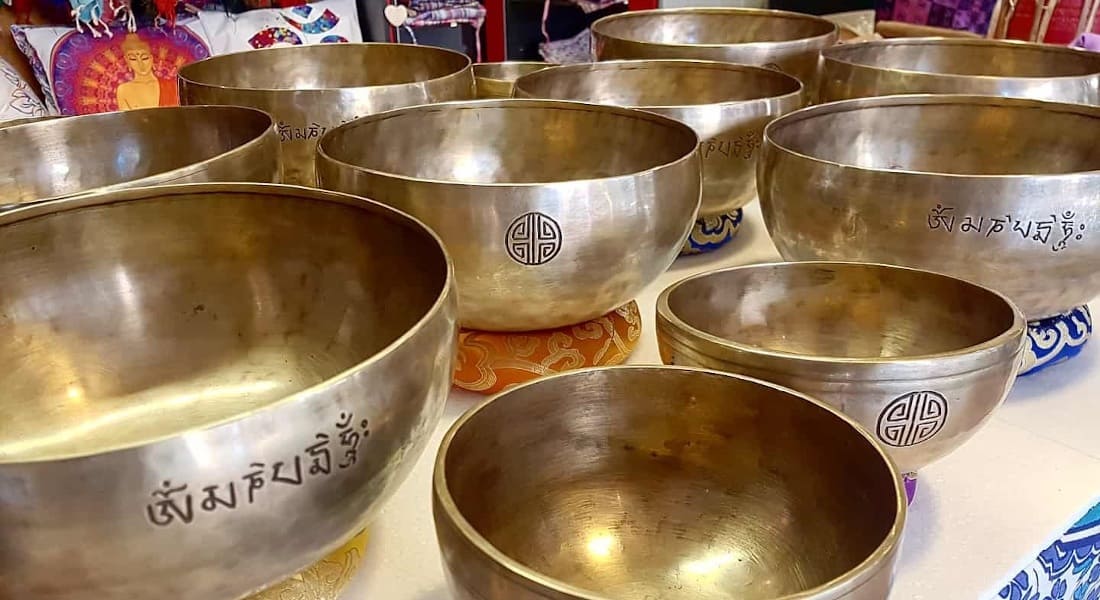
A Tibetan moon bowl isn’t really very different from any other singing bowl. It can vary in diameter, has a golden or even coppery colour, and doesn’t have a typical shape that makes it instantly recognisable. Nevertheless, there is a kind of convention among different artisans to indicate the presence of a full moon bowl.
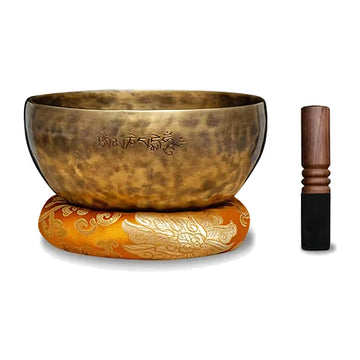
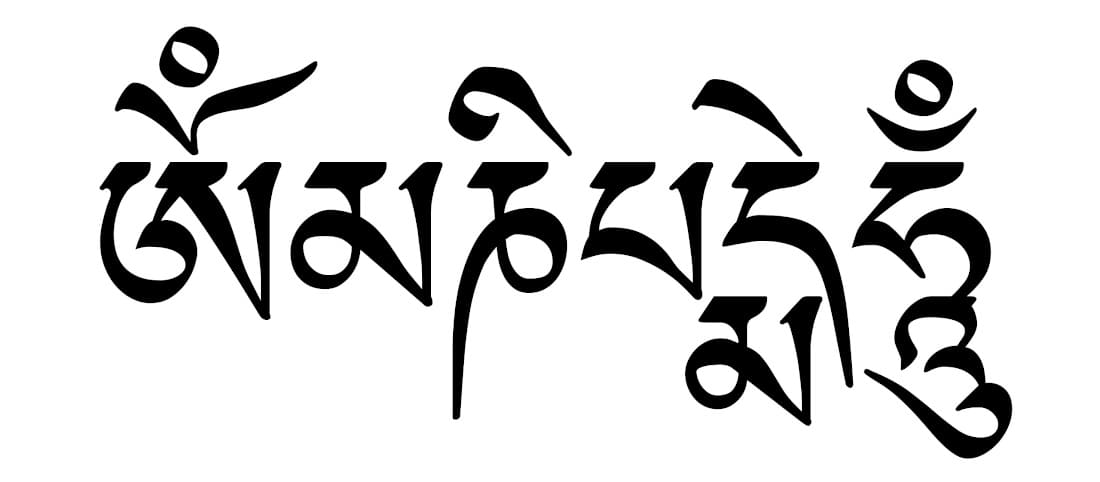
The first major characteristic is that the mantra of great compassion, "Aum mani padme hum," one of the most important mantras in Buddhism, is engraved on the outer wall of the instrument. It looks like this, although there may be slight variations depending on the artisan who made it:
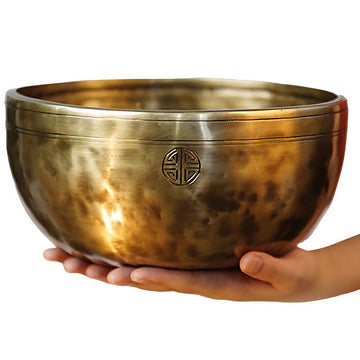
The second distinctive feature is the Shou Lotus, a symbol of long life, also engraved on the outer wall of the percussion instrument. It is often rendered in a simplified form, as the full design is too complex for craftspeople to execute. You can see it just below:
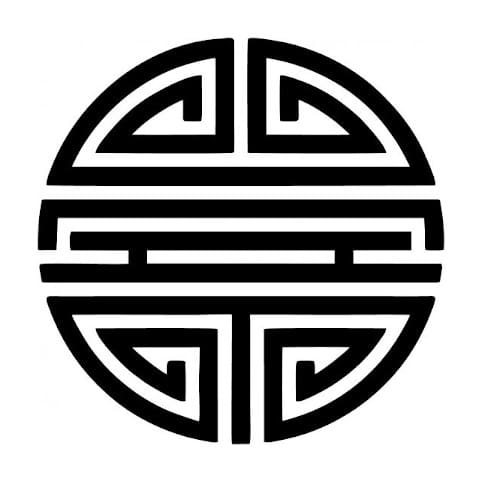
You may also find other mantras engraved on the singing bowl. However, if you see both the Aum mani padme hum and the Shou Lotus, you can be almost certain you’re looking at a Full Moon Tibetan bowl.
How can you tell if a moon singing bowl is genuine?
There’s a reason the word “almost” appeared in the previous paragraph. Because Tibetan full moon bowls are highly prized and luxurious items, it is possible to encounter counterfeit versions online. While some say you can recognise a Full Moon Tibetan bowl just by listening to it, my experience shows that good classic singing bowls can also produce excellent, very similar sounds, so tone alone is not proof that the instrument was made during a full moon night.
In reality, there is no way to verify this unless you personally visit the workshop that produces the bowls and confirm that the ritual described above is performed during the full moon, which is hardly practical. As a result, your only option is to trust the seller from whom you intend to purchase it.
Get a genuine Tibetan full moon singing bowl
The difference between a classic Tibetan bowl and a Full Moon bowl isn’t obvious at first glance, and mistakes are easy to make. However, their prices are far from similar. But thanks to these few lines and the information you have discovered, you will never again be mistaken in differentiating a full moon singing bowl from an ordinary model.
Nevertheless, although there is a fairly large selection of moon bowls available on the internet, there are few trustworthy stores where you can find genuine Tibetan Full Moon bowls. We therefore recommend purchasing this type of bowl from the French company Instruments du Monde, which sources its products directly from the best artisans to offer you singing bowls of unparalleled quality.
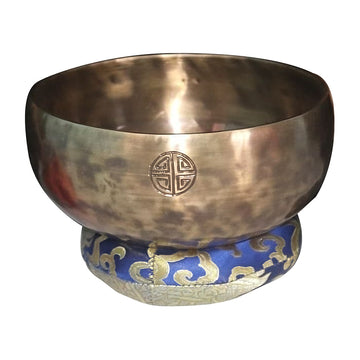
Explore our full range of Full Moon bowls by clicking on the image below:
Now you know everything there is to know about moon singing bowls. But do you know exactly where Tibetan bowls are made? The answer may surprise you, as this musical instrument is not only produced in Tibet. You may also be interested in our comprehensive guide to singing bowls, which will reveal all the mysteries of this musical object.


