



Written by Ambre Montespan on Aug 5, 2024 · Updated on Oct 15, 2026

Table of contents:
Are you thinking of buying a Tibetan singing bowl in the next few days? Have you heard that some models can be made from alloys composed of several metals? Which metals are actually present in an instrument that is said to contain 5, 7, 9, or even 12 metals? Does the number of metals included significantly change the sound or anything else?
I’ve been passionate about Tibetan singing bowls for over 10 years, and I’ve watched instruments evolve towards “more and more metals.” After digging into the topic, I can help you clearly understand what those claims really mean. That way, you can make an informed choice or simply learn more about what metals may be found in a singing bowl.
While Tibetan bowls are traditionally associated with seven metals—gold, silver, iron, copper, tin, mercury, and lead—5-, 9-, and 12-metal versions made from more exotic alloys (with zinc, aluminium, or even tungsten) have also appeared.
Once you’ve finished reading this article, you’ll know absolutely everything about:
- The traditional composition of Tibetan bowls made of 7 metals
- The rarer 5-, 9- and 12-metal alloys used in this Asian instrument
- The usefulness of the number of metals in a singing bowl
As a result, you’ll be able to confidently choose your next Tibetan bowl based on your expectations. You’ll also deepen your knowledge of the composition of this percussion instrument.
Now, let’s take a closer look at the metals found in Tibetan bowls.
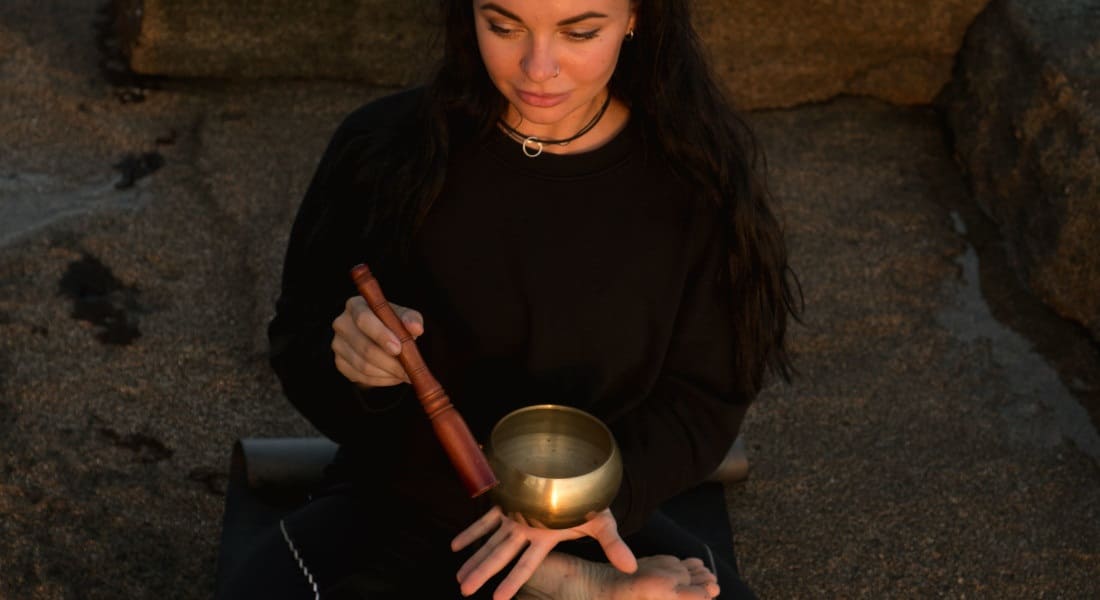
What is the composition of a Tibetan bowl made from a 7-metal alloy?
Most Tibetan bowls today are made from a classic seven-metal alloy. These metals are often presented as symbolic, linked to the seven major chakras in Hindu tradition, the seven days of the week, and the seven celestial bodies visible to the naked eye in ancient times. These metals are gold, silver, iron, copper, lead, mercury, and tin. In reality, metallurgical analyses of older singing bowls tend to show they were primarily made from just 2 to 3 metals, and that the “7-metal” formula is a fairly recent development dating back to the 1970s.
Furthermore, the Tibetan bowls made of seven metals that are currently manufactured are, in the vast majority of cases, made mostly of tin and copper—over 99%. The other metals are much rarer, especially gold, silver, lead, and mercury, which are only present in trace amounts. To learn more about the composition of Tibetan 7-metal bowls and their significance, read my other article. This formula is considered so traditional that I wrote an article dedicated to it, where you’ll find all the key information you need.
What metals can be found in singing bowls containing 5, 9, or 12 metals?
While Tibetan bowls made of seven metals are considered traditional, that’s really not the case for models containing five, nine, or twelve metals. They’re fairly rare, and their exact mixes vary widely from maker to maker. Unlike 7-metal bowls, there aren’t any widely accepted standards for versions with slightly fewer or slightly more metals. Looking at Tibetan bowls made of 5 metals, you might assume artisans simply remove 2 metals from a 7-metal recipe to end up with five. In reality, that’s not how it works. Some shops sell Tibetan bowls that contain zinc, aluminium, or even tungsten, along with a few classic metals such as copper, tin, or iron. Sometimes the composition isn’t even listed, which means you have no idea what metals were used to make the instrument.

The same goes for Tibetan bowls that contain—or are said to contain—9 or 12 metals. In the vast majority of cases, you won’t get any reliable details about which metals are actually in the alloy. Occasionally, sellers mention that zinc and nickel are added to the base 7-metal blend, bringing the total up to 9. As for Tibetan bowls made from 12 metals, some vendors claim to sell them, but I’ve never found any clear indication of which additional metals are supposedly added during forging. Some say that Peter Hess singing bowls contain 12 metals, but even on the manufacturer’s official website, it states: "Peter Hess® therapeutic singing bowls are made from high-quality bronze which, as tradition dictates, is enriched with several metals." So, on the one hand, the presence of 12 metals isn’t confirmed and, on the other hand, it’s not possible to know the instrument’s exact composition.
Does adding more metals automatically lead to better sound?
Personally, I don’t think so. First, it’s important to understand that the proportions are very often the same: over 99% tin and copper and under 1% for everything else. So adding a few more metals in tiny amounts doesn’t really change the sound, let alone improve it. After testing dozens of singing bowls made of seven metals, bronze, and even nine metals, I’ve found that very few people can tell the difference by ear alone—although there can be a subtle difference between a brass bowl and one made mostly of copper and tin.
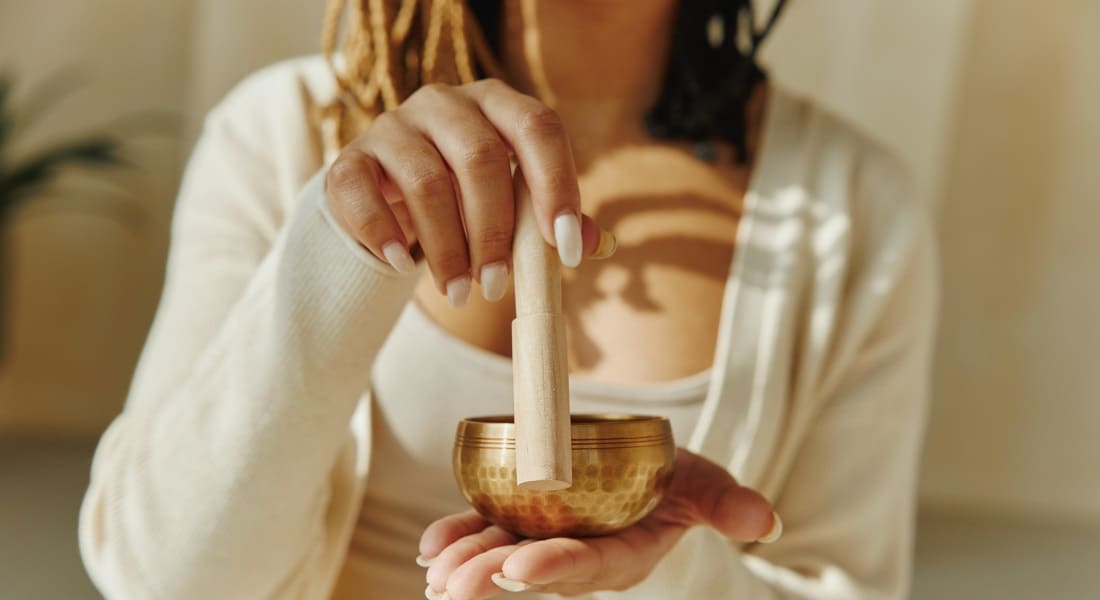
On the other hand, all of this makes me think it’s mostly a sales or marketing angle. Some retailers seem happy to list more and more metals in their Tibetan bowls, as if that automatically made the instrument higher quality. On top of that, you’ll often see claims that the singing bowl was “made traditionally.” There’s already debate about whether the 7-metal Tibetan bowl is truly traditional, so a 9- or 12-metal model certainly isn’t. Therefore, I recommend sticking to classic 7-metal or bronze Tibetan bowls, especially if the price of “more-metal” models is prohibitively high, which is usually the case. In any event, if you’re shopping for a Tibetan bowl, the number of metals shouldn’t be a deciding factor. Instead, read my other article on choosing a Tibetan bowl to help you determine which model will suit you best.
Enjoy a unique sound journey with an excellent 7-metal alloy bowl
While there’s generally little doubt about the composition of a Tibetan bowl made from a 7-metal alloy, which remains a more or less traditional option, the same can’t be said for models that claim a more “exotic” number of metals. That makes it difficult to know what these instruments are truly made of, since makers may use very different ingredients. In other words, this article has shown you that the number of metals in a singing bowl isn’t really a deciding factor.
That said, even among classic bronze or 7-metal singing bowls, choosing the right supplier matters because low-quality bowls are common. That’s why I recommend the online shop Instruments du Monde, which offers a carefully curated selection of Tibetan bowls. These instruments are sure to bring you deep satisfaction through the beautiful vibrations they produce—like this excellent 7-metal alloy bowl.
Go for quality and treat yourself to this Tibetan bowl by clicking on the image below:

The composition of a Tibetan singing bowl should now be much clearer. So why not start practising with your Asian instrument to support your well-being? One technique is called grounding with a Tibetan singing bowl. By reading my article on the subject, you’ll be able to reproduce it easily and effectively. Otherwise, explore everything you can do with your instrument by checking out this comprehensive guide to singing bowls. You’ll find absolutely everything you need to know.


