



Written by Ambre Montespan on Jun 24, 2024 · Updated on Oct 15, 2026

Table of contents:
Do you already own a Tibetan singing bowl and want to know which accessories are commonly used with this Asian instrument? What are these add-ons actually for? Are they truly essential? And which ones are worth buying to deepen your practice and improve your technique?
I first discovered Tibetan singing bowls over 10 years ago, and I’ve had the chance to use these instruments in many different settings—along with the accessories that go with them. So I can walk you through these complementary items and the role each one plays.
Among the accessories you’ll come across for Tibetan singing bowls, you’ll typically find a cushion, a mallet, a suction cup, a protective cover, and an instruction book. Some are must-haves, while others simply make the instrument much easier to use.
By reading this article from start to finish, you’ll discover the main accessories for Tibetan singing bowls, including:
- The cushion
- The mallet, also known as a beater or striker
- The suction cup
- The protective cover
- The instruction manual
So, after reading this article, you’ll not only understand what the different accessories for this Asian instrument are used for, but you’ll also be able to decide whether it makes sense for you to invest in them.
Let’s dive right in and look at the essential accessories for a Tibetan singing bowl!
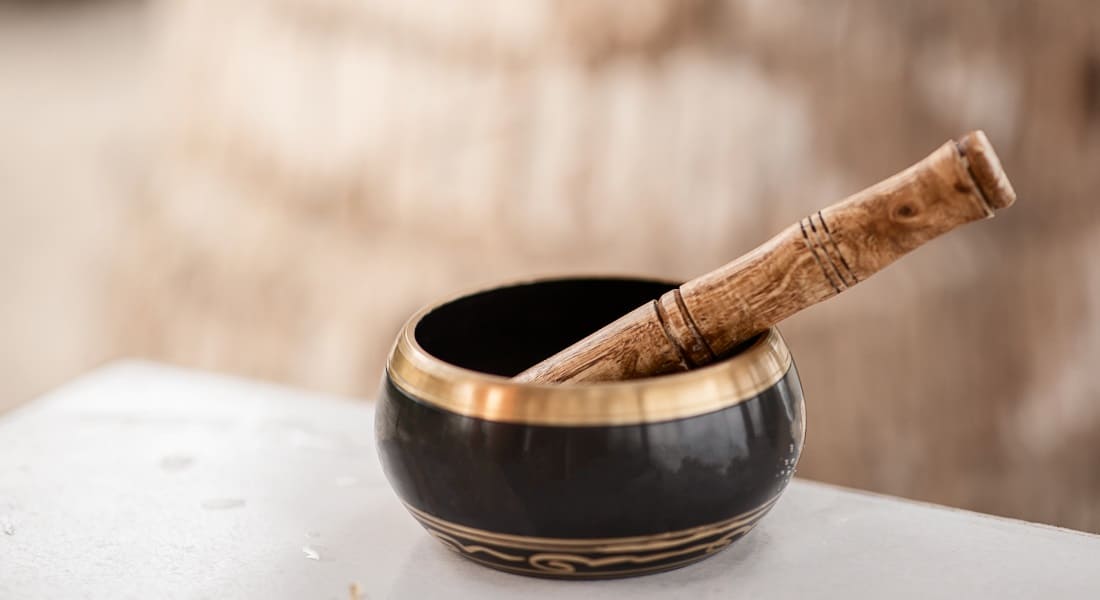
Is the cushion a necessary accessory for the Tibetan bowl?
The cushion, an essential accessory for Tibetan bowls, holds deep symbolic importance in meditation and relaxation. It’s placed under the Tibetan singing bowl for several reasons. First, it elevates the instrument, allowing the vibrations produced during resonance to develop at their full potential. That extra lift helps the sound frequencies spread more evenly, enhancing the bowl’s therapeutic effect. The cushion also provides physical (and, for many practitioners, energetic) support, creating a stable base for the bowl during use.
In fact, it’s strongly discouraged to play a singing bowl by placing it flat directly on a hard surface. The vibrations won’t be absorbed properly, and the result can sound harsh and unpleasant. If you don’t have a cushion, it’s best to play by resting the bowl on the open palm of your hand. That way, your hand acts like a cushion and absorbs part of the vibration. Cushions also come in different shapes—square, rectangular, and (most commonly) doughnut-shaped rings.
From a symbolic perspective, the cushion serves as a bridge between the sacred and the everyday, highlighting the importance of balance between the spiritual and the material. Using a cushion under your Tibetan singing bowl invites you to create a sacred space, reconnect with your spirituality, and reach a deeper sense of inner peace, strengthening the holistic impact of the bowl in your meditative practice.
The mallet, beater, or stick, an essential complementary object to the singing bowl
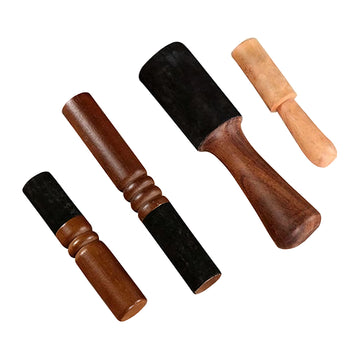
The mallet, also known as a beater or striker, is a central accessory in the world of Tibetan singing bowls, playing a crucial role in bringing out the instrument’s sound and vibrational energy. Its origins trace back to the ancestral traditions of Tibetan monks, where each element of a ritual carries deep meaning. Symbolically, the mallet represents the link between the practitioner and the energies contained in the bowl. Often made of wood and wrapped in leather, it embodies the connection between the physical and spiritual worlds. Using it isn’t purely practical—it can also be ritualistic, emphasising intention and respect when handling the instrument.
On a practical level, the mallet lets you create strong vibrations by gently striking or rubbing the outer rim of the Tibetan singing bowl. This subtle motion resonates through the metal, producing soothing, therapeutic sound waves. That’s why having a mallet is essential if you don’t already own one. The choice of mallet—leather-wrapped for a softer tone or bare wood for a brighter, clearer resonance—directly affects the sound you’ll get. Note that there are also mallets with a fabric ball (often felt) at the end, typically intended for larger singing bowls. Mallets specifically made for quartz crystal bowls are also available in most stores that carry this type of product.
Do you need a cover to protect your Asian instrument?
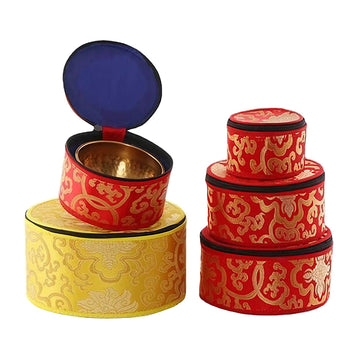
Often overlooked but surprisingly valuable in the world of Tibetan singing bowls, the protective cover has its roots in Tibetan craftsmanship and carries a meaningful place in meditative and ritual traditions. Originally made to protect the Tibetan bowl from knocks and humidity, it goes beyond a purely practical role to take on spiritual symbolism. Historically, these covers were often made from local fabrics decorated with traditional patterns, showcasing the artistry typical of Tibetan culture. Carefully crafted, they reflected the respect given to sacred objects. In that sense, the cover becomes the bowl’s physical guardian, helping preserve both its integrity and its energetic vibration.
Using a cover for your Tibetan singing bowl is also a sign of respect and mindful care. By shielding the instrument from dust and potential damage, a cover helps extend its lifespan, keeping the sound pure and crystal clear over time. This accessory is far too often ignored, yet investing in a good cover is something I strongly recommend. I’ve seen too many people disappointed after letting their bowl rust through simple neglect. Others have broken their Tibetan bowl after a drop or during transport. That kind of damage is usually irreversible.
What are suction cups for Tibetan singing bowls used for?
The suction cup is probably the least important accessory on this list. It’s really intended for professionals who practise Tibetan bowl techniques on other people. These small suction cups allow you to hold a singing bowl upside down with one hand. They consist of two parts: the suction cup itself and a handle. When placed underneath the bowl, it adheres by suction, so you can hold the Tibetan singing bowl by the handle. That leaves your other hand free to strike the instrument with a mallet, for example. This makes it easier to aim the vibrations at a specific area of the body, which is why it’s mainly used for sound massages. If you’re practising alone and simply enjoying a personal relaxation session, this accessory usually isn’t necessary.
Is it worth buying a specialised book on this Zen musical instrument?
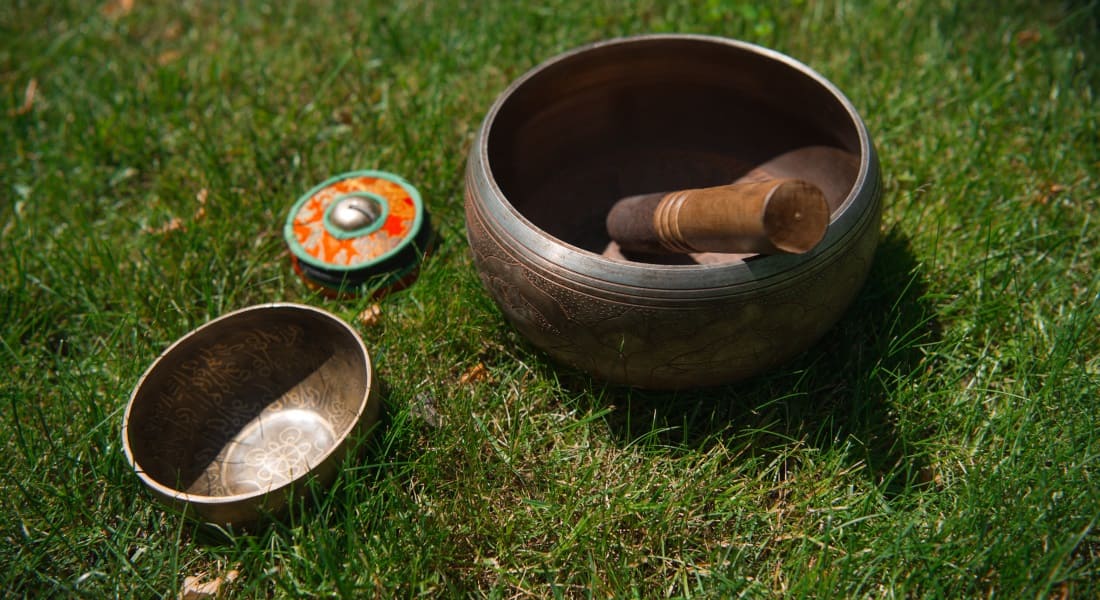
Adding an instruction book to your Tibetan singing bowl practice can deepen the experience by bringing in traditional knowledge. These manuals often cover playing techniques, the symbolic meanings of sounds and engravings, and the therapeutic uses of singing bowls. They act as a guide to sound meditation and help you get the most out of the instrument’s benefits. Of course, it depends on the quality of the information in the book, but if you don’t have several hundred Australian dollars and dozens of hours to spend on in-person training dozens or hundreds of miles from home, a solid, comprehensive book is a smart way to learn the different ways to use your instrument.
The instruction manual’s real value lies in its educational role. It builds awareness around the practice, transforming the singing bowl from a simple instrument into a true spiritual companion. This connection can make your meditative rituals feel more meaningful and more profound. In my view, the instruction manual is an indispensable accessory, bridging ancient wisdom with the modern-day goals of Tibetan singing bowl enthusiasts.
Improve your mastery of the Tibetan singing bowl by accompanying it with accessories
We’ve just covered the accessories that enrich the Tibetan singing bowl experience. From cushions to mallets, protective covers to suction cups, you’ve seen how useful these add-ons can be thanks to the insights in this article. Now you can decide whether these accessories make sense for your own practice with this percussion instrument.
That said, it can be tough to find authentic, high-quality accessories for a singing bowl. Tibetan singing bowls are still relatively rare, and there aren’t many shops that offer a full, reliable selection. That’s why it’s worth turning to Instruments du Monde, which carries all of these accessories. Whether you’re looking for a suction cup or a new mallet, you’ll be able to find the right fit—like this beautifully decorated cover designed to protect your precious Tibetan singing bowl as well as possible.
Purchase this magnificent cover by clicking on the image below:
Learn to master Wakan meditation with your Tibetan singing bowl. This is a guided meditation style invented by André Wakan that can help you reach a deep state of relaxation to support your well-being. Best of all, you can do it no matter what singing bowl you own.


