



Written by Ambre Montespan on Mar 18, 2024 · Updated on Oct 15, 2026

Table of contents:
Are you wondering whether you can use a Tibetan singing bowl for your pet? Can animals tolerate the sound of singing bowls? What are the benefits or risks of using this Asian musical instrument with a dog or cat, for example?
As a practitioner of meditation with Tibetan singing bowls for over 10 years, I’ve explored various possibilities with this percussion instrument, including its use with our four-legged friends. Thanks to my personal experiences and the information I’ve gathered on the subject, I’m able to answer your questions and help you bring the most well-being possible to your pet.
Tibetan singing bowls can offer some truly interesting benefits for animals, but it’s essential to take the right precautions before introducing them into your pet’s environment. Each animal’s individual sensitivity must be taken into account to ensure a positive experience.
After reading this article, you’ll have a thorough understanding of the relationship between Tibetan singing bowls and animals. You will learn about:
- The benefits of Tibetan singing bowls for animals such as dogs and cats
- How to use this musical instrument with your four-legged friends
- Whether using singing bowls around animals can be dangerous
This will help you use Tibetan singing bowls thoughtfully and adapt their sound and vibrations to your four-legged companions’ needs, creating a beneficial, harmonious experience that can only support their day-to-day well-being.
Let’s explore whether Tibetan singing bowls can be used with animals!
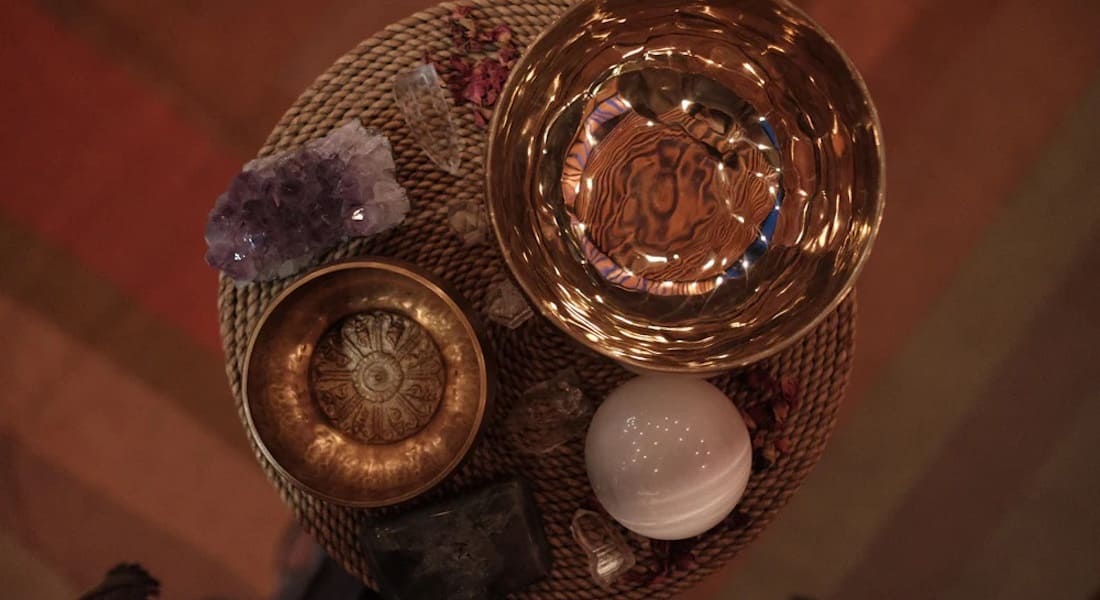
Are there any benefits to using Tibetan bowls on animals such as dogs or cats?
The practice of using Tibetan singing bowls—often simply called singing bowls—dates back several centuries, mainly in the Himalayan regions. These bowls are traditionally used for meditation, relaxation, and healing in traditional Tibetan medicine. The sound and vibrations produced by Tibetan singing bowls can offer a wide range of benefits, promote deep relaxation, and may help reduce stress and anxiety in humans, according to some fairly recent studies.
While formal research on their effect on animals is limited, anecdotal evidence—mostly drawn from personal experience—suggests that Tibetan singing bowls may offer similar benefits for some pets. When animals are calm and curious enough to listen to and feel the sounds and vibrations produced by these bowls, people often report a range of potential benefits, such as easing stress and overwhelming emotions, improving behaviour, supporting relationships with humans and/or other animals, rebuilding trust in people, making it easier to accept medication and care, and improving the quality of rest. Many also feel the overall atmosphere in the home becomes calmer, including for you as the owner. Here is a summary of the main benefits:
- Reduced stress and anxiety: Just as with humans, the soothing sound and vibrations of Tibetan singing bowls can help calm animals, reducing their stress and anxiety. This can be particularly helpful in potentially stressful situations, such as visits to the vet, thunderstorms, or fireworks.
- Improved well-being: The vibrations produced by Tibetan singing bowls may promote a sense of well-being in some animals.
- Interaction and communication: Using Tibetan singing bowls can also be a way to strengthen the bond between animals and their owners. Sessions can become a special moment of calm and connection. They’re also sometimes used in animal communication practices, helping you better understand what your pet is experiencing (or may be about to experience).
While in-depth scientific research on the effects of singing bowls on animals is limited, many individual testimonials and experiences suggest they can be helpful for some pets. As always, consult your vet or a certified animal behaviourist if you have any concerns about using this instrument for your companion.
How can this musical instrument be used on an animal?
As with humans, you can use a Tibetan singing bowl either from a distance, so the animal experiences only the sound, or in direct contact, so it feels both the sound and the vibrations on its body. At first, it’s best not to place the singing bowl directly on the animal. Start by using the instrument near your companion so they can get used to the vibrations and sounds. To do this, use the Tibetan bowl in the traditional way, either by striking it or rubbing it. You can see an example in the video below:
Once the animal is completely comfortable with the presence and sound of the Tibetan singing bowl, you can consider placing it gently next to them, but still without direct contact to begin with. For some animals—particularly those already familiar with the bowl and showing signs of comfort and relaxation—you can try gently placing the bowl on a firm part of the body, such as the back or next to the animal, while playing the instrument very softly. This should be done with extreme caution and only if you are sure that the animal is receptive and comfortable with the vibrations. In addition, choose a bowl size that suits the animal. A cat, for instance, can’t support the weight of the same Tibetan bowl as a 40 kg Rottweiler.
Is it dangerous to use a singing bowl on animals?
Using Tibetan singing bowls for animals often raises questions about their impact on the health and well-being of our four-legged friends, so it’s crucial to approach this practice with caution. Each animal reacts differently to sound stimuli, and it is essential to carefully monitor for signs of stress or discomfort during and after the use of Tibetan singing bowls. Some animals may be sensitive to vibrations and sounds, while others may perceive them as uncomfortable. Careful observation of the animal’s behaviour is therefore essential to assess the effectiveness and safety of this approach.
Keep in mind that using Tibetan singing bowls with animals can offer potential benefits in terms of calming and improved well-being. However, it is imperative to take a cautious approach, closely monitoring the animal’s reaction and adjusting the practice accordingly. Each animal is unique, and it is essential to respect its individual needs and sensitivity to ensure a positive and safe experience. It’s also worth considering potential risks from the animal’s hearing perspective, as well as basic ethical considerations.
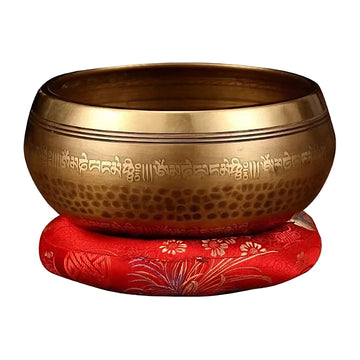
Is the auditory sensitivity of dogs and cats a contraindication for the use of Tibetan bowls?
The hearing of some animals, particularly dogs and cats, is much more developed than that of humans in higher frequencies. As a result, some animals have a much wider hearing range than humans. They are able to hear ultrasonic sounds that are inaudible to us. That means playing Tibetan singing bowls can be an intense sensory experience for them. When the sounds are harmonious and well tolerated, animals can relax deeply. However, in more sensitive individuals, these vibrations may feel disturbing or stressful, triggering avoidance or anxiety.
Responses also vary according to each animal’s history, environment, and species—some may be naturally drawn to the harmonious sounds of Tibetan singing bowls, while others may be more reluctant. Taking these differences into account helps ensure a respectful approach to animal well-being.
Carefully observing the animal’s reactions during the use of Tibetan singing bowls is fundamental. Signs of relaxation, such as calm postures, steady breathing, or relaxed behaviour, can signal a positive response. On the other hand, signs of stress, such as agitation, attempts to escape, or an excessive reaction, indicate that you should pause or adjust your approach. If the reaction is strongly negative, it may be best to stop using the bowl altogether.
What are the ethical and safety considerations when using singing bowls on animals?
Using Tibetan singing bowls with animals raises important ethical and safety questions. Before adopting this practice, it is essential to consider various aspects to ensure the well-being of our four-legged companions. First and foremost, it is crucial to respect the animal’s consent. Some may enjoy the soothing vibrations of Tibetan singing bowls, while others may perceive them as intrusive. It is essential to carefully observe your pet’s reactions, paying close attention to any signs of comfort or discomfort. If your pet shows signs of stress, it is important to stop using Tibetan singing bowls to avoid any negative impact on their well-being. Never force your pet to stay near a Tibetan singing bowl if it wants to move away.
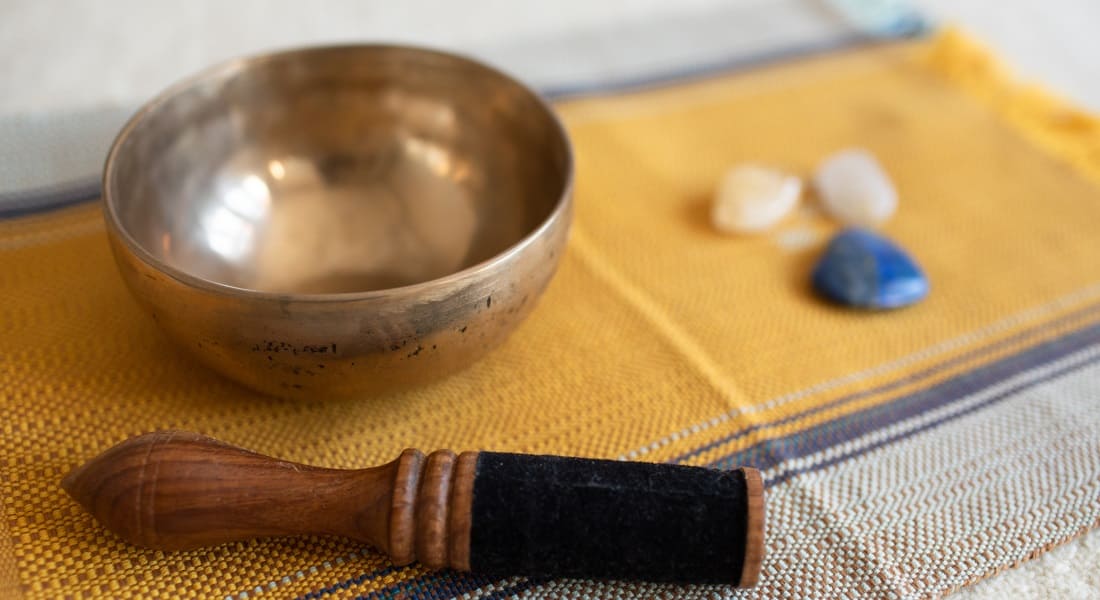
In addition, keep sessions moderate in frequency and duration. Excessive sessions could potentially cause fatigue or stress in the animal. Start slowly, carefully monitoring how the animal reacts, and adjust accordingly. Different animals have different sensitivities, and some species or individuals may be more receptive to sound stimuli than others, so it’s wise to tailor each session to your pet’s unique needs.
In terms of safety, it is important to ensure that the Tibetan singing bowl used is suitable for animal use, with no sharp edges or potentially dangerous materials. This is because the animal may have an unexpected reaction, which you need to anticipate. The location where the session takes place must also be safe, with no risk of the animal falling or injuring itself.
Choose the best Tibetan singing bowl for your four-legged friend
We’ve just explored how Tibetan singing bowls can benefit animals, especially popular companions like dogs and cats. It is therefore of paramount importance to emphasise that this practice requires a thoughtful and respectful approach, taking into account the specific characteristics of each species. Thanks to the guidance you’ve found in this article, you’ll be able to use this instrument in a way that supports your animal’s well-being.
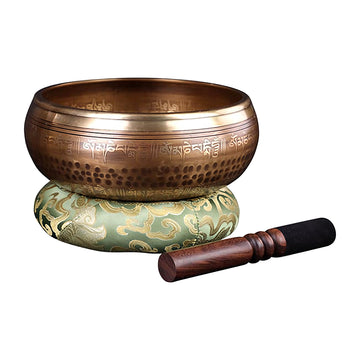
Because our four-legged friends have particularly sensitive ears, the quality of the Tibetan singing bowl you choose must be impeccable. And since you’ll likely be using the bowl too, choosing an instrument you genuinely enjoy can help create a real sense of connection. That’s why I personally recommend the online store Instruments du Monde, which offers a wide, carefully curated selection of authentic Tibetan singing bowls, guaranteeing a rich and soothing sound experience for both you and your pet. For example, this handmade singing bowl, available in several sizes, is ideal for creating a harmonious environment conducive to your well-being.
Discover this singing bowl by clicking on the image below:
When using or moving a singing bowl, it is quite possible that mishandling it could cause the instrument to fall. In most cases, the bowl will then suffer damage or deformation. If this happens, read my other article specialising in the repair of broken Tibetan bowls. You may then be able to save your precious musical instrument. And to learn more about it, check out my general guide to Tibetan singing bowls. It is a reference on the subject.


