



Written by Ambre Montespan on Feb 5, 2024 · Updated on Oct 15, 2026

Table of contents:
Thinking about buying a djembe, that beautiful African drum? Want some solid guidance to help you choose the right instrument as a beginner? What should you look for when selecting an excellent djembe?
I first discovered the djembe over 20 years ago, and I’ve had the chance to advise many aspiring musicians on buying this percussion instrument. I’ve also become familiar with a wide range of djembe models available today. So I can share the practical tips you need to choose your djembe with confidence.
To choose the right djembe as a beginner, consider your build so you can pick the right size. You’ll also want to look at overall quality, the materials it’s made from, your budget, and your musical goals.
By reading this article, you’ll know which djembe to choose when starting out. Most importantly, you’ll discover:
- Information about the materials used in traditional and modern djembes
- The ideal djembe size for a beginner
- Which djembe to choose for a child
- Why budget matters when choosing your instrument
Once you’ve read the article from start to finish, you’ll have the insight you need to choose the right djembe. You’ll also be able to pick this type of drum for a friend or loved one if you’d like to give it as a gift.
Now, let’s dive into how to choose a good djembe for any beginner percussionist.
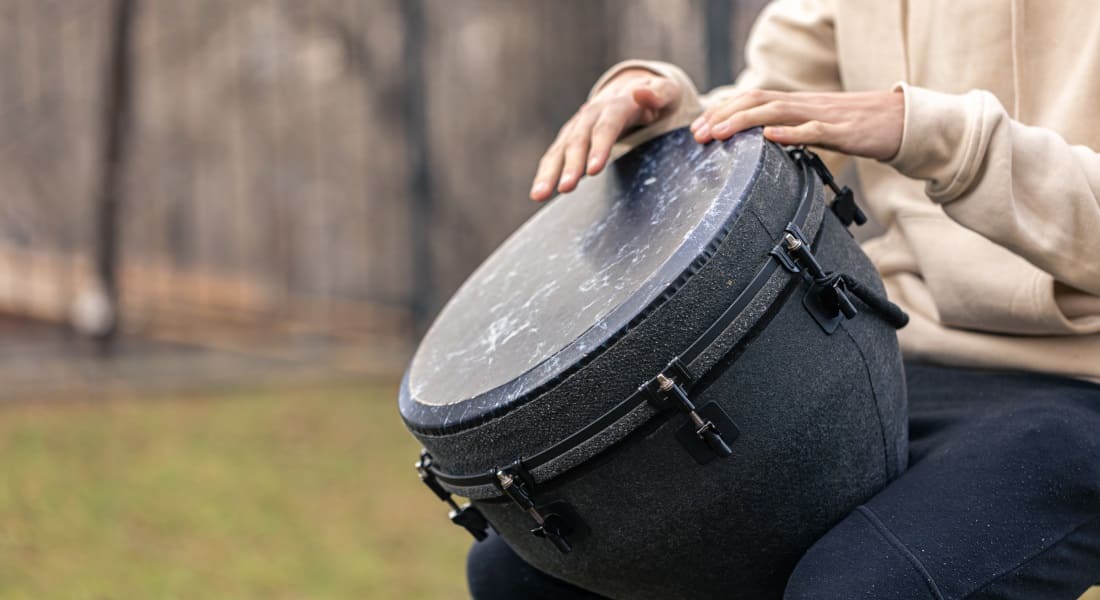
What material and type of djembe should you choose between a traditional and modern model?
The djembe, a percussion instrument of West African origin, has a rich history and a wide variety of styles that can feel overwhelming at first. If you’re thinking about buying a djembe to begin your musical journey, it’s important to understand the different categories you’ll find on the market. Traditional djembes, often handmade by skilled artisans, reflect the heart of African culture. They’re typically carved from solid wood, such as mahogany and iroko, and fitted with an animal skin head, such as goat or buffalo. These traditional djembes offer an authentic tone and a rich depth that purists love. However, they can be pricey due to the craftsmanship and premium materials.
On the other hand, modern djembes are usually mass-produced using more affordable materials like ABS plastic, fibreglass, and synthetic heads. They sometimes use tension rods to tighten the head rather than traditional braided rope. These instruments are designed to be more accessible in terms of price, though that can affect the sound. Modern djembes are a great fit for beginners who want to get started without spending too much. They also hold up better against weather changes and humidity, which makes them practical for outdoor playing. Keep in mind that there are also a few other types of djembes, such as electronic models, but they’re still quite rare.
Choosing between a traditional and a modern djembe depends on your musical preferences, your budget, and how attached you are to tradition. If you’re looking for authenticity and you’re ready to invest in a high-quality instrument, a traditional djembe may be the best option. If you’re just starting out and working with a tighter budget, a modern djembe can be a smart way to get comfortable with the instrument. Thinking through these differences before you buy will have a real impact on your early experience as a new percussionist. Once you’re clear on them, you’ll be better prepared to choose the djembe that truly matches your needs and your personal style.
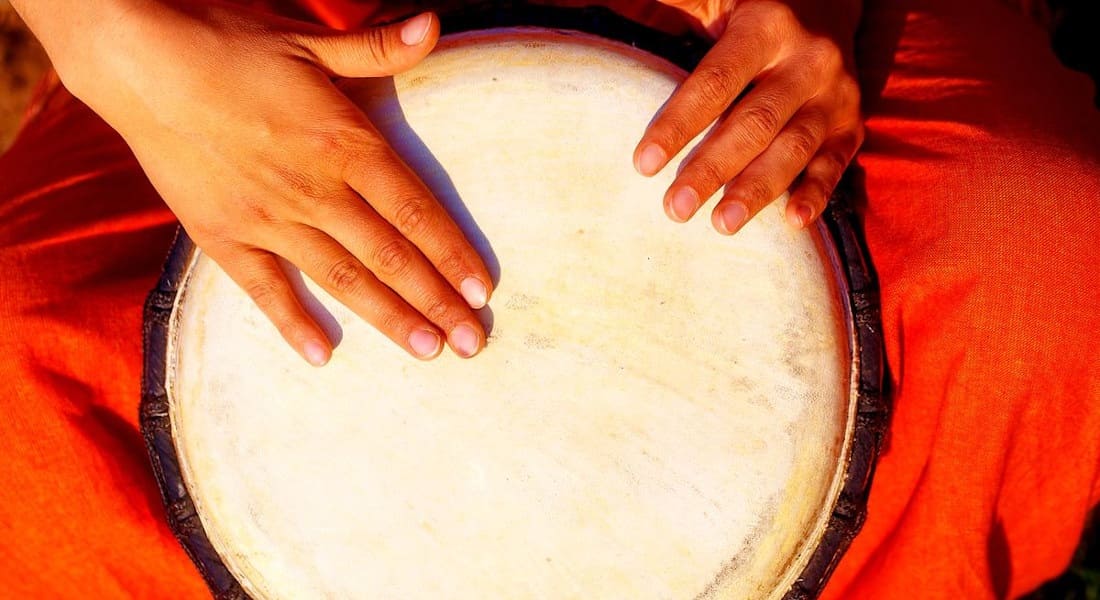
What is the best size of this musical instrument for beginners?
The size of the djembe is a key factor for beginners, and choosing the right dimensions can noticeably affect your playing experience. Djembes come in several sizes, each with its own pros and cons. First, let’s look at medium-sized djembes, which are typically around 40–50 cm tall. These instruments offer an excellent balance between portability and sound. Their moderate size makes them well suited to teenagers and people with a smaller build because they’re easier to handle and more comfortable to play. Medium-sized djembes are also often more affordable, which can be a deciding factor if you want to get into percussion without immediately investing in a premium instrument.
On the other hand, if you’re an adult beginner, or if you’re planning to play more complex rhythms or move towards advanced performance, a standard-sized djembe can be a great choice. These models are usually about 60 cm tall and offer a broader sound range. You can explore deep bass, warm mid tones, and crisp highs, making them suitable for many styles, from traditional African music to more contemporary compositions.
Finally, smaller djembes, up to about 40 cm tall, are also a solid option, especially for younger beginners or anyone looking for a compact, easy-to-carry instrument. These smaller djembes are ideal for getting started with African percussion and can be an excellent fit for children beginning their musical journey.
It’s worth noting that size directly affects the instrument’s sound: smaller djembes tend to produce higher-pitched tones, while larger models deliver deeper bass. So your size choice should match your musical preferences and the style you want to play. Ultimately, the best djembe size for a beginner depends on your personal preferences, your musical goals, and your budget. Whatever size you choose, what matters most is finding a djembe that inspires you to make music and explore new sound possibilities. To help you decide, watch this video featuring a large djembe:
And also this video showing the sounds of a small djembe:
How much should a beginner invest in an African drum?
When you’re just getting into the fascinating world of the djembe, one of the first questions that comes up is budget. It’s essential to find a djembe that fits your budget while still giving you a rewarding musical experience. Here’s a realistic idea of what you can expect to spend.
If you want to explore the world of the djembe without spending too much, a modest budget of €50 to €100 is a realistic option. In this price range, you can find small, entry-level djembes that work well for beginners. They offer an accessible introduction to African percussion, even if there are sometimes trade-offs in material quality and finish.
If you’re ready to invest a bit more in your passion for percussion, a mid-range budget of €100 to €300 opens up new possibilities. In this range, you’ll have access to a wider selection of djembes, from solid mid-range models to higher-quality instruments. These djembes are often handmade, offer better playability, and deliver a richer sound, helping new players progress faster while enjoying a more satisfying experience.
For djembe enthusiasts who are ready to fully commit to African percussion, a higher budget of over €300 is also worth considering. With that kind of budget, you can treat yourself to a high-end djembe made by experienced craftspeople using premium materials. These instruments offer exceptional tone, smooth playability, and impressive aesthetics. They’re well suited for percussionists who want to explore advanced rhythms and immerse themselves more deeply in African tradition.
Whether you choose an affordable beginner djembe or invest in a top-tier model, the most important thing is to start your musical journey with passion and consistency. Every budget offers unique opportunities to explore African percussion and grow as a player.
Which djembe is right for a child?
Choosing the right djembe for a child is an important decision that can help spark a lasting love for music and African percussion. One of the main things to consider when buying percussion instruments for children is choosing the right djembe size. For children who want to start playing, it’s best to go with a small model. Smaller djembes, usually around 40 cm tall, are suitable for young aspiring percussionists. They’re simply easier to handle and play.
A smaller djembe isn’t just more practical for children—it can also help them develop their technique faster. Smaller djembes are lighter, so children can carry them more easily. It’s also worth noting that a plastic djembe can be a great option since it’s even lighter and sometimes more durable than a solid-wood model. That can be a very sensible choice for younger children.
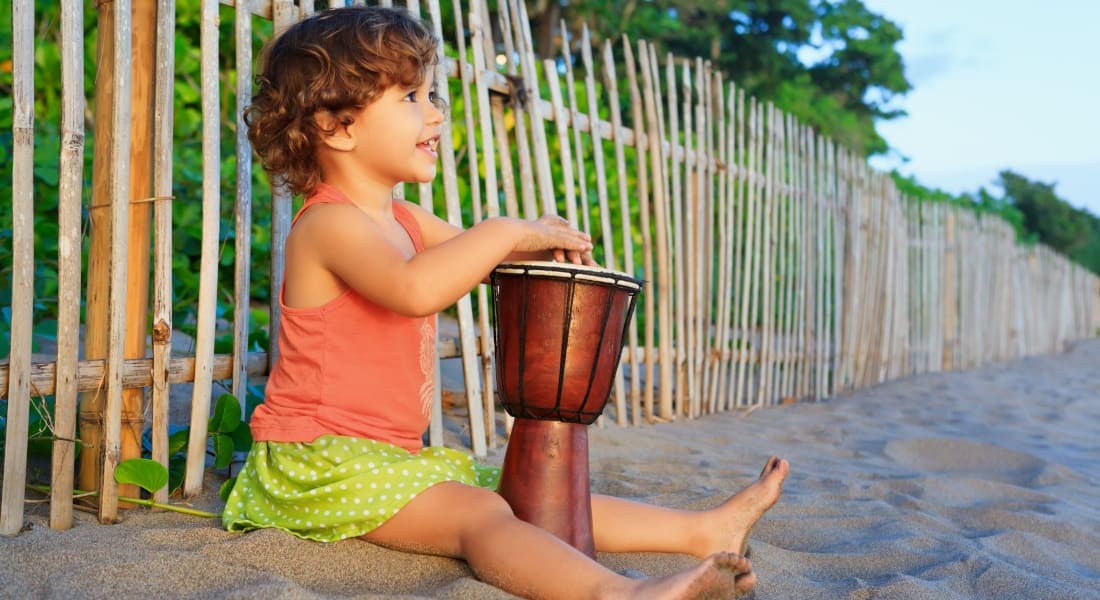
It’s worth noting that children’s djembes are designed to provide a fun and educational playing experience. They can be made from durable, colourful materials that grab children’s attention while holding up to everyday use.
As a beginner, should you buy accessories to accompany your instrument?
When you first step into the captivating world of the djembe, it’s important to get properly equipped for the best possible playing experience. The right accessories don’t just improve comfort—they can also help preserve your djembe and maintain its sound. A comfortable carrying strap is essential for transporting your djembe safely, whether you’re heading to lessons, rehearsals, or performances. It helps distribute the weight more evenly and reduces strain. A protective cover is also a smart investment to shield your djembe from the elements, dust, and bumps. It protects the finish and helps extend your instrument’s lifespan.
It’s also helpful to keep replacement heads (skins) within reach. Djembe heads can wear out over time, and having a spare can prevent unwanted interruptions in your practice. Using the right accessories can truly improve your beginner experience, helping you care for your instrument, explore new sounds, and make steady progress. Music is a personal adventure, so choose the accessories that match your specific needs and enrich your time with the djembe.
Some practical tips for choosing your first djembe
If you follow these tips carefully, you’ll be better prepared to choose the djembe that fits your needs and your musical style. And remember, your first djembe can be the start of a truly exciting sound journey.
- Set a realistic budget: Before you start your search, decide how much you’re willing to invest in your first djembe. There are options for a wide range of budgets, so it’s important to know your limit.
- Choose the appropriate size: For an adult beginner, a standard-sized djembe, about 60 cm tall, is an excellent starting point; a medium size suits teenagers and people with a smaller build, and a small size suits children. Size affects both playing comfort and the instrument’s sound.
- Consider the musical style: Think about what kind of music you want to play on your djembe. Certain sizes and types are better suited to specific styles.
- Think about aesthetics: The look of the instrument may matter to you too. Some djembes are beautifully decorated, which can add an artistic touch to your musical experience.
Choose the perfect djembe from our vast collection today.
Because the djembe isn’t a particularly common instrument, buying your first one can feel tricky as a beginner. Size, materials, and price are just a few of the factors that will naturally come up as you look for the perfect djembe. Thanks to this article, you now know how to choose your djembe in the best possible way, so you can make a smart purchase that fits your situation.
That said, specialist shops offering dozens of quality African drums to meet every musician’s needs are still rare. That’s why I recommend the online shop Instruments du Monde, which is passionate about exotic instruments and offers more than 50 different djembes to suit every player.
Explore the collection of djembes offered by Instruments du Monde today.
Miking and recording a musical instrument is truly an art in itself. If you plan to record the sounds of your djembe to produce a musical piece, I highly recommend reading my other article. You’ll be set up to do great things when it comes to audio recording.

Pamela
May 31, 2026Very helpful. Thank you
Ambre Montespan
May 31, 2026