



Written by Ambre Montespan on Jul 13, 2026 · Updated on Oct 15, 2026

Table of contents:
Do you live in the United Kingdom or nearby? Are you looking for a handpan with soft, melodious tones that let your creativity shine? Do you want to discover all the professionals who make this percussion instrument close to home?
I’ve been playing the handpan for about 10 years now, and I’ve spent that time following the many makers scattered around the world, especially in England, Scotland, Wales, and Northern Ireland. So I can quickly list the artisans who put their talents to work crafting handpans in these countries.
It turns out that just under ten handpan makers are based in the United Kingdom, most of them in England. Among them are Tāla Handpans, Acero Harmonic Handpans, and Samadhi Soundscapes.
As a result, by reading this informative article, you’ll learn:
- Who the different professionals are who handcraft handpans or Hang drums
- The history of these artisans
- The different instrument models they offer for sale, as well as their manufacturing methods
This will make it easy to decide whether visiting their workshop, getting in touch, and possibly making a purchase could be worthwhile.
Now, let’s dive into the details of each professional.
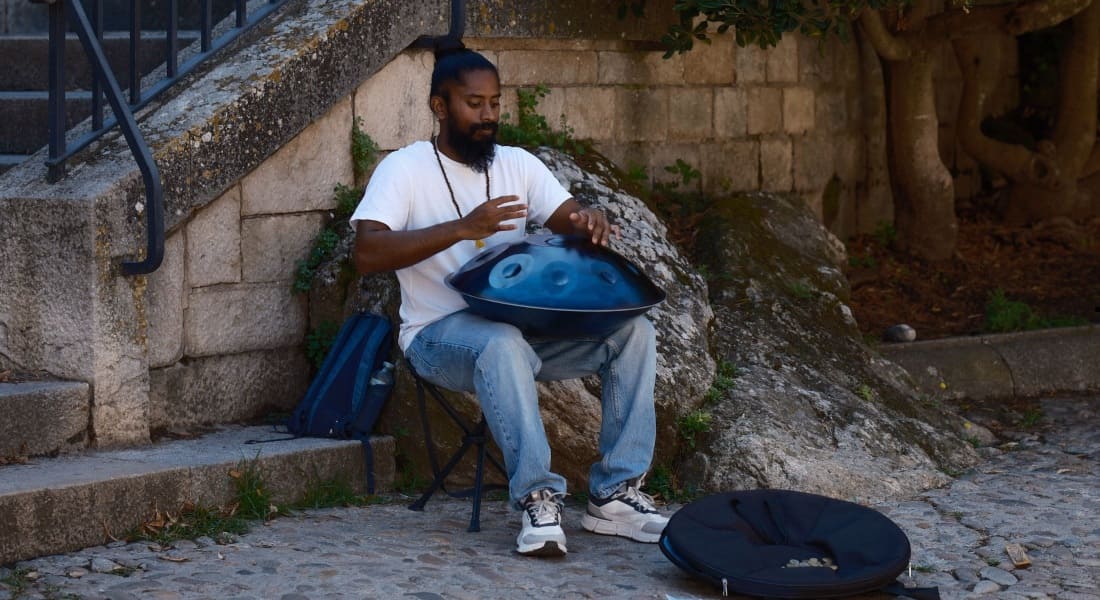
Which professionals make handpans in the United Kingdom?
Although the handpan was born in Switzerland in the early 2000s, it wasn’t until the mid-2010s that artisans in the United Kingdom began making their own instruments. Before that, you had to place an order in Switzerland, the United States of America, or Spain and wait months, sometimes even years, hoping to receive your instrument. Today, you can still find handpans in Bristol or Glasgow, although you may still have to wait a few months. Here is a comprehensive list of these manufacturers.
Tāla Handpans (Frome, Somerset, England)
Since September 2015, Daniel Comer has been wielding a hammer and taking on the battle with steel under the name Tāla Handpans. The first few months were discouraging, as he says he thought he was losing his mind from hammering away at a sheet of metal in a tiny shed in his back garden. Only through sheer persistence did his first models begin to produce accurate notes. Now based in Frome, Somerset, Daniel Comer works with two materials: hardened nitrided mild steel and high-carbon steel, hand-sunk and then powder-coated. Producing 55 cm diameter instruments with starting prices at €1,500, this is an interesting workshop in the United Kingdom. One interesting detail: the name Tāla Handpans is no coincidence, since in Indian classical music, tala refers to the rhythmic cycle, the beat kept by the hand.
Acero Harmonic Handpans (Warwickshire, England)
Head to Warwickshire, near Stratford-upon-Avon. That’s where Chris Gripton crafts professional instruments, fully built in the UK, under the name Acero Harmonic Handpans. This professional works exclusively to order and does not really keep stock, which may not suit you if you want to treat yourself to a handpan right away. Primarily active on Instagram, Acero is worth contacting directly if you want a handmade British handpan off the beaten track. Watch a presentation video of a Celtic D 432 hertz model below:
Samadhi Soundscapes (Glasgow, Scotland)
Heading north. Scotland has its own maker, and he is one of a kind. David, the sole man behind Samadhi Soundscapes in Glasgow, fell in love in Barcelona around 2004 when he heard a handpan resonating in the street. The catch back then? It was nearly impossible to find one. He still jokes about it: he says he would have had to “practically marry into the inventors’ family to be given one!” So he decided to build one himself, without even knowing whether he would be able to play it. Years of trial and error later, after failed templates and mistakes he himself describes as “horrible,” his first official instrument was born. Since 2012, Samadhi has been making handpans from non-nitrided DC04 steel as well as stainless steel. Two signatures distinguish his pieces: the Flower of Life engraved on each one and a generous 57 cm diameter, placing it among the largest handpans on the market. Then there’s the anecdote. In his own words, he had “the good fortune to build an instrument for Chris Martin of Coldplay.” This ultimately earned him an invitation to perform on both nights of the band’s world tour, on home turf, at Glasgow’s national stadium. He is the only Scottish manufacturer truly listed to date.
Salvatore Handpans (East Devon, England)
In East Devon, Daniel founded Salvatore Handpans, specialising in custom-made stainless steel handpans. His journey sums up an entire generation. 2015: after years of dreaming about it, he finally treated himself to his first pan. And then he started playing in the street. Busking became a driving force for both personal and musical growth. The following years? Sweat, blood, and tears, in his own words, poured into learning the craft until he built a reputation as a reliable, dedicated maker. But Daniel does more than build instruments. He runs lessons and workshops. And he sees the handpan as far more than a sound object: a tool for connecting people, whether through busking, gatherings, or sound baths.
PeterPan Handpans (Darwen, Lancashire, England)
Based in Darwen, Lancashire, the PeterPan Handpans workshop has been making instruments since 2017. According to the workshop’s own statements, no handpan has ever been returned for retuning. What sets this manufacturer apart is that no identity is disclosed on its official website. The listed address is “Hacking Street” in the town of Darwen, but there is no street number to pinpoint the exact location. In addition, when viewing this street on Google Street View, no workshop appears to be visible. Is it a mystery tied to the PeterPan name? I don’t really know, but the handpans start at €1,200 for 55 cm diameter models.

Zephyr Handpans (Wickham, England)
Since 2014, under the leadership of Dean Richardson, assisted by Paul Cummings, Zephyr Handpans has been producing this musical instrument in the heart of England, more specifically in the town of Wickham. The brand specialises in making models from 1 mm thick AISI 439 stainless steel. The range is fairly broad, offering several tunings and 440 or 432 hertz frequencies. Price-wise, entry-level models start at around €1,500 and go up to about €3,000. At that higher price, you can treat yourself to an 11- or 12-note handpan in the scale of your choice. One particular point about this manufacturer: the famous D Kurd handpan, sold everywhere as the “ideal” beginner scale, is not, in Dean Richardson’s opinion, the best choice. According to him, it is actually one of the most demanding, so he recommends other scales instead.
PanAmor Handpans (Exeter, Devon, England)
The entire story of PanAmor Handpans fits into one image. A teenager sinking sheet metal onto the top of an oil drum. Kettlebells used as tools. Old speaker stands used to support tuning rings. That teenager is Daryl Quinn, a percussionist since age 14, who started near Totnes before setting up his workshop in Exeter, Devon. He founded the workshop in 2015, and it is very much a family business, since Daryl Quinn’s partner, Marcia, handles the engravings and artwork on the instruments they produce. The artisan offers several ranges and materials for his handpans, including models made from Ember Steel, a type of stainless steel that offers longer sustain. The shells are hydroformed and available in 45 or 55 cm versions.
Meridian Handpans (Bristol, England)
In 2015, Duncan Arnot founded Meridian Handpans, where he began tuning and hammering examples of this percussion instrument. He built a small team, with Henry forming the shells while Ceri handles polishing and keeps an eye on the heat colourations that occur during the handpan’s various firing stages. Marketa, meanwhile, teaches and guides players who feel a little lost when choosing a scale.
The different models are made from nitrided steel, and the shells are hydroformed. Two sizes are available: 45 and 55 cm in diameter. As for pricing, expect to pay around €1,500 each for entry-level models. Note that this workshop highlights a sound pickup system, the Meridian Pickup System (patent pending), said to be “the world’s first and only electro-acoustic handpan.” Listen to a model produced by Meridian Handpans:
PanStream (Devon, England)
Mark Wilson did not discover metalwork late in life. Even as a child, he was making steel drums. And that Trinidadian culture of hand shaping now runs through every PanStream, from start to finish. The first handpan he heard? Immediate obsession, which led him to consider making this sound object himself. The early days, however, were rough, as many of the first examples ended up at the tip because the tones were so far off. As for the available models, everything stays classic. PanStream offers instruments made from stainless or nitrided DC04 steel. The frequency can be chosen between 440 and 432 hertz, along with the number of notes or the scale. Enough to satisfy just about any musician looking for this metal percussion instrument.
Node Handpans (Bradford, England)
Node Handpans is the story of Mo Doukali. Before becoming the “Mo” his customers mention with affection, he encountered the steelpan in Bern in 1992. He then began teaching the instrument in London schools starting in 2009, following the legacy of TASPO, the historic Trinidadian orchestra. Then, in 2012, he put hammer to steel to make his first handpan. It took him another full year to truly master making and tuning. Now based in Bradford, Node claims more than fifteen years of experience across all steel instruments. The brand controls the entire chain from start to finish: metal composition, shell shape and structure, heat treatment, and tonefield design. The 9-note range remains the most requested, with custom scales also available. Node also handles maintenance, repair, and retuning.
Treat yourself to an excellent, high-quality handpan
The map of British handpan makers comes down to just under ten names, but what depth! You’ll find seasoned steelpan players who moved into the pantam (Mo Doukali, Mark Wilson), world-renowned innovators (Duncan Arnot and his pickup), brilliant tinkerers who started from a garden shed (Daniel Comer) or an oil drum (Daryl Quinn), and even a Scotsman. With this article, you now have a solid idea of all the makers active in this country.
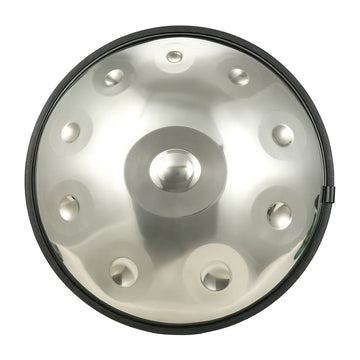
Still, the wait times with these professionals are often very long if you want to get your own instrument, and the prices are noticeably high. That’s why I personally recommend turning to the French brand Instruments du Monde, where you can treat yourself to a handpan quickly, easily, and at a very gentle price. For example, if you’re looking for a relaxing moment with your future instrument, get the Zen handpan, an excellent 10-note model with perfect acoustics.
Treat yourself and buy this handpan by clicking the image below:
Let's now head a few hundred kilometres west to focus on handpan makers in Ireland. There are even fewer of them than in the United Kingdom, but you'll still find workshops if you live in this wonderful country.


