



Written by Ambre Montespan on Sep 19, 2022 · Updated on Oct 15, 2026

Table of contents:
Are you thinking about buying a Tibetan singing bowl soon? Have you noticed there are two main types—those made of metal and those made of quartz crystal? What sets these two kinds of singing bowls apart, and which material makes the most sense for your future instrument?
For over 10 years now, I’ve had a genuine passion for Tibetan singing bowls. That’s given me plenty of opportunities to play and compare, time and again, bowls made of metal alloy or rock crystal. With everything I’ve learned from working with this unique instrument, I can easily help you make the right choice.
A metal Tibetan bowl is the traditional, more budget-friendly option, so it’s often recommended for a first purchase. A crystal singing bowl is more expensive, but it’s especially popular with people looking to do energy work.
By reading this entire article, you will get a detailed comparison between metal and crystal Tibetan bowls in terms of:
- How they’re made
- The sounds they produce
- The benefits they bring to body and mind
- Their prices
- Their physical and aesthetic properties
- And, finally, any contraindications
With all this information at your fingertips, you can confidently choose the singing bowl that’s right for you—and you’ll be equipped to guide friends and family who are also drawn to this Asian treasure.
Now, let’s take a look at the differences between an instrument made of metal alloy and one made of crystal.
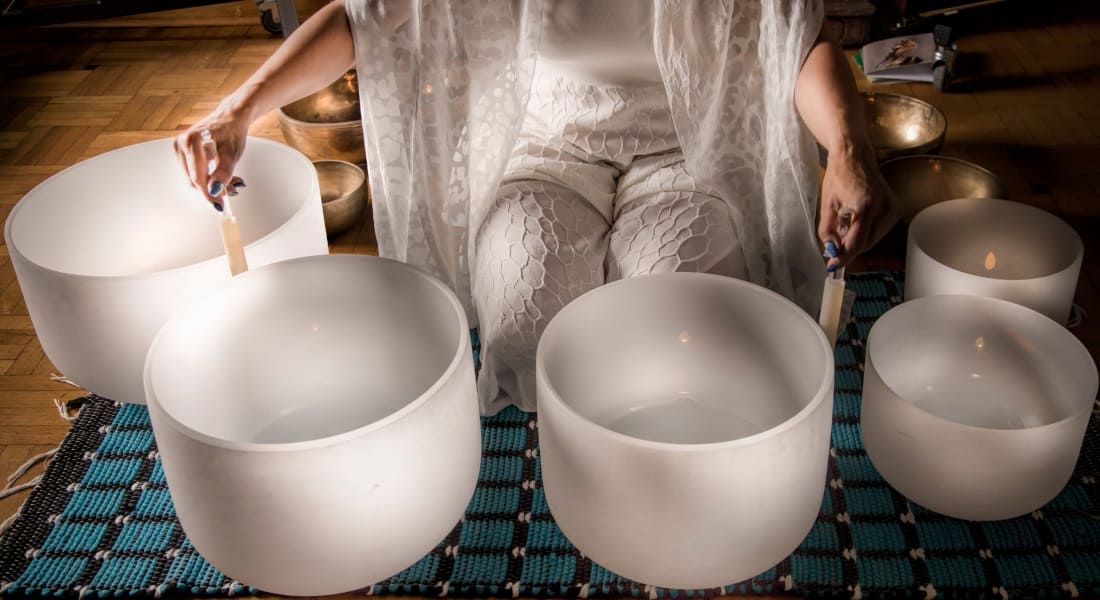
Traditional manufacturing: metal Tibetan bowls vs. quartz crystal bowls
The simple fact that these two types of Tibetan bowls are made from different materials naturally leads to different manufacturing methods.
Traditional metal singing bowls go through a manufacturing process that starts with a thick metal disc (an alloy that can include anywhere from 3 to more than 10 metals, depending on the model). The disc is heated, then hammered by several craftspeople until it takes on the bowl’s distinctive inverted-bell shape. Finally, the bowl is deburred, meaning small amounts of material are removed to make it smooth and shiny. It’s a long, demanding process that can take several hours and has been passed down for centuries through generations of artisans. You can see an example of this traditional manufacturing process in a typical workshop in the video below:
Tibetan crystal bowls were only invented at the end of the 20th century and therefore don’t have the same ancient, traditional heritage as their metal counterparts. To create a quartz crystal bowl, silica (also known as silicon dioxide) is heated to over 2,000°C (3,632°F) in furnaces, then poured into a mould to achieve the desired shape. The crystallised form of silica is called rock crystal or quartz, so the resulting singing bowl is known as a quartz crystal bowl. This design serves two purposes: it offers an instrument crafted from a material prized by practitioners of crystal healing (lithotherapy), and it produces tones that are noticeably different from those of metal models.
That’s what we’ll explore next.
A distinct sound signature depending on the material of the bowl
Even though the overall shape remains the same, a metal Tibetan bowl will generate a different range of sounds than a crystal bowl. When played, any instrument produces a main musical note and other different notes of lesser intensity, called harmonics. That’s why you can easily tell the difference between a piano playing a C and a guitar playing the same C—the fundamental note stays the same, but the harmonics change.
Take a look at the photograph below to see the difference between a metal and a crystal Tibetan bowl when the sounds they produce are recorded by a sound spectrum analyser. On the left is the crystal singing bowl and on the right is the metal one.
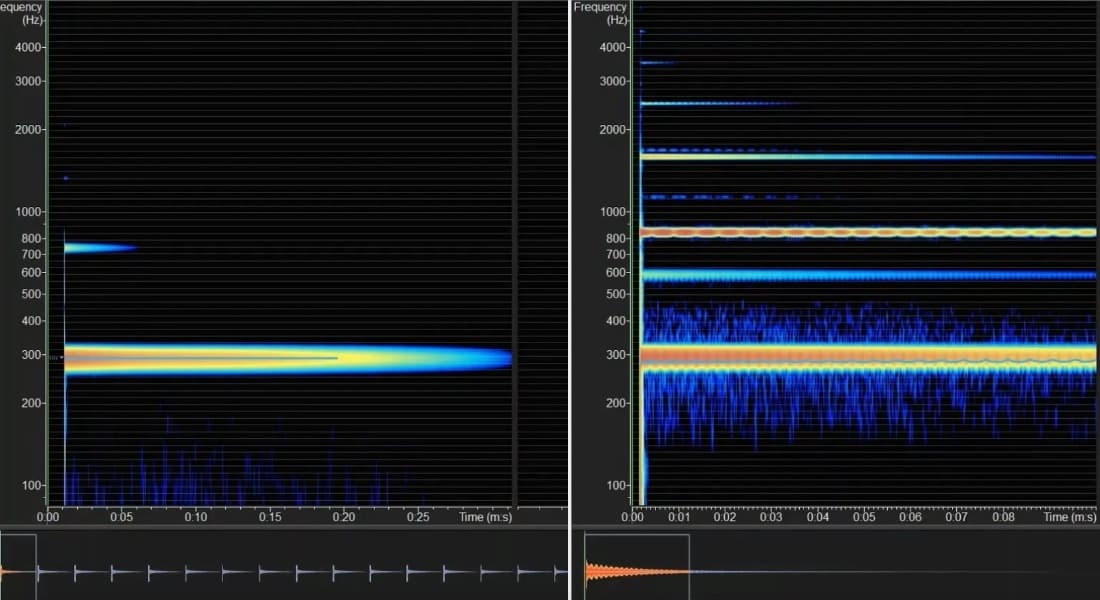
To keep it simple, each horizontal coloured line represents a different musical note. The big difference is that the sound spectrum of the crystal bowl (left) is much less complex than that of the metal bowl (right). In practice, this means Tibetan metal alloy bowls deliver richer, deeper tones, while quartz crystal bowls offer purer, more crystalline notes—and that impacts how they’re used, including for sound healing.
What are the health benefits of these two types of musical instruments?
Tibetan bowls are widely used in therapeutic settings to enhance everyday well-being. These health and vitality benefits can be divided into two categories: those that have been scientifically researched and those that have not.
The therapeutic benefits of Tibetan bowls proven by scientific studies
The virtues and benefits of singing bowls have been the subject of scientific studies for several years. This research has highlighted the fact that regular meditation using this instrument can reduce stress, anxiety, and blood pressure, and even alleviate pain in some cases. Some studies have used crystal singing bowls, while others have used metal bowls, and no significant difference between the two has been found. In short, regardless of the material, the therapeutic benefits of Tibetan singing bowls remain the same.
The energetic virtues of quartz crystal singing bowls
However, no experiments have been conducted by researchers in the field of vibration or energy—particularly with regard to the chakras—as no scientific proof of their existence has yet been provided, even though some people claim to be able to feel energy flowing through their bodies via the chakras.
Yet it is in this area that crystal singing bowls excel. Each of the seven major chakras is associated with a note in the C major diatonic scale: C, D, E, F, G, A, and B. For example, Muladhara, the root chakra, is linked to the note C, while Ajna, the third eye chakra, corresponds to the note A. See this other article to learn more about the relationship between the musical note of a Tibetan bowl and the chakras.
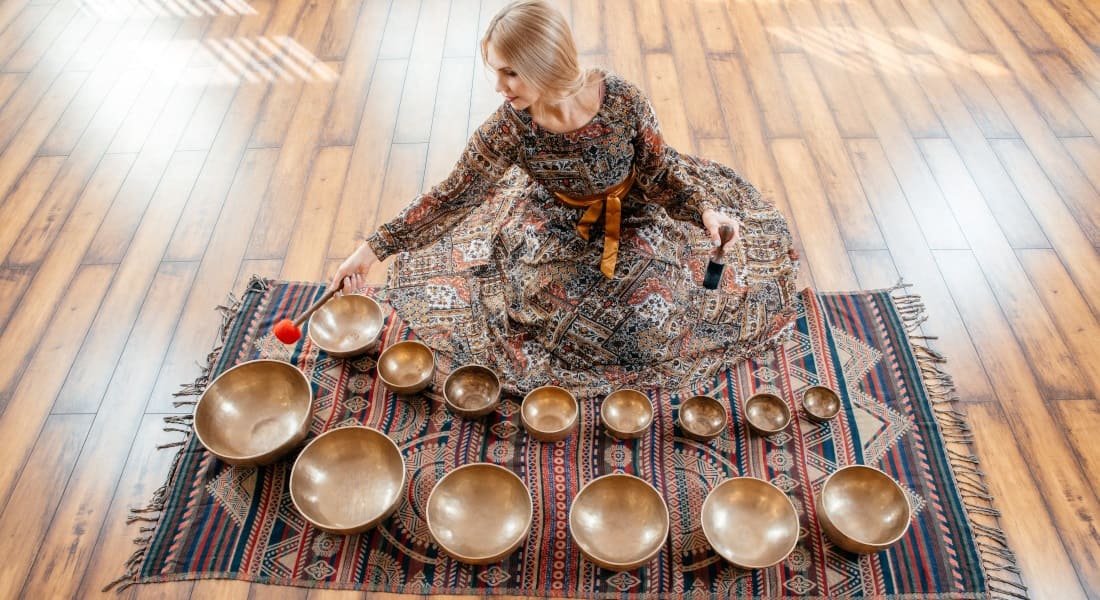
We’ve previously discussed the fact that crystal bowls produce a purer note than metal ones. This is where their main interest lies, because they can help you target a specific chakra to balance it, whereas a metal bowl can introduce additional overtones through its harmonics. As a result, for energy work, crystal singing bowls can feel more precise, while metal bowls tend to be more general.
Some quartz crystal bowls also offer specific frequencies such as 432 or 528 Hz, which many practitioners believe are even more effective for healing than the more traditional 440 Hz models. You can also find Tibetan crystal bowls combined with other lithotherapy stones, such as sapphire or emerald, so practitioners can blend the positive effects of several minerals. This type of variation is impossible (or far too complex) to achieve with Tibetan metal bowls using traditional manufacturing methods.
What is the price difference between these two types of singing bowls?
Budget is an important factor to consider when choosing a Tibetan bowl, because they can quickly cost several hundred euros. In terms of price, metal singing bowls have an undeniable advantage. While you can find small ones for less than €50, you’ll typically need to spend around €100 for a crystal bowl of the same diameter. So if your budget is tight, it’s best to go with a metal bowl.
Comparison of the weight and fragility of Tibetan singing bowls according to their material
Once again, weight, size, and fragility favour the Tibetan metal bowl. It will be lighter, smaller, and much more resistant than its crystal counterpart. If you drop a metal bowl on the floor, it may become deformed, but in most cases, a small fall will cause little or no damage. It’s also easier to carry in a bag and you won’t worry as much about having other items resting on it.
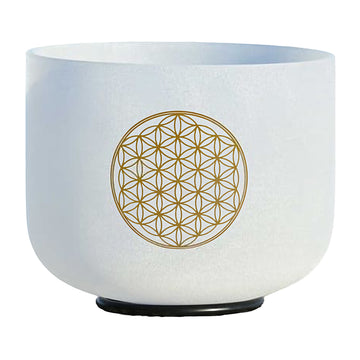
Crystal singing bowls are much heavier for the same diameter, weighing two to three times more than a metal bowl. They are also larger and wider, but above all, much more fragile. Special care must be taken when using them, because dropping them on the floor from a height of 30–60 cm will often cause them to crack or break, rendering the instrument unusable.
Different care instructions for singing bowls depending on their material
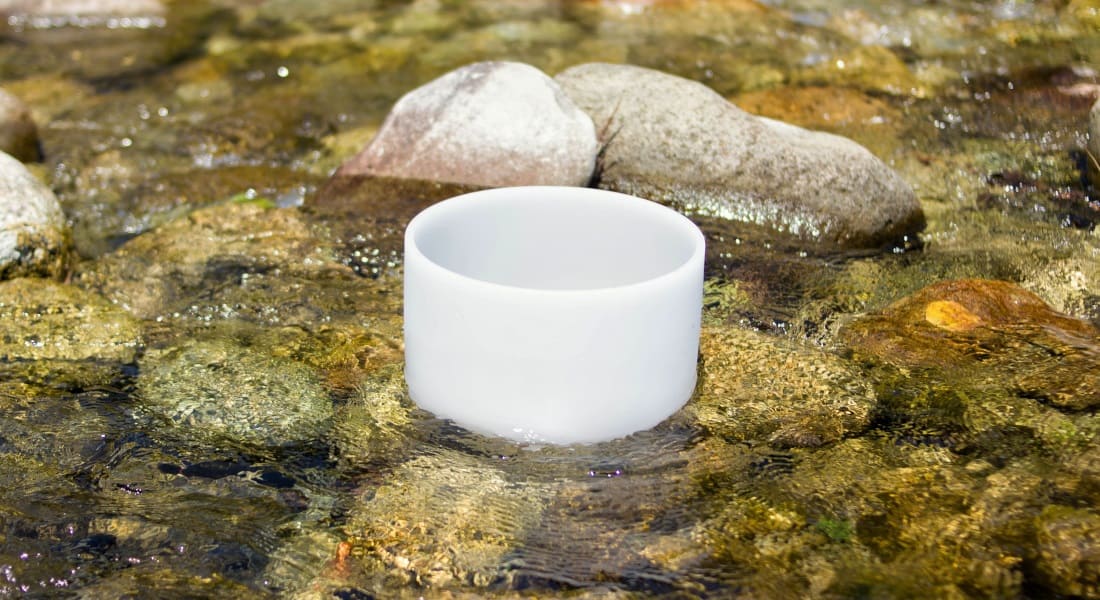
It’s obvious that a metal or crystal object can’t be maintained and cleaned in the same way, and the same applies to Tibetan bowls. Those made of metal alloys are more finicky, as they are susceptible to rusting when in contact with water or humidity. In addition, metal can react badly if you use products that are too harsh. On the other hand, crystal singing bowls are much more tolerant and require little maintenance. Read this article to learn everything you need to know about cleaning Tibetan bowls.
Are there any contraindications for rock crystal bowls compared to metal alloy bowls?
In general, singing bowls have very few contraindications or side effects. However, it is possible to be allergic to certain metals, which is not the case with quartz crystal. In addition, traditional Tibetan bowls made of seven metals contain trace amounts of mercury and lead, materials whose toxicity is well established. Therefore, if contact with these metals is a problem for you, it would be best to choose a quartz crystal singing bowl.
Aesthetic differences depending on whether the instrument is made of metal or crystal
Finally, the last element to consider is the one that stands out at first glance: the aesthetic aspect. Tibetan metal bowls appear golden, coppery, or slightly brown, and may be accented with red, green, or blue paint. Most striking, though, are the beautiful engravings—usually Sanskrit script. These engravings are created by drawing symbols with wax, then immersing the singing bowl in an acid bath for several minutes. The acid etches the metal in the unprotected areas, forming the design. Once the process is finished, the wax is removed to reveal the final shape of the bowl.
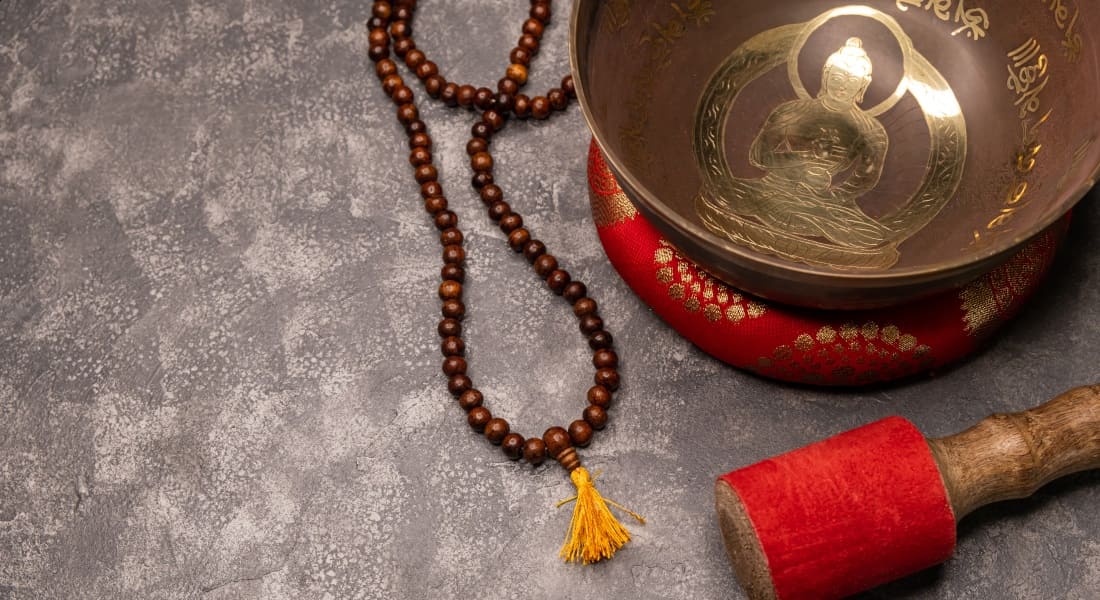
Such visual effects can’t be replicated on a crystal bowl. Crystal models are typically white, though you may now encounter fully transparent versions with colours or chakra symbols embedded inside. If you’re drawn to the traditional look of engravings, a metal bowl will be your best choice.
Find the perfect Tibetan bowl based on your criteria
Choosing a Tibetan bowl is not something to be done at random, and it can sometimes be difficult for a novice who doesn’t know the main differences between a metal bowl and a crystal one. Now you have all the knowledge you need to choose the instrument that will perfectly meet your expectations.
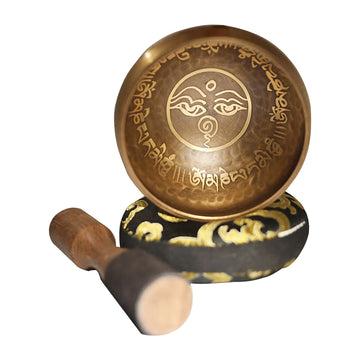
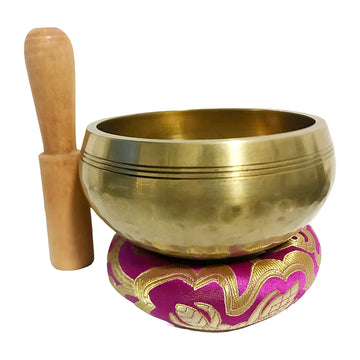
However, once you’ve decided between metal or crystal, few shops offer a wide enough range of instruments to suit every need and budget. That’s why Instruments du Monde has brought together more than 200 different Tibetan bowls so that everyone can find what they’re looking for, such as this model, which is perfect for a first encounter with this mysterious Asian instrument.
Purchase this Tibetan singing bowl by clicking on the image below:
You now have all the information you need to choose the material for your future singing bowl. But do you know where this musical instrument comes from? Find out by reading our specialised article on the origins of the Tibetan bowl. The origin of this enigmatic object will then hold no more secrets for you. And to learn more, read this guide to the secrets of the singing bowl. Everything will be revealed!


