



Written by Ambre Montespan on Jun 12, 2023 · Updated on Oct 15, 2026

Table of contents:
Do you own an ocarina and want to know how to clean and maintain it for hygiene reasons? Has your instrument stopped playing in tune lately? Do you feel like there’s dirt inside the chamber of this type of flute?
Having owned dozens of ocarinas for over 10 years, I’ve often run into the challenge of cleaning this wind instrument, whose interior isn’t exactly easy to access. After testing several techniques, I can help you deep-clean yours while also warning you about what you should never do.
Ocarinas need regular cleaning and upkeep. In most cases, a soft cloth, warm water, and mild soap are enough. However, it’s essential to take precautions so you don’t detune your instrument.
By reading this entire article, you will learn:
- Why you need to clean your ocarina
- What methods to use to remove dust from a ceramic, plastic, wood, or metal instrument
- How often you should clean your ocarina
As a result, you can be sure your instrument is clean. Beyond basic hygiene, this helps keep your ocarina’s tone pure and its tuning stable, just as the maker intended.
Now, let’s look at how to get rid of grime in an ocarina.

Why is it important to clean and maintain this type of flute?
The first reason you should clean and maintain your ocarina regularly is hygiene. You’ll often put the mouthpiece in direct contact with your lips, which can spread germs and bacteria. That’s why disinfecting your ocarina after each use is a must, especially if you plan to lend it to other musicians.
The second reason concerns the acoustics of the ocarina. Over time, grime and residue can build up around the holes or inside the instrument. This happens because a player’s hands aren’t always perfectly clean or because saliva particles enter the ocarina’s resonating chamber. If too much dirt accumulates, the ocarina’s sound will suffer: notes can go out of tune and may even become unpleasant to the ear. That’s why every ocarina player has a good reason to clean out their instrument from time to time.
How can you remove dirt from your ocarina?
Cleaning your ocarina depends on the material it’s made from, so it’s important to distinguish between ceramic models and those crafted from plastic, wood, or metal.
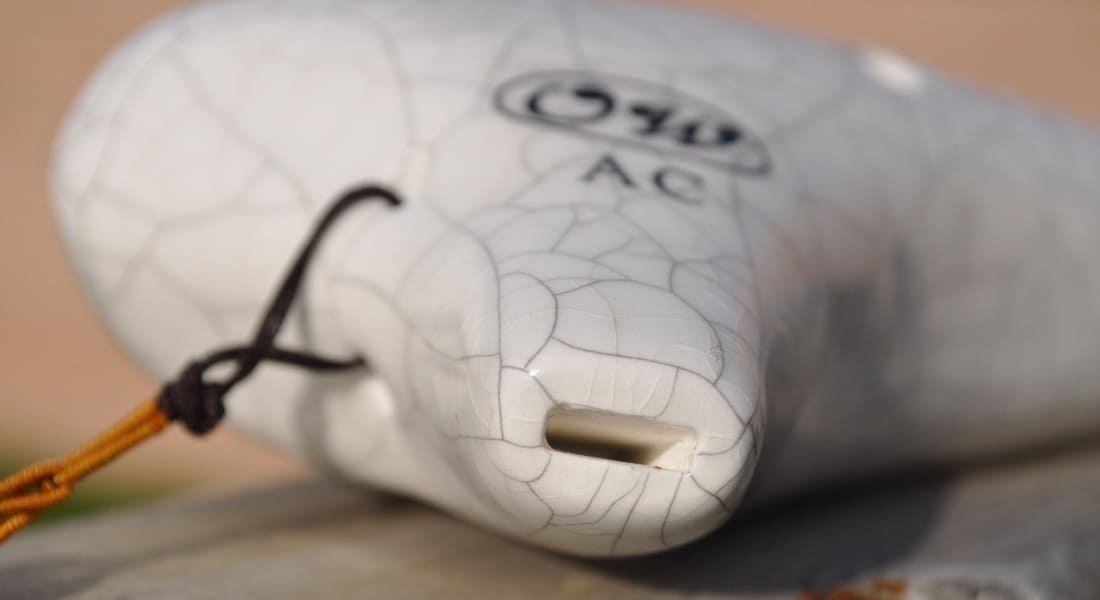
How do you clean ceramic ocarinas?
Ceramic, terracotta, and even porcelain ocarinas are the most common on the market, but they’re also the most delicate to clean. So, it’s important to take a few precautions to avoid damaging your instrument.
Start by gently rubbing the ocarina with a soft cloth to remove dust. Next, using warm water and mild soap, you can wash the outside of the ocarina with a cloth, taking care not to get water inside the instrument. In any case, never immerse the ocarina in water to try to clean the inside. Ceramic is highly porous, so it will absorb moisture and change the instrument’s acoustic properties—so much so that a water bath can fully detune the ocarina and make it unusable. Keep in mind that the ocarina can also absorb detergents, which can cause similar issues while leaving behind an unpleasant odour. Also, the outside of an ocarina is almost always coated in a varnish that gives it a glossy finish. This varnish protects the ceramic from water, but it can be damaged by harsh cleaners. That’s why it’s best to stick with mild soap and never put your ocarina in the dishwasher.
If your ocarina starts playing off notes, it’s usually because dirt has built up around the mouthpiece or in the finger holes. In that case, clean the mouthpiece using a strip of paper cut to the same width as the mouthpiece opening. Insert the paper into the mouthpiece to push the grime towards the instrument’s chamber. You can fold the paper to make it thicker depending on the size of the mouthpiece. For the finger holes, a cotton bud can work, but the most effective tool is a pipe cleaner. Usually used for children’s crafts, it works perfectly as a small swab in the ocarina’s holes to remove dirt.

Finally, blow firmly into the mouthpiece to expel any remaining residue. Before you do, remember to cover the bell of the ocarina with one of your fingers so it doesn’t produce an extremely loud sound that could hurt your ears. If you have a can of compressed air, a hairdryer, or a vacuum cleaner, you can also use those.
Can plastic instruments be washed?
Unlike ceramic ocarinas, plastic ones are much more tolerant of moisture. That means you can do everything described above for ceramic models, except you can safely immerse them in a bath of soapy water. Just make sure to use gentle, non-abrasive products. Also avoid the dishwasher, as the heat can damage the ocarina.
How should wooden and metal ocarinas be cared for?
Just like ceramic ocarinas, wooden and metal models are even more sensitive to moisture. With wood, moisture can cause cracks, while with metal, rust may appear. As a result, use liquids very sparingly and with caution, and be sure to dry the instrument thoroughly.
How often should you care for your wind instrument?
Whenever possible, clean your ocarina after each use. Dry and wipe down the ocarina with a cloth to protect it from moisture. Use mild soap to disinfect the mouthpiece and keep germs from settling in. Finally, as a general rule, try to have clean hands before playing.

For a deeper clean, it depends on how often you play. With normal use, do a thorough cleaning once every three months, unless you notice something off about the sound while playing.
How can you preserve your ocarina for a long time?
Once again, a soft cloth—and using it often—will be your best ally. That said, ocarinas do tend to discolour over time. That’s normal, and the only way to truly revive the original colour is to fire the instrument again at several hundred degrees. To keep your ocarina looking its best for as long as possible, store it in a small pouch that protects it from dust and from the sun’s UV rays, which can have a harmful effect on this woodwind-family instrument.
Preserve your ocarina so you can always play the right notes
Maintaining and cleaning your ocarina are essential steps for any musician who wants to keep their instrument clean and working properly. Since the ocarina’s chamber isn’t easy to access, especially on the inside, it can be tricky to remove the grime that builds up. However, with the methods you’ve discovered in this article, you can keep your ocarina impeccably clean while making sure you don’t damage it.
That said, the most practical way to avoid these hassles is to store your ocarina in a protective case designed for it. These cases aren’t always easy to find, since the ocarina is still a relatively rare instrument. That’s why the Instruments du Monde store offers a padded case made specifically for ocarinas, so you can keep your instrument safe for many years.
Get your case now by clicking on the image below:

Thinking of buying a new ocarina? If so, you’ll want to decide how many holes the instrument should have, because it has a big impact on how difficult it is to learn. Read our article for advice on how many holes to choose for your ocarina, and you’ll be sure to pick an instrument that perfectly matches your needs.


