



Written by Ambre Montespan on Apr 29, 2024 · Updated on Oct 15, 2026

Table of contents:
Would you like to enjoy all the benefits of a Tibetan singing bowl? Want to learn more about sound therapy, also known as sound healing? How can you successfully incorporate a singing bowl into a sound-therapy session to enrich your daily life and well-being?
With over 10 years of experience, during which I’ve taken a special interest in the therapeutic use of Tibetan singing bowls, I have personally conducted several sound-therapy sessions with this musical instrument. I can therefore share practical advice and tips that will enable you to effectively incorporate Tibetan bowls into your sound-therapy sessions.
To practise sound therapy effectively with a Tibetan singing bowl, you can explore approaches such as meditation, sound massage, energy healing, or chakra balancing.
By reading this article in its entirety, you will gain a wealth of information on:
- The concept of sound therapy
- The benefits and contraindications of this practice
- Ways to effectively use Tibetan bowls in a sound-therapy session
All this information will help you get the most out of your singing bowl, not only for your own benefit, but also to support your loved ones who want to try this unique therapeutic experience.
Let’s take a look at how to practise sound therapy with a Tibetan bowl!
What is sound therapy?
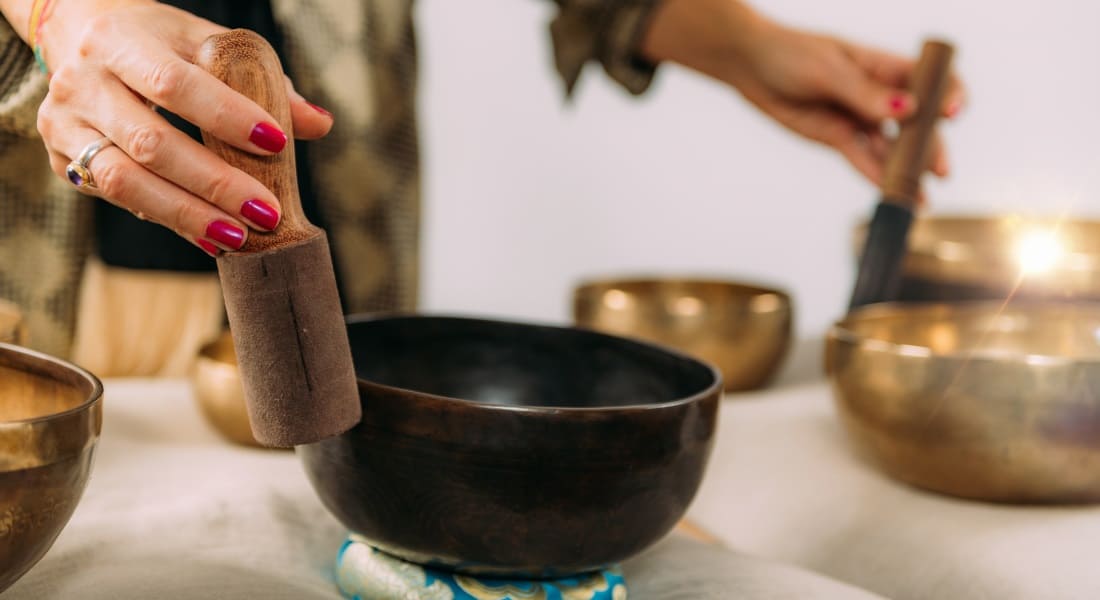
Sound therapy, also known as sound healing, is a healing practice that uses the properties of sound and vibration to promote relaxation, healing, and balance of the body and mind. It is based on the idea that sound vibrations can influence our physical, emotional, and spiritual well-being. Sound therapy practitioners use a variety of instruments, such as Tibetan singing bowls, tuning forks, gongs, drums, flutes, and even the human voice, to create therapeutic sounds and vibrations. Sessions vary depending on the practitioner and the client’s needs, but they generally invite participants to relax and listen to the sounds, allowing the vibrations to work on the body and mind.
Tibetan metal bowls, usually made from an alloy of seven metals, emit deep, enveloping tones. Crystal bowls produce more precise and delicate sound waves, similar to those of glass. It is therefore possible to use these two types of singing bowls in synergy during a sound-therapy session.
Are there any benefits or contraindications associated with Tibetan bowls?
Scientific studies exploring the effects of sound therapy and sound-based therapies on health and well-being are ongoing. While the field still requires further research to establish solid evidence, some studies have shown promising results regarding the benefits of sound therapy. Here are some areas in which studies have been conducted:
- Stress and anxiety reduction: Several studies have shown that music and therapeutic sounds can help reduce stress and anxiety. For example, listening to nature sounds or soft music has been associated with decreased levels of cortisol, a stress hormone.
- Improved sleep: Research suggests that using music or soothing sounds can improve sleep quality, helping individuals fall asleep more quickly and sleep more deeply.
- Pain management: Some studies have examined the effect of sound-based interventions, such as listening to music, on pain management, indicating a reduction in pain perception in some patients.
- Effects on mental health: Sound therapy has also been studied in the context of mental health, with indications that it may help improve symptoms of conditions such as depression.
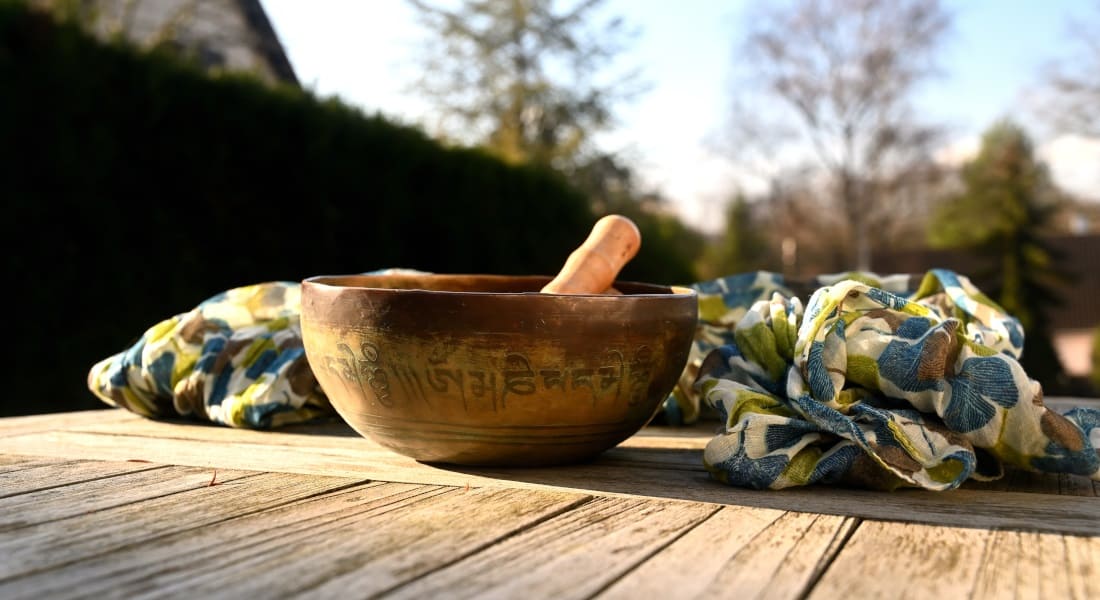
In addition, other scientific studies have looked specifically at the virtues and benefits of Tibetan singing bowls. Similar effects to those associated with sound therapy have been observed, such as lower blood pressure and reduced stress levels. I invite you to read this other article that details all the benefits of singing bowls. As a result, sound therapy and Tibetan bowls pair beautifully, which is why this instrument is so often used in this healing practice.
Finally, there are virtually no contraindications for sound therapy, so much so that it is suitable for everyone. Only people with severe hearing impairments, epilepsy, or neurological disorders should take a few precautions, such as consulting a healthcare professional. If you experience any discomfort during a sound-therapy session, stop immediately. You can also read about the contraindications associated with using a Tibetan bowl, though, like sound therapy, normal use of this Asian instrument is completely safe.
However, it’s important to note that sound therapy is not a substitute for traditional medical treatments—it’s best used as a complementary practice to support overall health and well-being. Sound therapy is not a one-size-fits-all solution, and its effects can vary from person to person. In addition, the quality of studies varies, and there is a need for more rigorous research to better understand the mechanisms by which sound therapy exerts its effects, as well as to determine the most effective protocols.
How can singing bowls be integrated into sound therapy?
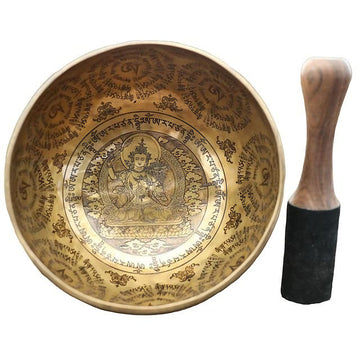
There are several ways to practise sound therapy using a Tibetan singing bowl. The main ones are sound meditation, sound massage, and energy healing, which can take different forms such as chakra balancing or reiki. It is best to approach them one at a time.
Sound meditation using Tibetan singing bowls
Using Tibetan singing bowls in meditation is not only an ancient practice, but also a modern tool for mental and physical well-being. Incorporating a bowl into your sessions greatly enriches the meditative experience thanks to the unique vibrations and sounds it produces. The recommended approach includes preparing a conducive environment, carefully selecting the bowl according to personal energy needs, and adopting a comfortable posture that promotes deep concentration.
Meditation techniques with a singing bowl, whether using the striking or rubbing method, offer a path to relaxation and mental clarity. The method chosen depends on individual preference and ease in entering a state of deep meditation. If you’re ready to explore further, quartz crystal bowls and guided meditation sessions are popular choices that each offer unique, enriching experiences. Consistent practice is key to reaping the full benefits, while always keeping meditation a joyful, not burdensome, part of your day. You can watch this video, which will show you a Tibetan singing bowl sound meditation session:
To learn how to meditate with this musical instrument, I highly recommend reading this article, which will explain step by step how to get the most out of it.
Singing bowl sound baths or massages
Singing bowl therapy can also take the form of a sound bath or massage. This practice uses the vibrations emanating from metal or crystal bowls to promote calm and relaxation. The instruments are either placed near the person receiving the treatment or directly on them, while a sound therapist regularly strikes or rubs the instruments. In this case, the person hears the sounds but also feels the vibrations emitted by the Tibetan bowl, which adds a much-appreciated effect. The only catch is that you can’t really give yourself a sound massage—you’ll need to seek help from a professional or, at the very least, a friend. You can watch a Tibetan bowl sound massage session in the video below:
Energy healing with this Asian percussion instrument
Energy healing can take different forms depending on individual beliefs and convictions. For example, some people use Tibetan bowls to harmonise, unblock, or align their chakras. These are energy centres located at strategic points in the human body. Others use singing bowls in the practice of reiki, a Japanese healing technique that focuses on the laying on of hands as a catalyst for the universal energy that each of us possesses. Finally, some people use this instrument in lithotherapy (crystal healing) to recharge their stones and crystals with energy so that they can bring physical and mental benefits.
If you’re interested in any of these topics, I’ve already explored them in depth in other articles—so feel free to click over for further reading:
- Chakra harmonisation
- Practising reiki with a Tibetan bowl
- Or to recharge lithotherapy stones with energy
Practising sound therapy with an excellent Tibetan singing bowl
While sound therapy is an intriguing practice that’s gaining traction in the field of alternative medicine, integrating singing bowls should never be done at random. This article shows you how to practise sound therapy with Tibetan bowls effectively, highlighting techniques such as sound meditation, sound massage, and chakra harmonisation.
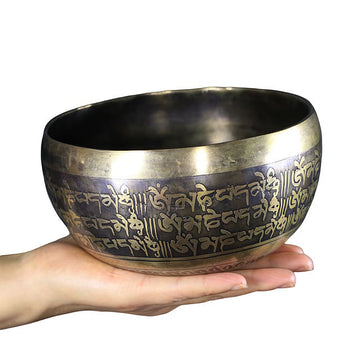
However, to work on your well-being in the best possible way, it is advisable to use high-quality Tibetan bowls that will produce beautiful vibrations promoting relaxation and calm. With this in mind, the Instruments du Monde shop is the ideal place to purchase your future Asian instrument. Each of the bowls offered for sale is chosen for its unique sound properties, its craftsmanship, and its authenticity. Such is the case with this Tibetan singing bowl with its sublime engravings.
Treat yourself to this magnificent Tibetan bowl by clicking on the image below:
Now that you understand the importance of sound therapy using singing bowls, you may be interested in learning more about this field by exploring sound massages and healing sessions performed with this Asian instrument. In addition, take a few extra minutes to browse my comprehensive guide to Tibetan bowls. You will learn a lot about this ancient sound object.


