



Written by Ambre Montespan - Updated on Aug 11, 2026
Table of contents:
Are you a teacher or school instructor? Do you work in a school environment? Or are you simply a parent looking to introduce your child to the world of music? Have you discovered the tongue drum, a round percussion instrument, and are wondering which model to choose for a creative activity with young children? What are the benefits of this instrument for pupils?
With over 5 years in the tongue drum world, I’ve had the chance to watch dozens of children blossom through music with this instrument. So I can help you choose the model that best fits your pupils.
To be best suited to primary school and nursery pupils, choose a model with a maximum of 11 notes and a fairly small size.
By reading this article, you will learn:
- The advantages of using tongue drums in schools
- Which model to choose for young children
- Creative and musical activities you can do with this type of drum
You’ll also be able to confidently introduce this instrument, which is probably unfamiliar to pupils, and give them a moment of relaxation and learning thanks to its soft, soothing sounds.
Let’s start by looking at the benefits of this musical instrument in education.
Why use a tongue drum in a school setting?
While it may seem surprising at first to think of using a tongue drum to introduce music in the classroom, it’s actually a great choice. It supports children’s development, and its design makes it especially well suited for school use.
How does music stimulate brain development in young children?
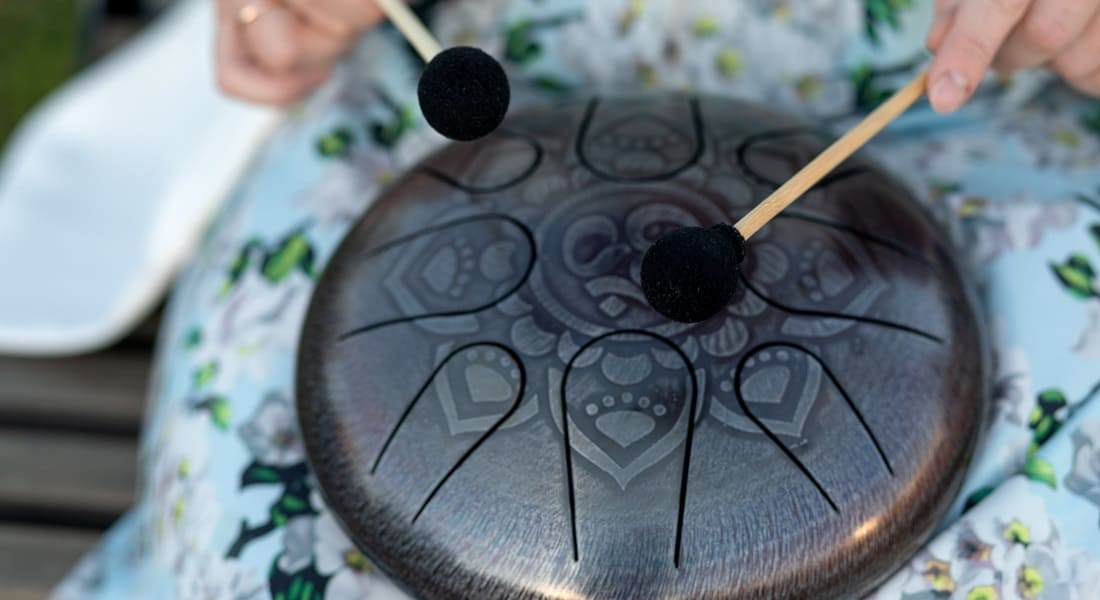
It’s no coincidence that, for several decades now, pupils from nursery through secondary school have been required to take music classes. Indeed, various scientific studies on this subject have highlighted the benefits of learning to sing or play a musical instrument at a young age. Music stimulates the brain and supports children’s cognitive growth.
Singing lessons strengthen memory, as does playing an instrument, since pupils must remember where each note is located. It also enhances fine motor skills, as many required movements are precise and take time to master. A 2014 University of Chicago study showed that children who were introduced to music education over a two-year period experienced positive neurobiological changes in their brains. Not only did their learning ability improve, but their language acquisition skills also improved.
There’s no doubt that music has a positive impact on a child’s education. So let’s explore why the tongue drum deserves a spot in nursery and primary school classrooms.

Why use the tongue drum specifically in schools?
It turns out that the tongue drum has undeniable qualities when it comes to introducing pupils to the world of music. First of all, it’s a very easy instrument to use. The tongue drum works a bit like a xylophone. In other words, each cut on the top surface produces a different note depending on its size. This means it’s impossible to play a wrong note because the instrument is tuned during production. Pupils simply strike a tongue to get the same note every time, without risking an unpleasant sound, which can really build confidence.
However, the resemblance to the xylophone ends there. While a xylophone can produce fairly shrill tones that quickly become tiring at home or in a classroom, the tongue drum’s resonant body naturally softens the vibrations, creating gentle, relaxing sounds. Additionally, the steel tongue drum has no sharp edges, greatly reducing the risk of injury to young children. It’s made entirely of metal, so it’s durable enough to handle frequent classroom use. Finally, it’s an object that sparks curiosity in children, who will inevitably want to touch it and play a few notes.

So why is the tongue drum still so rare in schools today? Quite simply because it is a relatively new instrument in terms of its design. The first prototype was designed in 2004 from a recycled gas cylinder, and it spread for years mainly through hobbyists who built their own tongue drums from salvaged materials. Only recently have professionals recognised the instrument’s potential and started offering models for sale. Chances are the tongue drum will gradually find its place in educational settings—and even nurseries.
Which tongue drum should you choose for school children?
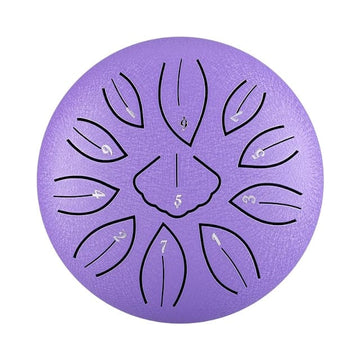
When selecting a tongue drum for pupils, remember that simplicity is key. Some models offer many notes or specialised tunings intended for adults—it’s best to avoid those. The most beneficial option for children is a tongue drum with around 8 notes tuned to the C major scale, which is the most commonly used scale for beginners on virtually any instrument.
Note that there are also pentatonic tank drums, which have a scale with only five different notes. This type of instrument is great for players who want to improvise instinctively, but it’s not suitable at all if your goal is to play familiar songs like nursery rhymes. If that’s one of your goals with a tongue drum, don’t choose a pentatonic model.
A smaller instrument will also be more suitable for children, who will be able to handle it when taking it out of a cupboard or putting it away. Larger models weigh more than 3 kg, so you will constantly have to help younger children. I therefore recommend choosing a diameter of no more than 15 cm, or at most 20 cm, to ensure that the instrument remains accessible to everyone.
What activities can you offer nursery and primary school pupils with this instrument?
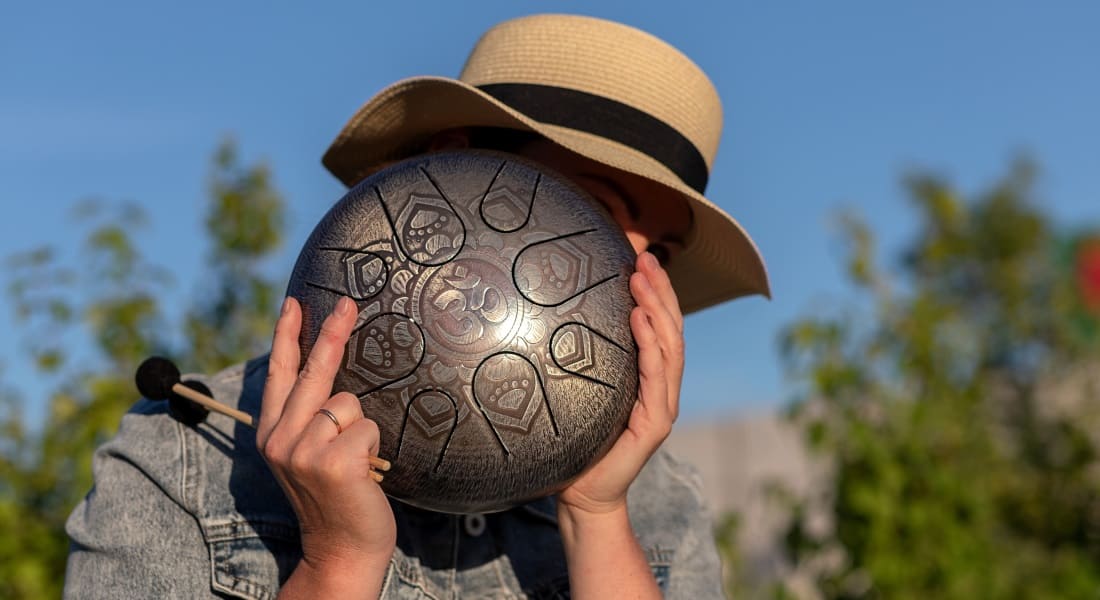
As with any instrument, there are several exercises you can give children to support their intellectual development. Very simply, the tongue drum can be left out for free use so pupils can explore it during a rainy-day break time. It can also be used during a calm-down period after a more energetic activity to help refocus restless kids.
You can also take a more guided approach by suggesting that they play a familiar tune such as Happy Birthday. To make it easier, you can place coloured stickers on the different tongues of the instrument for children who don’t read numbers yet. This helps them find their place and reproduce the melody more easily.
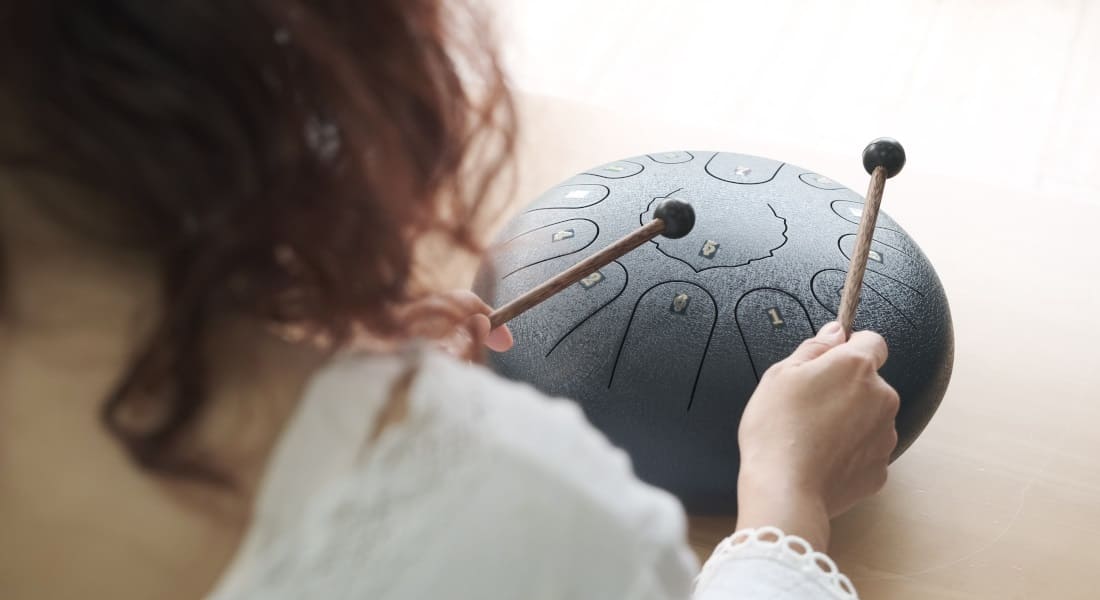
Finally, you can invite pupils to compose their own piece by giving them a short prep time and setting a maximum number of strikes—for example, 20—using the pair of mallets. They’ll explore what the tongue drum can do and present the composition that sounds most harmonious to them, while also practising counting. You’ll be pleasantly surprised by the result—I guarantee it. Read this article to learn how to play the tongue drum. You’ll also see techniques used with hands or mallets that you can pass on to children in a simplified way.
Encourage musical awareness in young children with the steel tongue drum
Though the tongue drum remains largely unknown to the general public, it offers undeniable advantages for music education. Whether they’re primary school or nursery pupils, everyone can benefit from this instrument’s soothing sounds. Now you know which model of tongue drum is perfect for children, and you can offer them this original activity.
However, the tongue drum’s rarity remains its biggest drawback. Few shops carry them and, often, only a small number of models are truly designed for younger kids. That’s why we recommend shopping at Instruments du Monde, which offers dozens of tongue drums, including several specifically designed for children, such as this 8-note model.
Get your tongue drum now by clicking on the image below:

Do you know the differences between the terms tongue drum, hank drum, tank drum, and hang drum? All of these words refer to musical instruments, but not necessarily the same ones. Find out by reading this comprehensive article. Or learn more about tongue drums by consulting our guide, which contains all the information you need.


