



Written by Ambre Montespan - Updated on Sep 25, 2026

Table of contents:
Have you heard of the djembe and the tam-tam? Want to learn more about these two percussion instruments? Wondering what sets these two African drums apart?
I first discovered the djembe and the tam-tam more than 20 years ago, and I quickly realized that these two instruments are very similar, although a few key differences do stand out. After doing extensive research, I now have plenty of information on the subject, and I’m delighted to share it with you in this article.
Although both belong to the drum family, the djembe and the tam-tam differ significantly in certain respects, such as their origins, physical characteristics, and the sounds they produce.
By the end of this article, you’ll have a clearer understanding of the djembe and the tam-tam. In particular, you’ll discover:
- The different origins of the djembe and the tam-tam
- The differences between the traditional uses of these two drums
- The differences in the physical characteristics of the djembe and the tam-tam
- How the sounds produced by these two percussion instruments differ
With all the insights you’ll gain from this article, you’ll be able to tell these two drums apart. That way, you won’t second-guess yourself when it’s time to recognize one or the other.
Now, let’s explore the differences between the djembe and the tam-tam.
Djembe and tam-tam: two musical instruments with different origins
First of all, it’s worth noting that in some African cultures, the term "tam-tam" is sometimes used generically to refer to several types of African drums or membranophones. In that broad sense, the djembe could be considered part of the “tam-tam” family. Additionally, “tam-tam” is also the name given to an Asian instrument resembling a gong, but that instrument is beyond the scope of this article. Finally, “tam-tam” can also refer to an African instrument more commonly known as “dum dum,” which traditionally accompanies the djembe—and it is this latter meaning that we will focus on.
As I mentioned earlier, there are notable differences between the djembe and the tam-tam, even though the two share certain similarities as percussion instruments. The djembe and the tam-tam are two African drums that differ from each other, especially when it comes to their origins. To understand what sets these two African instruments apart, it helps to look at the history and culture of the peoples who created them.
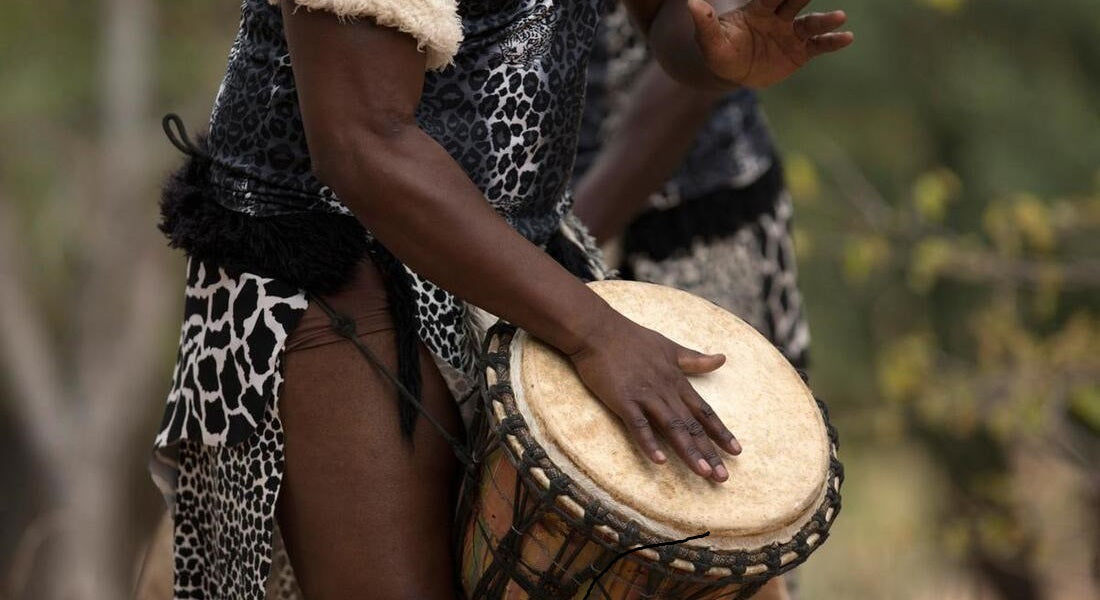
The djembe originated with the Mandinka peoples of West Africa, particularly in the region encompassing Mali, Guinea, Côte d’Ivoire, and Burkina Faso. Its history dates back about 700 years, and it is considered one of the most iconic percussion instruments of this region. Crafted from a hollowed-out tree trunk—often mahogany or acacia—it features a distinctive goblet or mortar shape and is covered with goatskin secured by ropes and iron hoops. In contrast, the tam-tam is believed to originate from the coastal regions of West and Central Africa and is usually crafted from hollow tree trunks, resulting in a more cylindrical shape. So you can see that, despite their similarities, each drum has its own distinct roots.
Different uses for these two African drums
There is a notable difference between the use of the djembe and the tam-tam. These two African drums are not used in the same way or for the same purposes. The djembe and tam-tam have had different functions in Africa’s past and continue to play distinct roles today.
The historical functions of these two percussion instruments
The djembe, as a musical instrument, has historically been used to celebrate life and accompany moments of joy and rejoicing within Mandinka communities. It plays an essential role in wedding ceremonies, baptisms, festivals, and rites of passage. Its rich, versatile sound lets it adapt to a wide range of traditional and contemporary music styles—making it the kind of drum that fits almost anywhere.
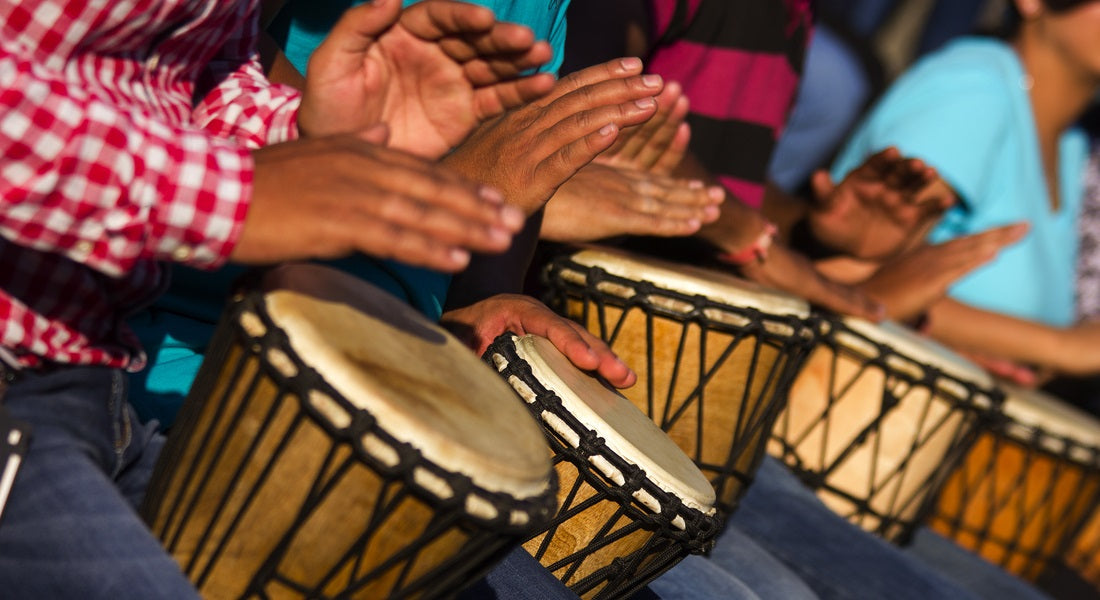
The tam-tam, on the other hand, played a fundamental role in long-distance communication. It was used to transmit messages, alerts, or assembly signals within villages and between villages in the same area. The tam-tam was also used as a war drum. Indeed, some African peoples used its sound to signal a declaration of war. In addition, the tam-tam also had a sacred dimension, being used to establish a spiritual connection with the supernatural world during religious and shamanic practices.
The current roles played by these two African drums
Today, the djembe has become an iconic percussion instrument, recognized and played around the world. It is often used in modern percussion ensembles, world music groups, and even contemporary dance performances. Its international popularity makes it a musical ambassador for African culture.
The tam-tam, on the other hand, has not achieved the same notoriety as the djembe and retains its importance in certain regions of Africa, particularly for communities that maintain traditional modes of communication. However, its role has gradually transformed into that of a simple musical instrument, largely due to advances in communication technologies that have rendered it obsolete.
So, although the djembe and the tam-tam share deep African roots as African percussion instruments, their cultural, historical, and contemporary uses reflect significant differences.
What are the physical differences between the djembe and the tam-tam?
I’ve already touched on some of these elements a few paragraphs above, but it’s worth noting certain differences between the physical characteristics of the djembe and those of the tam-tam.
The djembe is a percussion instrument with a distinctive goblet shape. It is an African percussion instrument renowned for its wooden body of varying thickness, which greatly influences its sound. The precise mounting of the goatskin on this body and the tension of the rope lacing are essential to creating the characteristic sound of the djembe. The combination of these elements creates a versatile instrument that can produce a wide range of tones, offering percussionists a rich and varied sound palette. Crafted from a hollowed-out tree trunk and covered with goat or antelope skin, it delivers a resonant voice. Its distinctive shape includes a hollow bottom and upward-sloping sides, allowing it to produce a variety of sounds depending on how it is played. Typically, this traditional instrument measures about 24 in (60 cm) high and about 12 in (30 cm) in diameter. It is played with the hands, and each area of the skin produces a different sound, offering a rich range of musical possibilities.
The tam-tam, on the other hand, has distinct physical characteristics. It consists of a cylindrical solid wood shell, which is covered with goat or antelope skin stretched over the ends. The tam-tam is much larger than the djembe, measuring about 40 in (1 m) in length, although it is possible to find examples with a diameter of just 4 in (10 cm). Unlike the djembe, its cylindrical shape is consistent throughout its length. This African musical instrument is played with a pair of drumsticks or a single mallet. Tam-tam players often use wooden sticks to strike the skin stretched across both sides of the drum, creating a powerful and hypnotic rhythm.
In short, while the djembe and the tam-tam are both African drums, they can also differ in their lacing, tension, length, and diameter. Additionally, the animal skins and woods used in each drum vary, since specific types of skin and wood are chosen to achieve a particular sound for a given drum.
Is there a difference in sound between these two types of drums?
Apart from all the differences we have discussed between the djembe and the tam-tam, it should be noted that these two musical instruments also produce different ranges of sound.
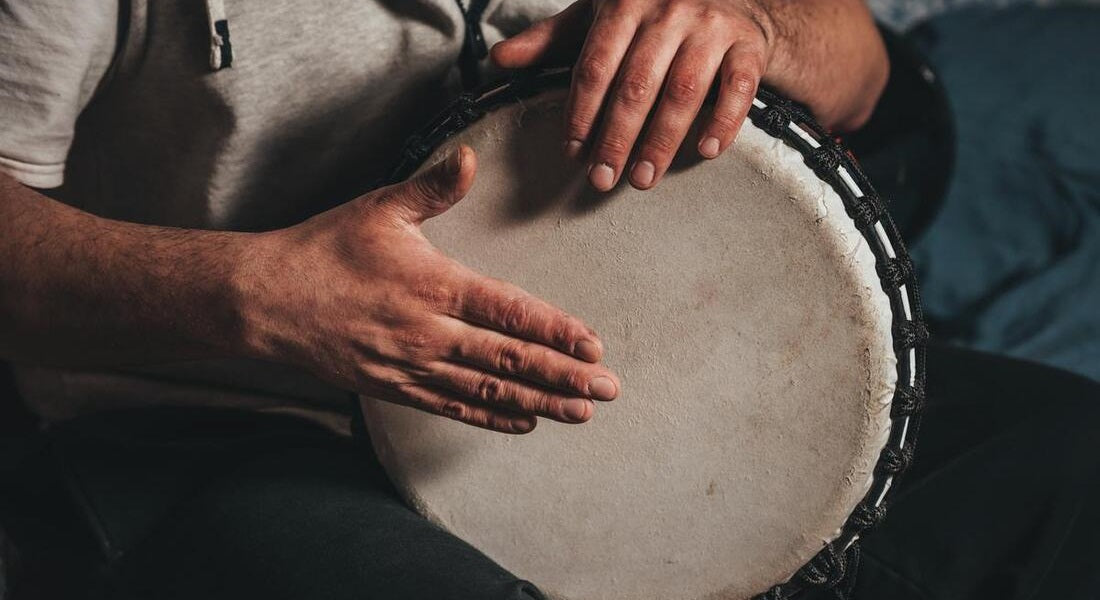
The djembe offers an exceptionally wide range of sounds. Its chalice design provides great sonic versatility, allowing the djembe to produce deep bass tones that resonate like a heartbeat, as well as crisp high tones that cut through the air. This is also what gives the djembe a central place in African percussion ensembles. Djembes are often considered high-quality musical instruments, which is reflected in their price. Its versatility lets it play a wide range of rhythms and melodies, making it the centerpiece of many musical styles. In addition, the playing technique varies depending on hand placement on the head, offering a rich range of sound possibilities. Listen to a djembe player by watching the video below:
The tam-tam, for its part, is a percussion instrument renowned for its deep, low, resonant sound. Its unique tubular design allows the tam-tam to produce a deep, low, resonant sound. Its imposing size gives it serious sound power, and it is often used to mark the foundational pulse in African percussion ensembles. It produces powerful low frequencies that can be heard for several miles (several kilometers). That’s also why some peoples used it in the past to announce war. While the tam-tam offers less tonal variety than the djembe, its sheer presence is undeniable, providing a solid rhythmic base in African percussion ensembles. Take a moment to appreciate a tam-tam performer by watching the video below:
It’s worth noting that the djembe and the tam-tam, while both part of the rich African musical tradition, are distinguished by their unique sounds. The djembe shines with its versatility and ability to produce a variety of tones, while the tam-tam stands out for its depth and impressive sound power. Each of these instruments occupies a special place in African music, bringing its own color and rhythm to the continent’s melodies.
Explore African musical culture with a djembe
Ultimately, it’s important to remember that African music is a vibrant mosaic of sounds and rhythms, of which the djembe and tam-tam are two of its most precious gems. Each instrument delivers a unique musical experience—from the djembe’s dynamic versatility to the tam-tam’s resonant power. Both are crafted from wood, typically covered with goatskin, and hail from the African continent. Despite all the similarities between these two African drums, they still have notable differences, which I have taken care to detail in this article. Now you’ll be able to distinguish between these two drums at a glance thanks to what you’ve learned here.
However, if you’re a music lover seeking a deeper connection to African traditions, the djembe is often the better choice over the tam-tam thanks to its sonic versatility and ease of transport. This African instrument has several distinctive features and will allow you to explore an impressive range of sounds and rhythms, whether you are an experienced musician or an enthusiastic beginner. Treat yourself to a beautiful traditional djembe from the Instruments du Monde store. You’ll have a wonderful time exploring the musical richness of Africa.
Browse our fabulous collection of djembes to find the instrument of your dreams.
You may not know it, but playing the djembe has many benefits for the body and mind of musicians who practice regularly. Find out why you should learn to play the djembe by reading our article, which summarizes all the benefits of this percussion instrument.
