



Written by Ambre Montespan - Updated on Sep 25, 2026

Table of contents:
Want to know how to draw a djembe? What tools do you need to sketch this classic African drum? What are the steps to learn how to draw this percussion instrument? How can you easily create a nice sketch of a djembe?
Since I discovered the djembe about 10 years ago, I’ve enjoyed drawing this magnificent instrument as a way to unwind. In this article, I’ll walk you through my personal technique so you can create a beautiful djembe drawing, too.
To draw a djembe well, you’ll need to gather your materials, observe a real instrument beforehand, and begin with a sketch before refining the details, shading, texture, and color.
By reading this article in its entirety, you’ll get all the information you need to draw a djembe. In particular, you’ll discover:
- The tools you need to draw a djembe
- The different steps to successfully complete your illustration
- Tips for adding artistic elements to this African drum
- Practical advice for successfully drawing a djembe
When you finish reading, you’ll be ready to create a beautiful djembe drawing and share this method with friends and family.
Now it’s time to discover how to draw a djembe together!
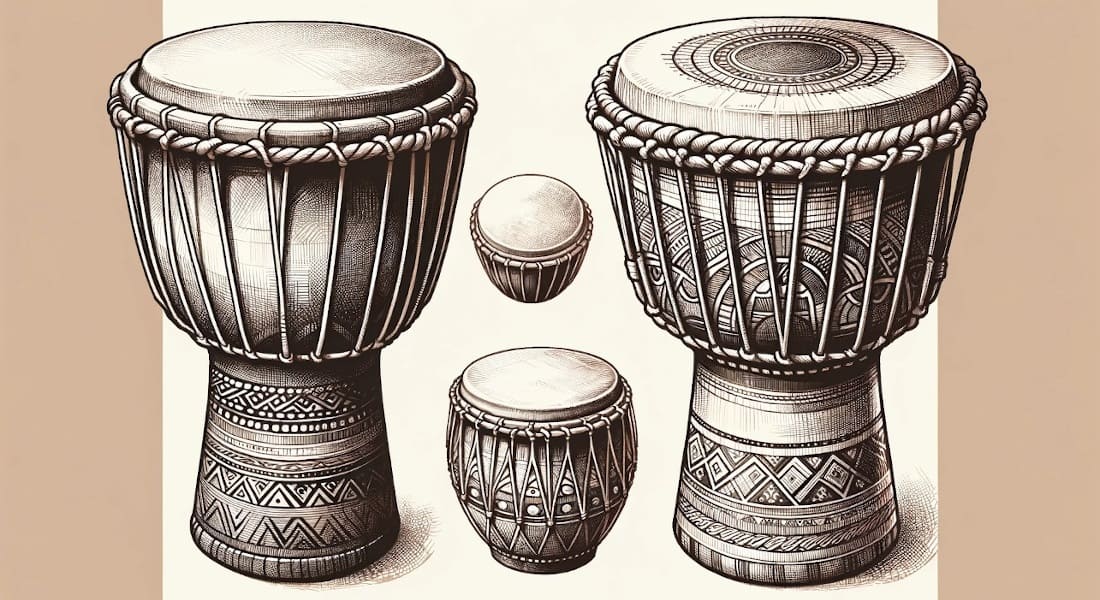
What tools do you need to draw a djembe?
To create a detailed and accurate illustration of a djembe, it’s essential to have the right materials. Start by choosing your surface, which is usually high-quality drawing paper. The paper you select will depend on your preferred medium—whether pencil, pastel, watercolor, or other techniques—so make sure it matches the texture and weight you need, since that will directly affect your final result.
Drawing pencils are a must for clean lines and detailed shading. Use pencils of varying degrees of hardness to create different line weights and subtle gradations. A high-quality eraser is equally important, as it lets you correct mistakes, refine shapes, and add highlights to your drawing.
Beyond these essentials, a few tools can help you stay precise. A ruler makes straight lines easy, while a compass helps you draw clean circles, such as the one that forms the base of the djembe. If you plan to cut out or mount your drawing, scissors or a craft knife will help you get crisp edges.
A drawing board is recommended to keep your paper flat and stable during the creative process. Lighting is often overlooked, but it matters a lot. A good light source helps you work more accurately, spot small details, and avoid unwanted shadows.
Finally, if you plan to keep or display your work, a fixative can help protect it from smudges and damage. Choose a fixative that matches your medium, as some products can alter colors or the texture of your drawing.
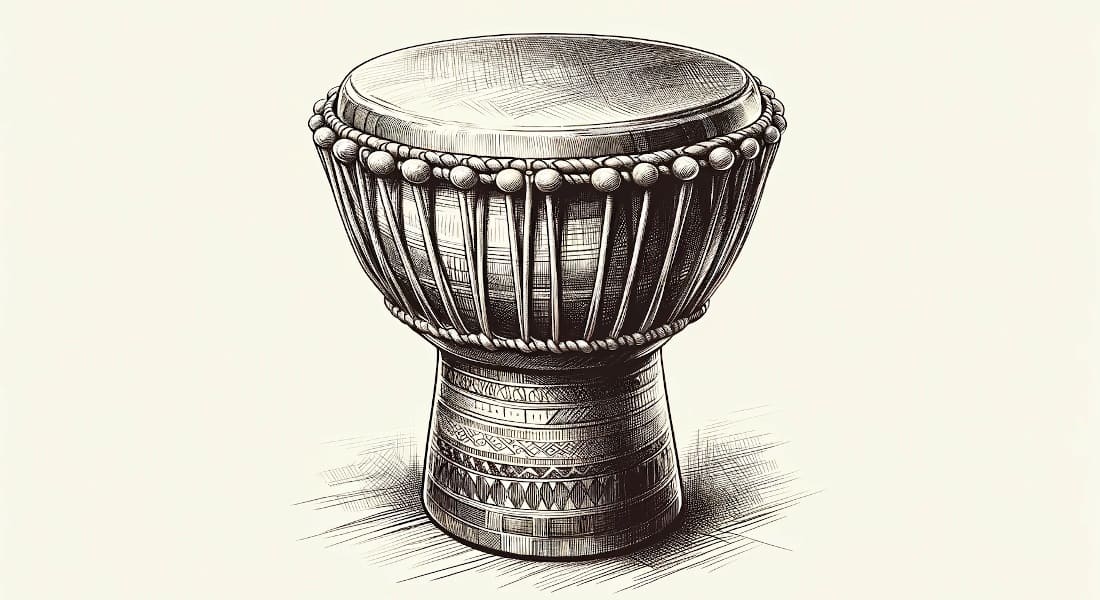
How do you sketch the basic shapes of this musical instrument?
To create a convincing sketch of the basic shapes of a djembe in your drawing, simply follow a few simple steps:
- First, make sure you have a comfortable, well-lit workspace. Before you start drawing, take a moment to carefully observe a real djembe or refer to high-quality images of the instrument. This will help you understand its overall structure and capture key details.
- Start by sketching the main body of the djembe, with a wider top and a narrower bottom. Next, add the conical section below it. Be sure to maintain the correct proportions and smooth curves so your drawing feels true to the instrument.
- Next, draw the upper rim where the drumhead is stretched. Keep it centered and proportionate to the body so your sketch looks balanced.
- Add the tension ropes that run from the top circle down toward the base of the djembe. Draw them as straight or slightly curved lines, making them follow the instrument’s form. The tension ropes are a distinctive feature of the djembe, so it is crucial to represent them accurately.
- To refine your sketch, examine it carefully and make any necessary adjustments. Correct any proportions, shapes, or details that may not match your vision of the djembe. Finally, you can finalize your drawing by adding shadows and more precise details, using pencils of varying degrees of hardness.
By following these steps methodically and focusing on the basic shapes, you’ll be able to create a successful sketch of a djembe—a solid foundation for a more detailed, artistic drawing if you wish. The art of drawing lies in patience and practice, so feel free to hone your skills over time.
For additional guidance, you can also watch this video, which walks you step by step through the process of creating a djembe sketch:
How do you draw the details of the djembe?
When creating a drawing of a djembe, adding details is essential to make this African percussion instrument look more realistic and authentic. Details such as the wood grain on the body, decorative rings, tension ropes, and geometric patterns can enrich your illustration and make it feel true to life.
The wood grain is one of the djembe’s signature features, and by drawing it carefully, you can capture the texture and warmth of the material. Decorative rings are often found on traditional djembes, adding an artistic and cultural touch to the instrument. The tension ropes, meanwhile, are crucial for holding the drumhead in place, and drawing them accurately adds authenticity to your sketch.
The drumhead is an essential part of the instrument, and by depicting subtle texture variations created by tension, you can boost the realism of your drawing. The geometric patterns that adorn some traditional djembes are also worth attention, since they reflect the cultural aesthetics of this drum.
Shadows and reflections add depth and realism to your drawing, helping the instrument feel three-dimensional and more convincing. When you include these details, your djembe drawing comes to life and tells a richer visual story that reflects the essence of this African percussion instrument. Accuracy in how you represent these elements is crucial for a realistic, believable result.
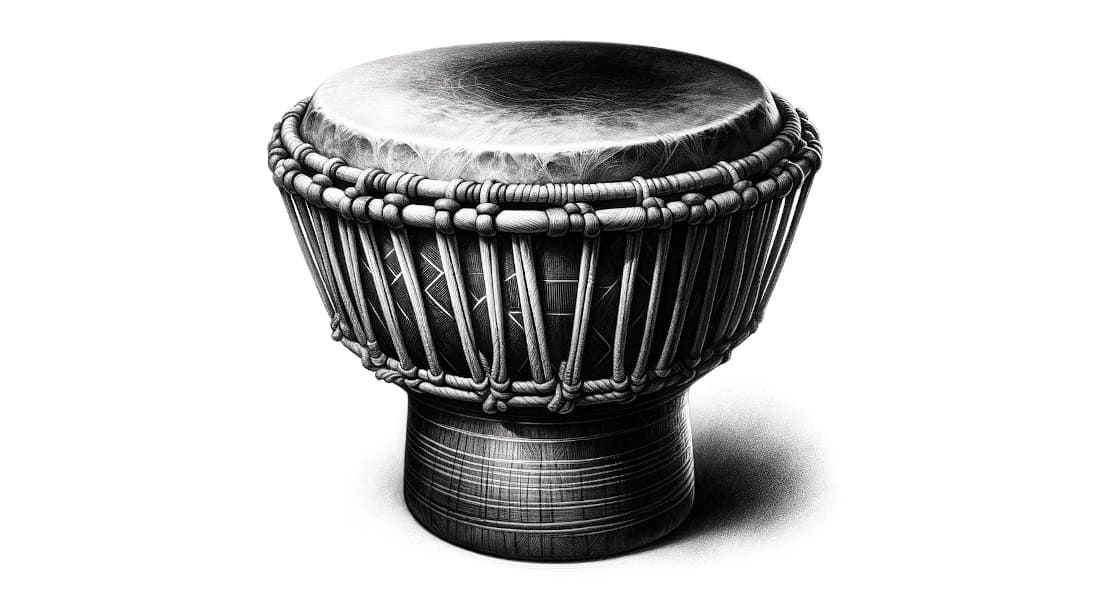
Should you add shading and texture to this African drum?
Adding shading and texture is an essential step in creating a realistic drawing. These elements give depth to your illustration by simulating variations in light and texture on different parts of the instrument. Here's how to achieve convincing shading and texture:
- Start with careful observation. Before you begin, take a moment to study a real djembe or high-quality images of the instrument. This step helps you see how light interacts with the djembe’s surfaces and how the wood and drumhead look under different lighting.
- To create shading, use a range of drawing pencils with varying degrees of hardness. Harder pencils are best for fine details, while softer pencils let you add darker shading and smooth gradients. Follow the direction of the light, keeping lit areas lighter and shaded areas darker.
- Blending is an important technique for creating smooth transitions between shaded and light areas. You can use a blending stump or even your fingers to soften the pencil marks and create gradual, realistic shading.
- To render wood texture, draw fine, irregular lines that mimic the grain, varying your pencil pressure to create lighter and darker areas. For the texture of the taut drumhead, use finer, closer lines to suggest the surface.
- Finally, add shadows and highlights to give your drawing depth. Shadows simulate shaded areas based on your light source, while highlights suggest where light hits the body or other parts of the djembe.
By combining these shading and texturing techniques with careful observation and regular practice, you’ll be able to create djembe drawings that capture the beauty and authenticity of this African percussion instrument. Shading and texture add a layer of realism and depth to your work, making it visually appealing and captivating.
How to color a djembe sketch?
When it comes to coloring and highlighting a djembe drawing, it is essential to follow a series of steps to bring your illustration to life. Preparation begins with choosing colors that accurately reproduce the appearance of the instrument. Once you have the basic colors, you can start applying them to the different parts of the djembe.
Once the base colors are in place, move on to shading and highlighting. Shading involves adding darker tones to areas hidden from light, while highlighting uses lighter colors to accent the illuminated parts of the instrument. Smooth transitions between shadows and highlights are key to a realistic look.
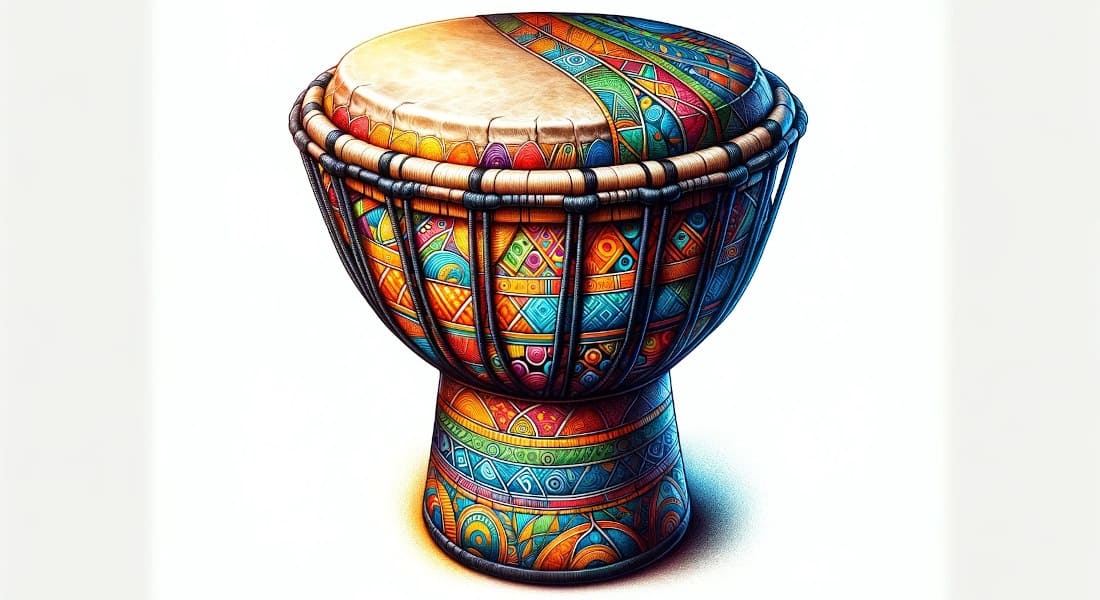
Texture plays an important role in coloring and highlighting. Textured details, such as the grain of the wood on the body or the taut surface of the drumhead, must be accurately represented to create a realistic illustration. If the djembe has decorative patterns, their precision and symmetry are also essential.
Finally, keep in mind that regular practice is the key to perfecting your coloring and highlighting skills. The more you practice, the more you will develop your ability to bring your djembe drawings to life and capture their authenticity.
Add artistic elements to your drum illustration
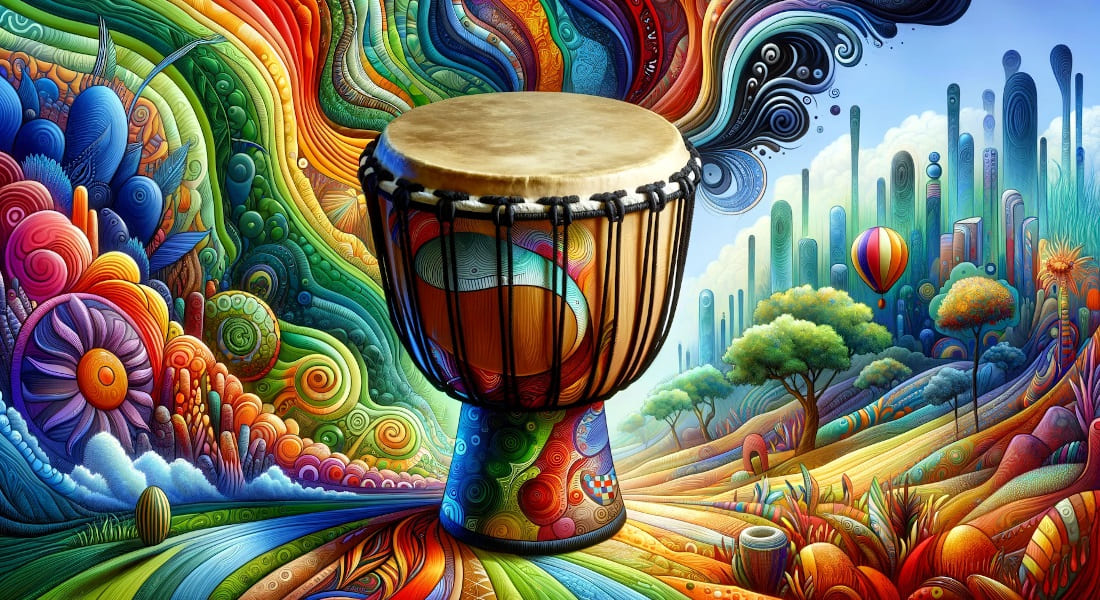
When approaching the creation of a djembe drawing, adding artistic elements is a key step in bringing originality and creativity to your work. This process begins with choosing an artistic style, which can range from realism to abstraction. Customizing the look of the djembe is a popular way to add an artistic touch. You can incorporate patterns, colors, and details that highlight your creativity and give your drawing a unique dimension. Experimenting with color plays a central role here, whether you try unconventional palettes or explore bold gradients.
Texture is also key to adding depth to an artistic drawing. Special techniques, such as hatching or irregular linework, can help you create original textures, whether you’re suggesting the wood grain on the djembe’s body or the surface of the stretched drumhead. Composition matters, too. You can experiment with the placement of the djembe on the page, as well as unusual viewing angles to create a captivating visual effect. Mixed media, which combines several artistic mediums, is another great way to explore new creative directions.
Making room for personal expression is essential. Your artistic sensibility can come through in your choice of details, colors, and techniques, giving your drawing a signature style. Adding artistic elements to a djembe drawing is a way to blend the tradition of this instrument with your own creative vision. Done well, it can turn your artwork into an original and captivating visual piece while preserving the beauty and essence of the instrument.
Some practical tips for a successful djembe drawing
Creating a successful drawing relies on a few fundamental principles. For your best results, follow the practical tips below.
- Planning and preparation: Before you begin, think through your drawing. Set your goals, choose the style you want, and gather the tools you’ll need, whether paper, pencils, paint, or drawing software.
- Careful observation: Take time to observe your subject, whether it’s a djembe, a natural scene, or any other reference. Understanding shape, proportions, colors, and details accurately is essential.
- Preliminary sketches: Before committing fully to your final drawing, make preliminary sketches to define composition, proportions, and key elements. This helps you adjust as you go.
- Master the basics: Make sure you have a solid grasp of drawing fundamentals such as perspective, composition, shading, and proportions. These skills are essential for a realistic, balanced drawing.
- Keep a light hand: Use a light touch for early sketches and initial outlines. This makes it easier to erase and correct without damaging the paper.
- Use of values and shading: Shading and values are crucial for realism. Use darker values for shaded areas and lighter values for lit areas.
- Colors and textures: If you’re working in color, explore techniques for blending, layering, and using color realistically. Texture matters, too, so experiment with different strokes and mark-making to bring your drawing to life.
- Patience and practice: Patience is essential in drawing. Take your time to refine your work, and don’t hesitate to redo certain parts if necessary. Regular practice is the key to improving your skills.
- Seek constructive criticism: Share your work with other artists or friends to get constructive feedback. Outside input can help you spot areas to improve.
- Stay true to your style: While experimentation is important, stay true to your personal artistic style. Your unique style is what sets you apart as an artist.
- Keep a sketchbook: Always carry a sketchbook with you to capture spontaneous ideas and practice regularly, even when you’re on the go.
- Be patient and persistent: Drawing is a skill that improves over time. Don’t get discouraged by mistakes—use them as learning opportunities.
Move from fiction to reality by treating yourself to a djembe
The djembe, with its elegant shape and cultural richness, is an inexhaustible source of inspiration for artists, whether beginners or experienced. By exploring the steps involved in creating a djembe drawing, we have discovered together the artistic universe of this iconic African percussion instrument. Through this article, you now know how to draw a djembe according to your own artistic vision.
However, it’s important to remember that the djembe isn’t just a drawing subject. It’s a living musical instrument, pulsing with tradition and creativity. If your artistic journey is bringing you closer to the djembe, it may be time to consider getting a real drum. Visit the trusted Instrument du Monde store today to purchase an excellent solid wood djembe. It can become a faithful musical companion, inviting you to explore a world of rhythms, melodies, and endless artistic expression.
Browse our collection of djembes today and find the model that truly resonates with you.
To find out where to buy the best djembes, check out our other article. You’ll find all the places you need to shop for the best percussion instrument possible.
