



Written by Ambre Montespan on May 12, 2025 · Updated on Oct 15, 2026

Table of contents:
Have you just discovered the artistic talents of Reo Matsumoto, a Japanese handpan player who also beatboxes? Want to learn more about him? How did he discover the Hang drum? And how did this percussionist become so well-known?
After stumbling across Reo Matsumoto by chance about 10 years ago, I kept following his career because I find his songs genuinely inspiring. They’ve brought a real breath of fresh air to the handpan community, so I’m excited to share everything I’ve learned about him.
By reading this article, you will learn:
- How Reo Matsumoto’s journey has evolved alongside the handpan
- His best-known tracks
By the end, you’ll know everything there is to know about this musician who has helped promote the handpan in a big way throughout Japan.
Let’s dive right into his biography.
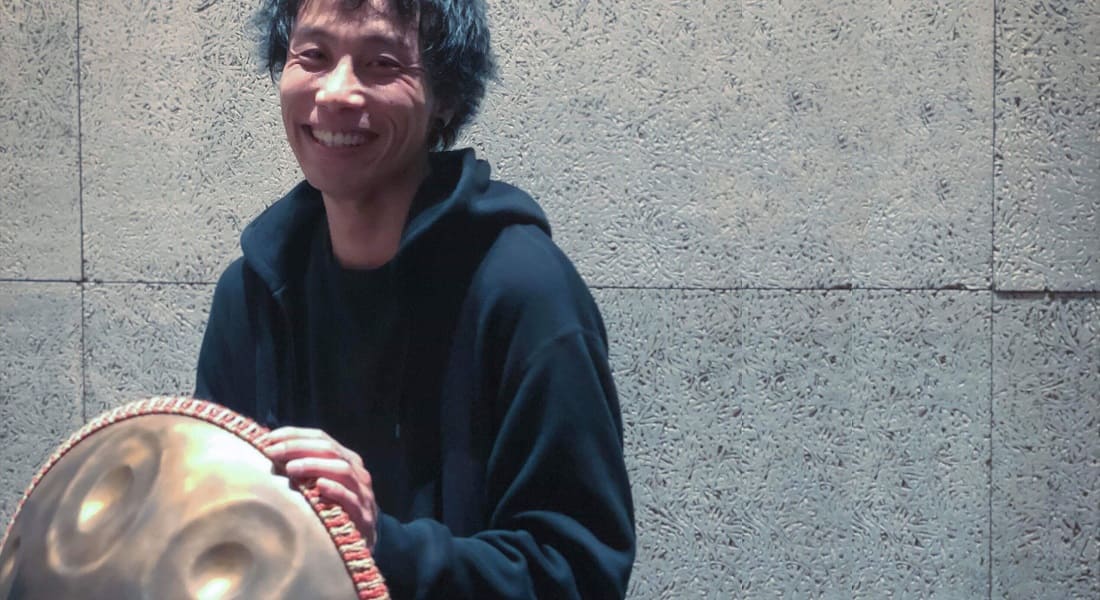
How did Reo Matsumoto become famous playing the handpan?
Reo Matsumoto is a Japanese musician born on January 24, 1988, in the city of Yokohama. Interested in music from an early age, he played every piece in a 100-page music book on the recorder in fourth grade, earning praise from his teacher. That’s how he fell in love with music. But in fifth grade, during a music class, he improvised on the xylophone, and his teacher harshly reprimanded him for it. He then lost all interest in music. It wasn’t until 2005 that he discovered a passion for beatboxing, taking to the stage just two months after he found it. After that, mainly in Japan, he gave more than 150 concerts, organized various workshops, and took part in beatbox battles against dozens of other artists. In 2009, he participated in the London BeatBox Convention and the World BeatBox Championship with his group "Humanism," and in 2010, he won the Japanese beatbox championship.
In 2010, he left his music career in Japan behind and set out as a nomadic musician around the world. He began his journey in Melbourne, Australia, with just 3,000 yen in his pocket—just under €20—plus a microphone and a speaker. Thanks to the money he earned busking, he trained for three years, playing mainly in India, New York, and Melbourne. He took part in numerous music festivals, and it was at one of them that he discovered the handpan. He developed such a strong connection with the instrument that he quickly got one to add to his sound palette.
In 2013, he formed the group Matsumoto-zoku in Melbourne with Koji Matsumoto, another Japanese handpan and didgeridoo player he is not related to, then created another group he named BREATH TRIO. That same year, he released two albums and sold over 8,000 copies, returning to the stage after performing in the streets. In his compositions, beatboxing blends beautifully with the handpan, as you can see in the video below from one of Matsumoto-zoku's performances:
Between 2013 and 2015, he performed every year at Ozora Festival, one of Europe’s largest psychedelic festivals, where he played several of his tracks. Advocating “a new form of music integrating beatboxing and music close to everyday life,” he has released six CDs since 2013, sold over 10,000 copies, toured four times in Europe, three times in Russia, and four times in Japan, and given guest concerts in 41 cities across 14 countries worldwide.
Combining organic rhythms produced by the human mouth with instruments such as the handpan and the didgeridoo, he has created a musical style that goes beyond human beatboxing, offering music without borders that blends chill-out, ambient, psychedelic, dance, hip-hop, and drum and bass. With his band Matsumoto-zoku, he has created a new genre of alternative and organic music that thrills festival-goers around the world. Reo Matsumoto is also the organizer of the Tokyo HandPan Festival and the director of the Tokyo HandPan Lab, which regularly holds workshops and concerts in Tokyo. Finally, he has also collaborated with Sam Maher and Mumi, other well-known handpan players.
What are the most popular songs by this Japanese Hang drum musician?
Reo Matsumoto is one of those musicians who doesn’t really title his compositions. His most popular melody is simply called "Handpan in Singapore" and has racked up nearly 50,000 views so far. Several other tracks with tens of thousands of views are also available on his YouTube channel. You can enjoy one of his songs in the video below:
Recreate Reo Matsumoto's style with a good percussion instrument
Reo Matsumoto has developed a unique sound, brilliantly blending beatbox rhythms with the melodic tones of the handpan. The result is hypnotic tracks that have won over a huge number of listeners. With everything covered in this article, you now have a clear picture of the path this Japanese musician took to become a global icon with his Hang.
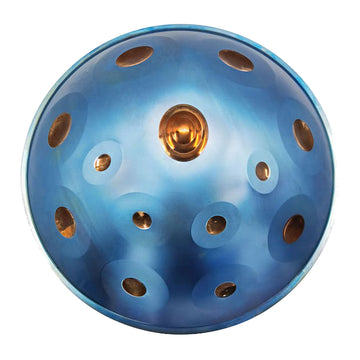
That said, Reo Matsumoto could only develop his talent with the help of a high-quality instrument. With that in mind, I recommend choosing a model from the Instruments du Monde store, which is sure to deliver a handpan with outstanding acoustics. That’s exactly the case with this luxury model featuring 13 notes, a ding, and gold-plated dimples.
Discover this excellent handpan by clicking on the image below:
Continuing with our aim of introducing you to the best handpan players around the world, we now head to Portugal to meet Kabeção. This musician played a major role in popularizing the instrument in his home country with a performance on a hit TV show in 2015.


