



Written by Ambre Montespan - Updated on Sep 25, 2026

Table of contents:
Have you heard or read that Tibetan bowls are made from 7 metals? Are you wondering which metals they are? Why is this musical instrument designed this way? What does it mean in Tibetan tradition? Is it really necessary to make a singing bowl using exactly these seven metals?
Having taken a keen interest in the various methods of manufacturing Tibetan bowls for over five years, I naturally became curious about their unusual composition. In this article, I’ll answer the main questions people ask about the metals used to make this instrument.
Tibetan bowls are traditionally made from the following seven metals: iron, lead, silver, gold, tin, copper, and mercury, which correspond, among other things, to the seven main chakras of the human body. However, you can also find bowls made from other alloys.
By reading this article, you will finally learn:
- Why the seven metals are used in the manufacture of Tibetan bowls
- What these seven metals are in detail
- How to tell if a bowl contains the seven metals and not another alloy
You’ll also see why, according to Tibetan tradition, it’s important for a Tibetan bowl to be made with these seven materials and no others.
Let’s explore the mysteries surrounding the manufacture of Tibetan bowls.
Why are singing bowls made from an alloy of seven metals?
For most beginners, it’s surprising to learn that Tibetan bowls are made from a blend of seven metals. While “Tibetan tradition” is often cited as the reason, the reality is more nuanced.

The composition of singing bowls is closely linked to Tibetan tradition
The seven-metal alloy used in the design of singing bowls is attributed to Tibetan tradition and linked to the symbolism of the number 7. Without getting too technical, each metal is said to correspond to one of the seven major chakras familiar to yoga practitioners, as well as the seven musical notes, the seven days of the week, and the seven celestial bodies of our solar system visible to the naked eye: the Sun, the Moon, and five planets. The belief is that combining these metals creates an alloy that gives the instrument therapeutic virtues, such as easing stress and insomnia, relieving migraines, and supporting the immune system.
As a result, most sellers and manufacturers of Tibetan bowls—whether in Kathmandu, Nepal, or running an online store—often point to Tibetan tradition to justify this alloy. However, historical and scientific research tells a different story, which we’ll explore below.
Have Tibetan bowls always been made from a mixture of seven metals?
All of the information gathered to date indicates that Tibetan bowls made from seven metals are a relatively recent phenomenon.
Various websites, and even some poorly informed physical stores, often claim that Tibetan bowls are objects dating back several millennia in order to give this instrument a traditional, folkloric, and ancient dimension. In reality, this is both true and false. It is true because metal bowls shaped like inverted bells are indeed very old, but it is false because historical documents from the period only indicate that these bowls were used in a culinary or religious context, with Buddhist monks using them to collect alms or offerings, for example, and not as musical instruments. In fact, when consulting the entire Tibetan archives concerning music, there is no mention of singing bowls. No account or history of the period refers to this instrument either. Explorers and journalists such as Perceval London, who studied Tibetan music and traditional medicine in the early 20th century, never mentioned singing bowls. However, a similar instrument existed in China and Japan; it was called dobachi or rin.
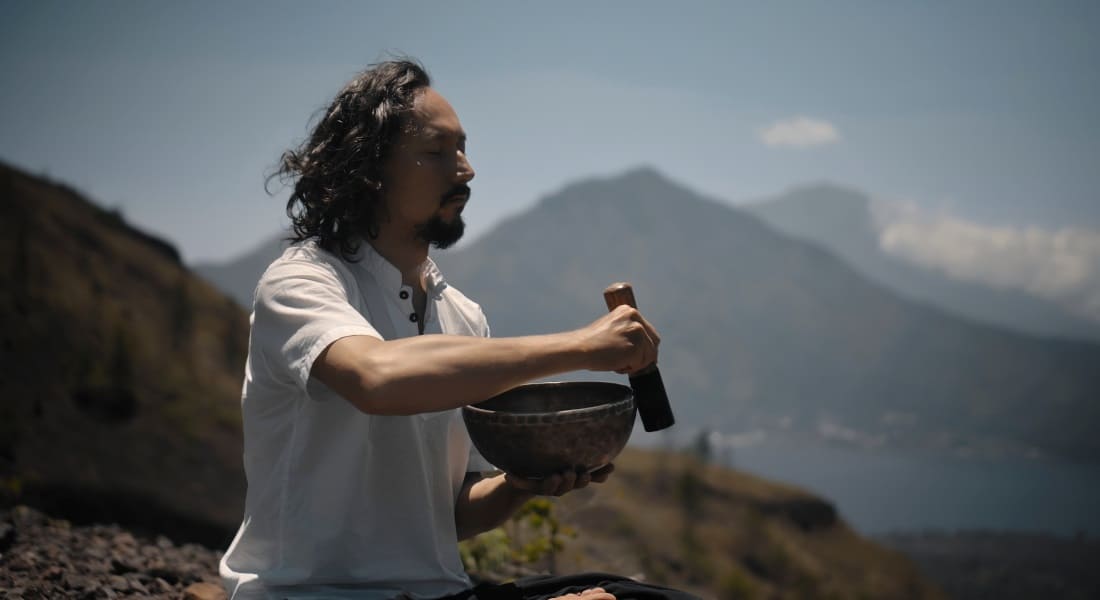
The first written records describing the use of metal bowls in Tibet specifically intended to produce sound date back to the 1960s, when tourism was booming. It is therefore highly likely that metal bowls traditionally used for cooking or religious purposes were repurposed as musical instruments by making them “sing” with a mallet.
To confirm this, a scientific team from Oxford University led by Dr. Peter Northrup analyzed the composition of more than 100 metal bowls similar to singing bowls from the Himalayan region in 2010. All of these bowls were manufactured between the 16th and 19th centuries. Metallurgical analysis revealed that almost all of these objects were made of bronze, an alloy of copper and tin. Traces of iron were also found in less than 2% of them, but no other metals were found.
Therefore, after considering all these factors, it is reasonable to doubt that the composition of Tibetan singing bowls made of seven metals is a genuine ancient tradition. Does this mean that all recent singing bowls are made of bronze? Absolutely not, as proven by this analysis report on relatively recent Tibetan bowls from Concordia University dated May 30, 1995, which you will find below:
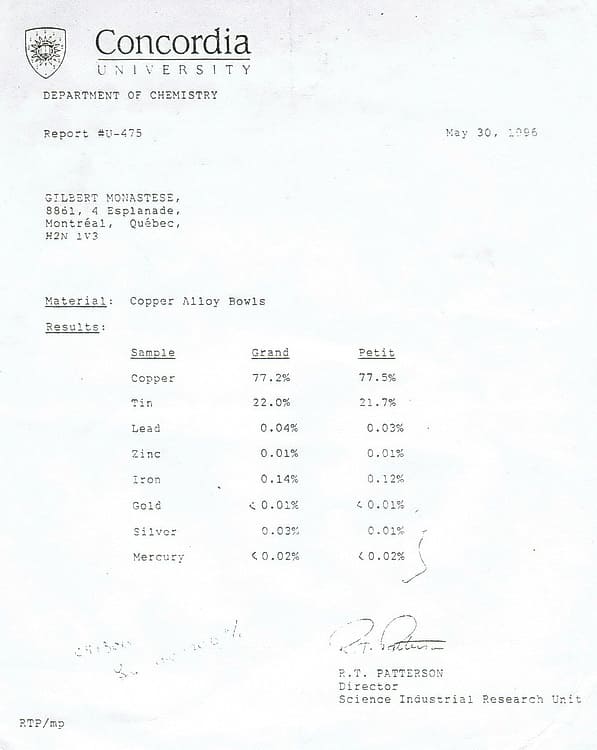
This report clearly states that the bowls analyzed are indeed composed of seven different metals, with a very high content of over 99% copper and tin. As a result, it’s likely that since the 1960s—fueled by tourists’ enthusiasm for Tibetan bowls—a legend formed around their composition, and some craftsmen began adding a few other metals in tiny amounts to their original bronze alloy to match the story.
In short, while we can’t say this with complete certainty, Tibetan bowls that weren’t meant for music were likely made of bronze until they transitioned to a seven-metal blend in the 1960s.
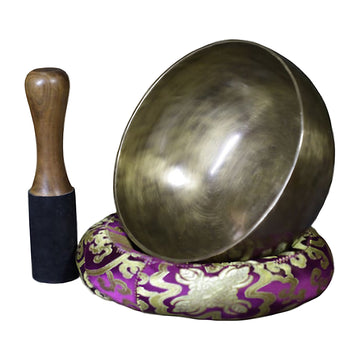
What are the seven metals that make up a Tibetan singing bowl and what are their meanings?
Now that we know Tibetan bowls crafted from an alloy of seven metals do indeed exist, let’s take a closer look at these metals and explore their meaning according to Tibetan tradition on a case-by-case basis.
Iron
Iron is the most common metal in everyday life, mainly in the form of alloys such as steel and cast iron. In the context of a Tibetan bowl, iron is linked to Muladhara, the first of the seven major chakras, also known as the root chakra, as it symbolizes the union between spirit and matter. This metal is also associated with Tuesday, the planet Mars, the color red, and the musical note C.
Silver
A precious and malleable metal, silver has been used since ancient times to make coins—hence the French expression avoir de l’argent (literally, to have money). In a Tibetan bowl, silver resonates with the sacral chakra, called Swadhisthana, which governs creative potential and sexual energy. Silver is represented by Monday, the Moon, the color orange, and the musical note D.
Gold
Since its discovery, gold has always played a decisive role in different civilizations due to its rarity. A noble and unalterable metal, gold is symbolized by Manipura, the third major chakra, which is the solar plexus chakra located approximately at the navel. This energy point influences self-confidence, charisma, and organizational skills. Gold is associated with Sunday, obviously with the Sun, which shines like this metal, with the color yellow, and with the musical note E.
Copper
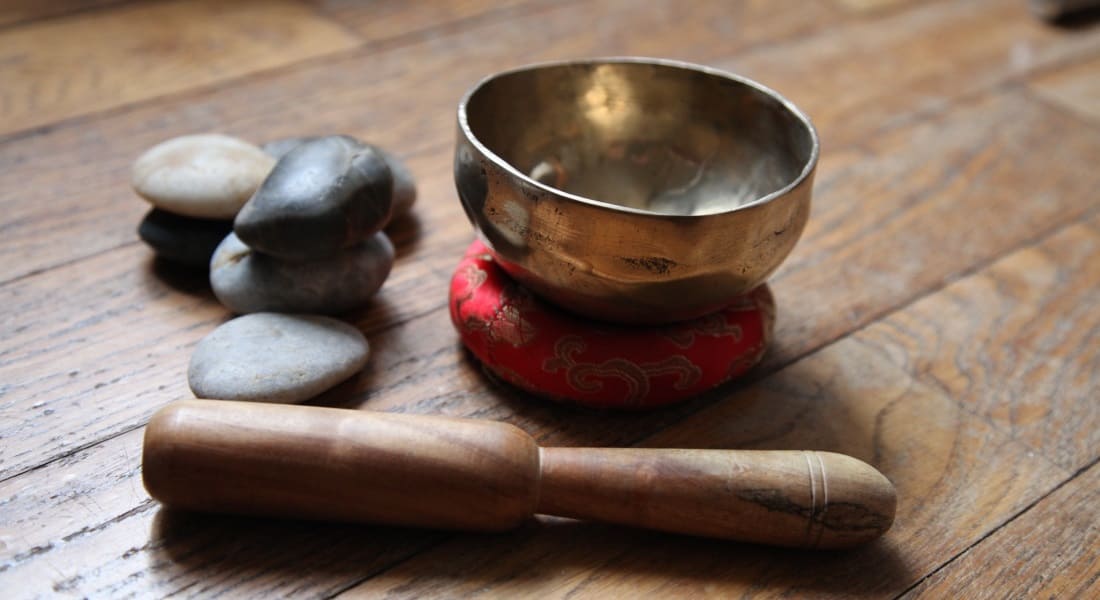
Copper is a metal that, along with gold, was among the most widely used in ancient times because it is one of the few materials that can be found in its pure form directly in nature. It is therefore naturally present in Tibetan bowls, which also date back to this period. The chakra associated with copper is Anahata, the heart chakra, which governs love, vitality, and communion with nature. It is linked to Friday, the planet Venus, the color green, and the musical note F.
Mercury
Under normal conditions, pure mercury is a liquid metal that was used in medicine for a long time before being banned in France due to its high toxicity. It was long known as quicksilver before its name was changed permanently in 1787. Mercury is connected to the throat chakra, known as Vishuddha, the chakra of truth, wisdom, and logical thinking. According to belief, mercury corresponds to Wednesday, the planet that bears its name, the color blue, and the musical note G.
Tin
Known since prehistoric times, tin was mainly used to make bronze by mixing it with copper, and together with copper it is the main component of singing bowls. Tin is linked to Ajna, the third eye chakra, which represents, among other things, an individual's intuition and wisdom. This metal is associated with Thursday, the planet Jupiter, the color blue, and the musical note A.
Lead
The last of the seven metals used to make Tibetan bowls, lead is one of the best known and most widely used metals since ancient times due to its abundance and low melting point, which make it easy to use for a variety of applications. However, it is toxic and can cause a disease known as lead poisoning. Linked to the crown chakra called Sahasrara, lead is therefore associated with enlightenment and spirituality. It is associated with Saturday, the planet Saturn, the color purple, and finally, the musical note B.
What are the proportions of each metal present in the bowl?
Officially, the proportions of each metal in a traditional Tibetan bowl are closely guarded secrets, passed down among artisans across generations. In reality, thanks to the metallurgical analyses mentioned above, it is now well known that the bowls are made of at least 99% bronze, with approximate proportions of 77% copper and 22% tin. If other metals are present, they are in minute quantities.
It’s worth noting that, according to various scientific studies on the composition of Tibetan bowls, this precise alloy of 77% copper and 22% tin is one of the key elements in achieving a beautiful sound. Thus, this precise composition varies only very slightly among all the specimens tested, which testifies to the truly precise craftsmanship of the artisans of the time.
Can a Tibetan singing bowl be made with more or less metal?
As we’ve already mentioned, it’s highly likely that the first Tibetan bowls were made with only two metals—copper and tin—which remain one of the basic materials used to craft this instrument. However, there’s nothing to prevent one or more other metals from being added in very small quantities.
That’s why you can now find Tibetan bowls crafted from 3, 5, 7, 9, or even 13 metals. Zinc, nickel, platinum, chromium, or manganese may be blended with the original 7 metals. According to many sellers, each additional metal amplifies the bowl’s therapeutic properties. From a traditional perspective, though, this is hard to justify, because while the first seven metals were known in ancient times, the number did not reach 12 until the Middle Ages. Today, 82 different metals are listed—so perhaps we’ll even see a Tibetan bowl made of 82 metals in a few years!
How can you be sure a singing bowl contains the expected seven metals?
To be honest, it’s going to be complicated. It’s no coincidence that scientific studies with metallurgical analyses had to be carried out in order to learn more about the origins of Tibetan bowls. Without advanced testing equipment, it’s impossible to determine with certainty what your Tibetan singing bowl is actually made of. A laboratory analysis will easily cost several hundred euros. There are also metal analyzers, called spectrometers, but these are often specialized in precious metals and do not have the accuracy of a laboratory, whereas great precision is required. This is because, apart from copper and tin, all other metals are present in minute quantities. What’s more, these analyzers also cost several hundred or even several thousand euros, so they’re unlikely to be a practical option for most people.
Since there’s no reliable way for anyone to determine whether a singing bowl is truly made from seven metals, trust becomes essential. You’ll need to trust the person or company from whom you intend to purchase it, because in practical terms, you won’t be able to verify this yourself. Some professionals even travel to Nepal to observe the production process and work directly with artisans to source the finest bowls. Even when they visually confirm that seven metals are used in a particular batch, there’s no assurance that subsequent bowls will be crafted in exactly the same way. It’s obviously not feasible to monitor the production of every singing bowl, and there is currently no official, reputable body responsible for certifying workshops that use seven metals in their instruments.
Can these metals be dangerous to the health of the musician?
When it comes to the seven metals present in a Tibetan bowl, the question of health hazards often arises because of the presence of lead and mercury, the other metals being much less concerning from a health perspective. Indeed, the toxicity of lead, which has been officially classified as a probable carcinogen since 2004 and causes lead poisoning, and that of mercury, which has been banned in the manufacture of thermometers and other measuring instruments in France since 1999, are not very reassuring for musicians.
As we’ve already mentioned, both lead and mercury are present in minute quantities, so much so that to date, no cases of poisoning linked to the use of Tibetan bowls have been reported. Compared to other metals, while pure gold and silver are considered hypoallergenic and therefore do not cause allergies, this is not necessarily the case for others such as copper or tin. If you know you’re allergic to any of the metals in singing bowls or if you notice redness after handling one, stay cautious and consult a healthcare professional.
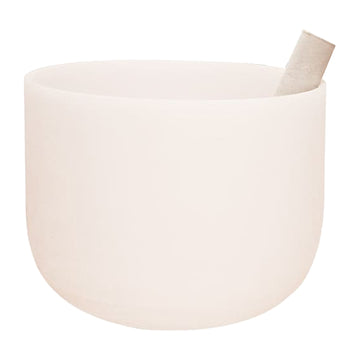
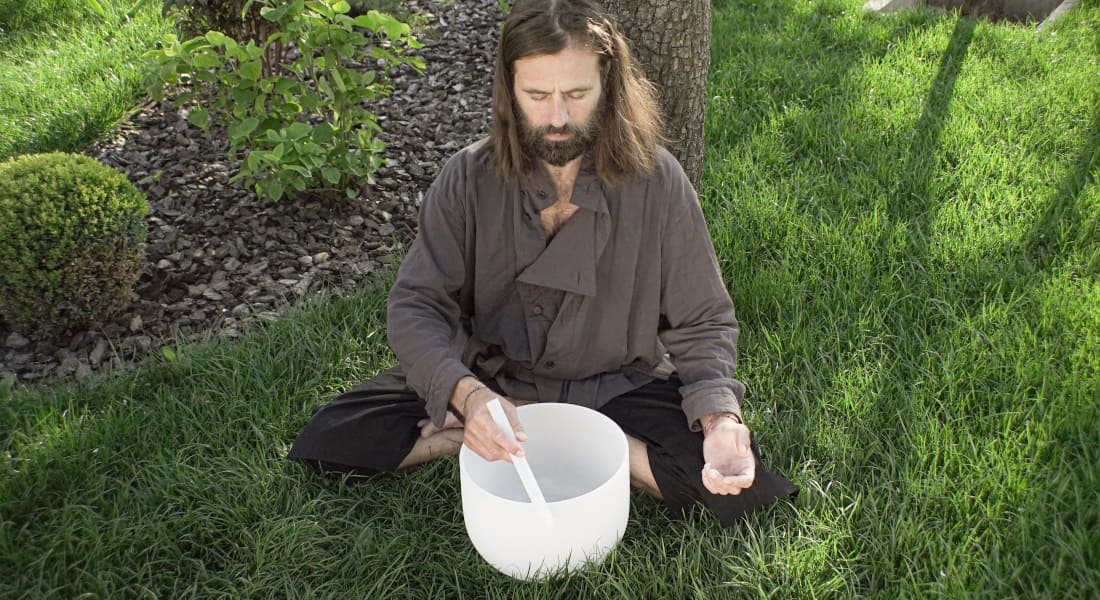
If you still have reservations about using a Tibetan singing bowl made of seven metals, don’t buy one. You’ll never fully relax and enjoy the bowl’s benefits if you’re distracted by safety concerns. In that case, two options are worth considering. The first, if you want to stick with a metal object, is to buy a bronze singing bowl. You can be sure that it will contain only copper and tin, which eliminates the risk of lead and mercury, which are the most problematic. If you prefer a non-metal option, a quartz crystal bowl is an excellent choice. Composed of 99.9% quartz, it helps you avoid potential allergy or toxicity concerns while still delivering the calming, Zen-like experience you’re looking for.
Do 7-metal bowls have a richer sound?
One argument often mentioned in favor of 7-metal singing bowls is that they have a richer sound than their counterparts made with fewer compounds. The few studies that have been conducted on the sound of these instruments have emphasized that the sounds are mainly related to the copper/tin ratio rather than the addition of other metals in minute quantities.
In my experience, it generally depends on the individual and their sensitivity in this area. I’ve met just as many people who were convinced that their 7-metal bowl was more harmonious than a bronze one as those who felt the opposite. Personally, I recommend trusting your instincts—you can enjoy all the benefits of this instrument or meditate with it, whether it’s crafted from seven metals, bronze, brass, or quartz crystal. Instead, choose the singing bowl that suits you and how you plan to use it!
Can Tibetan bowls be made from metal from meteorites?
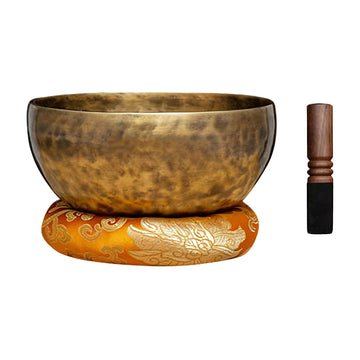
It may seem surprising the first time you hear this, but if you have the opportunity to talk to Tibetan bowl sellers in Kathmandu, Nepal, you will inevitably come across one who will claim that their bowl was made from the remains of a meteorite that fell in the Himalayas, as is the Tibetan tradition. The singing bowl would then be linked to the cosmos, the stars, and much more. Is this possible? Yes, but highly unlikely.
As we discussed earlier, less than 2% of ancient Tibetan bowls analyzed by Oxford University contained iron. Scientists now know very well which metals are contained in meteorites. The answer is simple: almost exclusively iron and nickel, along with a little cobalt. So it’s possible that a meteorite did crash in the Himalayas, and a craftsman chose to add some of that metal to a Tibetan bowl he was crafting. But let’s not forget that when there is iron in the instrument, it is in very small quantities, less than 1%. It may therefore be worth asking the seller what proportion of the metal in their Tibetan bowl comes from meteorites, to check their honesty.
What’s more, no traces of nickel or cobalt have been detected, even though ferrous meteorites contain these elements. With iron appearing in less than 2% of bowls from that period, it’s hard to call this a widespread Tibetan tradition. On the other hand, what is certain is that it adds a beautiful folkloric dimension to the Tibetan bowl and a fabulous selling point for those who are willing to believe in it. It’s up to you to decide whether this story is too good to be true or not.
Purchase your Tibetan bowl from a trusted store
It’s natural to want to learn more about the mysterious composition of Tibetan bowls made from seven metals and their meaning, especially when you encounter conflicting information. Now you have a good idea of the various compositions of singing bowls, and you’ve seen that there is legitimate doubt about whether this instrument has always been made from seven metals. While nothing can be confirmed with absolute certainty, some long-held beliefs may have been challenged here—yet transparency and honesty remain the best approach. This in no way detracts from the Tibetan singing bowl’s ability to promote relaxation and calm.
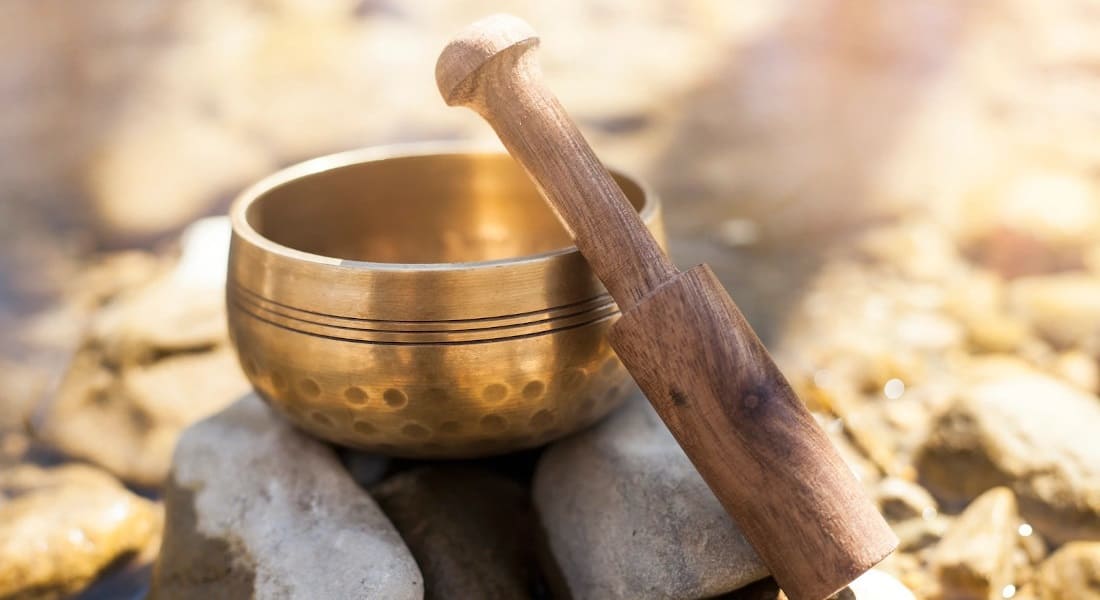
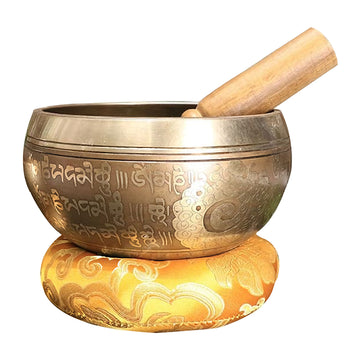
However, finding a reliable supplier of singing bowls is no easy task, as there is now such a wide range available on the internet. There are now many unscrupulous professionals who have no qualms about lying or exaggerating the origins of this instrument. With this type of seller, it is reasonable to doubt the 7-metal composition of the bowls they offer. Therefore, we recommend choosing the Instruments du Monde store, which offers a wide selection of singing bowls and is completely transparent about their composition. Such as this 7-metal singing bowl dedicated to healing.
Turn to a trusted store and treat yourself to this singing bowl by clicking on the image below:
Did you know that it is possible to heal with a Tibetan bowl? Of course, you shouldn’t expect miracles, but you can support well-being and help relieve certain conditions by learning how to use this musical instrument as part of a therapeutic approach.


