



Written by Ambre Montespan on Mar 4, 2024 · Updated on Oct 15, 2026

Table of contents:
Do you practise a religion such as Islam, Judaism, or Christianity and want to know whether using a Tibetan singing bowl is compatible with your beliefs? Curious about the faiths or denominations that regularly incorporate this Asian musical instrument? Do Tibetan singing bowls have religious origins?
For more than 10 years now, I’ve had a genuine passion for this Asian musical instrument in the shape of a bowl. Over the years, I’ve researched the topic extensively and met religious leaders from different traditions who use Tibetan singing bowls for meditation or simply to unwind. So I can help answer your questions with clarity and perspective.
Because the origins of Tibetan singing bowls are still largely unknown, it’s not established whether this instrument is inherently a sacred object. While it’s widely used in Buddhism and Hinduism, its use in other faiths, such as Islam, remains a debated topic.
By reading this article in its entirety, you’ll discover everything you need to know about the connection between religions and Tibetan singing bowls. In particular, you’ll find information on:
- The potential religious origins of Tibetan bowls
- The compatibility between Islam and Tibetan singing bowls
- The use of this Asian instrument in Buddhism and Hinduism
- The possibility of using this sound object in Christianity and Judaism
Once you’ve finished reading, you’ll know everything there is to know about the relationship between religious beliefs and Tibetan singing bowls, including whether, based on your faith, you can use this instrument to relax and feel more at peace.
Now let's take a look at the religions that use Tibetan singing bowls.
Does the Tibetan singing bowl have religious origins?
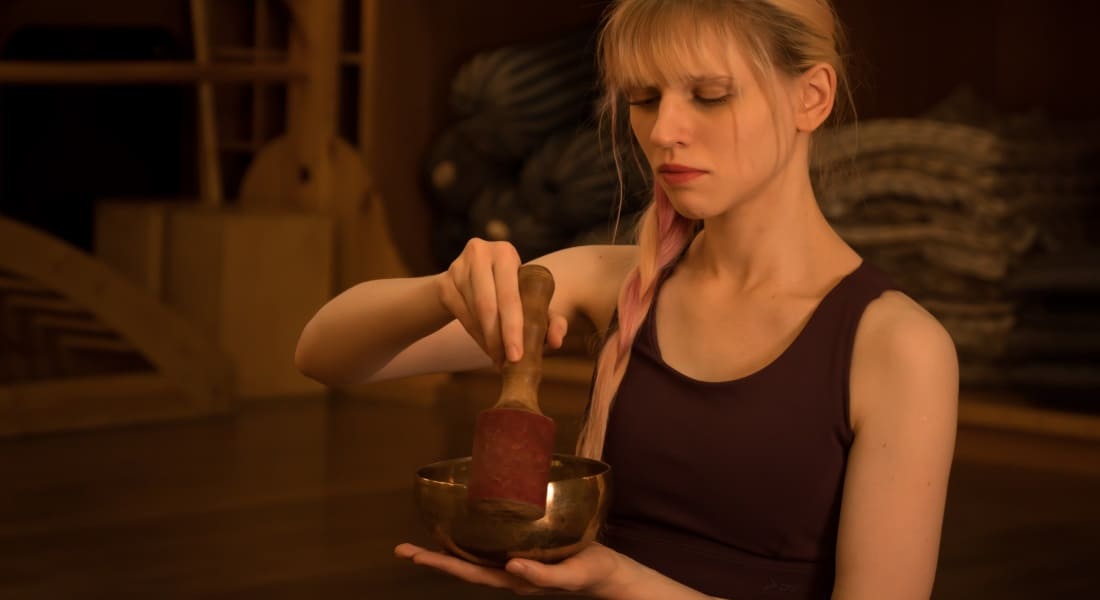
The origins of the Tibetan singing bowl aren’t clearly established. In fact, the origins of this musical instrument are shrouded in mystery, as no written records mentioning it have been found before the 1970s. Legends suggest they were created 5,000 years ago in Mongolia, where nomadic blacksmiths crafted copper bowls for cooking that later evolved into ritual instruments through metal alloys. These bowls were reportedly incorporated into the Bön religion before later spreading among Buddhist monks in Tibet and beyond.
However, recent metallurgical analyses and historical research challenge these accounts, finding no solid evidence for an ancient origin. Some researchers suggest the association with Tibet may be more modern, linked to the growth of tourism in the region in the 1970s. For more details, see my article detailing the origins of Tibetan bowls. So while singing bowls are used today in Buddhist practice, it seems this instrument doesn’t truly have religious origins—rather, it was integrated at some point we can’t yet pinpoint with certainty.
Are Tibetan bowls sacred to certain faiths?
Yes, Tibetan singing bowls occupy a unique place within various religious traditions, where they are often considered sacred objects imbued with spirituality and deep symbolism. The sacred aspect of Tibetan bowls stems primarily from their ritual use in Buddhism, where they are used as instruments of meditation and healing.
In Buddhism, Tibetan bowls are frequently used during religious ceremonies, tantric rituals, and meditation practices. Their unique sound is seen as a sonic representation of the cosmos, capable of inducing a deep meditative state and opening the way to spiritual realisation. Thus, for Buddhist practitioners, these bowls have a sacred dimension, acting as bridges to transcendence and spiritual connection.
Outside of Buddhism, Tibetan bowls are also integrated into other spiritual traditions of the Himalayan region, notably Hinduism. They are used in Hindu rituals to create an environment conducive to meditation and prayer. In these contexts, Tibetan bowls also take on sacred meaning, symbolising harmony, inner peace, and communion with the divine.
The sacred aspect of Tibetan bowls is not limited to geographical or religious boundaries. Their worldwide popularity in non-religious contexts attests to their ability to transcend cultural barriers and inspire a sense of universal spiritual connection. Many wellness, meditation, and relaxation practitioners experience a sacred dimension in these bowls, using their soothing sound as a way to reconnect with themselves and with something larger than everyday life.

What spiritual symbolism is associated with this Asian instrument?
It’s important to note that Tibetan singing bowls are much more than musical instruments—they carry deep spiritual symbolism that goes beyond the melodious notes they emit. At the heart of their symbolism lies rich spiritual meaning, rooted in the religious traditions of the Himalayas. In Tibetan Buddhism, singing bowls are often viewed as mediators between the spiritual and the material. Their manufacture, sometimes associated with sacred rituals, incorporates specific metallic elements, each symbolically representing aspects of spirituality. For example, copper is associated with Venus, a symbol of love and compassion, while tin is linked to Jupiter, representing wisdom. In that sense, even the making of Tibetan bowls can be seen as infused with spiritual symbolism.
The sound emitted by Tibetan bowls also holds profound meaning in Buddhism. Considered a sonic manifestation of the cosmos, it’s used as a meditation support to reach higher states of consciousness. The symbolism lies in the belief that the transcendental sound of Tibetan bowls paves the way for enlightenment and spiritual understanding. In Hinduism, Tibetan bowls are also associated with spiritual symbolism. They are used in rituals and meditation practices to balance the chakras, the body’s centres of spiritual energy. Each note emitted by the bowl is thought to correspond to a specific chakra, promoting harmony and inner balance.
Beyond Asia, the spiritual symbolism of Tibetan bowls has captivated people from many different backgrounds. Their use has become widespread in wellness, meditation, and relaxation practices around the world, where the harmonious sound is perceived as a means of restoring spiritual and emotional balance.
Is Islam compatible with Tibetan bowls?
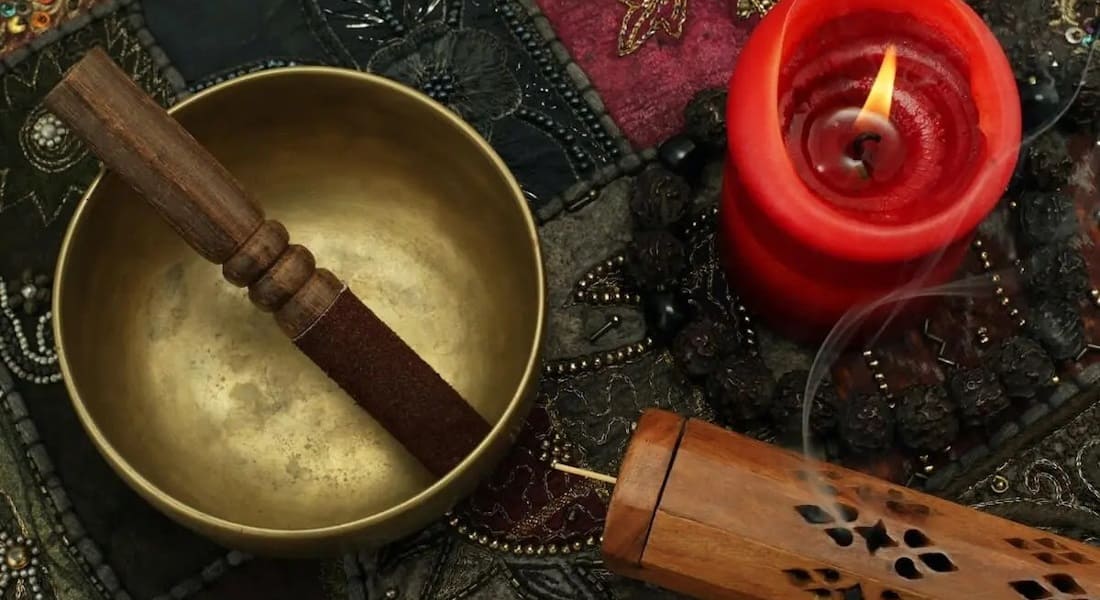
The use of Tibetan bowls in the context of Islam often raises questions about whether these instruments align with Islamic principles. Islam places strong emphasis on ritual purity and avoiding any practice that could be seen as contradicting strict monotheism. From this perspective, the use of Tibetan bowls can be perceived in different ways within the Muslim community. Some believe that using singing bowls for meditation or relaxation does not conflict with the foundations of Islam, as long as it isn’t tied to rituals or beliefs that contradict Qur’anic teachings.
However, other members of the Muslim community may express reservations about Tibetan bowls because of their cultural origin and association with spiritual practices outside of Islam. Some consider that using these bowls, especially in esoteric settings, may be viewed as incompatible with stricter interpretations of Islamic teaching.
So what do Islamic texts say about Tibetan singing bowls? Are singing bowls considered halal according to the Qur’an? The Prophet Muhammad says this in the hadiths: “Sometimes (the word of Allah) is like the sound of a bell, this form of inspiration is the most difficult of all, and then this state disappears after I understand what is inspired.” It should also be noted that the Prophet spent much of his time meditating on the word of God, and it was during this period that he received his first revelations of the Qur’an. In addition, several verses in the Qur’an encourage reflection and meditation—and Tibetan singing bowls are often used as meditation supports.
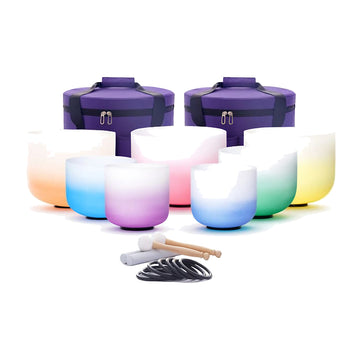
It’s important to remember that Islam is a diverse faith, and individual perspectives vary. Some Muslims view Tibetan bowls as simple tools for relaxation, while others prefer to avoid them to stay true to their personal practice. If you still feel reluctant to use a metal Tibetan bowl, I personally recommend that you opt for a quartz crystal singing bowl. This type of instrument was inspired by Tibetan bowls but has only been made for a few decades from pure quartz. This technology was not available to Buddhist monks at the time, so you can be sure this instrument carries no historical religious connotations. Furthermore, according to the latest studies on the subject, the benefits of using crystal singing bowls are similar to those of Tibetan metal alloy bowls.
The use of this percussion instrument in Buddhism and Hinduism: what you need to know
Tibetan bowls, also known as singing bowls, occupy a central place in the spiritual practices of Buddhism and Hinduism. Their use is often said to date back centuries, and each sound emitted by these bowls carries a heritage deeply rooted in the spirituality of the Himalayas.
The Tibetan bowl in Buddhism: harmony and deep meditation
In Tibetan Buddhism, these bowls hold particular importance, playing a key role in sacred rituals, ceremonies, and meditative practices. The vibrating sound emitted by these bowls is considered a sonic representation of the cosmos, promoting a deep meditative state. Each vibration is perceived as a way to connect with cosmic energies and transcend the material world. Buddhist practitioners use these bowls to attain higher states of consciousness, fostering peace of mind and inner harmony.
Singing bowls to balance the chakras and promote meditation in Hinduism
In Hindu practice, Tibetan bowls are used for meditation and chakra balancing. Each note produced by the bowl is said to resonate with a specific chakra, the body’s spiritual energy centres. Tibetan bowls are also used in Hindu rituals to create an atmosphere conducive to meditation and spiritual connection. Their use is intended to awaken spiritual awareness and energise the energy balance of the body and mind.
Are singing bowls allowed in Christianity?
The use of Tibetan bowls in Christianity raises questions about their compatibility with the theological teachings of that faith. Traditionally, bells have played a significant role in Christian practices, serving to invite believers to religious services and announce prayer times. Although the sound of bells differs from that of Tibetan bowls, the question of their acceptance in Christianity deserves a closer look. In the Old Testament, Exodus 28:33-35 describes the use of golden bells around the hem of a robe, symbolising a mark of holiness. The Bible also encourages meditation, as highlighted in Proverbs 15:28, stating that “the heart of the righteous ponders how to answer.” Meditation is presented as a practice in harmony with biblical teachings, as illustrated in Genesis 24:63, where Isaac meditates in the fields, and Joshua 1:8, which prescribes constant meditation on the law.

However, the question of acceptance of Tibetan bowls in Christianity remains complex. For some Christians, using these bowls for meditation can align with their faith, offering an opportunity for deep reflection without compromising their religious convictions. More conservative individuals may express reservations due to the bowls’ cultural origin and their potential association with non-Christian spiritual practices.
This diversity of opinion mirrors the wide range of Christian denominations and theological perspectives. Some groups welcome Tibetan bowls as a tool for contemplation, while others choose to avoid them to prevent any ambiguity. Ultimately, whether singing bowls are permitted in Christianity depends on individual interpretations and specific theological beliefs within the Christian community.
Is it possible to use singing bowls in Judaism?
To better answer this question, let's explore the perspective of Jewish leaders on the use of singing bowls in Judaism. Joy Krauthammer offers an interesting perspective, stating that rabbis and religious leaders of all denominations incorporate singing bowls into meditative practices and Torah teachings. She points out that playing healing bowls before, during, and/or after these moments of meditation and teaching helps create an atmosphere conducive to presence and a deeper understanding of shared Jewish wisdom.
This approach is echoed in verses from the Torah that highlight the importance of music and sound in the context of worship. Psalm 49:5 evokes the idea of exposing truth to the sound of the harp, while 1 Chronicles 15:16 mentions David ordering the use of musical instruments, including cymbals, to create a great noise of rejoicing during religious ceremonies. The idea of “Jewish meditation” dates back to ancient times, as Rabbi Sam Feinsmith points out. He notes that ancient literature reports various techniques, including the permutation of Hebrew letters and the visualisation of heavenly realms, for communing with the divine. Rabbi Feinsmith himself practises mindfulness meditation to support the work of cultivating wisdom.
 Our pickFind peace with this Tibetan singing bowl featuring beautiful engravingsSee the Tibetan bowl
Thus, the presence of singing bowls in Judaism seems to fit within a long tradition of meditation and spiritual connection. Their use, in harmony with the shared wisdom of Judaism, offers a contemplative approach that can find its place in Jewish spiritual life. Of course, while singing bowls are embraced in certain Jewish settings, some adherents may feel cautious about incorporating them. Some may view Tibetan bowls as foreign to their traditions or as carrying spiritual connotations that don’t fully align with Jewish teachings.
Religious sensitivities vary within the Jewish community, and some people may prefer to stick to more traditional methods of prayer and meditation without incorporating elements from other spiritual traditions. The diversity of opinions within Judaism reflects the richness and complexity of this ancient faith.
How can you get the most out of Tibetan bowls without compromising your religious beliefs?
The use of Tibetan bowls, rooted in centuries-old spiritual traditions, offers a unique experience of meditation, healing, and spiritual connection. For those seeking to incorporate these instruments while preserving their religious beliefs, a few thoughtful approaches can maximise the benefits without compromising the integrity of their faith. Before adopting Tibetan bowls into your spiritual practice, it’s important to understand their meaning within your religious tradition. Explore how other believers integrate them and seek specific teachings on their use to assess how this might align with your beliefs.
Integrate Tibetan bowls into a context that honours your religious beliefs. Use them intentionally—perhaps during meditation, prayer, or spiritual reflection—so they complement your practice rather than compete with it. If you still have doubts about whether Tibetan bowls are appropriate for your beliefs, consult with religious leaders in your tradition. Getting specific guidance can help clear up any concerns and make sure that incorporating these instruments aligns with the principles of your faith.
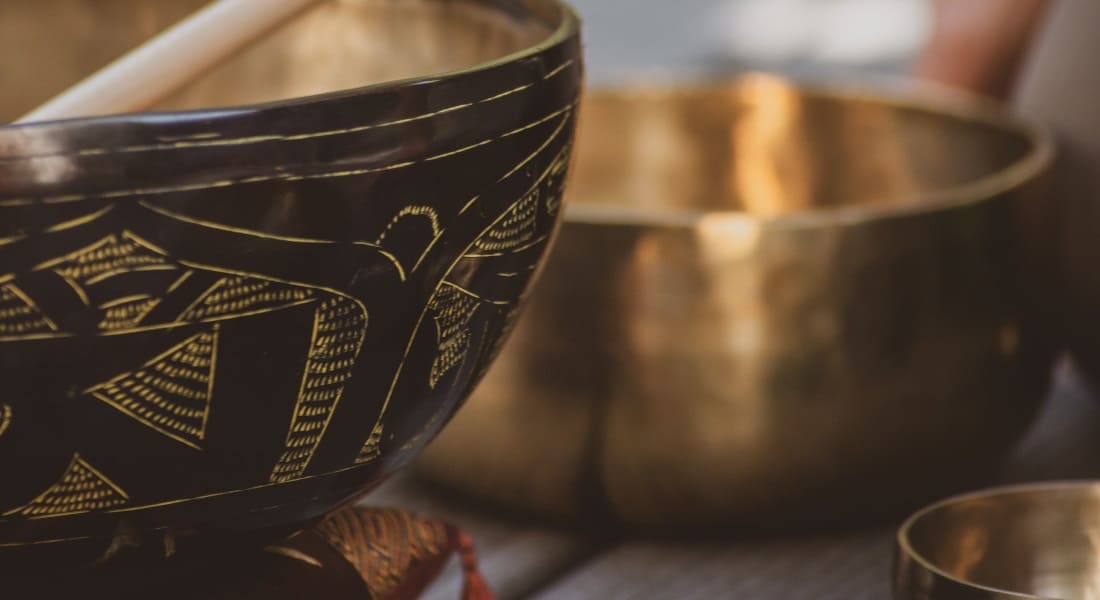
Develop a personal ritual that incorporates Tibetan bowls in a meaningful way. Whether before prayer, during meditation, or as a way to find inner peace, creating a dedicated space can strengthen your spiritual connection while honouring your religious beliefs. If you decide to use Tibetan bowls, share your knowledge with other members of your religious community. Explaining how this practice aligns with your beliefs can encourage understanding and create open dialogue within your community.
If, after reflecting on it, you decide a metal Tibetan singing bowl isn’t right for your faith, switch to a quartz crystal singing bowl instead. This type of instrument is a modern creation that offers the same relaxation, calming, and meditation benefits as metal singing bowls, without any religious associations—so you can pursue inner peace with confidence, while staying aligned with your beliefs. Ideally, choose a crystal singing bowl with no pattern or inscription.
Enjoy the benefits of singing bowls regardless of your religious beliefs
We’ve just explored the profound spiritual implications of Tibetan bowls, delving into their significant use in Buddhism and Hinduism. We’ve also addressed how to integrate these bowls into religious contexts such as Islam, Christianity, and Judaism, emphasising that their use is possible as long as the individual remains true to their beliefs. So, thanks to this article, you can now determine whether the use of this instrument aligns with your personal convictions.
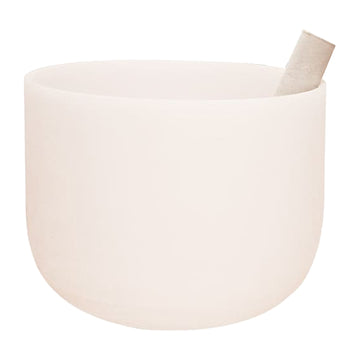
However, if you conclude that Tibetan bowls aren’t compatible with your faith, an excellent alternative is a crystal singing bowl. This instrument produces pure tones that offer the same soothing vibrations as a metal model. I personally recommend the Instruments du Monde store, which offers several hundred models to suit every belief. For example, you might fall in love with this immaculate white model, available in several sizes to suit all needs.
Discover this magnificent quartz crystal bowl now by clicking on the image below:
The relationship between religions and Tibetan singing bowls is now no longer a mystery to you. If you’re interested in wellness, read my article that explains whether this musical instrument may contribute to tinnitus, migraines, and headaches. You’ll then have all the information you need to determine whether singing bowls might be contraindicated for you. You can also browse this Tibetan singing bowl bible to learn absolutely everything there is to know about them.


