



Written by Ambre Montespan - Updated on Aug 27, 2026

Table of contents:
Learning to play the piano is not just about mastering an instrument or knowing how to play your favourite pieces. During each practice session, the pianist must read the notes, anticipate what comes next in the score, listen to what they’re playing, keep the rhythm, and coordinate the movements of both hands.
This hobby goes far beyond simple entertainment. It engages four major cognitive functions in a simultaneous effort that few other activities can reproduce: memory, attentional focus, auditory perception, and bilateral hand coordination. The keyboard becomes a complete brain-training ground, accessible to everyone from a six-year-old child to a seventy-year-old retiree.
The combination of piano, memory, and concentration is attracting a growing number of Belgians, drawn as much by the pleasure of music as by the benefits for their mental abilities. Understanding how the piano affects the brain helps you get the most out of it, no matter your starting level.
Understanding Why Playing the Piano Works the Brain So Intensely
Playing the piano means performing five cognitive tasks at the same time. The visual cortex deciphers the sheet music, the prefrontal cortex anticipates the next bars, the auditory cortex evaluates the sound being produced, the motor cortex controls each hand independently, and the cerebellum regulates the tempo. Few everyday activities engage so many brain regions in such a synchronised way, including piano lessons in Belgium, which attract a wide range of students.
This multisensory stimulation activates a fundamental mechanism: brain plasticity. The brain creates and strengthens neural connections with every practice session. Brain imaging studies of musicians reveal a greater volume of grey matter in areas related to motor control, hearing, and memory compared with non-musicians.
The effect is not limited to simple mental exercise. Each new piece forces the brain to reconfigure its circuits, adapt its reflexes, and refine its predictions. This constant demand for adaptation is what sets the piano apart from repetitive exercises like puzzles or Sudoku.
Strengthening Memory and Concentration Through Piano Practice
Working memory is in full gear from the very first bar. The pianist simultaneously keeps track of finger positions, upcoming notes, and the current phrasing, an effort comparable to that of an air traffic controller managing several flight paths.
Several types of memory coexist at the keyboard:
- Short-term memory: it stores the passages currently being learned, recent fingerings, and corrections to be integrated.
- Long-term memory: it consolidates mastered pieces and turns complex sequences into muscular reflexes.
- Muscle memory: through repetition, certain movements become automatic, freeing up attentional capacity for interpretation and expressiveness.
- Auditory memory: the pianist recognises harmonic progressions, anticipates resolutions, and identifies errors even before seeing them on the score.
Sustained attention is the other pillar. Playing the piano demands prolonged, uninterrupted concentration, sometimes for twenty or thirty minutes at a time. This kind of cognitive endurance is difficult to train in any other way in a daily life fragmented by notifications.
Neuroscience research indicates that musicians perform better in cognitive flexibility, working memory, and verbal fluency compared with non-musicians. Their verbal and visual memory also surpasses that of people with no instrumental practice. These findings suggest that the piano acts as a global cognitive catalyst, extending far beyond music alone.
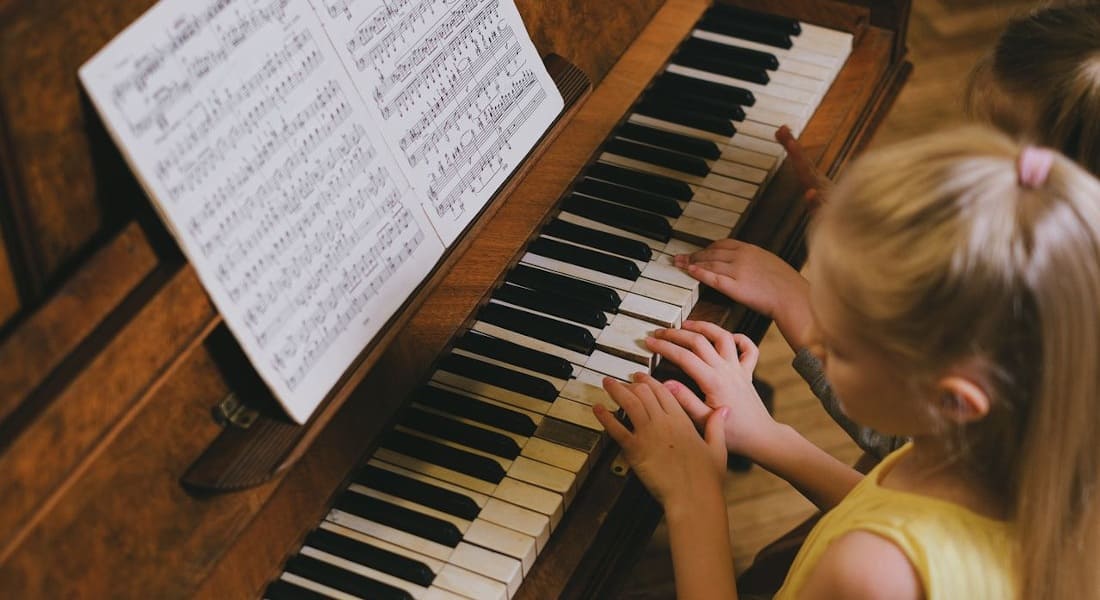
Developing Coordination, Listening Skills, and Stress Management at the Keyboard
The independence of both hands presents a unique motor challenge. The left hand may play a quaver accompaniment while the right hand carries a syncopated melody. This dissociation trains tactile precision that benefits other manual activities: surgery, craft, and typing.
Active listening develops little by little. The pianist learns to distinguish subtle dynamic nuances, spot imbalances between voices, and perceive the resonance of harmonics. This auditory sensitivity carries over into everyday life, for example during conversations in noisy environments.
The emotional dimension is worth pausing on, without drifting into medical promises. The deep concentration required to play works like a form of active meditation: the mind focuses on the sound, and distracting thoughts fade away. Playing music stimulates the release of dopamine and endorphins, two neurotransmitters associated with pleasure and calm. Many amateur pianists describe a feeling of decompression after a session, comparable to what they feel after moderate physical exercise. These observations converge in the scientific literature, but they do not replace medical care in the case of a confirmed disorder.
Starting the Piano at Any Age to Gain Cognitive Benefits
The idea that you have to start as a child to benefit from the piano’s effects on the brain remains a persistent myth. The reality is far more encouraging: benefits can be observed at any age, in children as well as seniors. The brain retains the ability to create new connections throughout life, and regular practice is enough to activate it. Let’s look at what that means at different stages of life.
In Children: A Particularly Receptive Brain
Before age seven, the brain shows exceptional malleability. Neural circuits linked to memory, attention, and language strengthen quickly under the effect of structured music learning. One study showed that fifteen months of music training in children is enough to produce measurable structural changes in the brain.
The benefits extend beyond music. Children who play the piano often progress faster in reading and maths, two areas that share sequential processing and pattern recognition with music.
In Adults and Seniors: A Brain That Keeps Learning
Brain plasticity does not disappear in adulthood. It slows down, of course, but remains sufficient to create new neural connections through regular learning. In active adults, the piano strengthens working memory, concentration, and resilience to daily stress.
Researchers followed adults aged 60 to 80 who were beginning the piano. After a few months, these participants showed measurable progress in working memory and information processing speed. Recent research indicates that starting after age 65 produces significant cognitive benefits.
The piano also maintains manual dexterity, which often becomes more fragile with age. And the social dimension, including group lessons, amateur recitals, and exchanges between students, supports morale and breaks the isolation experienced by some seniors.
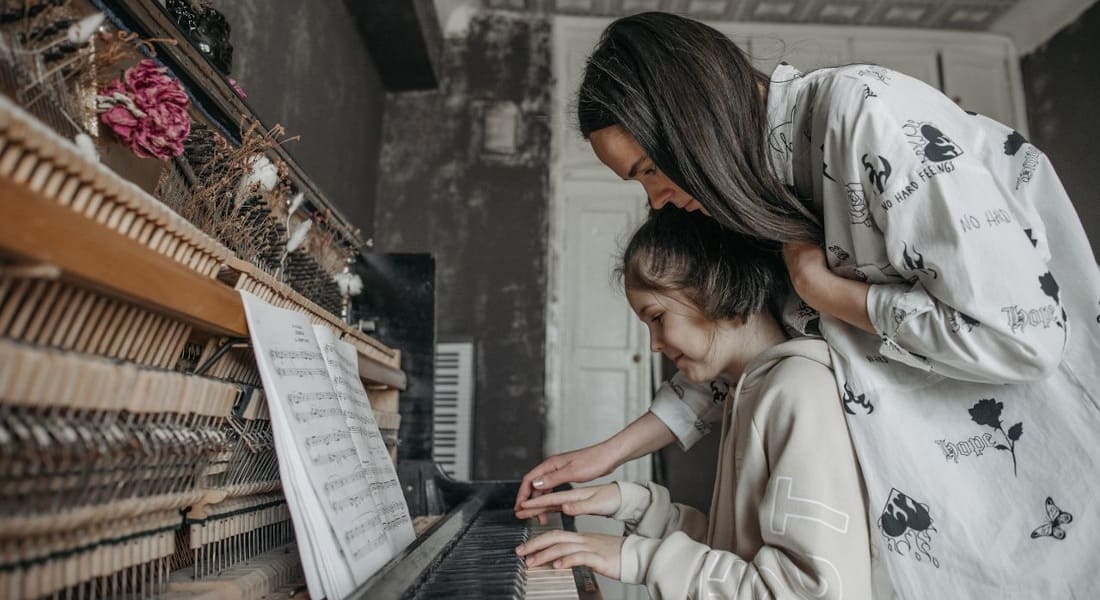
Adopting an Effective Practice Routine to Maximise the Effects
Consistency matters more than the length of each session. Short, frequent practice is generally preferable to long sessions spaced far apart. The key is to maintain a regular rhythm, vary the exercises, and preserve your concentration throughout the session. Here’s how to organise your practice to make effective progress.
- Practise for about 20 minutes a day, five days a week, to observe effects on concentration and stress management.
- Alternate technical exercises (scales, hand independence) with work on pieces to vary the demands on the brain.
- Limit each session to a maximum of 40 minutes to maintain high-quality attention.
- Choose short, frequent sessions rather than two hours on Sunday, which tire the brain without consolidating what you have learned.
An amateur pianist who follows this rhythm engages the brain intensely and regularly enough for neural plasticity to take effect. The pleasure of playing does the rest.
Several questions often come up among people interested in this approach. Here are the most direct answers.
FAQ
Can playing the piano really improve memory in adult beginners?
Studies show that even adult beginners notice improvements in working memory and verbal fluency after a few months of regular practice. The adult brain retains sufficient plasticity to create new neural connections through music learning.
How long do you need to practise piano to see benefits for concentration?
Research points to a threshold of about 20 minutes a day, five days a week, to see measurable effects on concentration and stress management. Consistency matters more than the length of each session.
Is piano recommended for seniors to prevent cognitive decline?
Playing the piano stimulates memory, dexterity, and mental alertness in seniors. Recent research indicates that starting even after age 65 produces measurable cognitive benefits within a few months, without being a medical treatment in the strict sense.
Do you need to know music theory to benefit cognitively from piano?
No. Cognitive benefits appear from the first few weeks of practice, even without a background in music theory. Simply coordinating your hands, listening, and memorising sequences is enough to stimulate the brain.
Moving house and you own a piano? Have a read of my dedicated article for all the advice you need to avoid damaging your precious instrument during the move.
