



Written by Ambre Montespan on Mar 14, 2023 · Updated on Oct 15, 2026

Table of contents:
Are you looking to buy your first tongue drum? Is this a whole new world for you because you only recently discovered this percussion instrument? With so many options out there, are you wondering which model makes the most sense for a beginner? In other words: which tongue drum should you choose to start learning with confidence?
Having played the steel tongue drum for over 5 years now, I’ve often met aspiring musicians who were thinking about buying this unique instrument. I’ve guided many of them through their first purchase, and I’m happy to share my recommendations here so you can find the ideal tongue drum for beginners.
To find the perfect tongue drum for beginners, start by clarifying what you want to do with the instrument, then decide on the number of notes and its key or scale.
In this article, we’ll walk you through these key points:
- What is the best method for selecting a tongue drum for beginners?
- How much should you expect to pay?
- How to choose the right key/scale for your percussion instrument
- Do you need accessories to get started with tongue drumming?
When you’ve finished reading, you’ll know exactly which tongue drum model to choose to really enjoy this captivating percussion instrument—and you’ll be able to guide friends who want to buy one, too.
Let’s get started.
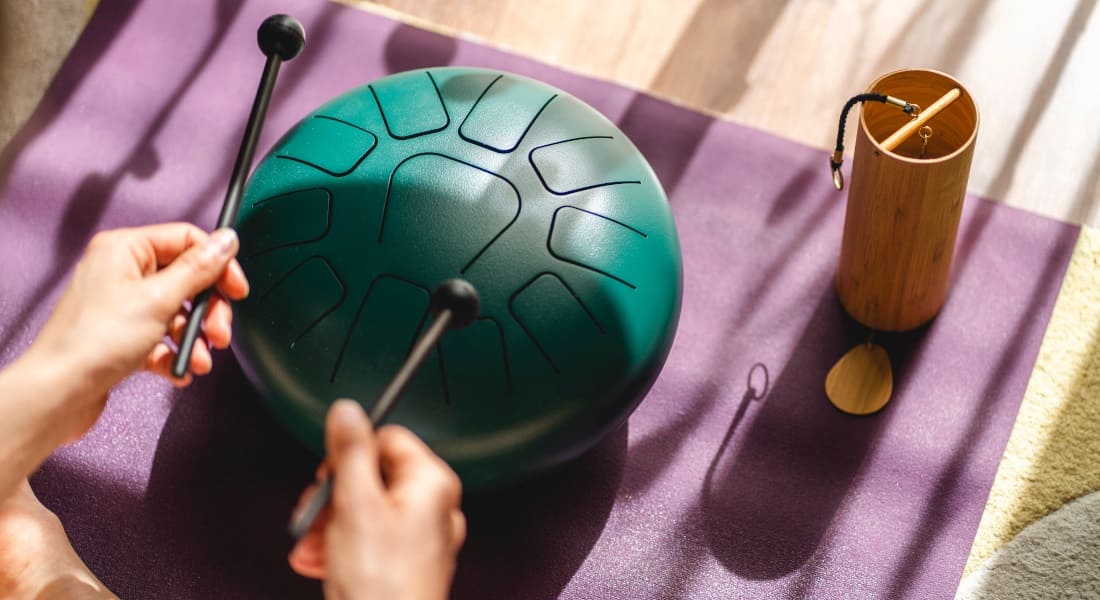
How do you find the best tongue drum for beginners?
When a beginner enters the world of tongue drums, the first step is to decide how they plan to use the instrument so they can choose a model that truly fits their goals. There are two main ways to approach a tongue drum.
The first is playing sheet music—reproducing existing melodies such as "Happy Birthday" (a simple song), or more complex ones like the main theme from the Pirates of the Caribbean films, as well as the beloved Simon and Garfunkel tune "The Sound of Silence." The second approach is completely different: instead of following a set sequence of notes, the player lets instinct and emotion guide the performance, creating music in the moment.
You can watch an example of an instrumentalist playing the score for Ed Sheeran’s song Perfect:
While another, playing by instinct, will sound more like this:
It’s important to decide which playing style you want to focus on, because the instrument you choose won’t necessarily be the same. If you plan to play sheet music, an instrument with a larger number of diatonic tongues—meaning it includes seven different notes—is a sensible choice. On the other hand, if you prefer to play instinctively, a pentatonic tongue drum (five different notes) or a model with fewer than ten notes will do the trick.
If, for example, you choose a pentatonic tongue drum, you won’t be able to play most sheet music because you’ll be missing essential notes. On the other hand, owning a 15-note instrument just to focus on intuitive playing isn’t always the best choice either. Often, 9 notes are enough to create beautiful atmospheres, and having too many tongues can add unnecessary complexity. So take the time to figure out what type of playing you want to prioritise.
How many notes should a beginner choose for a tongue drum?
As we mentioned earlier, the number of notes depends on the playing style you want to adopt. This matters most if you plan to play sheet music, because the more notes your instrument has, the more pieces you’ll be able to tackle. With a tank drum, for instance, you won’t be able to play a piece written for a model that has more tongues than yours. For example, if you want to play a song written for a 13-note tongue drum, you can play it with a 15-note instrument, but not with a drum that only has 11. For the most comfortable experience, a 15-note tongue drum is ideal—you’ll be able to play almost all of the songs available.
On the other hand, the number of tongues is less important if you want to use your percussion instrument more instinctively. Generally, between 8 and 10 notes are perfectly adequate. Of course, you can buy a 15-note model if you wish; there’s no problem with that. But percussionists usually prefer to invest in a larger instrument with fewer notes.
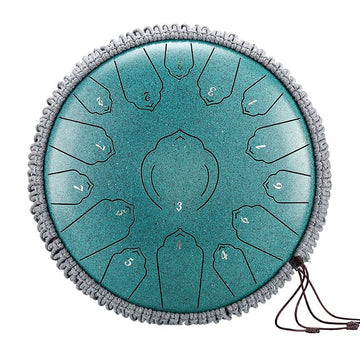 Our pickStart learning the tongue drum with this excellent 15-note modelShop the 15-note tongue drum
What key or range should a beginner choose for their percussion instrument?
The scale or key of a hank drum can be either major or minor. This scale corresponds to a series of notes arranged in a very specific order. That structure shapes the overall mood and colours the emotions you’ll feel while playing. In short, tongue drums in a major scale sound brighter, more balanced, and more energetic, while those in a minor scale tend toward melancholy, introspection, and sadness.
If you plan to play sheet music, the recommended scale for all beginners with any musical instrument is C or F major. These are the keys where you’ll find the widest selection of songs and exercises. On the other hand, if you want to play instinctively, there are many beautiful scales to explore. Among them are "Akebono" (with a Japanese flavour), "Hijaz," and "Pygmy." That said, the most beginner-friendly options—because they’re easy to learn and sound great quickly—tend to be "Amara" and the classic D minor. These two scales make it easy to create lovely melodies while letting your creativity flow, which is why they’re highly recommended for new tongue drum players.
How much should a new player invest in a tongue drum?
As a beginner, you’ve probably never played a tongue drum—or only very little. So it’s sensible to keep your budget under control to avoid spending money you might regret later. That’s why I recommend not going above £450 for your future percussion instrument. Above that price point, models are generally aimed at experienced musicians—or even professionals—who perform on stage.
Obviously, the price depends on the number of notes and the drum’s diameter. For smaller models—around 20 or 25 cm (8 or 10 in) in diameter—with roughly 10 notes, you can find options for under £85. Larger models quickly reach £170 or £250. Depending on your budget, it may be worth investing in a larger, versatile 15-note model rather than buying a medium-sized tongue drum now and upgrading to a higher-note version later.
Keep in mind that the design also impacts the final price. My advice? Choose a tongue drum you genuinely love—if you get that “wow” feeling, you’ll enjoy playing it as much as you enjoy seeing it in your space.
Do you need accessories to start learning the Zen drum?
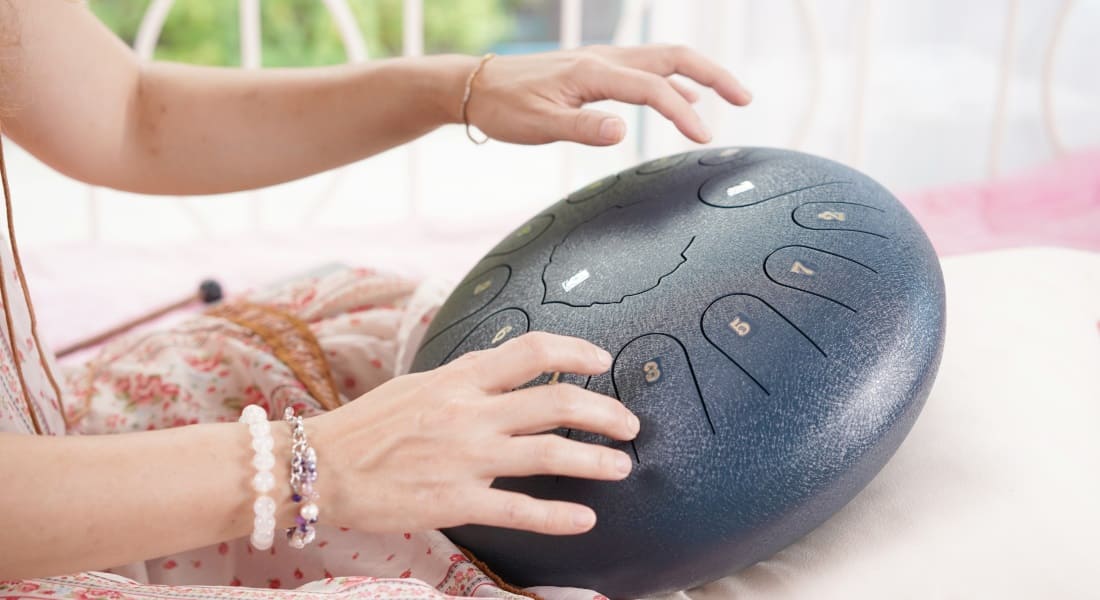
If there is one type of musician who benefits most from accessories, it’s the brand-new player. That’s why we recommend choosing an instrument that comes with a few extras to make learning easier. A small booklet (often in French) is always a nice bonus for discovering your tongue drum from every angle. Stickers are also very helpful: you place them on the tongues so you can quickly identify which note is which. Check out this guide to learn how to apply the stickers to your tongue drum.
A pair of mallets is usually included with all tongue drums so you can play with your hands or with this handy accessory. Finally, you can also find silicone protectors that slip on like rings, letting you create sounds with your fingertips. This last accessory isn’t essential, but it’s a nice extra.
Get started with a tongue drum that’s right for you!
The tongue drum is an unusual and rather atypical musical instrument, so it’s completely normal to have questions and feel a little unsure when it comes to choosing your very first model. With the advice and recommendations you’ve just read, you’ll be able to pinpoint the tongue drum you should buy next much more easily.
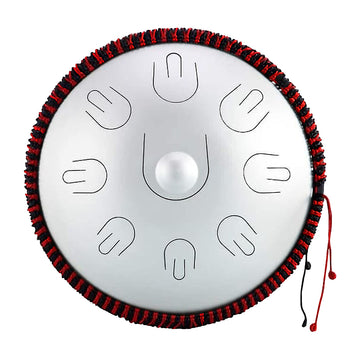
However, stores selling tongue drums are still pretty rare these days. This instrument hasn’t become widely mainstream yet, so the local selection can be limited. That’s why we recommend shopping at Instruments du Monde, which offers dozens of models in all sizes and styles—like this 9-note model, which is ideal for anyone who wants to play the tongue drum instinctively.
Get started with the tongue drum right away and discover this instrument by clicking on the image below:
Still unsure about how much to spend on your musical instrument? Check out our guide to tongue drum prices to make sure you’re spending the right amount to get one. Alternatively, you may also be interested in our general article on tongue drums to learn more about this harmonious instrument.


