



Written by Ambre Montespan - Updated on Sep 25, 2026

Table of contents:
Want to learn to play the djembe well? Can you teach yourself this percussion instrument? Should you take in-person or online lessons for this type of drum? What are the different ways to learn djembe more easily?
I’m mostly self-taught on djembe, but I also learned a lot from advice shared by experts in Africa. Over time, I’ve personally helped more than 50 beginners discover this instrument. So I can share my perspective and a few practical tips to help you learn djembe in the best possible conditions.
You can learn to play djembe with a teacher or without leaving home. To do that, you can follow online tutorials, read articles on the subject, take online courses, or simply explore the instrument on your own.
By reading this article, you will learn:
- How and why to choose a good djembe for learning.
- How to learn djembe without disturbing your neighbors.
- How to learn to play djembe using tutorials and online courses.
- The basic techniques for learning your instrument.
By the end of this article, you’ll be able to choose the best approach for playing beautiful rhythms and melodies on your African drum.
All right—let’s dive in and see how to learn to play the djembe.
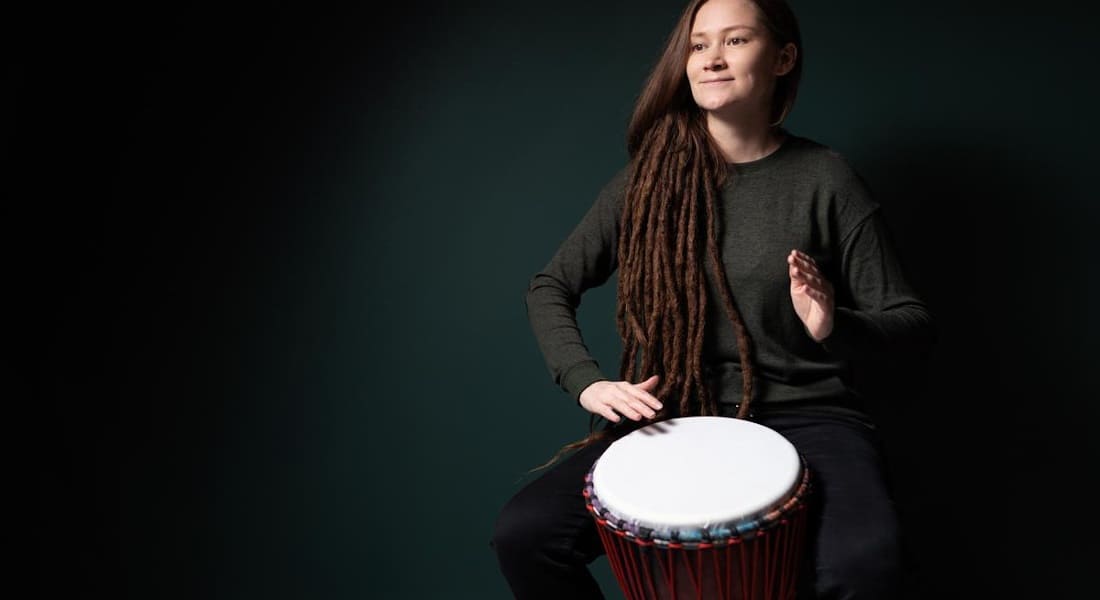
How to choose the right djembe to discover this instrument in the best conditions?
Whether you decide to learn the djembe on your own or with a teacher, the first step is choosing a good instrument. Djembes come in different sizes, materials, and quality levels. It’s essential to find a djembe that matches your skill level and your learning goals. When choosing a djembe, several factors matter. First, size is crucial. Smaller djembes are popular with beginners because they’re easier to handle and play. Standard-sized djembes are a great fit for intermediate players, while larger djembes offer a wider range of tones and are ideal for experienced percussionists. Of course, prices usually rise as the size goes up.
The material used to make the djembe is also important. Traditional African djembes are crafted from solid wood, while modern versions can be made from synthetic materials. The material you choose will shape the instrument’s sound, since each type of wood or synthetic material has its own tonal character. To help you choose the perfect djembe, be sure to read my other article about choosing the right wood for this instrument.
In addition to the djembe itself, you may need a few essential accessories to help you learn. This includes a djembe stand or tripod to keep the instrument stable, replacement drumheads in case yours gets damaged, and, of course, a carrying bag to protect your djembe from moisture when you store it and when you travel. Once you’ve chosen the right djembe and the accessories you need, you’ll be ready to start your learning journey with this wonderful instrument.
How do you learn to play the djembe?
You can learn djembe with a professional in person, online, or by teaching yourself. In any case, it’s best to set up a practice plan and deepen your knowledge of African rhythms to sharpen your command of the instrument.
Learn to play the African drum with an in-person teacher
Learning to play the djembe with a teacher right there with you is an excellent way to make solid progress. Local music schools and conservatories are often the first places to check. They usually offer a variety of music classes, including percussion. Visit their websites or call to see whether they offer djembe lessons. Some schools even run classes specifically focused on African percussion.
Cultural centers, especially those focused on African cultures or world arts, may offer djembe lessons or workshops. Local community centers can be great resources too. They often host a wide range of activities, including music classes. You can also use social media to look for local groups related to music or djembe—people often share teacher recommendations there.
You can also attend events related to African music or cultures. These gatherings can be ideal for meeting teachers or getting recommendations. Finally, check bulletin boards in libraries, cafés, and music stores—teachers and music schools often post their services there. Local newspapers and community newsletters may also include listings for music lessons, and you can always find ads directly online.
Online resources for discovering the djembe: tutorials and virtual lessons
Learning the djembe is much easier today thanks to the huge number of online resources available. You can start with my article on how to play the djembe, where I share the key techniques for playing effectively. It’s completely free and packed with practical advice to help you improve. On top of that, online percussion communities are a great way to connect with others who share the same passion. You can exchange ideas, share recordings of your playing, and even join remote collaborations. Most of the time, these are forums where djembe enthusiasts meet up.
The internet is also full of video tutorials, online courses, and communities of percussionists ready to share their expertise. These resources let you learn at your own pace, from anywhere in the world, without the higher cost of in-person lessons. Video tutorials—like the ones you can find on YouTube—are especially helpful for beginners. You can find videos that cover the basics, from how to hold the djembe to striking technique and simple rhythms. Following interactive videos can feel like having a virtual teacher by your side, guiding you through each step. In addition, many musicians and djembe teachers offer online courses. These lessons range from beginner to advanced and give you a structured learning path. You can interact with the instructor, ask questions, and receive personalized feedback on your playing.
In short, learning djembe on your own is within reach for anyone with an internet connection—you can explore this captivating instrument and progress at your own pace while benefiting from the experience and support of the worldwide percussion community.
How do you set up a training program with this percussion instrument?
Learning the djembe is a musical journey that requires regular practice and a well-designed training program. The key to progress is consistency. It’s better to spend time with your djembe every day, even for short sessions, than to practice intensely once a week. That consistency helps you build a deeper connection with the instrument and develop endurance. Before any longer session, warming up and loosening up are essential to help prevent injuries. Simple exercises that relax your wrists and fingers are a great idea before each practice session.
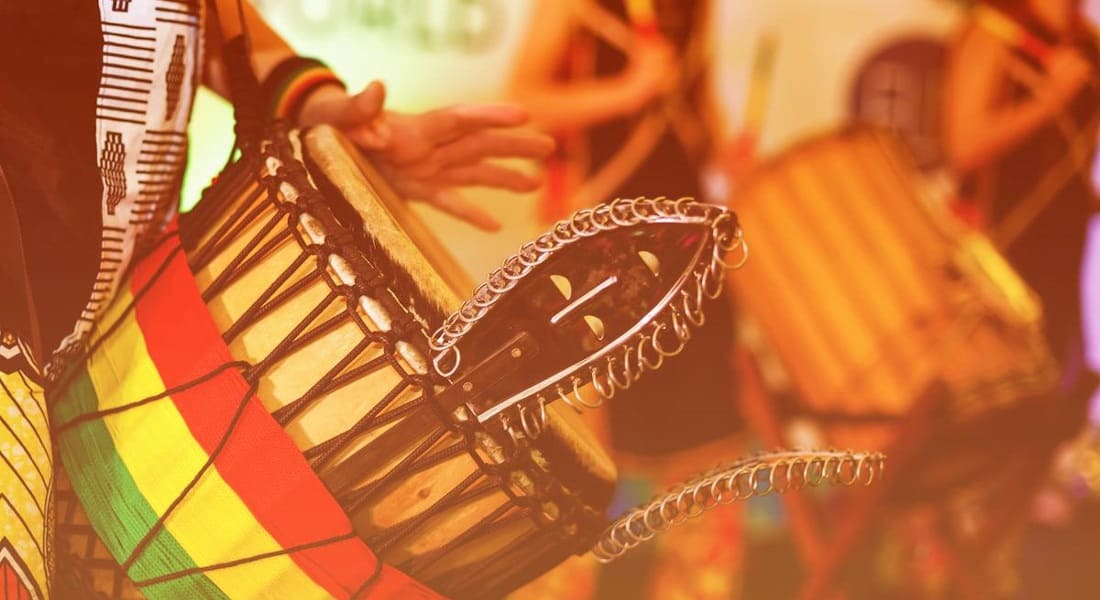
To build an effective practice plan, it’s essential to set clear goals. These goals can be short-term or long-term. For example, you might aim to learn a specific rhythm, improve your playing speed, or become comfortable playing in a group. Goals give your practice direction and help you stay motivated.
Gradual progression is also crucial. Start with simple rhythms and gradually move on to more complex patterns as you improve. That way, you build skills steadily while staying challenged. Recording your practice sessions is another powerful habit. Listening back helps you track your progress over time, spot what needs work, and adjust your plan accordingly. You can record audio only, or you can film yourself to check the accuracy and placement of your strokes.
Variety and exploration are essential to maintaining interest in your training program. Explore different rhythms, musical styles, and playing techniques to enrich your sound and your overall musical experience. Don’t forget to spend time listening to music, especially renowned percussionists such as Mamady Keita. Musical inspiration can spark new ideas and motivate you to keep improving.
When possible, practice with a group. Playing with other musicians helps you sync up, listen, and react in real time, and it’s also a great way to share knowledge and tips. Finally, remember that repetition is essential for mastery. Djembe rhythms are built on repeating rhythmic phrases, so regular practice helps lock them into muscle memory.
Explore African rhythms to deepen your mastery of the djembe
When you immerse yourself in the world of the djembe, it’s hard not to be captivated by the richness of rhythms and African musical styles. This musical exploration is a unique chance to discover the cultural and rhythmic diversity of the continent. Africa is the cradle of percussion, and each region and ethnic group has developed its own musical traditions. African rhythms are deeply rooted in history, spirituality, and everyday community life. Each rhythm tells a story, carries emotion, and connects people to their roots.
Djembe playing styles vary widely from one region to another. From the powerful, fast Mandinka rhythms in Guinea to the fluidity of Malian grooves and the complexity of Ivorian polyrhythms, each style offers a unique musical experience. Learning these African rhythms is an adventure in itself. It takes attentive listening, an appreciation of the culture they come from, and regular practice. Percussionists are often guided by masters or elders who pass these rhythms down from generation to generation. By listening closely, you’ll naturally progress—your ear will open up to new sounds you might never have imagined, and you’ll start trying to reproduce them yourself.
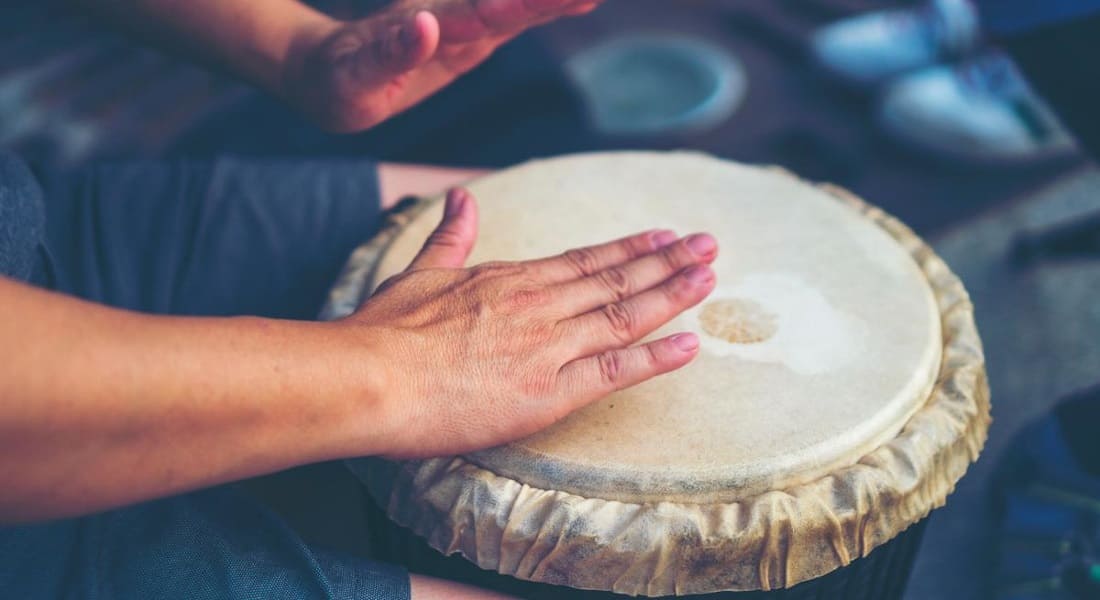
How can you measure your progress in learning this type of drum?
If you’ve chosen to teach yourself the djembe, measuring your progress is essential for staying motivated and making sure you’re headed in the right direction. However, as a self-taught player, it can be hard to know where to start and how to evaluate your development. One major challenge is the lack of direct feedback. Unlike working with a teacher or taking a group class, self-taught players don’t always have someone to correct mistakes or give immediate guidance. This means that it’s essential to develop your musical ear and your ability to self-assess. Recording your practice sessions can be a valuable tool for hearing your progress and pinpointing what needs improvement.
Another challenge is staying disciplined and motivated. Self-directed learning can occasionally lack structure, which can lead to inconsistent practice. Setting clear, achievable goals is an effective way to stay motivated. These goals can focus on learning new rhythms, improving technique, or preparing a personal performance.
Musical exploration is one of the most exciting parts of learning on your own. Still, it’s important to balance personal creativity with solid fundamentals. Skilled self-taught percussionists dedicate time to traditional rhythms and basic techniques to build a strong foundation. To measure your progress, it can also help to record videos of your playing. This makes it easier to see how your technique evolves over time. Sharing these videos with other percussionists or online can also bring constructive feedback.
Finally, remember that learning djembe on your own is a personal journey. There’s no fixed timeline for progress, and every percussionist grows at their own pace. The ultimate goal is to find your own musical voice and thrive as a percussionist.
How can you learn to play the djembe without disturbing your neighbors?
Learning to play the djembe is an exciting musical experience, but it’s important to keep your neighbors in mind so you don’t disturb them during practice. The powerful rhythms and lively tones of the djembe can get loud, but there are effective ways to practice more quietly. First, consider a muffling technique. By placing a cloth or sponge inside the shell of your djembe, you can significantly reduce the volume without ruining the feel of your playing. Test a few materials to find what works best for you—this often depends on the size of the instrument.
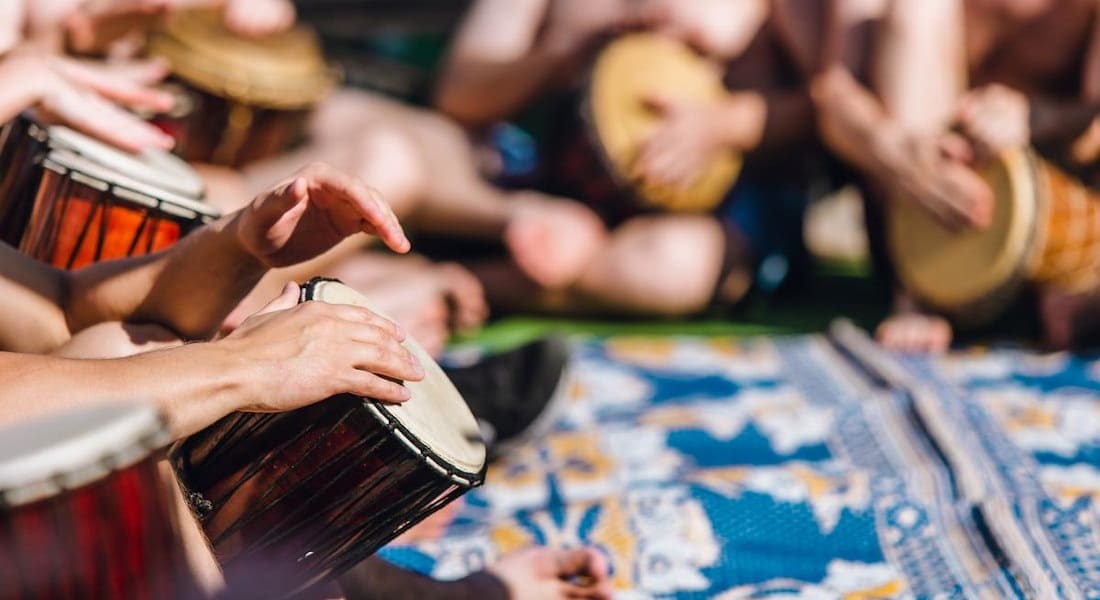
Another essential tip is choosing the right practice times. Avoid playing late at night or early in the morning. Instead, pick times when noise is generally better tolerated, such as early afternoon. If possible, consider practicing outdoors. Open spaces, such as parks or gardens, offer excellent natural acoustics, reducing the volume heard by your neighbors while creating a pleasant atmosphere for your session.
Investing in an electronic djembe is another option to consider. These instruments let you play with headphones, so you get great sound while keeping things peaceful around you. Finally, don’t hesitate to communicate with your neighbors. Let them know about your passion for djembe and keep them informed about your practice times. By staying open and respectful of their comfort, you can maintain good neighborly relationships while continuing your musical adventure.
Learn to play the djembe with an excellent model
While the djembe can be played instinctively, true mastery takes training that can last for years. In fact, even the greatest djembe players in Africa spend countless hours developing their skills from early childhood. Now that you’ve read this article, you know the different ways to learn how to play the djembe well. It’s up to you to choose the approach that fits you best.
That said, choosing a high-quality djembe makes a real difference in how quickly you learn and how enjoyable the journey feels. You’ll want an instrument that fits your needs and skill level and delivers exceptional acoustics. That’s exactly what the Instruments du Monde online store offers, with carefully selected models designed to give you an outstanding musical experience.
Treat yourself to a great djembe by browsing all the models available at Instruments du Monde.
And if you feel like staying creative, did you know you can also illustrate this percussion instrument using simple markers or pencils? Learn how with our tutorial that explains how to draw a djembe. You’ll be sure to create something beautiful.
