



Written by Ambre Montespan - Updated on May 8, 2026
Table of contents:
Have you heard of a musical instrument called a djembe and want to learn more about this iconic African drum? What does it look like? Where does this percussion instrument come from? What exactly is a djembe?
I first discovered the djembe more than 20 years ago, and it’s been part of my everyday life ever since. Driven by pure passion, I’ve done a great deal of research on this drum—its construction, its origins, and how it has evolved over time. In other words, I’m here to satisfy your curiosity about this exotic, traditional instrument: the djembe.
The djembe is a percussion instrument that originated in Africa more than 700 years ago and has evolved in remarkable ways. It features a hollow wooden shell shaped like a chalice, topped with a stretched drumhead that’s played with the hands.
After reading this article carefully, you’ll know everything you need to know about the djembe, including:
- The physical appearance of the djembe
- The origins of this African drum
- How this instrument produces sound
You’ll know what a djembe really looks like and be able to recognize one at a glance just by its shape. You’ll also have the knowledge to confidently answer questions from people who are curious about this instrument.
Let’s dive in and discover the djembe, this magnificent African drum.
What does a djembe look like?
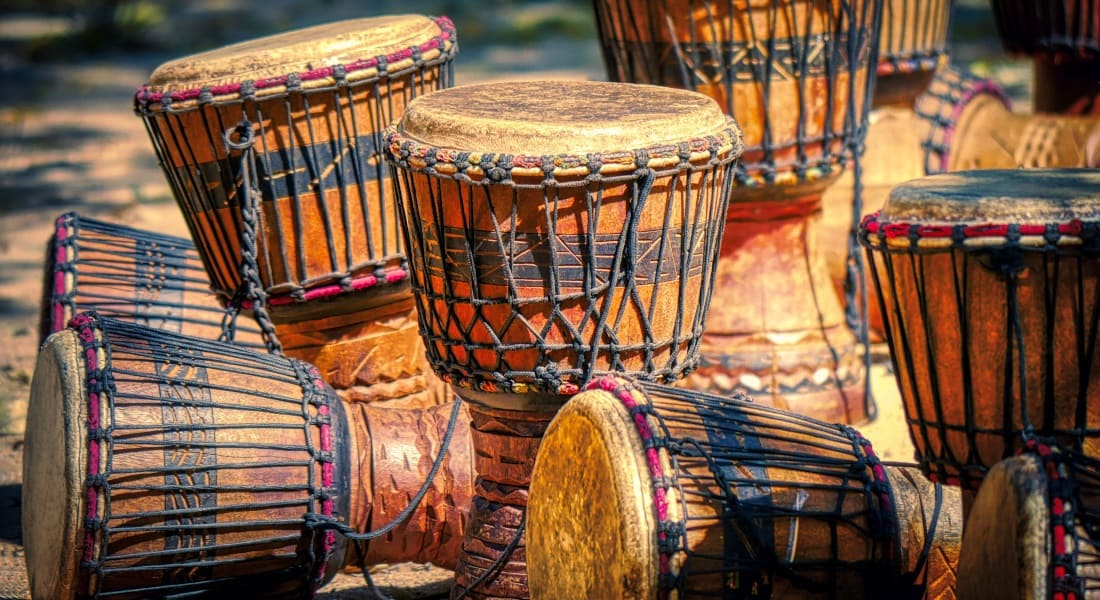
The djembe is an African drum with an unmistakable silhouette. It’s both a percussion instrument and a work of art. A closer look at its build shows just how unique and captivating it really is.
The djembe consists of three main elements: the shell (resonating body), the drumhead, and the tuning rope. The shell, often carved from a single hollowed-out tree trunk, is shaped like a chalice, with a flared base that opens upward into a wide rim. This distinctive djembe design creates exceptional sound projection, making it one of the most powerful hand drums in the percussion family.
The drumhead is typically goatskin, though modern versions may use plastic or other synthetic materials. It is stretched tightly over the shell with nylon or plant-fiber cord. By adjusting the tension, you can fine-tune the drum’s tone, which makes the djembe impressively versatile.
The tuning rope forms a complex network around the upper part of the djembe. It’s laced around a metal hoop that sits on the rim of the shell. By tightening or loosening this rope, the percussionist changes the pressure on the drumhead, which affects the pitch. This gives you a wide range of sounds, from deep bass tones to sharp, cutting highs.
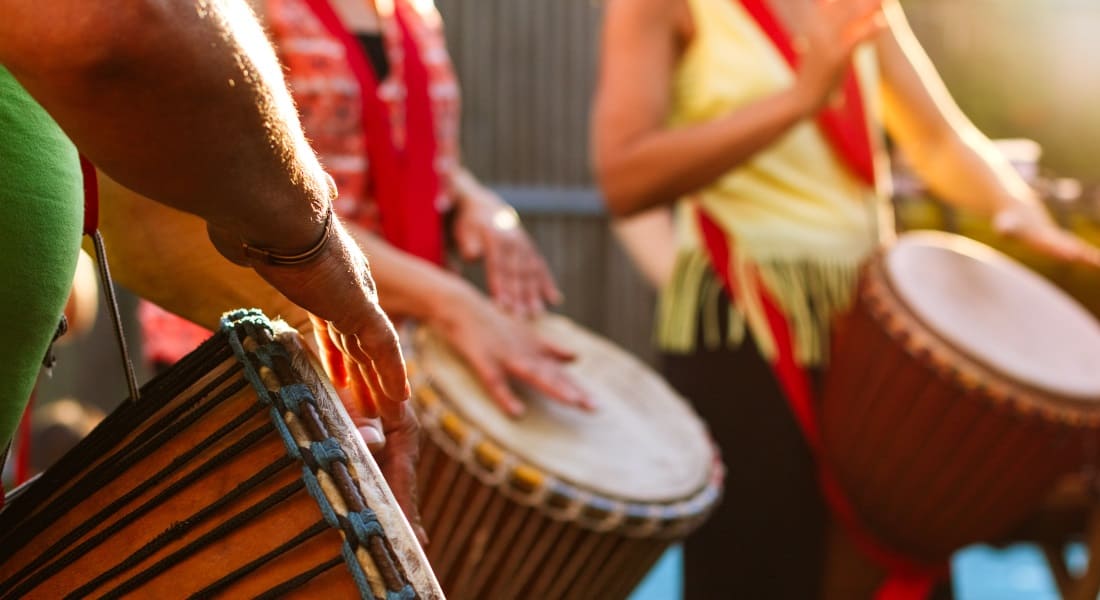
The top surface of the djembe is traditionally played with the hands, fingers, and palms, allowing for great agility when creating intricate rhythms and subtle dynamics. Experienced percussionists can produce a wide range of sounds, from gentle to thunderous, using different playing techniques.
Many djembes also feature artistic inlays and engraved patterns on the outside of the shell. These decorative details aren’t found on every djembe, but they often reflect the culture and traditions of the instrument’s region of origin. They add a striking visual dimension to the raw beauty of the wood and the elegance of the stretched drumhead. You can watch a djembe player in the video below to get a feel for the tones this one-of-a-kind instrument can produce.
The djembe is a remarkable percussion instrument thanks to its iconic shape, handcrafted construction, and tonal range. Its chalice-shaped shell, stretched goatskin head, and tuning rope come together as a harmonious whole that resonates with the richness of African culture. Whether you play it on stage or admire it as a piece of art, the djembe continues to fascinate and inspire musicians and enthusiasts around the world.
What are the origins and evolution of this African drum?
The djembe has its roots in West Africa, in the heart of the Manding Empire, also known as the Mali Empire. This empire, founded by Soundiata Keïta in the 13th century, stretched from Guinea to eastern Mali and also encompassed northern Ivory Coast and Burkina Faso. The djembe, called “boté” by the Soussou people of Guinea, is a core element of a polyrhythmic ensemble. You’ll rarely hear it solo, since it’s typically played alongside other percussion instruments such as the doundounba, sangban, kenkeni, several accompanying djembes, and a lead solo djembe. It’s also deeply connected to African dance, where djembe phrases accent and drive the dancers’ movements.
The djembe began traveling outside of Africa in the 1950s, thanks to African ballet companies and figures such as Fodéba Keïta. Guinea, under President Sékou Touré, also played a major role by elevating the country’s national ballet to an international showcase. The 1980s proved decisive in bringing this African drum to the world, thanks to national-ballet masters such as Mamady Keïta, Amadou Kiénou, Famoudou Konaté, François Dembélé, Adama Dramé, and others. They helped spread the instrument globally by opening learning centers in Europe, the United States, and Japan.
During the 2000s, the djembe moved beyond its traditional cultural settings and found a place in modern music. In 2002, Noel “Toca” Rivera, percussionist for American artist Jason Mraz, brought the djembe into pop-rock during a tour built around a guitar-and-djembe duo. Starting in 2010, French artist Christina Goh made the djembe her main rhythmic instrument in albums and live shows, pairing it with electric instruments such as guitar and 8-string bass on tracks blending blues and Afro-rock. To go deeper into the story, read our other article that explores the origins of the djembe. You’ll learn the full history of this African drum.
What is a djembe player called?
A djembe player is commonly called a “djembefola” or “djembéfoli.” These terms come from West African culture and refer to a musician or artist who specializes in playing the djembe. However, other expressions may also be used depending on the region or cultural context.
In West Africa, where the djembe originated, the term “djembefola” is widely accepted. It conveys skill and mastery of this polyrhythmic instrument, and djembefolas are often seen as guardians of African musical tradition and culture.
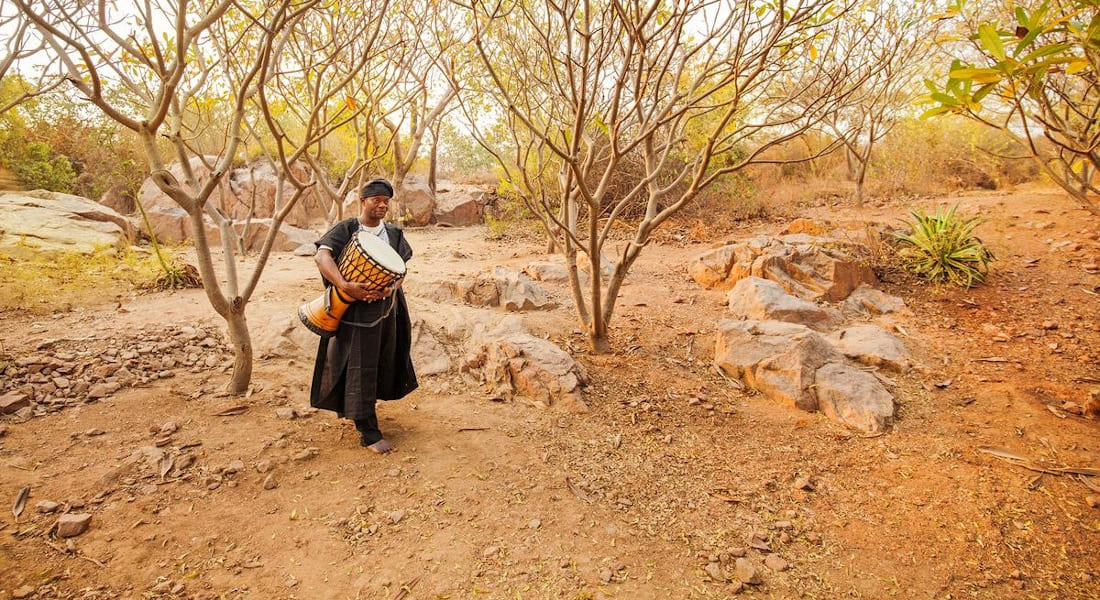
Outside of Africa, particularly in global percussion and music communities, the term “djembe player” is widely used to describe anyone who plays this instrument. It’s a more generic and inclusive label that covers percussionists of all skill levels, from beginners to professionals. Some music and ethnomusicology enthusiasts also use the term “African percussionist” to refer to a djembe player, emphasizing the instrument’s African origin and its role within broader musical performances.
Ultimately, the term depends on the context, culture, and the speaker’s perspective. Whatever the label, these musicians play an essential role in preserving and sharing African music, bringing a powerful rhythmic richness to the international music scene.
How is the sound of a djembe produced?
The magic of the djembe’s sound lies in the complex combination of several elements working together to create a rich, dynamic palette. To understand how a djembe produces sound, let’s look at the main components involved.
The djembe’s resonating body
The djembe’s resonating body is traditionally carved from a single tree trunk in the shape of a chalice. This distinctive design is essential for strong sound projection. The shell amplifies the vibrations created by the drumhead and tuning rope, giving the djembe its unmistakable voice.
The head of this African drum
The head of the djembe is usually goatskin, although modern variants sometimes use synthetic materials. The head is stretched tightly over the shell using nylon or plant-fiber cord. When struck, the head vibrates and generates sound waves. The tighter the head, the higher the pitch, while less tension produces a deeper tone. The sound waves then resonate inside the shell and exit through the bottom of the drum, producing the djembe’s characteristic sound.
The tuning rope of the instrument
The tuning rope, often made of nylon, is laced around the top of the head. By adjusting its tension, the percussionist can change the pitch. This ability to tune the drum is crucial for producing different tones and rhythms, giving the instrument its rich, varied sound.
The musician’s striking technique
The sound of a djembe is also strongly influenced by the percussionist’s striking technique. Players use their hands, fingers, and palms to strike the head in different areas, producing distinct tones. Gentle strokes and stronger hits create rhythmic depth and subtle musical nuance.
Openings and holes in the sound box
Some relatively rare djembes feature openings or holes in the shell. These allow sound vibrations to escape in a controlled way, influencing the instrument’s resonance and overall character.
Finally, keep in mind that the djembe’s unique sound comes from the interaction between the shell, the head, the tuning rope, the striking technique, and any openings.
What material is this musical instrument made of?
The djembe is made from two main elements: the wood of the shell and the head stretched across the top. Let’s look at each one separately.
The resonating body of the djembe is traditionally carved from wood, although you can also find models made from synthetic materials such as plastic or aluminum. The woods used vary, but some are more sought-after than others, such as mahogany, doussie, or iroko. Each offers distinct tonal characteristics, and the type of wood has a major impact on the djembe’s sound—its warmth, depth, and resonance. See this article on selecting wood for your djembe to learn more.
The head of the djembe is one of its most crucial components. Traditionally, goatskin is used, although modern variants may use synthetic heads. Some makers also use antelope or cow hide. Goatskin is especially prized for its resonance, durability, and authentic tone. Head quality plays a major role in how the djembe sounds: a high-quality head produces rich harmonics and strong resonance for a warm, complex voice. Take the time to read this article, which will reveal the nuances between all djembe skins.
Because both the wood and the head are natural materials, they age gracefully and develop a rich patina over time, adding to the instrument’s authenticity. Together, these elements form the foundation of the djembe, embodying the richness of African musical tradition and continuing to inspire musicians around the world with its unique sound and exceptional craftsmanship.
How loud is a djembe?
A djembe’s volume can vary widely depending on several factors, including the size of the drum, the percussionist’s technique, and the materials used. For the loudest models, sound levels can reach up to 105 decibels, which is louder than a typical lawnmower. Here’s how those factors affect how loud a djembe can be.
The size of the djembe
Size is one of the biggest factors when it comes to volume. Djembes come in many sizes, from small models around 6 to 8 in tall (15 to 20 cm) to concert djembes that are 24 in (60 cm) or taller. In general, the larger the djembe, the more powerful it can sound, thanks to its bigger resonating body. Smaller djembes tend to have a softer, more intimate voice.
The percussionist’s playing technique
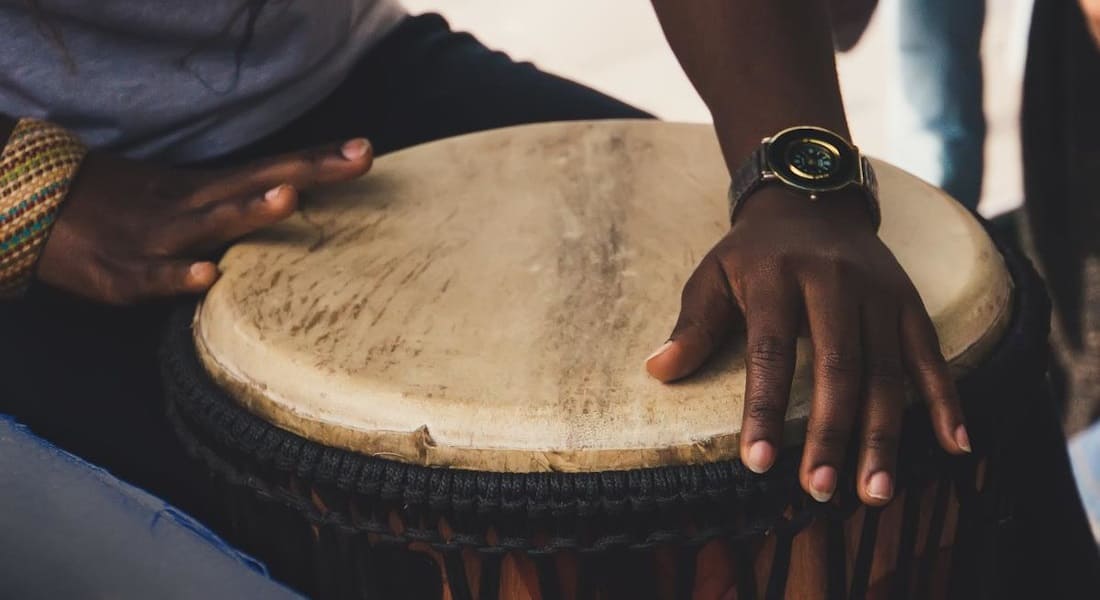
The way a percussionist plays also has a major impact on volume. Striking technique, angle, and especially how hard the drum is hit—as well as where the hands land on the head—directly affect volume and projection. Skilled players can also create subtle dynamics by refining their touch.
The material used to make the instrument
The type of wood used for the shell can influence volume as well. Some woods, such as lenke, are known for producing a strong, projecting sound due to their density. Others, like djabara, offer slightly different tonal qualities. The right choice often comes down to the sound you’re looking for.
The environment in which the drum is used
Finally, the space where you play affects perceived loudness. Outdoors, sound has room to disperse, which can make the drum feel less intense up close while still carrying well. Indoors, reflections and reverberation can make the djembe seem much louder—one reason some percussionists prefer practicing in enclosed spaces, while others love playing outside.
Overall, a djembe’s volume is highly variable and can be adapted to the player and the musical setting. In most cases, a djembe will produce between 60 and 100 decibels. This drum is wonderfully versatile, capable of both soft, subtle tones and powerful, driving rhythms. That versatility is exactly why it’s so loved by percussionists worldwide.
Get yourself a djembe now and enjoy a pleasant African musical journey.
The djembe isn’t deeply rooted in Western culture, which is why many people aren’t exactly sure what it is—or where it comes from. But thanks to what you’ve learned in this article, you now know exactly what a djembe is. You’ll be able to recognize one instantly, and you might even be feeling the urge to get one of your own.
That said, truly beautiful, high-quality djembes can be surprisingly hard to find. To avoid low-end drums that won’t deliver the sound and feel you’re looking for, shop with Instruments du Monde, where you’ll find a wide selection of African drums suited to every type of player. It’s a unique chance to add a trusted musical companion to your life—ready to follow you on every rhythmic adventure and spark your creativity.
Explore our full selection of djembes today.
The dimensions of a djembe matter a lot, because they largely determine the tones the drum can produce. Read our article to help you choose the right djembe size for your needs. You’ll then be sure to select the model that fits you perfectly.
