



Written by Ambre Montespan - Updated on Sep 25, 2026

Table of contents:
Thinking about buying a djembe and noticing there are several types of drumheads (skins) available? Already own one of these African percussion instruments and want to replace the head? What are the different drumhead materials used for this type of drum, and what makes each one unique? Which skin should you choose for your djembe?
I discovered the djembe over 20 years ago and have watched this percussion instrument being made on several occasions. I’ve also had the opportunity to play many djembes fitted with different types of drumheads. In this article, I’ll share the information and insights I’ve gathered about the various heads used for djembes.
The drumhead you choose will shape your djembe’s voice, so it’s crucial to pick the right thickness and decide between animal and synthetic materials.
As you read this article, you will discover:
- How the type of drumhead affects your djembe’s sound
- The different animal skins used for this drum
- The ideal thickness for your percussion instrument
- The special case of synthetic heads for the djembe
All this information will help you understand the specific characteristics of each type of drumhead used in making djembes. You’ll be fully informed to choose the head that best fits your instrument and your playing style.
Let’s get straight to the point and figure out what type of drumhead you need.
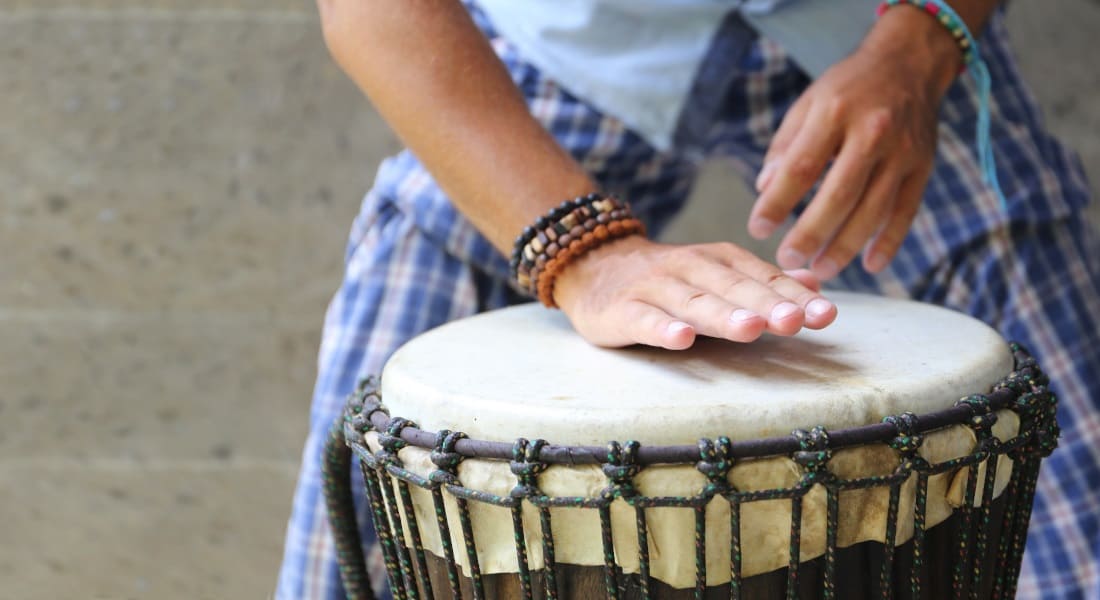
Why is it important to choose the right skin for your djembe?
Before exploring the different types of skins that can be used on a djembe, it’s important to remember that the head you choose has a major influence on your instrument. Drumhead choice has a significant impact on tone. Each material brings its own sound signature that shapes the djembe’s voice. Thicker skins generally produce deeper, lower tones, while thinner skins favor higher, brighter tones. This lets percussionists fine-tune their sound to match personal preference and musical style. In addition, the drumhead can influence the djembe’s resonance, power, and versatility, just like the selection of the wood used to make the drum, making it a key part of customizing this iconic African instrument.
Ultimately, it’s important to recognize that the type of skin you select for a djembe plays a vital role in creating its distinctive sound. Percussionists and djembe makers factor in these differences to create instruments suited to a variety of musical styles and sound preferences. This contributes to the diversity and richness of musical expression through the djembe, which remains a symbol of African culture and global percussion.
What are the best animal skins for playing this African drum?
Traditionally, the animal skins used in making djembes come from goats, cows, deer, or antelope. It’s worth exploring each of these options in turn.
Goat skin for a warm, deep sound with the djembe
Goat skin is prized for its warm tone. When properly stretched over the djembe, it produces a deep, enveloping sound that feels both warm and authentic. A djembe with a goatskin head is also rich in harmonics, meaning the sound contains several layers of frequencies, which makes it complex and interesting. This rich timbre helps the djembe stand out in an ensemble, drive African polyrhythms, and add depth to your music.
It’s also worth noting that goat skins aren’t uniform in thickness; they vary depending on the region and how the hide is prepared. This variation gives makers and players room to fine-tune the instrument’s voice. A thinner skin can produce a higher-pitched, more responsive sound, while a thicker skin can produce a deeper, heavier sound. This allows artisans to customize the djembe according to the musician's preferences.
Goatskin is one of the best all-around choices for a djembe drumhead. This traditional African instrument is deeply rooted in West African culture, and goatskin has been used for generations to make djembes, helping preserve the authenticity and tradition of the instrument. Goatskin is also closely associated with the classic sound of African rhythms—its rich timbre and warm tone are especially well suited to expressing the polyrhythms and musical diversity of West Africa.
Finally, goat skins are also valued for their flexibility, letting percussionists use a wide range of techniques—from open tones and slaps to deep bass notes—expanding the djembe’s sonic palette.
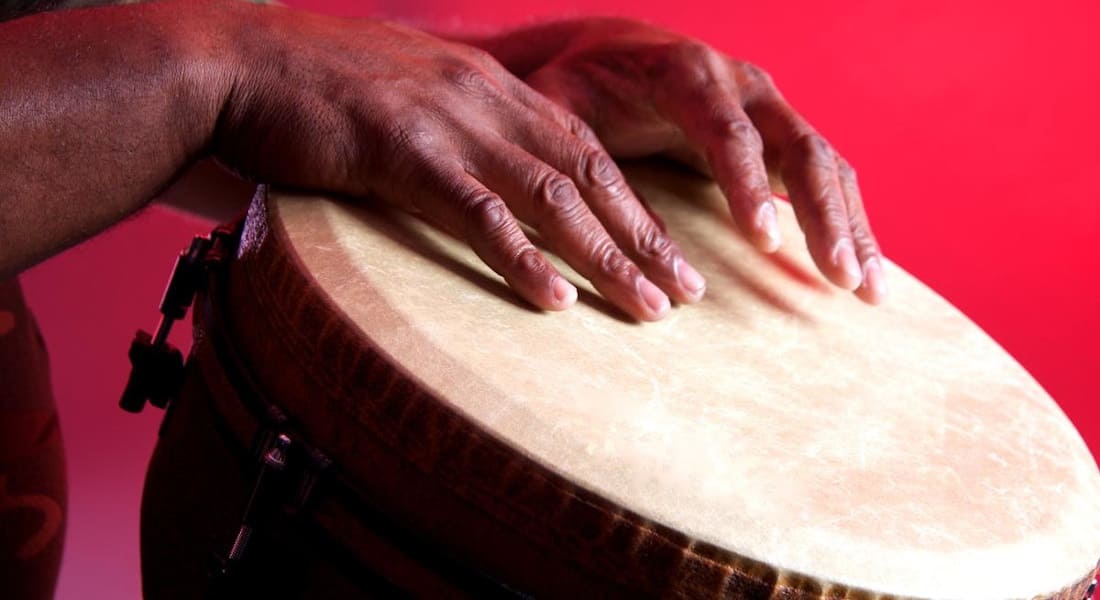
Cowhide: a skin renowned for its durability and sound projection in the world of African drums
Cowhide is a material commonly used in the manufacture of djembes due to its unique sound characteristics. To install it, it’s pulled tightly over the lower part of the djembe’s shell using rope or leather straps. That precise tension is essential for getting the djembe’s signature sound.
One advantage of cowhide is its ability to produce deeper, lower sounds compared to goatskin, making it a favorite for percussionists who want powerful, resonant lows. Cowhide also tends to project more, meaning the sound carries farther. That makes it a solid option for outdoor performances or larger spaces where you need more volume and reach.
Furthermore, cowhide is generally thicker and more robust than goatskin, so it’s less prone to damage from intense, prolonged playing—making it a smart, durable choice for high-energy performances. Finally, cowhide offers tonal versatility, meaning it can be used to achieve a variety of sounds depending on how it is tensioned and played. This allows percussionists to explore different musical styles and adapt to various sound requirements. On the other hand, goat skin offers better overall acoustic performance, which is why it is often preferred.
Deerskin for a clear, crisp sound on your djembe
Deer skin, though less common than goat or cow, can bring a unique and distinct voice that sets your djembe apart. In fact, it is prized for its ability to produce a clear, crisp, and bright sound. It offers a brighter tone compared to goat or cowhide, which can be especially appealing for certain musical styles or for adding a different color to a percussion ensemble. Deer skin also delivers good resonance and solid sound projection, so your notes travel clearly across the stage or studio.
Furthermore, deer skin is sensitive to subtle playing techniques, allowing percussionists to express a wide variety of nuances and emotions through their playing. This makes it a popular choice for musicians who wish to explore a wide range of sound dynamics. Deer skins are also appreciated for their distinctive visual appeal. The natural markings and patterns of deer skin can add an interesting aesthetic touch to the djembe, which may be appealing to some percussionists. On the other hand, they are generally more expensive than goat and cow skins and are also more fragile. As a result, they tend to tear after a few years.
Antelope skin, used to achieve rich and expressive sounds with the djembe
Antelope skin is a less common but quite remarkable choice for djembe making. Antelope skin is highly prized for its ability to produce a rich and expressive sound. It offers a complex tone with subtle harmonics that give it a unique sound character. This tonal variety is ideal for musicians looking to create expressive melodies and rhythms. In addition, antelope skin is highly responsive to subtle playing techniques. Percussionists can manipulate nuance, articulation, and dynamics depending on how they strike, making it easier to convey emotion through their performance.
Antelope skin also delivers excellent resonance and powerful sound projection, so your djembe’s voice cuts through the mix in group performances or large venues. What’s more, it suits everything from traditional African rhythms to contemporary styles, giving you a versatile sound palette for any musical context. The main drawback is that antelope skin is rare, as antelope populations continue to decline. This scarcity makes it relatively expensive and raises ethical concerns about endangered species.
Is synthetic skin effective for this percussion instrument?
Synthetic skins, though not as traditional as natural skins, are sometimes used on djembes because of their specific advantages. They’re known for superior durability compared to natural skins, standing up better to intensive playing and temperature fluctuations. This toughness can be a real plus for players who frequently perform outdoors or in more demanding conditions. Synthetic skins are also less sensitive to humidity than natural skins, so they hold their tension and tone even in damp environments—useful in places with unpredictable weather.
Unlike natural skins, synthetic skins deliver more consistent tone across different weather conditions. They’re less affected by changes in humidity or temperature, which helps you keep a stable sound. In addition, synthetic skins can be more affordable than high-quality natural skins, making the djembe more accessible to beginner percussionists or those on a limited budget.
Finally, synthetic skins do not pose any animal-welfare concerns. However, many experienced players still stick with animal skins because they feel synthetic alternatives don’t match their performance. The choice is yours, based on your convictions and playing goals.
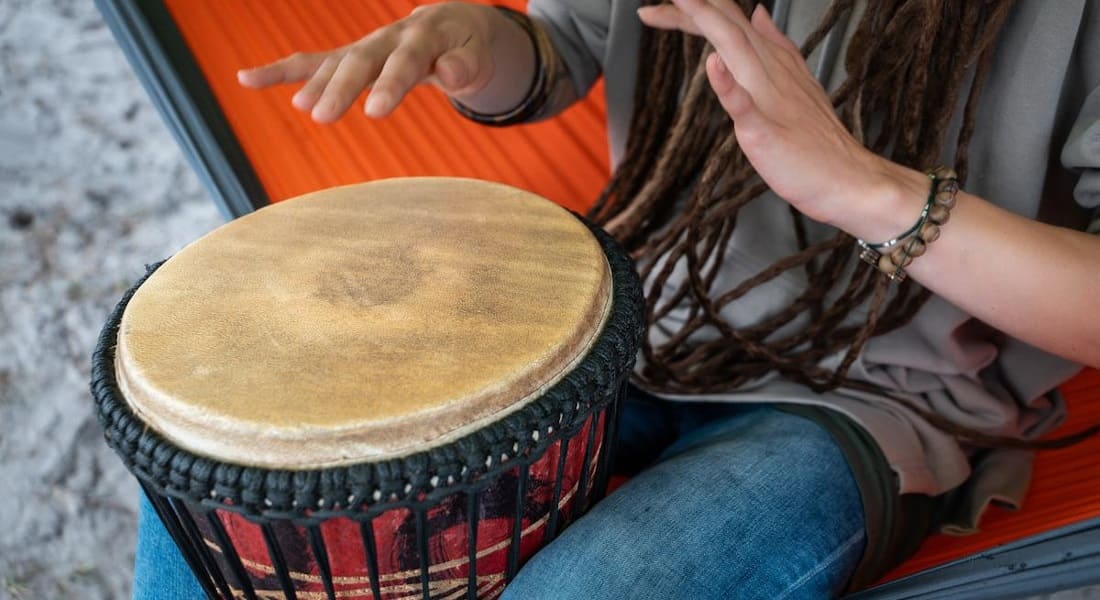
How thick should a djembe head be?
The thickness of a djembe drumhead is a crucial factor that greatly influences the instrument’s sound. Djembe heads vary in thickness, and the right choice depends on your preferences and the style of music you want to play. Thin skins are generally about 0.02 in (0.5 mm) thick. They’re lighter and more sensitive to touch, ideal for producing high-pitched, bright, and fast sounds. Percussionists who prefer to play fast rhythms and solos often opt for thin skins. They offer a quick response and crisp articulation, allowing you to explore a wide range of nuances.
Medium drumheads are approximately 0.03 in (0.8 mm) thick. They produce balanced tones that work well across many musical styles. These heads offer strong versatility, which is why they’re a popular choice for many players. They blend the responsiveness of thinner skins with some of the depth of thicker ones.
Thick heads, on the other hand, are usually over 0.04 in (1 mm) thick and can be up to about 0.08 in (2 mm). They’re heavier and produce deeper, lower-pitched sounds. Percussionists seeking deep resonance and powerful projection often opt for thick skins. They’re sturdy and can withstand more intense playing conditions, making them an ideal choice for group performances.
It’s worth noting that thickness is just one part of customizing your djembe’s sound. The quality of the skin, how it’s treated, and how well it’s fitted to the drum also play essential roles in achieving the tone you’re after. In short, the most common djembe skin thicknesses range from about 0.02 to 0.04 in (0.5 to 1 mm). The best choice depends on your preferences and musical style: thin skins deliver bright, fast tones, medium thickness offers versatility, and thick skins unleash deep, powerful sounds.
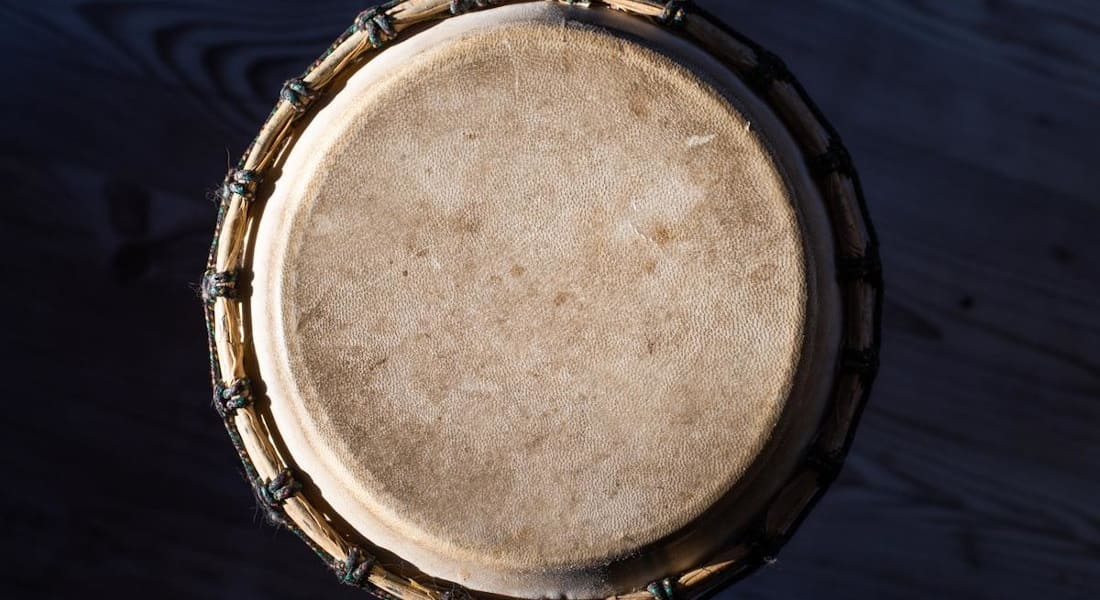
Get a quality drumhead for your African drum
Choosing the right skin for your djembe is no small decision. The best option depends on the sound you want, and it’s not always easy for beginners to know where to start. Thanks to the information in this article, you now understand what each drumhead material brings to the instrument, opening up endless sound possibilities for percussionists everywhere. Whether you’re an experienced musician looking for a specific head to refine your tone or a curious beginner discovering the magic of the djembe, you’ll be able to make the right choice with confidence.
However, finding high-quality skins specifically made for playing the djembe can be tricky, since dedicated retailers are relatively rare. That’s why we recommend getting your next djembe skin from Instruments du Monde. Whether you’re simply looking for a replacement head or a complete djembe, you’re sure to find something that fits your needs.
Explore our full collection of skins and djembes to find the perfect match for your sound.
Once you have a good idea of the type of skin you want for your African drum, it may be helpful to think about how much you want to invest in this musical instrument. Check out our article on the price of djembes to see what kind of model you can get based on your budget.
