



Written by Ambre Montespan on Mar 14, 2023 · Updated on Oct 10, 2026

Table of contents:
So you’ve decided to treat yourself to a kalimba and you want to invest in a quality instrument by choosing a reputable brand. But you don’t really know the different thumb piano brands on the market. Are they all good value for the money? Which kalimba brand is the best fit for you?
I’ve been playing the thumb piano regularly for over 10 years, and over that time I’ve tested at least 20 different brands. As a result, I’ve been able to weigh the pros and cons of each one, and I can point you in the right direction to help you choose your kalimba.
To choose the right kalimba brand, start by deciding how much you want to spend and what type of thumb piano you’re looking for. Once those criteria are clear, only a few brands will really make sense, and you can choose the one that best matches your preferences.
In this article, I’ll introduce around ten kalimba brands that I consider the most noteworthy. This isn’t an exhaustive list, but you’re very likely to find the right match by choosing one of them. Let’s look at the brands:
- Gecko
- April Yang
- Hluru
- LingTing
- Aiersi
- Cega
- Seeds
- Kimi and Nalu
With all this information at your fingertips, you’ll be able to choose the kalimba brand that suits you best, and you’ll even be able to advise friends who want to buy a thumb piano, too.
Let’s start by looking at each of these brands together.

Choose a high-end kalimba from Gecko
If you’ve started researching good kalimba brands, there’s a strong chance you’ve heard of Gecko. Founded in 2009, this company specializes in manufacturing kalimbas, ukuleles, electric guitars, and cajons (another percussion instrument). In practice, though, thumb pianos remain their main focus. The brand’s logo is, unsurprisingly, a green-and-black gecko.
Gecko offers kalimbas with excellent build quality and finishing. Most models have 17 or 21 tines, although you can also find 15- and 8-tine versions. There are kalimbas with and without a resonator box, and their thumb pianos come with a generous set of accessories. Several wood types are available, such as classic mahogany or maple. It’s also worth noting that Gecko is one of the few manufacturers that offers thumb pianos made from camphor wood, such as the Gecko K17CAP. This wood gives off a pleasant camphor scent for about four to five years after being cut, which some players really enjoy.
It’s rare to find a musician who’s disappointed with Gecko. The main downside is the price, especially for kalimbas with a resonator box, which can easily go over €100. If your budget allows and you want to invest in a wooden instrument—Gecko doesn’t offer acrylic kalimbas—Gecko is a great option to consider. Here is a video example:
Discover the musical instruments of the famous April Yang
April Yang is a musician who became widely known thanks to her YouTube channel, which now has over 100 million views—a reflection of her undeniable talent. She mainly plays the kalimba, but she also performs on other exotic instruments such as the tongue drum and the ocarina.
After previously playing Gecko, Hluru, and LingTing kalimbas, April Yang founded her own company with her husband on December 15, 2017, with the goal of manufacturing musical instruments. In 2019, she launched her own kalimba brand, simply called “April Yang.” Its logo features a circle with a ram’s head inside.
Designed entirely by the artist using the materials she believes perform best, the April Yang brand currently offers only one thumb piano: a 17-tine model without a resonator box, made from solid beech wood. The April Yang kalimba is therefore only for you if you’re looking for this specific type of instrument. If you’re set on an acrylic model or a 10-tine thumb piano, you’ll need to look elsewhere. Otherwise, it could easily become the best kalimba you’ll ever own. Listen to the sound of this high-end instrument:
Hluru thumb pianos: good value for money
Hluru is a musical-instrument brand launched in 2017 that focuses on tongue drums, handpans, and, of course, kalimbas. It operates from a production, research, and development facility spanning about 192,000 sq ft (17,800 m²), where more than 200 artisans craft instruments by hand. The brand prides itself on blending new technologies with traditional craftsmanship. Their logo features a circular arc shaped like a smile, with several vertical lines reminiscent of the tines of a thumb piano.
When it comes to its mbiras or sanzas (other names for the kalimba), Hluru offers a very wide range of instruments, from 7 to 34 tines, in many different wood types. Whether you want a thumb piano with or without a resonator box, you’re sure to find what you’re looking for. Check out our review of Hluru kalimbas to learn more about this brand.
It’s also worth mentioning that this brand offers a particularly successful model called “ocean,” which combines wood with epoxy resin, with a whale and a jellyfish embedded inside. The result is visually striking. You can see it by clicking on the image below:
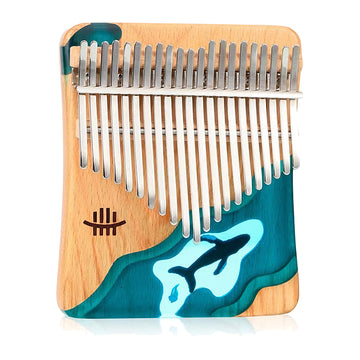
Hluru kalimbas are a bit more affordable than those from Gecko or April Yang, which can be a great compromise in terms of value. Expect to pay between €80 and €180. The best approach is to listen to a sample—like this handmade 17-tine black walnut kalimba—to see if the brand matches the sound you’re after.
Mbiras from Lingting, a safe bet
Founded in 2016, LingTing is also a manufacturer of exotic musical instruments. In addition to kalimbas, it also makes tongue drums, handpans, and ukuleles. You can spot a LingTing thumb piano right away: each one features a small gold-colored metal plate screwed to the front of the wooden body, simply inscribed “LingTing.”
The brand offers no more than around ten different models with 17 or 21 tines. LingTing kalimbas without a resonator box are quite thick compared to the competition, which is especially appealing to players with larger hands. They also come with plenty of accessories, including a traditional decorative tassel, which some musicians absolutely love.
LingTing still stands out with real strengths: a polished finish for a very reasonable price starting around €90. Once again, it’s best to listen to what the brand can do to make sure you’re choosing correctly, like this example of the melody “Ballade pour Adeline” played on a 21-note kalimba.
A good compromise for the sanzas in the Aiersi range
The Aiersi brand has specialized in manufacturing guitars and ukuleles since 2013. Only very recently has it begun developing its own range of kalimbas. Their logo is simply the brand name in a distinctive font.
There aren’t many thumb piano models under the Aiersi brand. They all have a resonator box, 17 tines, and are made from mahogany. The main differences are the color and the shape of the body, which may or may not be more ergonomic. If you’re on a tight budget, Aiersi isn’t necessarily a bad choice, although I personally think you’ll be better off with the next brand I’m about to show you, which is in a similar price range.
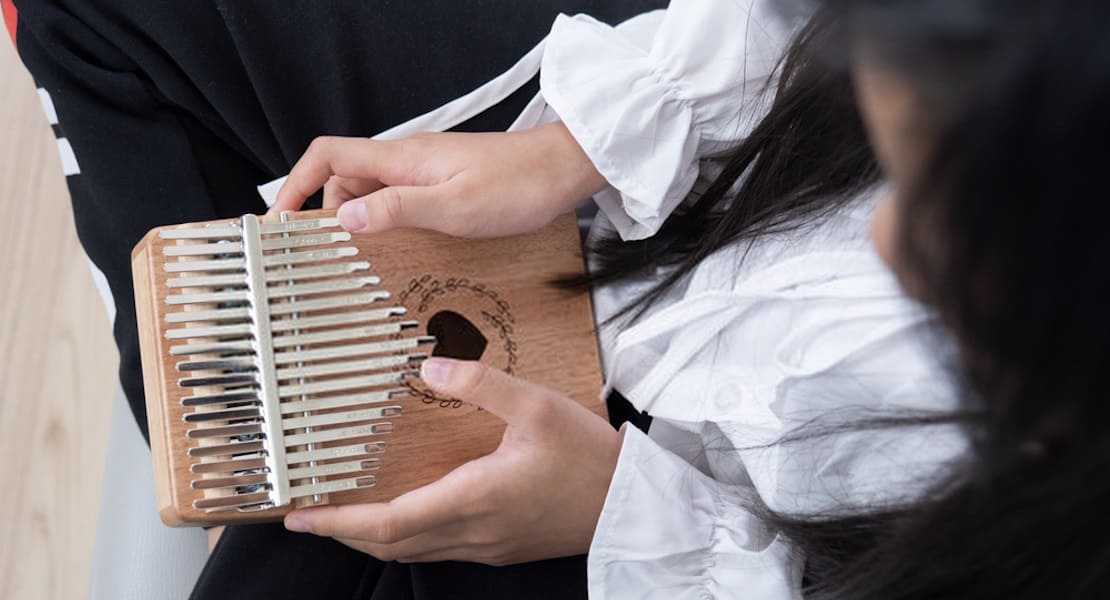
Start with a finger piano from the Cega brand
Cega is the kalimba brand of the Byla company, which produces around a dozen musical instruments, including djembes, tongue drums, lyres, and xylophones. This company was founded in 2015, and the Cega logo is simply the brand name.
In practical terms, Cega has everything it takes to appeal to beginner players who want a reliable instrument without spending more than €70, while still getting most of the accessories that are useful for getting started. Cega also offers multiple designs and very attractive colors. The downside is that you’ll only find 17- or 21-tine models with a resonator box. If that’s not what you’re looking for, then you should skip this brand.
On the other hand, if you want to spend under €70 on a thumb piano that comes with accessories, the Cega kalimba has everything you need to fall in love with it. At least, it’s the one I recommend for people who have never touched a thumb piano in their life. As always, it’s best to hear what this kalimba can do to find out if the tone suits you. Watch the video below to make up your own mind:
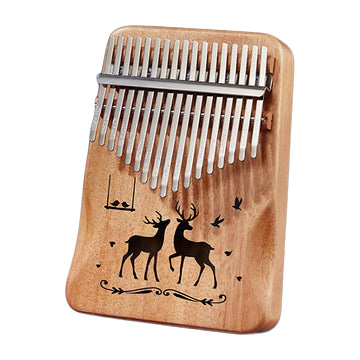
Seeds, the benchmark for chromatic mbiras
Created in 2018, the Seeds brand makes kalimbas only, with just three models total. These models come with 17, 20, or 34 tines, and it’s the 34-tine version that’s especially well known among thumb piano enthusiasts. You can recognize a Seeds kalimba by the acorn engraving on the body of each instrument.
The 34-tine model from Seeds is popular because it appeals to demanding, experienced players looking for a chromatic kalimba. Unlike most kalimbas, which are diatonic—meaning, to put it simply, they stick to the notes C, D, E, F, G, A, and B—chromatic instruments are more complex because they include all 12 semitones, adding sharps and flats.
If you’re looking for a thumb piano like this, the Seeds kalimba is an excellent choice that won’t disappoint. Just keep in mind it’s not ideal for brand-new players, who may get discouraged by the high level of complexity that comes with so many tines.
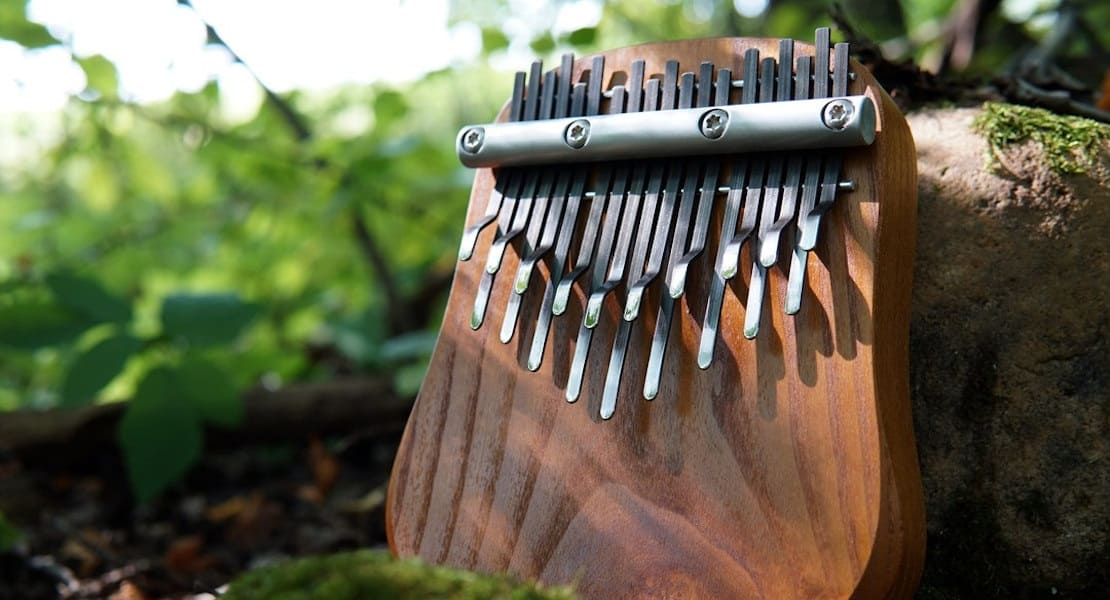
Kimi and Nalu brands specializing in acrylic glass kalimbas
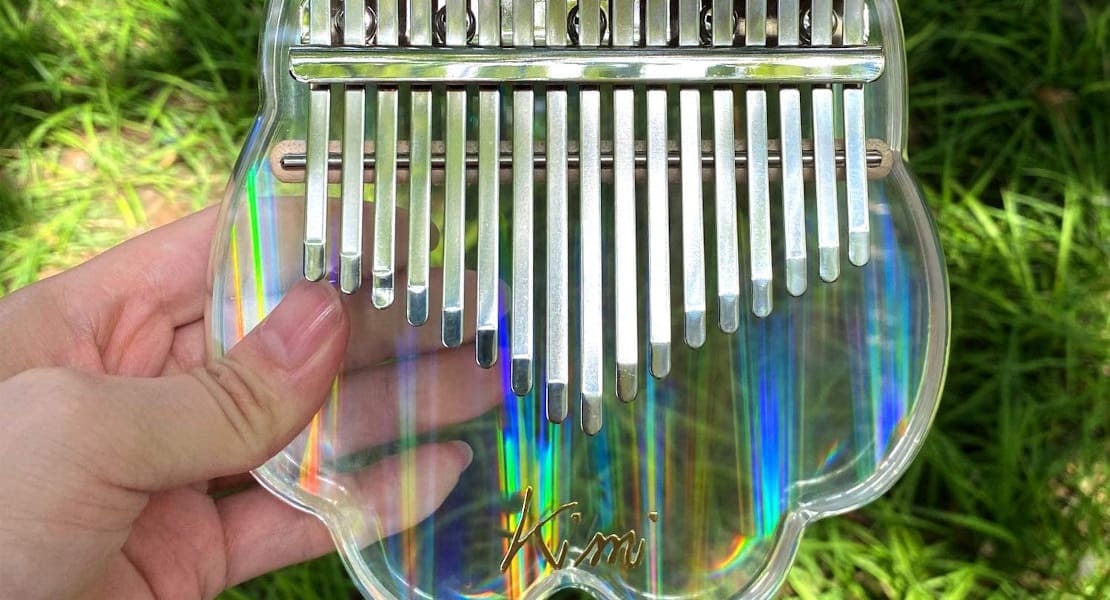
Whether you choose a kalimba from Nalu or Kimi, both brands specialize in instruments made from acrylic (often called acrylic glass). It’s a crystal-clear plastic polymer that’s highly resistant to the elements. Because it can be heated until liquid, it can also be molded into many different kalimba shapes and designs.
If you want a thumb piano with a unique look and don’t want to worry too much about maintenance, acrylic is a great option. Plus, Kimi offers “Rainbow” kalimbas, which feature rainbow reflections inside the acrylic for a truly eye-catching result. The price is slightly higher than a solid-wood instrument, but it’s a style many players love.
That said, since Kimi and Nalu are specialists in this category, it’s smart to choose one of these two brands if you want a transparent acrylic kalimba. Overall quality is excellent, and the accessories are well made.
Demand a quality instrument by choosing a recognized brand
Because the kalimba is still a relatively exotic musical instrument, most brands that make them aren’t widely known to the general public. So it’s completely normal to wonder about the quality of the different companies selling thumb pianos. But now you have all the key information you need to choose the right kalimba brand based on what you expect from the instrument.
However, dishonest sellers sometimes produce counterfeit versions of these brands to take advantage of their reputation. Like any knockoff, the end result is unfortunately not on the same level as the original. To avoid unpleasant surprises, Instruments du Monde sources directly from these manufacturers to ensure it offers instruments with the best possible build quality.
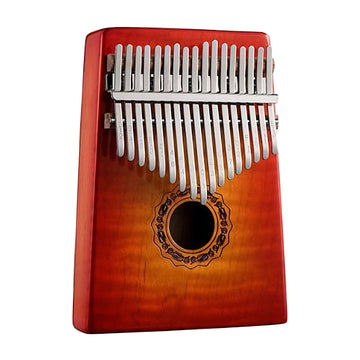
Treat yourself to this superb kalimba from the Hluru brand by clicking on the image below:
At this point, you know the different kalimba brands and what sets them apart. Still, this instrument isn’t widely known worldwide, and while it isn’t difficult to learn, we strongly recommend reading our guide to learning how to play the kalimba if you’re planning to start your thumb piano journey. Also, reading the detailed tutorial on the sanza will help you a lot.


