Written by Ambre Montespan - Updated on Aug 11, 2026

Table of contents:
Do you have questions about the kalimba, a musical instrument of African origin that resembles a small piano but is played using only the thumbs? Do you want to learn absolutely everything there is to know about this intriguing instrument? Are you thinking about buying a kalimba but aren’t quite sure how to choose one?
After more than 10 years of experience with this instrument, I’ve developed a particular interest in everything related to it, whether directly or indirectly. As a result, I can easily answer all your questions—and much more.
As you read through this complete guide, you’ll learn exactly:
- What a kalimba is and where it comes from
- Which thumb piano is best for your needs
- How to play the mbira perfectly
This instrument will no longer hold any secrets for you, and you’ll be able to confidently choose the model that’s perfect for you while learning all the techniques and methods you need to develop your skills.
What Is a Kalimba?
The kalimba is a little-known and still rather exotic world instrument. It’s therefore helpful to define exactly what it is before exploring its origins and how it works.

What is a kalimba?
A kalimba is a percussion instrument in the idiophone family. This family includes instruments whose materials produce sound when acted upon by an external force, such as being struck with a mallet. Xylophones, bells, and gongs are perfect examples of idiophones. With a kalimba, this external action occurs when the player presses and releases one of the steel tines, causing it to vibrate.
The kalimba has dozens of names, although this one remains the most widely used. Some of the most popular include the mbira, sanza, thumb piano, and finger piano. Since this list is by no means exhaustive, we’ll discuss the different names in more detail later in this article.
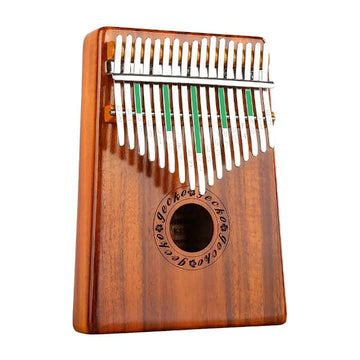
The kalimba is traditionally made from wood, although technological advances have led manufacturers to develop models in other materials, such as acrylic and ABS plastic. The instrument consists of a soundboard, which may or may not include a soundbox, with several steel tines held under tension by two bridges and a metal pressure bar. On a kalimba, each tine corresponds to a single musical note, which can be changed by adjusting the tine’s length relative to the bridges. To get a good idea of the sounds this instrument produces, watch the video below featuring a musician playing a traditional kalimba with a soundbox.
You now have a clear, simplified overview of what a kalimba is. If you’d like to explore the subject in greater depth, read this article explaining in detail what a thumb piano is. You’ll learn what each of its different parts is used for.
What are the origins of this musical instrument?
Archaeological evidence concerning the kalimba suggests that it was invented twice, both times in Africa. The earliest traces date back more than 3,000 years, when remains of the instrument were found on the West African coast, specifically in what is now Cameroon. At the time, the mbira had a wooden body and bamboo keys, which had not yet been replaced by steel. Then, the evidence disappears entirely. The instrument seems to have died out. This could be because it was made exclusively from plant materials, making it more fragile and difficult to preserve over time.

Other ancient kalimbas were later discovered near the Zambezi River, which flows through Zambia, Zimbabwe, and Mozambique, among other countries. These examples are approximately 1,300 years old—1,700 years more recent than the first mbiras discovered. This time, the keys were made of metal rather than bamboo, and the instrument was traditionally used during festive and religious occasions.
It wasn’t until Portuguese colonists arrived in Mozambique during the 16th century that the kalimba was introduced to Europeans. The first written accounts of this unusual instrument are attributed to the missionary João dos Santos. However, the sanza remained far from popular, and it only began to reach a broader audience in the 1950s. This development is credited to ethnomusicologist Hugh Tracey, who became fascinated by the instrument during a stay in Africa. He set out to create a Westernized version with notes that matched European musical standards. He developed an initial 15-tine model with a soundbox and began marketing it through his own company, founded in 1954 and named AMI, for “African Musical Instrument.”
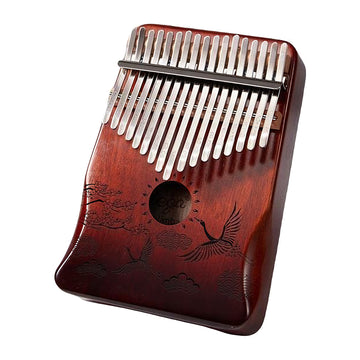
Since then, the kalimba has grown in popularity year after year. Well-known groups such as Earth, Wind & Fire have used it in some of their songs, while numerous manufacturers have emerged to offer instruments made with ever-greater quality and precision. This led to the creation of models made from synthetic materials as well as models with built-in microphones. Since this is a broad topic, we explore the origins of the kalimba in greater depth in another article that we highly recommend.
What are the differences between a kalimba, mbira, sanza, and sansula?
As we’ve already discussed, there are many names for thumb-piano-style instruments. These different terms stem from the instrument’s origins. Before Hugh Tracey popularized the word “kalimba,” the instrument was used by many local peoples and tribes, including the Shona, and these groups gave it many different names.
Depending on the geographic region, the finger piano was called “mbira,” “sanza,” “karimba,” “kalimba,” “likembe,” “mbila,” “huru,” “nhare,” “matepe and njari,” “okeme,” “ubo,” or “gyilgo.” Hugh Tracey had to choose a name for the instrument he planned to market, and he settled on kalimba.

Fundamentally, there was originally no significant difference between an mbira, kalimba, or sanza. Over time, however, enthusiasts have generally come to use kalimba to refer to the European version promoted by Hugh Tracey, while the other names refer to traditional instruments made in Africa using ancestral methods. This isn’t an official definition; it’s simply the meaning enthusiasts commonly give these terms today, and it’s perfectly acceptable to call the European version of the instrument an mbira.
The sansula, on the other hand, is quite different from the kalimba, mbira, or sanza. It is a relatively recent instrument invented in 2001 by musical instrument dealer Peter Hokema. He came up with the idea of placing a frame drum beneath a traditional kalimba without a soundbox. This design provides greater control over the resonance of the sounds produced. In the video below, you can watch Peter Hokema himself demonstrate his sansula.
Although we’ve broadly outlined the differences between these names, it’s worth exploring the subject further in our comparison of the kalimba, mbira, sanza, and sansula. You’ll never again use the wrong name for this little-known instrument.
Is kalimba masculine or feminine in French?
French-speaking beginners who own this musical instrument often wonder whether the instrument’s name should be treated as masculine or feminine. It’s difficult to give a firm and definitive answer. The word originally comes from African languages and was later used as a brand name by Hugh Tracey.
Nevertheless, a choice had to be made when adapting the word to French. Without any clear etymological justification, the word “kalimba” is listed as masculine in most dictionaries that include it, such as Wikipedia and the Dictionnaire des francophones. The same applies to “mbira,” which is also treated as masculine. Surprisingly, however, “sanza” is considered feminine.
These statements should still be taken with a grain of salt. The Académie française has never conducted an in-depth study of the grammatical gender of all the words used for thumb pianos, and it is highly unlikely that it ever will. Using kalimba as a feminine noun in French is therefore not strictly a spelling error; the masculine form has simply prevailed because it is more widely used.
For a closer look, read this more comprehensive article detailing the etymology of the names commonly given to thumb pianos.
How does the thumb piano produce sound?
The thumb piano can sometimes puzzle people seeing it for the first time because they don’t immediately understand its operating principle. In reality, it’s quite simple. All the kalimba’s tines are held under tension firmly between two bridges. When a musician presses a tine and releases it sharply, it begins to vibrate—or, more precisely, oscillate up and down. Watch the video below to see this phenomenon in action.
These oscillations make the surrounding air vibrate, producing sound. The pitch depends mainly on the length of the tine. The longer the tine, the lower the sound; conversely, a shorter tine produces a higher note. The tines’ vibrations also travel through the instrument’s soundboard, so the material used to make the kalimba has a measurable effect on its overall tone. Finally, if the kalimba has a soundbox, the vibrations are amplified and the instrument is louder than an otherwise identical model without one.
Finally, as you may already have noticed, some kalimbas with a soundbox also have two holes on the back. These openings are used for advanced playing techniques in which the musician produces sound effects by covering and uncovering the holes at specific moments in the melody. This creates an effect known as vibrato. To explore the subject further, visit this article explaining exactly how the kalimba works. The instrument’s sound vibrations will no longer hold any secrets for you.
Is This Musical Instrument Suitable for Everyone?
Thumb piano beginners often wonder whether this musical instrument is right for them. Is it easy to play? Does it offer any benefits? Let’s answer all these questions right away.

At what age can you start learning the kalimba?
Let’s put your mind at ease right away: you can learn the kalimba at any age because it’s accessible, fairly lightweight, and compact. Its pleasant, relaxing tones also have the power to charm a wide range of people.
Some expectant parents regularly play the mbira throughout pregnancy. Once the baby is born, they continue playing the same melodies they performed while the child was still in the womb. The baby recognizes these pieces almost like a musical signature, which provides reassurance while discovering this brand-new world. The child can also begin trying to play a few notes very quickly because simply pressing the tines produces sound—something babies can understand within the first months of life.
As for children and teenagers, they are, of course, fully capable of learning to play the finger piano. You simply need to adapt the instrument to their age and musical background to give them a wonderful gift. A good approach is to select an instrument with roughly as many tines as the budding musician’s age. A 10-key kalimba, for example, may be appropriate for a 10-year-old. This number can be slightly lower or higher depending on whether the child has never touched an instrument or already knows how to play one. Watch what a 6-year-old can do with this instrument after only a few dozen minutes of practice:
For adults and older adults, the kalimba is an excellent way to learn music without necessarily devoting a great deal of time to it. The instrument’s simplicity is one of its greatest strengths because you don’t need years of music theory lessons to unlock its full potential. Since the mbira is lightweight and portable, you can take it anywhere, including work. It even allows older adults who no longer have the strength they once did to play melodies—something that might not be possible with a heavier, bulkier instrument such as a double bass.
Explore this topic further by reading our latest article explaining why the kalimba can be played at any age. You’ll be convinced that this instrument can suit an enormous variety of situations.
Is it easy to play the mbira?
If there’s one quality no one can take away from the kalimba, it’s its remarkable simplicity combined with immense potential. To be honest, the instrument achieves a balance that borders on perfection. It is neither so simple that it becomes uninteresting nor so complex that not everyone can play it. Everything about the kalimba has been simplified to make it accessible to as many people as possible. Each tine corresponds to a single musical note, just like a traditional upright piano. There is therefore no chance of producing a false note in the way you might on a violin.
Thumb pianos also frequently come with a complete set of accessories designed to make your life easier. These may include a sheet of stickers to help you navigate the tines, instruction and sheet music booklets to help you start learning under the best possible conditions, and sometimes silicone thumb guards, which are useful if you play intensively and your fingers begin to hurt.
The sheet music is also very different from what you may be used to. You won’t find the familiar horizontal staff lines, measures, treble clefs, or many other complex symbols used in standard notation. Simplified kalimba sheet music is actually a sequence of letters or numbers showing the order in which to press the instrument’s tines. Experienced musicians who already understand conventional musical notation can, of course, use traditional sheet music. Everyone else can still play beautiful songs without necessarily having the time or desire to learn it.

All these features make the thumb piano a simple instrument. Still not convinced? Read our article proving that playing the kalimba really is easy. You’ll have no excuse not to embark on this wonderful musical adventure.
What are the benefits of the finger piano?
Like all musical instruments, the finger piano offers many benefits that can be highly rewarding if you make the effort to get one. In general, playing an instrument improves coordination and fine motor skills. This is particularly valuable for children and older adults, who tend to lose these abilities over time. Learning an instrument improves self-confidence and brain function, especially memory. It also reduces stress and provides an emotional outlet. Science has demonstrated all these benefits time and again, and the many advantages of learning any type of instrument no longer need to be proven.
Looking more closely at the kalimba itself, this instrument appears ideal for use in music therapy. Music therapy is a serious practice overseen by an official French federation and based on the principle that music and instruments can be used as part of a therapeutic approach. It is a form of complementary medicine that can be passive, with the patient simply listening to sounds, or active, with the patient playing an instrument. The practice is expanding rapidly in healthcare facilities such as hospitals. A France 3 report highlights its use at Creil Hospital, including with infants:
Why is the kalimba so valuable from a music therapy perspective, as shown in the video above? First, the sounds produced by the instrument are soft, light, and relaxing, strengthening the benefits already provided by this practice. Second, the thumb piano’s small size, portability, and ease of use are major advantages. Someone who has never played one can quickly become comfortable with it and enjoy the experience, something that would be unthinkable with a guitar. The kalimba therefore works perfectly in active or passive music therapy, making it a favorite instrument among professionals.
If you’d like to explore the subject further, we’ve written a more comprehensive article answering the question of why playing the kalimba is worthwhile. It reveals all the benefits associated with this instrument.
Which famous artists use the kalimba in their songs?
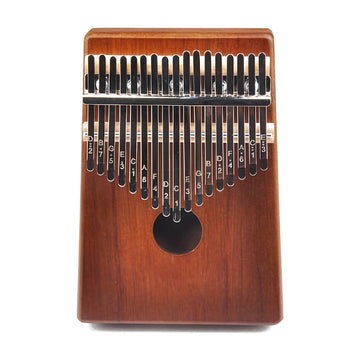
The kalimba clearly isn’t a common musical instrument. It is therefore particularly rare to see one onstage and even rarer to find one in the hands of famous groups or musicians. Nevertheless, some professional musicians have taken up the challenge and played a few thumb piano notes in their compositions. There aren’t many, but you’re bound to recognize at least one name.
For example, the jazz-funk band Earth, Wind & Fire, formed in 1969 under the leadership of Maurice White, used the kalimba in its 1974 song “Evil.” From the very beginning, you can hear the kalimba’s light, sublime tones, which continue until the song ends. Listen to it in the video below:
Singer and vocalist Bobby McFerrin also used the kalimba in his simply titled piece “Kalimba Suite.” Although this piece isn’t especially popular, the artist is much better known for “Don’t Worry, Be Happy,” which has received hundreds of millions of views on YouTube. Musician April Yang is also widely known for her mastery of the kalimba. Finally, Sting, Phil Collins, and the band Genesis have occasionally used this African instrument in their music.
To discover many more acclaimed artists who have used the kalimba, read this article, which explores the subject in greater depth. You’re sure to discover some lesser-known but highly talented musicians.
What Is the Best Thumb Piano on the Market?
Let’s answer this question right away: there is no perfect kalimba that is genuinely better than every other one. Some brands have certainly proven the quality of their instruments, but you’ll often need to balance numerous factors to find the mbira that’s right for you. We’ll review all these factors so you ultimately know which instrument suits you.
Should you choose a 17- or 21-tine kalimba?
This is the question beginners ask most often when deciding between a 17- or 21-tine kalimba. After taking a quick look at the market, they notice that most models have 17 keys, while other, slightly more expensive instruments have 21. It may be tempting to assume that more tines always give a musician more possibilities. Although this is generally true, it’s important to consider the advantages and disadvantages of both models.
In terms of price, dimensions, bulk, and weight, 17-key kalimbas have a slight advantage. They are generally less expensive, smaller, and lighter than their 21-tine counterparts. Conversely, adding four extra tines gives the instrument four additional notes. These notes are inevitably lower and expand the thumb piano’s range, meaning the span of sounds it can produce. To hear the difference, listen to the same piece, “Ballade pour Adeline,” played first on a 17-key instrument and then on a 21-key instrument.
The melody performed on the 21-tine kalimba sounds richer and more pleasant. That’s only natural because the musician has four additional notes available.
At this point, choosing a 21-tine kalimba over a 17-tine model may seem very tempting. However, there is an important detail to consider: the vast majority of sanzas sold today have 17 keys. As a result, most of the sheet music you’ll find online is written for that number of keys. A 21-tine kalimba is also more difficult to play than a 17-tine model. Beginners who have never played an instrument are therefore generally advised to start with 17 tines. Players who already understand music theory or play another instrument can certainly consider 21 tines or even more.
You’ll need to decide which option is best—17 or 21 tines—based on your current musical background. If you’re still struggling to choose, read our guide to choosing between a 17- and 21-tine kalimba. Reading it in full will make the decision clearer.

What are the differences between a sanza with and without holes?
This is another frequently asked question because prospective players quickly notice two major types of kalimbas: solid models without holes and models with openings on the front and sometimes the back. These two types of thumb pianos naturally have differences worth discussing.
Kalimbas without holes are made from a single block of wood or plastic. This is the simplest form of the instrument to manufacture, and the earliest remains discovered in Africa 3,000 years ago had this design. Such an instrument is sturdier than a version with openings, less expensive, and requires little maintenance. These models are also thinner and lighter, which can matter to musicians with small hands. Their lack of a soundbox also affects the sound because their volume is inevitably lower.
In contrast, kalimbas with holes have a soundbox. They are much more difficult to make and therefore cost more. Because they are generally box-shaped, they can break more easily if a heavy object is placed on them. It is not uncommon to encounter models with cracks. Kalimbas with soundboxes are also heavier, thicker to hold, and more difficult to clean because dust accumulates inside. However, they are much louder than models without openings and, most importantly, can produce special effects. Placing your fingers over the holes alters the sound waves and creates a wah-wah or vibrato effect.
We haven’t been able to cover every advantage and disadvantage of these two types of mbiras in full. Visit this article comparing kalimbas with and without holes to make sure you choose correctly.
Should you choose a wooden or acrylic instrument?
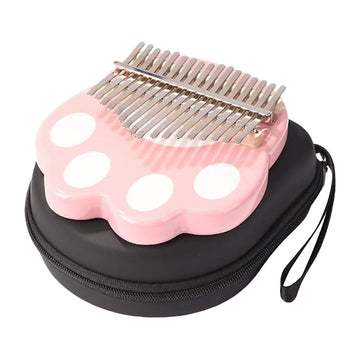
Although wood is the traditional material used to make kalimbas, a new type of instrument made from acrylic, a plastic polymer, has recently appeared. These two types of thumb pianos naturally differ in appearance and design, but they also have many other distinctions worth considering.
The difference isn’t dramatic, but the two materials do produce some tonal variations. Acrylic tends to generate bright, warm notes, making it perfect for lullabies and gentle music. A wooden kalimba, by contrast, produces richer notes that are ideal for upbeat melodies from popular culture.
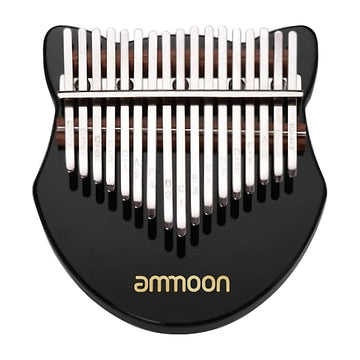
Most acrylic kalimbas are also made without a soundbox. A few models have one, but they are quite rare because shaping acrylic into a box is more difficult. Choosing an acrylic finger piano will therefore almost certainly mean giving up the benefits of kalimbas with holes discussed earlier, including the ability to create sound effects and produce greater volume.

Finally, acrylic currently costs more than wood, affecting the kalimba’s final price. This plastic material is also heavier, which is another consideration. However, it has the advantage of being extremely sturdy, highly resistant to moisture and ultraviolet light, and easy to maintain. You’ll still need to be more careful about scratches, which are much more visible than on wood.
It’s a difficult choice, isn’t it? Put your mind at ease by reading our comprehensive comparison of wooden and acrylic kalimbas. You’ll have everything you need to select the right material for your future thumb piano.
Which type of wood should you choose for an mbira?
If you’ve chosen a wooden mbira, you may still need to decide which wood species is best for your instrument. Is there really a difference between a mahogany thumb piano and one made from black walnut? Absolutely, because most of a kalimba is made from wood. The effect is even more pronounced when the instrument has a soundbox, as sound waves are amplified inside while bouncing off the material. Differences in the wood’s hardness and nature therefore produce tonal variations.

Generally, the harder the wood used to make the kalimba, the more readily sound waves bounce off it. Soft wood, by contrast, tends to absorb them. Mahogany, a soft wood commonly used for thumb pianos, produces pleasant, rich tones. It is relatively affordable, making it a popular choice among beginners. Maple is harder and offers a good balance of bright and diffuse notes, perfect for meditation and Zen activities.
The wood species also has a major effect on the instrument’s appearance. Some musicians particularly appreciate visible grain patterns, which add undeniable charm to a kalimba. As a result, certain woods described as premium or luxurious are selected to make these instruments. Black walnut, traditionally used in high-end furniture, can now be found in some kalimbas. However, an instrument made from it may cost two or three times as much as a mahogany model. There are also mbiras made from camphor wood. This species has the unusual ability to release a eucalyptus scent for several years after being cut. The musician can therefore smell it while playing, which may appeal to you.
At least twenty wood species are commonly used to make thumb pianos. Read our guide to selecting wood for a kalimba, which provides information on most of these species to help you find the right one.
How many keys should my thumb piano have?
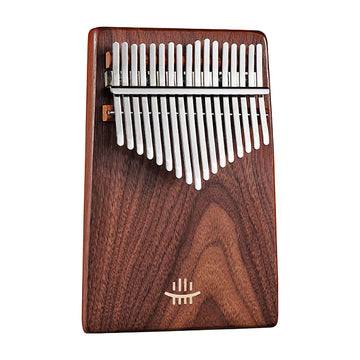
We’ve already discussed 17- and 21-tine kalimbas. However, many thumb pianos have very different numbers of keys. With options ranging from very simple 5-tine models to more complex instruments with 42, how do you choose? This is an important decision. Choose an instrument that is too simple, with too few keys, and you’ll inevitably become bored. Choose one that is too complicated, with dozens of tines, and discouragement is guaranteed to make you give up quickly.
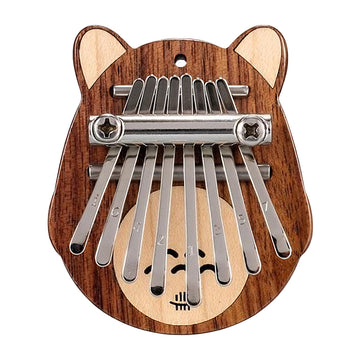
Kalimbas with fewer than 10 tines are often children’s gifts or instruments designed for travel. Such a small number of keys doesn’t allow you to play a wide variety of songs, but it makes the instrument accessible to young children and compact enough to serve as a keychain. Between 10 and 15 keys, the kalimba begins to reveal its potential. Teenagers or adults who aren’t comfortable with music may find these models suitable. However, relatively few instruments have this number of tines, which can make them difficult to find.
Instruments with 17 or 21 tines are the standard models in the kalimba world. They are easy to find because they offer an excellent balance between difficulty and musical potential. Adults and teenagers with some musical experience generally choose these numbers of keys. Kalimbas with more than 21 tines, however, are commonly chromatic models intended for professionals and shouldn’t be placed in the hands of an inexperienced musician. Their large number of keys and the difficulty of mastering them make these instruments best suited to experienced musicians.

After reading this, you should have a good idea of which kalimba most closely suits your needs. If you’re still unsure, read this article for more details about the perfect number of tines for a thumb piano. Your ideal instrument will then be within reach—or rather, within thumb’s reach!
Which finger piano brands are the best?
When you want to invest in a kalimba, the question of brand inevitably arises. Several brands are available, each with its own strengths and weaknesses. If budget isn’t a concern, Gecko is an excellent choice. For several years, Gecko has developed kalimbas that are unanimously praised by enthusiasts for their quality and sound. Dozens of models are available with different numbers of keys and wood species, offering something for every taste. However, you’ll need to spend at least €50—and possibly more than €100—to enjoy one of these instruments. That said, you won’t be disappointed!
You could also consider Hluru, which offers an appealing balance of quality and price. Slightly less expensive than Gecko kalimbas, Hluru has an extensive catalog that includes exotic models made from combinations of several woods or blends of wood and epoxy resin. Read our complete review of the Hluru brand here. The Lingting brand is in the same price range. However, it offers far fewer options, leaving you to choose from fewer than 10 kalimbas.

Affordable brands such as Aiersi and Cega are perfect for beginners who don’t necessarily want to spend more than €50 on their first kalimba. Seeds mainly specializes in professional chromatic thumb pianos with several dozen tines, while Kimi and Nalu focus on instruments made from transparent acrylic and shaped like animal heads.
It ultimately comes down to the budget you’re prepared to invest in your future instrument. We cover many different kalimba brands in this article, giving you a clear idea of which one will suit you best.
Can you buy the kalimbas used by April Yang?
If one artist stands out for her use of the kalimba, it is musician April Yang. Her YouTube channel, where she plays various instruments but mainly the thumb piano, is approaching one million subscribers and has received more than 110 million views to date. It’s perfectly natural to want to recreate this artist’s performances with the same kalimba. The good news is that doing so is entirely possible and even relatively affordable.
A look through April Yang’s YouTube channel reveals that she has used a considerable number of mbiras from different brands, including Gecko, Hluru, Dual, and Lingting. If you’re interested in purchasing a specific model, we review all the kalimbas used by April Yang in this article, based on the most popular videos she has uploaded to her YouTube channel. You’re sure to find the model of your dreams.
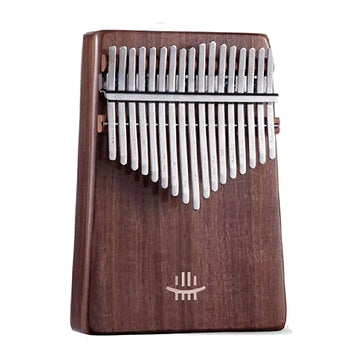
More recently, April Yang has begun producing a kalimba under her own brand. She was fully involved in its development to create an instrument that, in her opinion, offers the best acoustic capabilities. It features 17 tines, a solid beech body, and the musician’s ram’s-head logo. Listen below to an example of what this instrument can do:
Click the link to get April Yang’s official kalimba.
Can you build your own instrument?
DIY enthusiasts should know that it is entirely possible to make your own kalimba because the instrument has a relatively simple design. You can also purchase some parts separately, including the steel tines, to make the task easier. You’ll simply need a few tools and several materials that are fairly easy to find at a hardware store.
First, consider the kalimba’s base. You’ll need to cut a board to the correct size or build a box from several pieces of wood, drilling a hole in the front if you want a model with a soundbox. Once the base is complete, the most difficult step begins: creating the bridges and pressure bar. You can use two thick nails cut to size for the bridges, while a steel tube and two screws will work perfectly for the pressure bar. Make the tines from old bicycle spokes, for example, and insert them between the bridges and pressure bar. Then tighten the screws to hold everything in place. You should end up with a basic but functional kalimba.
Admittedly, this is difficult to picture without photographs. Take a look at this step-by-step tutorial explaining how to make a kalimba. You’ll find a list of all the required materials along with the useful, detailed instructions you need to complete the project successfully. Premade sets of tines, bridges, and pressure bars are also suggested to keep this activity accessible to as many people as possible, especially younger builders.

How much should you budget for a quality mbira?
Although the kalimba is relatively inexpensive compared with other instruments, prices can range from a few dozen to several hundred euros. For less than €20, you can find small pocket mbiras that go almost anywhere with you. However, that budget may be too limited for a larger instrument. In fact, you’ll need to invest between €30 and €40 for a decent-quality 17-tine kalimba. This is generally the price range chosen by people who want to get started.
Increase your budget slightly, and between €40 and €70, the first branded kalimbas become available, including models from Hluru, Cega, and Aiersi. This can be an attractive option if you want to invest in a quality thumb piano or one made from a fine wood. This is also the price range where you’ll begin to find 21-tine kalimbas and models made from plexiglass or acrylic, which generally cost more than wooden instruments.
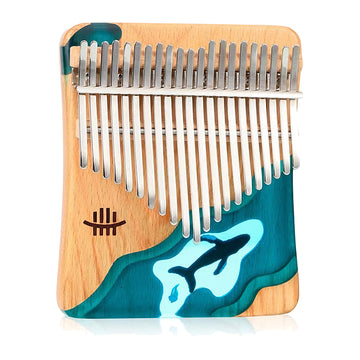
Above €70, you are clearly entering the high-end instrument category. These may be models with large numbers of keys, such as 34-tine chromatic kalimbas, or instruments from more prestigious brands such as Gecko or Lingting and, to a lesser extent, Hokema or Meinl. Finger pianos made from luxurious wood species such as black walnut can also exceed this price. Some models equipped with piezoelectric microphones are similarly priced.
Your kalimba budget will therefore affect the instrument’s final quality. To understand every subtle effect price has on an instrument, read this article, which explains everything you need to know.
Is there a perfect thumb piano for beginners?
After reviewing all the factors we’ve just discussed, you should have a good idea of which kalimba you need. If you’re still unsure, some instruments are more highly recommended for beginners.
If you’ve never played a thumb piano, immediately eliminate every model with more than 21 tines. They will be far too complicated to master, and you can always return to them later if you want to develop your playing. Unless you have a good reason, you may also become bored with a kalimba that has fewer than 15 keys. These instruments have fairly limited potential, which may be perfect for children but rarely suits adults. It is therefore best to choose a model with 15 to 21 tines based on your current musical background. If you have no particular knowledge of music or music theory, prioritize a 15- or 17-key kalimba. Otherwise, choose one with 17 or 21 tines.

The kalimba’s material and the presence or absence of a soundbox will affect its tone, but this usually doesn’t concern beginners who have no point of comparison. It is therefore generally best to choose an instrument you find visually appealing so you’ll enjoy playing it. If your budget allows, consider a kalimba from Gecko, Hluru, or Cega. Cega may be the most suitable because you can get a decent model for less than €50, limiting your loss if the kalimba doesn’t appeal to you.
Finally, an accessory pack containing at least a tuning hammer and stickers is essential. An instruction and sheet music booklet is another significant advantage. To make sure you select the right model, read our beginner kalimba recommendations. These few lines will help you find a kalimba suited to your needs.
Are there kalimbas specifically designed for children?
Thanks to its ease of use, the finger piano is perfectly suited to young children. However, that doesn’t mean you can choose just any model. As discussed earlier, you should select an appropriate number of tines as well as a playful design that will appeal to younger players. An animal-shaped kalimba or a model featuring a cute or funny engraving is therefore ideal.
If the child tends to break everything they touch, avoid thumb pianos with soundboxes because they are more fragile. Acrylic models also scratch more easily, which is another factor to consider. To learn more and make sure you choose correctly, read our article dedicated specifically to kalimbas for children.

Do older adults need a specific instrument?
The kalimba is particularly well suited to older adults. This musical instrument is small and lightweight, allowing it to be played almost anywhere without much difficulty. Its compact dimensions even allow nursing home residents to keep one in their rooms. Finally, the thumb piano is extremely easy to use, and progress becomes apparent very quickly, which tends to motivate new musicians. The kalimba is therefore the perfect instrument for older adults who want to discover music in a simple and enjoyable way.
Nevertheless, it’s important to consider the specific needs of older adults when choosing the perfect kalimba. First, lightweight models are recommended, which means selecting a relatively soft wood such as mahogany or walnut. Hard, heavy woods such as padauk or maple may eventually place excessive strain on their hands and forearms, quickly causing discomfort. For the same reason, a kalimba with no more than 17 or 21 tines in a single row is generally recommended because a second row and additional metal tines add considerable weight.
The right number of tines depends on the person receiving the instrument. A former musician can easily choose a 21-tine kalimba, while a beginner may be more comfortable with a 10- or 17-tine model. Read this article to learn more about selecting an mbira for an older adult.
Should you choose a chromatic or diatonic mbira?
Although a few rare kalimbas use a pentatonic scale with five different notes, the vast majority of other instruments use either a chromatic or diatonic scale. The primary difference is the number of distinct notes that can be played on the finger piano. A traditional diatonic kalimba provides the seven familiar notes C, D, E, F, G, A, and B. Chromatic models provide five additional notes altered by a sharp or flat.

The main advantage of a chromatic mbira over its diatonic counterpart is therefore the ability to play five additional notes per octave. This provides greater precision when performing complex melodies and avoids the need to retune the instrument regularly for songs requiring a tuning other than C major.
In exchange, a chromatic kalimba is significantly more expensive than a diatonic model because it is more complex to make. It also has more keys—an average of 34 arranged in two rows—making it heavier, bulkier, and more difficult for beginners, who may feel overwhelmed by the complexity of the tines. Few, if any, chromatic thumb pianos have a soundbox or an acrylic body. You’ll therefore need to choose a diatonic model if you absolutely want a transparent instrument or one with holes for creating sound effects.
In conclusion, the chromatic kalimba is an excellent choice for musicians who want to invest deeply in learning the instrument. However, it is less suitable for beginners who simply want to discover the sanza without too much difficulty. If you’re still undecided, read this article comparing chromatic and diatonic kalimbas. You’ll then be certain you’re making the right choice.
Are some kalimbas better than others?
Now that you have all the information needed to select the right type of finger piano, certain models and brands do stand out in performance and quality. If you’re interested in a 17-tine kalimba without a soundbox, we can only recommend April Yang’s solid beech model. If you want an acrylic mbira, Kimi’s instruments are truly remarkable.
In reality, every type of kalimba has one model that outperforms the others, whether in tonal refinement, value for money, or the additional accessories included. To help you choose the right instrument, explore our top 10 best kalimbas available today. You’ll never be disappointed when you choose one of the models in this ranking.
Where can you buy a kalimba?
The kalimba clearly isn’t as popular as the guitar, so it’s perfectly normal to have trouble finding one because retail inventories are limited. Let’s quickly review all your options.

If you choose a new instrument, online stores offer the widest selection. Specialized websites provide a particularly large number of options, including the Instruments du Monde store, which offers more than 200 kalimba models. They provide thorough customer service and in-depth guidance to help you choose an instrument. General-purpose marketplaces, by contrast, have a more limited selection and may know little or nothing about the subject. I’ve encountered physical music stores that didn’t have a single kalimba for sale. Finding thumb pianos in stores is therefore difficult, and when you do, don’t expect much choice. Although a physical store lets you test the instrument, this advantage should be put into perspective: online purchases can be returned within 15 days for any reason and without explanation, making it easy to test a kalimba and see whether it suits you.
On the secondhand market, options are few and far between. You may find a few instruments on websites such as leboncoin. Be careful with the prices, however. Unscrupulous sellers sometimes resell their kalimbas for more than the cost of a new one, particularly because the instrument is considered unusual and therefore rare.
If you’d like to discover every place where kalimbas are available, read this article explaining where you can buy this instrument.
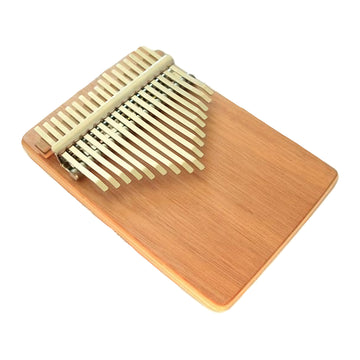
Which microphone should you choose for your percussion instrument?
A microphone is an essential accessory if you plan to record your kalimba performances or play melodies onstage or before an audience. The sounds produced by the instrument must be captured clearly so they can be reproduced faithfully afterward.
There are two main types of microphones: pickups, which attach directly to the mbira’s soundboard, and conventional microphones positioned near the instrument. Conventional microphones record air vibrations, while pickups capture vibrations from the kalimba’s wooden or acrylic body, which is why they attach directly to it. You can also buy thumb pianos with built-in microphones. These are more discreet than external microphones added to instruments that didn’t originally have them, which can be attractive from a design standpoint.
Each type of microphone has advantages and disadvantages. Pickups, for example, are not susceptible to feedback, the familiar, unpleasant squeal that can occur when a microphone repeatedly captures sound from a speaker. Conventional microphones, however, produce a more pleasant, musical result. If you want to purchase one of these accessories, we highly recommend researching your options in our article explaining how to choose a kalimba microphone. You’ll have all the information needed to find the microphone that suits you perfectly.
How Can You Play Beautiful Melodies on a Thumb Piano?
Although anyone can quickly learn a few notes and play basic melodies, playing your kalimba well requires mastering several simple tasks, including tuning, applying stickers, and reading sheet music.
Do you need to tune your kalimba?
Yes, yes, and yes again. Some unscrupulous sellers incorrectly claim that the instrument never needs tuning, will always play the right notes, and received a tuning before shipping or delivery, supposedly eliminating the need to tune it yourself. All of this is false, or at least only partially true, as we can easily demonstrate.

The notes played by the kalimba’s keys depend entirely on the length of the tines relative to the bridge. The greater the distance between the bridge and the end of the tine, the lower the note. Importantly, the tines are not welded to the bridges. They can slide up and down, changing the notes they produce when played. When your kalimba arrives—often through the mail—you have no certainty that the sender tuned it correctly. If the carrier subjected it to an impact, one or more tines may also have shifted by a few millimeters. Even those few millimeters can have a major effect on the pitch. In conclusion, the kalimba must be tuned when you receive it, after it is struck or dropped, and regularly thereafter to ensure it continues to play the correct notes. It’s true that once the instrument is properly tuned, the keys will play the right notes—but first, you must make sure that it is.
Tuning your kalimba is a simple process anyone can perform. Test each key with a tuner to determine whether it still produces the correct musical note. If it does, leave it alone. Otherwise, use the hammer to shorten or lengthen the distance between the bridge and the end of the tine.
Our article about tuning a kalimba explains the process in detail. You’ll become a true expert whose instrument always produces the correct notes.
Which tuner should you use for the instrument?
Once you understand the tuning technique, the next question is which tuner to use. Is one choice better than another? Once again, everything depends on your budget and what you expect from the instrument.
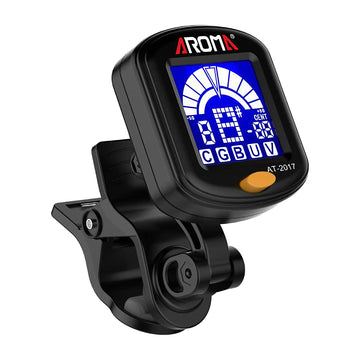
If you’re prepared to spend a few euros, buying an electronic tuner designed for a thumb piano is a good option. This small device clips onto the instrument, placing it as close as possible to the sound source so it can analyze the tones precisely. Electronic tuners are accurate and reliable because they are specifically designed for this purpose, and they provide a fully portable solution that doesn’t depend on another device. You can also use one to tune other musical instruments.

If you own a smartphone, you also have a free—or almost free—option. The phone’s built-in microphone captures the sounds so an app can analyze them. You’ll need to download a dedicated app such as DaTuner or BOSS Tuner. In reality, however, these apps aren’t entirely free. You’ll either need to spend between €5 and €10 or tolerate numerous ads that appear frequently. Since a smartphone microphone isn’t specifically designed for this purpose, the result will also be less reliable than with an electronic tuner.
If you want greater accuracy, we recommend using a tuner made specifically for the task. In every case, read this guide to choosing a kalimba tuner for an overview of all available apps and devices.
Where should you place the stickers on a finger piano?
I sometimes meet beginners who are surprised to find decals or stickers inside their kalimba’s box. They often haven’t read the manual and know even less about the subject. Yet applying these small vinyl stickers is an important step, especially for anyone discovering the instrument.
The stickers are applied to the instrument’s steel tines. They provide visual reference points that help beginners navigate the keys, displaying information such as the musical note corresponding to each tine. They may also be placed at regular intervals simply to serve as visual markers for the musician. Sometimes, stickers are used purely to decorate the kalimba with bright colors.
The essential point to remember is that, except for decorative stickers, they cannot be placed just anywhere. They must match a specific pattern based on the kalimba’s number of tines. The stickers on a 21-tine kalimba are therefore not placed in the same positions as those on a 17-tine model. For these diagrams, read this tutorial on kalimba sticker placement. Correct placement will help you play beautiful melodies, especially when using tablature.

How do you read kalimba sheet music to play songs?
Learning to read thumb piano sheet music is essential for every musician. Reproducing famous melodies from popular culture, such as the theme from “Game of Thrones” or Ed Sheeran’s “Perfect,” is extremely rewarding. You’ll primarily encounter two types of musical documents created specifically for kalimbas: simplified sheet music using numbers or letters and tablature.
Simplified kalimba sheet music consists of a sequence of numbers or letters corresponding to musical notes according to the following chart:
| Solfège | Do | Re | Mi | Fa | Sol | La | Ti |
| Letter notation | C | D | E | F | G | A | B |
| Number notation | 1 | 2 | 3 | 4 | 5 | 6 | 7 |
Simply follow the sheet music in the standard reading direction. Playing the notes in the correct order ultimately creates the desired melody. Parentheses may sometimes appear. When they do, play the enclosed notes together at the same time. Dots may also appear above or below a note. In that case, play the same note one octave higher or lower.
Tablature is much more precise because it incorporates tempo, rests, and the duration of the notes to be played. It also provides a visual representation of the tines, allowing you to see immediately where to press without memorizing the locations of all the notes. Tablature is therefore a genuine advantage for musicians who want to improve their kalimba playing. However, these benefits come at a cost: you’ll need to understand various concepts from music theory before you can play tablature. The good news is that all these concepts are explained in our tutorial on reading kalimba sheet music. Tablature and sheet music will then be well within your reach. You can also consult our list of the best sheet music for beginners. You’ll be able to begin learning confidently with pieces created especially for new players.

Where can you find or download kalimba sheet music?
Finding high-quality kalimba sheet music or tablature isn’t easy. Most examples come from well-meaning amateurs who post sequences of letters or numbers on social media without providing a way to hear the final result and decide whether it suits you before investing time in learning the piece.
To address this problem, Instruments du Monde offers more than 50 free kalimba sheet music and tablature arrangements. Every arrangement has been approved by our experts and includes a video showing the result you’ll obtain by following it exactly. This guarantees that you won’t waste time learning a melody that ultimately fails to meet your quality expectations. Sheet music is also available for 17-, 21-, and 8-tine thumb pianos, allowing the vast majority of players to find something suitable.
Can you transpose music for the thumb piano?
Transposition means adapting a song specifically for the thumb piano. In other words, you convert a piece played on another instrument, such as a guitar, so it can be performed on a kalimba. In theory, any piece written for one or more instruments can be transposed to the mbira. However, the kalimba’s simplicity becomes a disadvantage here. A kalimba generally provides 17 or 21 notes, while other instruments offer many more. The melody is therefore highly likely to lose some of its richness during transposition when notes outside the kalimba’s range must be removed.
With that warning in mind, the easiest way to arrange music for the kalimba is to begin with a piano version because the piano is the closest instrument and has a vast selection of available sheet music. You can visit MuseScore, for example, where you’ll probably find what you need. Once you locate the sheet music, isolate the notes within your kalimba’s range and convert them into either simplified sheet music or tablature. This process is fairly long and tedious, but it may be worth the effort if no one has converted your chosen song before.
If you still want to transpose a song, study our complete guide to converting music for the kalimba. It provides every detail you need to make your project a success.
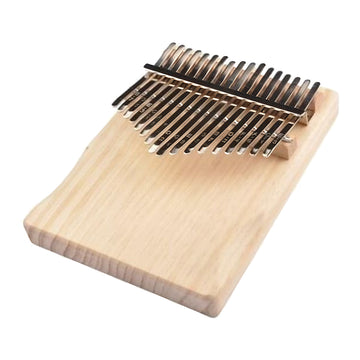
What are the basics of playing the sanza?
Although playing the sanza isn’t very difficult at first, developing your skills through advanced techniques requires more time and commitment. To begin, hold your kalimba firmly and play a few notes by pressing a tine and releasing it sharply. Remove your finger immediately afterward so you don’t accidentally touch the tine. The goal is to avoid restricting or stopping its oscillation and obtain the best possible sound. Next, play a sequence of notes while continuing to release each tine sharply. Then practice playing two notes simultaneously with both thumbs.
Once you have mastered these basic techniques, you can focus on the glissando, which involves playing several notes together by sliding your thumb across multiple tines while pressing them. You can perform glissandos of three, four, or five notes depending on your preferences and the requirements of the sheet music. Watch an example in the video below:
All that remains is to learn how to use the vibrato and then the wah-wah effects if your instrument has a soundbox, study how to read sheet music and tablature, and you’ll be fully prepared to play beautiful melodies with soft, soothing tones.
Find all the tips and advice for playing the kalimba perfectly in this article. Applying everything you discover will inevitably improve your thumb piano skills and impress your family or friends.
How do I clean my mbira?
Just because the mbira is inexpensive doesn’t mean you shouldn’t care for it. Without maintenance, the instrument’s wood can crack, or accumulated dust can cause what is known as a buzz or tine hum, meaning a key that functions poorly or not at all. Regularly cleaning your instrument is therefore strongly recommended to avoid these problems.
The first step is removing the dust that inevitably accumulates on the instrument. Because the kalimba produces sound through vibrating tines, dirt eventually works its way between the tines and bridges. Use a soft microfiber cloth to remove dust. If the buildup is severe, remove every tine and clean each one with warm, soapy water before drying and reinstalling it. To maintain the tines’ shine and remove small rust spots, use a kalimba polishing block, a small abrasive sponge designed to make the steel gleam.

Acrylic requires almost no maintenance, but wood needs special attention. Avoid moisture and direct sunlight as much as possible; using a case is therefore recommended. You should also care for it with a special oil that nourishes the wood and preserves its shine and acoustic properties.
To learn how often to perform these maintenance tasks and discover other tips, read our article about cleaning a thumb piano. Your precious instrument will remain in excellent condition and last for many years.
What musical notes are found on a kalimba?
It’s helpful to know which notes you can play on your instrument so you can determine whether it supports the sheet music you want to use. In the vast majority of cases, a kalimba arrives tuned to C major with 17 metal tines. In this configuration, you have the notes C, D, E, F, G, A, and B in the third and fourth octaves as well as C, D, and E in the fifth octave.
Your thumb piano may instead be tuned to B major or an entirely different key. Most instruments have the notes engraved on their tines to help you identify them, but this isn’t always the case. If your instrument lacks these markings, use an electronic tuner to identify the note produced by each key.
You can find step-by-step instructions and a method for playing sharps and flats in our free article about the subject. You’ll always know exactly which notes your kalimba can play.

Why do the kalimba’s tines sound bad or produce no sound?
When you play certain tines on your thumb piano, a physical problem may prevent them from vibrating correctly, producing a very unpleasant sound. This issue can have several causes. Most commonly, it results from inadequate maintenance. After repeated use, dust and dirt inevitably become lodged among the kalimba’s tines. This grime can interfere with their vibrations, making it necessary to clean the instrument.
A finger piano that sounds bad may also have misaligned tines. Check that they are all parallel to one another and, more importantly, perpendicular to the bridges on which they rest. Unpleasant sounds may also result from incorrect tuning. In that case, checking and correcting the tuning with an electronic device is fairly easy.
Finally, you may find that the shortest tines on your instrument are not loud enough for your taste. This problem cannot really be solved because shorter tines produce less volume. Nevertheless, we recommend reading our article about kalimbas that sound out of tune or otherwise bad to explore every available solution.

Do you need long fingernails to play this percussion instrument?
It’s true that having fairly long fingernails is an advantage when learning the finger piano. Thanks to the hardness and shape of their nails, players can perform for longer without thumb pain and press several tines quickly or execute a glissando with greater precision. The ideal length is 0.04 to 0.08 in (1 to 2 mm), with the nails shaped like almonds.
However, this doesn’t mean you cannot play the kalimba if you don’t want to or cannot grow your nails. Many percussionists play magnificent melodies using only the pads of their thumbs. You can also purchase silicone finger guards or finger picks, accessories that create artificial nails you can put on and remove as easily as gloves.
Read this article for details about every available solution to help you master your African musical instrument when you have short nails. The recommended accessories will produce a clear improvement in your performance.
How do you install tines on a kalimba?
Whether you plan to build your own instrument, purchased one as a kit, or want to clean it thoroughly, you’ll inevitably face the problem of placing the metal tines between the two bridges and the pressure bar. Installing these keys isn’t very difficult once you know the technique. However, you’ll need a tuning hammer and a small pair of flat-nose pliers.

The heart of the technique is using one tine as a guide to install another. Place the guide tine on the front bridge and slide it through one of the pressure bar’s openings. Next, take a second tine—the one you want to install—and rest it on the other bridge before passing it through the same pressure-bar opening as the guide. The second tine will then rest on top of the guide tine. Use the tuning hammer to tap the tine being installed until it passes over the front bridge. Finally, remove the guide tine with the flat-nose pliers and repeat the process to install every key.
Only the final tine will remain. The method is different because it has no guide, as all the other tines are already installed on the kalimba. Place it on the front bridge and inside the pressure bar, then bend it with the flat-nose pliers while tapping it with the tuning hammer to guide it over the other bridge. Click here to watch a video demonstrating this process step by step and get advice that ensures every key is positioned correctly.
Discover the Thumb Piano for a Guaranteed Escape
Although exotic and still largely unknown, the kalimba has everything it needs to become a popular musical instrument among a broad segment of the population. Its simplicity makes it accessible to nearly everyone, especially people who have never played another instrument or studied music theory. It is also steeped in history, with African origins dating back more than three millennia. You now know absolutely everything about the thumb piano and how to choose one that will let you explore a surprising new musical world.
However, finding a reputable store with a large selection of quality kalimbas remains difficult. That’s why the French company Instruments du Monde offers more than 200 different kalimbas that are guaranteed to satisfy even the most demanding musicians. Plus, shipping is free in the United States.
Explore this magnificent kalimba collection by clicking the image below: