



Written by Ambre Montespan - Updated on Jan 28, 2026
Table of contents:
Are you thinking about getting an ocarina soon? Have you noticed they come in ceramic, but also plastic? Is it actually worth choosing this instrument in a polymer material? Can a plastic ocarina really sound good?
I own more than 10 ocarinas, including both plastic and ceramic models, so I’ve had plenty of opportunities to compare the advantages and disadvantages of these two materials. That means I can easily help you choose your next instrument.
Even if it can feel surprising to see plastic ocarinas that look like toys from a distance, they’re genuine musical instruments, and they can offer real advantages over certain ceramic models.
After reading this article, you’ll know:
- How plastic ocarinas sound compared with ceramic ones
- What all-plastic models are actually useful for
That way, you’ll know right away whether a plastic ocarina makes sense for you or whether you’d rather go with ceramic, the most common material for this wind instrument.
Let’s take a closer look at what makes a plastic ocarina unique.

How does the acoustics of a plastic ocarina hold up?
Unlike most musical instruments, such as guitars or violins, the material used to make an ocarina has only a small influence on the final sound it produces. That’s because the air inside the ocarina vibrates, but the body of the instrument—held entirely in the musician’s hands—doesn’t resonate in the same way. So it’s absolutely possible to find excellent plastic ocarinas with great acoustics. In practice, the real deciding factor is how precise the manufacturing methods are. That’s why you can find good and bad plastic ocarinas, just as you can find great and mediocre ceramic ones.
That said, the material still has a tiny impact. It mainly comes down to microporosity, which is higher in ceramic than in plastic. You can hear this subtle tonal difference in the two videos below. Both ocarinas are tuned to alto C—one is plastic, and the other is ceramic.
Plastic ocarina:
Ceramic ocarina:
What are the advantages and disadvantages of this polymer wind instrument?
It’s helpful to weigh the pros and cons of buying a plastic ocarina by listing the advantages first, then the disadvantages.
The benefits of a plastic ocarina
The plastic ocarina has several real advantages over its ceramic counterpart. The first, and most obvious, is toughness. Dropping a plastic ocarina on the floor rarely causes damage, while a ceramic model has a strong chance of shattering or developing cracks—which very often spells the end of the instrument. Plastic is also lighter, and that combination of low weight and durability makes it a great pick for travelers who don’t want to pack an ocarina that’s as fragile as porcelain.
Because it’s so tough, the plastic ocarina is also a great choice for kids—it’s hard enough keeping any ceramic item intact. What’s more, ceramic can be more dangerous than plastic: if the instrument breaks, the sharp edges can become like razor blades, and it’s easy to get hurt. This is obviously not the case with plastic. When it comes to children, the only real downside I can think of is that you have to make sure the finger holes are small enough for young kids to cover with their little fingers. But in reality, the same issue applies to ceramic ocarinas.
Finally, there are three other interesting advantages worth mentioning. The first is long-term durability: plastic is less likely to degrade over time due to temperature changes or humidity. The second relates to the price of the ocarina. As a general rule, plastic instruments are less expensive than ceramic ones, even if the price difference isn’t huge. The third advantage concerns cleaning, since plastic can handle stronger detergents more easily than ceramic.
What are the disadvantages of a plastic ocarina?
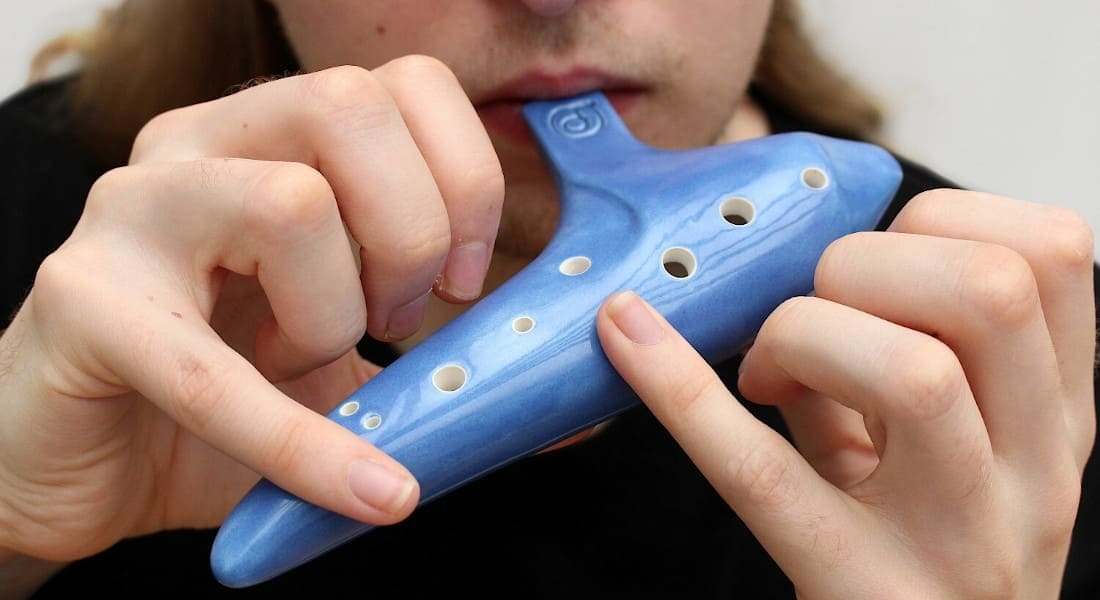
Now let’s look at the downsides of a plastic ocarina. The first that immediately comes to mind is perception: many people assume a plastic instrument is a toy, and a musician who owns one won’t be taken seriously. That’s a shame, because as I mentioned earlier, a plastic ocarina is capable of producing truly beautiful notes, but that’s the reality. A ceramic ocarina will often give those around you the impression that you’re playing something “more professional” than the same model in plastic. So it’s really just about how others see it, which can be a problem for some musicians.
Another disadvantage is the accumulation of moisture inside the ocarina. When you blow into the mouthpiece, you inevitably create condensation in the chamber, and it doesn’t vent as easily when the instrument is made of plastic. During longer playing sessions, droplets can form and disrupt the ocarina’s acoustics.
It’s also worth noting that plastic models are less common than ceramic ones, so you’ll have fewer options in terms of design, tone, or type of ocarina if you prefer plastic. Some players also find the feel of plastic less pleasant than ceramic under their fingers, although I consider this a minor detail. Finally, it’s also worth considering the environmental aspect: plastic generally has a greater impact, and this factor may help guide your choice.

Let yourself be won over by the robustness of a plastic ocarina
It’s easy to assume plastic ocarinas are low-quality toys made for kids. In reality, that’s not true, and this type of instrument can be an excellent starting point for any ocarina beginner. There are very good models out there, and their biggest advantage is that they’re highly resistant and can survive the occasional accidental drop.
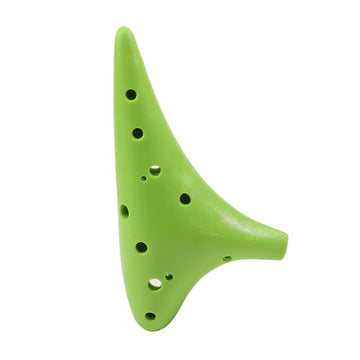
However, it’s not always easy to find plastic ocarinas that can play pure, crystal-clear notes, and very few reputable music shops carry them. That’s why we recommend choosing your next ocarina from Instruments du Monde, so you can be sure you’re getting a quality instrument. Try this superb plastic ocarina tuned to alto C and available in four colors.
Discover this instrument now by clicking on the image below:

It turns out there are several types of ocarinas, and they can be very different from one another. Discover all the ocarina models on the market by reading our article.


