



Written by Ambre Montespan - Updated on Sep 25, 2026

Table of contents:
Are you thinking about getting a Tibetan singing bowl to open and unblock your chakras? Do you already own one, but you’re not sure how to use it to harmonize and balance these energy centers? And how can a singing bowl actually influence the 7 major chakras of the human body?
I’ve been passionate about Tibetan singing bowls for over 10 years, and I’ve used this Asian instrument in countless yoga and meditation sessions to help release and unblock my chakras. So I can confidently help you choose the right singing bowl and show you how to use it for truly effective results.
To open and unblock your chakras with a Tibetan singing bowl, start by choosing the right instrument, then use it during meditation or as part of a sound massage.
Once you’ve read this entire article, you’ll understand:
- What chakras are
- How Tibetan singing bowls affect these energy points
- What you can do to balance your chakras with this instrument
That way, you can keep your chakras in harmony, which can support your everyday sense of well-being.
Now let’s explore the connection between chakras and the singing bowl.
What are chakras?
Before diving in, it’s helpful to define exactly what chakras are, share the Sanskrit meaning of the word, and describe the symptoms that may appear when one of these energy points becomes blocked.
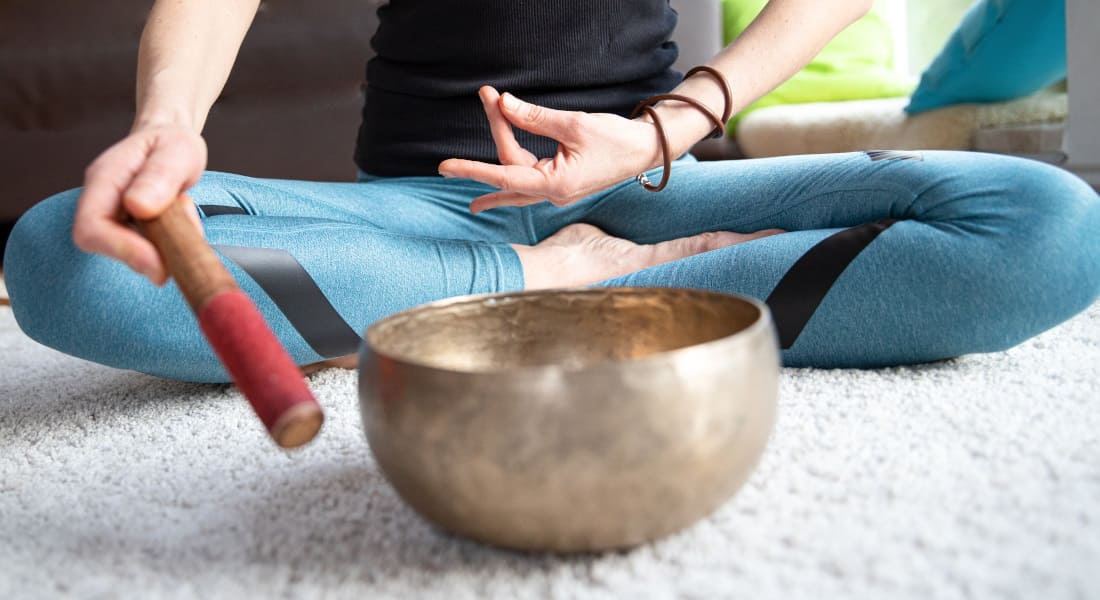
What is the definition of chakras?
Chakras are considered energy junctions located in the body of every living being. They are invisible, just like the energy that flows through them. There are seven major chakras, each located in a specific place, as well as several thousand secondary chakras. The major chakras, in order, are Muladhara, Svadhishthana, Manipura, Anahata, Vishuddha, Ajna, and Sahasrara. They are translated into English as root, sacral, solar plexus, heart, throat, third eye, and crown chakras, respectively. They start at the base of the spine and rise straight up to the top of the head.
Belief in the presence of chakras in the human body dates back several hundred years in Hindu tradition. The first written records mentioning the functioning of the chakras were found in the Yoga Upanishads, a collection of 20 philosophical texts written in Sanskrit between 700 and 1300 AD. According to Hindus, balancing the energy that flows between the different chakras is the key to a fulfilling and healthy life—physically, psychologically, and emotionally.
However, in the interest of transparency, it should be mentioned that the existence of chakras has not yet been confirmed or refuted by scientific advances. Consequently, while some practitioners claim to be able to feel their chakras and believe that these energy points are real organs like the lungs or liver, whether you believe they exist in your body will depend on your sensitivity to the subject.
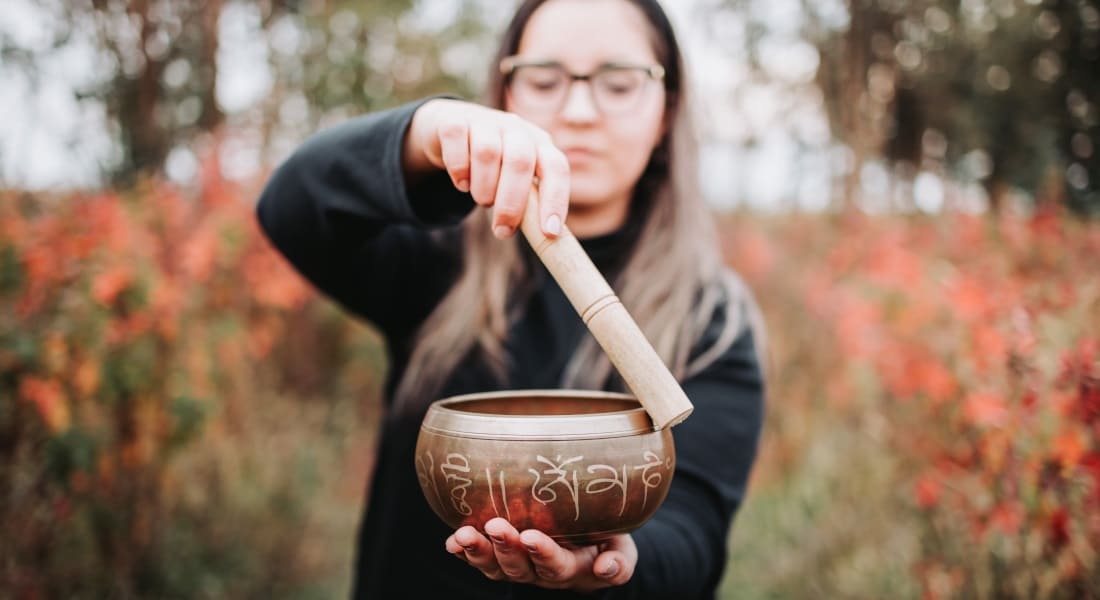
What does this word mean?
The word chakra means “wheel” or “disk” in Sanskrit. This term was used to name things that were generally circular in shape, such as the sun. At the heart of Hindu traditions, a wheel, or chakra, is featured on the Indian national flag. The chakras of the human body are therefore logically represented by circles through which energy flows.
What are the symptoms of a blocked or closed chakra?
When your chakras are balanced, everything may feel “normal,” so it’s often only when one or more of these energy centers become blocked or closed that you notice symptoms. Each chakra is associated with several bodily functions, both mental and physical. For example, the first of the seven major chakras, Muladhara, represents the link between mind and matter. Blocking it can cause pain in the lower body, such as the knees, feet, or pelvis, and may lead to feelings of insecurity, lack of self-confidence, or difficulty concentrating, along with distraction and lightheadedness.
Consequently, each chakra must be balanced in order to enjoy the best possible version of yourself. And to achieve this, the Tibetan singing bowl can be a wonderful tool.
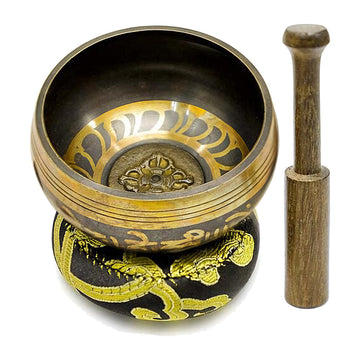
Why can Tibetan singing bowls open or unblock these energy points?
The Tibetan singing bowl is a musical instrument that has been used for hundreds of years by Buddhist monks in their meditation practice. This instrument produces deep sound vibrations at unique frequencies that can influence the flow of energy between your different chakras. When you play a singing bowl, the sound waves interact with the chakra, gently and naturally encouraging it to restore itself. The goal is to unblock one or more energy points and help bring back harmony and balance.
How can you harmonize your seven chakras using this Asian musical instrument?
Using a singing bowl for chakra work isn’t something you do at random. First, choose the right bowl, then use it during meditation or as part of a sound massage.
Which Tibetan bowl should you choose to unlock your chakras?
While any Tibetan singing bowl can support chakra release, certain models tend to be more effective. Your choice should focus on the musical note produced, the material the instrument is made from, and the frequency it’s tuned to.
1 – The musical note of the instrument
There is a correspondence between the seven major chakras and the seven musical notes of the C major diatonic scale: C, D, E, F, G, A, and B. This correspondence is shown in the illustration below:
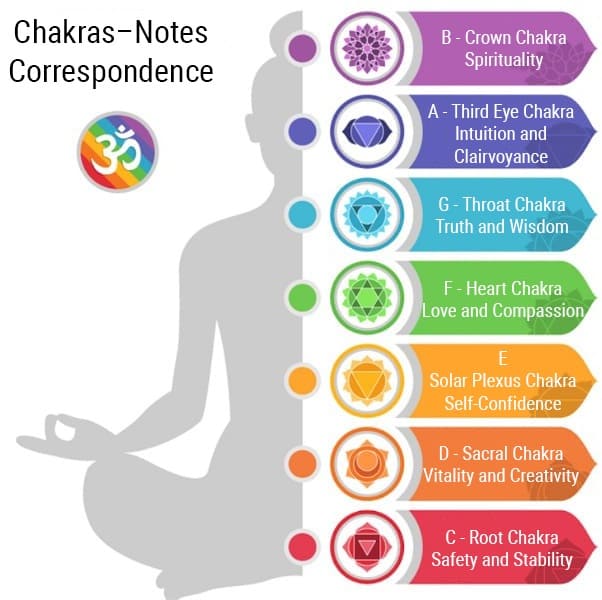
So, for example, if you want to focus your efforts on the sacral chakra, you’ll want a Tibetan singing bowl tuned to the note D. The ideal situation, of course, would be to own one bowl for each of the seven notes to do the most complete energy work. If you’re unsure which note to select, read our guide to choosing the perfect note for your future singing bowl. If you already own one of these instruments but don’t know its note, check out this other article that explains how to identify the note of your Tibetan singing bowl.
One detail is worth mentioning: some singing bowls for sale don’t indicate the note they produce. That’s simply because the artisan who made the bowl didn’t specifically tune it to a particular note. After all, some Tibetan bowl users aren’t interested in chakra work, and therefore don’t pay attention to the note being played.
2 – What material should you choose for your singing bowl?
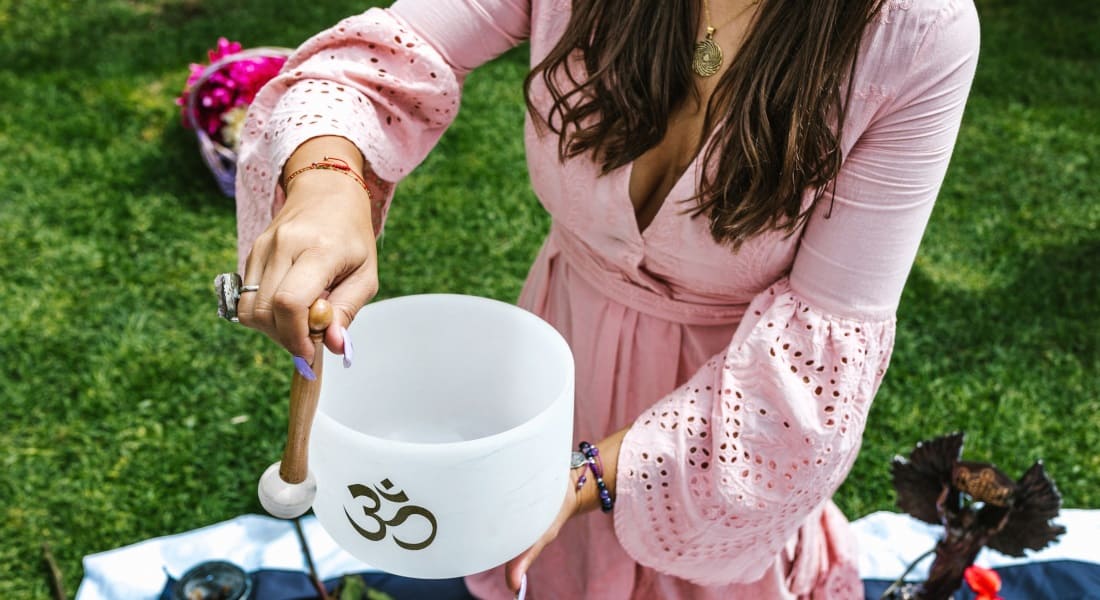
While Tibetan bowls made of a seven-metal alloy are the most popular today, quartz crystal bowls are often appreciated for energy healing. Partly because quartz is one of the most commonly used stones in crystal healing, and also because, unlike metal bowls, it’s much easier to obtain an exact musical note with this material.
It’s important to understand that metal bowls are traditionally made by hammering a disc, and it can be difficult for artisans to achieve a precise note once the instrument is finished. To do that, they would need to remove or add material. Quartz crystal, on the other hand, is melted and then placed in a mold. So adjusting the mold’s dimensions is usually enough to get the desired note, which is much simpler.
In addition, rock crystal (quartz) produces a clearer, purer sound, which can make it ideal when working with a blocked chakra. For improved effectiveness, a crystal singing bowl often feels more suitable than its metal counterpart.
3 – Choosing the right frequency for your Tibetan bowl
If you’ve looked at different Tibetan bowls on the market, you may have noticed that several frequencies are offered. The most common are 440 Hz and 432 Hz. These numbers correspond to the frequency at which the note A in the 3rd octave is tuned. All other musical notes are derived from this base frequency. So a C tuned to 440 Hz won’t sound exactly the same as a C tuned to 432 Hz—the latter will be slightly lower.
But what does this have to do with singing bowls? Since 1953, an international standard modified in 1975 stipulates that music must be tuned to 440 hertz, whereas previously 432 Hz was more common. Some people consider this standardization a mistake, believing that 432 Hz is “sacred,” connected to nature, and linked to the golden ratio phi, and therefore may have therapeutic properties. It’s also said that 432 Hz music can heal the soul, body, and mind. Currently, there is no solid scientific evidence to prove that this frequency is more beneficial than any other. However, having experienced both, I personally prefer 432 Hz for unblocking the chakras.
It’s also worth mentioning that many other frequencies, such as 528 Hz, are praised by users. Here again, it’s best to form your own opinion and choose the frequency that feels most beneficial to you.
Unblocking your energy centers by meditating with a Tibetan singing bowl
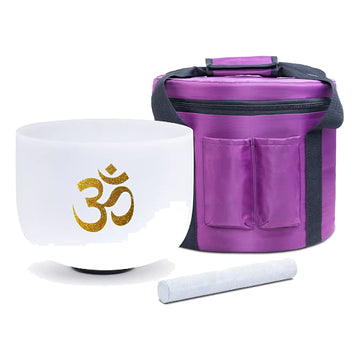
While yoga mainly uses postures to unblock the chakras, Tibetan singing bowls are used during meditation. To get started, find a quiet, comfortable space, sit cross-legged or in lotus if you’re flexible enough, and rest the singing bowl in the palm of one hand. Then play your instrument using your stick or mallet—either strike it or “sing” it.
Focus on the vibrations produced by the singing bowl, visualizing the energy flowing through your body, especially in the area where you want to unblock the chakra. Set the intention to unlock this energy point. Once the sound fades, repeat the process until you sense improvement in your chakra harmony. If you’d like to learn more, read our article on learning to meditate with a Tibetan bowl. You’ll then be able to work effectively on all your chakras.
Enjoy a singing bowl sound massage to harmonize all your chakras
Another highly effective technique for balancing all your chakras is to experience a massage or sound bath with Tibetan bowls. Since this practice can’t be done alone, it’s often performed by a professional who places singing bowls directly on your body and then strikes them to create vibrations.
To target all the chakras precisely, the practitioner usually has seven different bowls, sometimes more, tuned to the seven musical notes corresponding to the seven chakras. They then take a Tibetan bowl and place it on the part of the body corresponding to the chakra in question. For example, the bowl tuned to E would be placed on the solar plexus. Next, they place one hand inside the bowl so it stays steady and stable when they strike it or make it sing. Finally, they sound the bowl. The person receiving the massage remains completely passive. The bowls are used one at a time, and the time the practitioner spends on each chakra—anywhere from a few seconds to several minutes—is often determined by a preliminary conversation in which the person being massaged explains what they’re looking for in the session.
For the root chakra, the bowl is typically placed either between the thighs with the legs slightly apart or in front of the feet if the legs remain straight. For the third eye and crown chakras, the Tibetan singing bowl can be placed directly on the person’s forehead or held by the practitioner close to the skull if the bowl is too heavy. Care should be taken with how strongly the bowl is struck to avoid a sound that’s too loud, unpleasant, or even harmful to the recipient’s eardrums.
When the bowls are not placed directly on the body, the session is called a sound bath rather than a sound massage. Even in a sound bath, the benefits of Tibetan singing bowls can still be very valuable. Watch the video example to get a clear idea of this practice:
While highly effective, this technique requires two people, and professional sessions can sometimes be expensive. You can still get the singing bowls you need and practice with fellow enthusiasts. If you’d like to try it, we recommend reading about the contraindications and potential side effects of Tibetan bowls first. That way, you can enjoy your session without taking unnecessary risks.
Is it recommended to have regular and frequent sessions to maintain chakra balance?
Regular sessions with Tibetan bowls offer a subtle yet powerful way to keep your chakras in balance. These bowls, crafted from precious metals and sometimes rock crystal, emit sound vibrations that resonate with the body’s energy centers. Frequent use can create a synergy with the unique vibrations associated with each chakra. Whether you’re aiming to balance the root chakra, solar plexus, or crown chakra, consistency can deepen the resonance and help you get the most out of the practice.
However, each individual is unique, and therefore, the ideal frequency of sessions can vary from a few per month to several per week. Some people feel effects after short, frequent sessions, while others prefer more spaced-out sessions. Listening to your own rhythm can guide you toward a practice that feels right for you. Regular sessions can act like ongoing energy care, helping maintain chakra balance along the spine. As sound vibrations move through the body, they can help loosen energetic blockages and encourage a smoother flow of vital energy—supporting recovery, boosting energy, and helping you maintain a healthy body and mind.
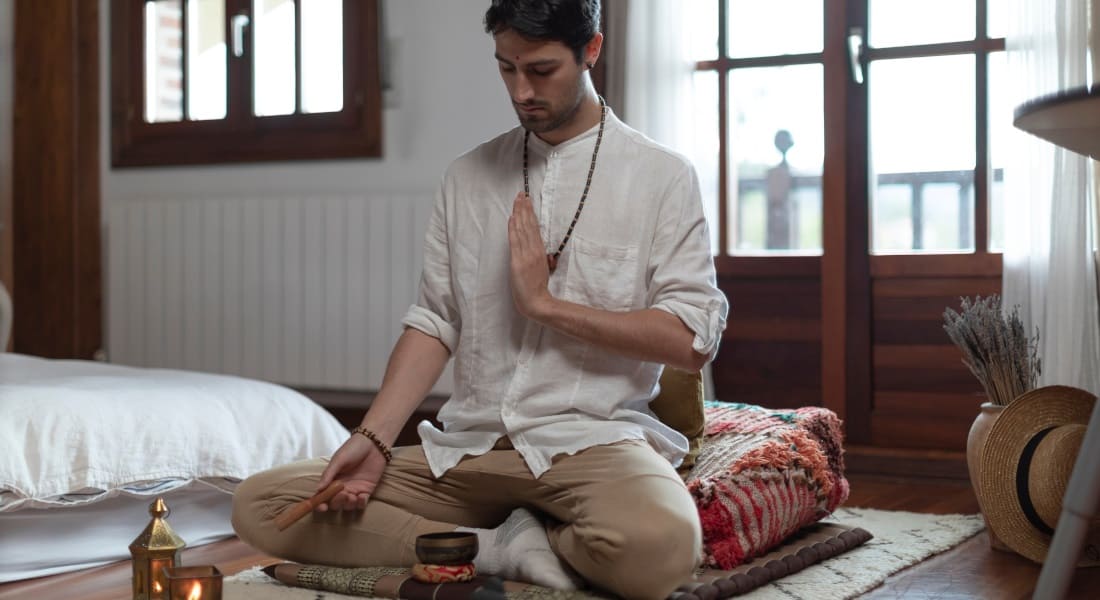
Chakra harmony isn’t achieved in a day. Like a well-tuned musical instrument, energy balance is built over time. Frequent sessions, like regular notes, help create a harmonious symphony between body and mind. Furthermore, Tibetan Buddhist monks have long used singing bowls in their rituals, recognizing their harmonizing power. Today, with crystal healing and modern energy work, these bowls remain reliable allies for those seeking to balance and energize their chakras.
The depth of regular sessions with Tibetan bowls lies in their ability to go beyond the physical and speak to something deeper. These instruments, associated with specific frequencies, can act like a form of energy medicine, reaching the most subtle layers of the self. The sound vibrations, produced by carefully chosen metals and pure rock crystals, can feel like a sound bath for the soul—nourishing not only the energy centers, but also the most intimate parts of our inner world. That’s where the real power of regular Tibetan bowl sessions can be found: a resonance that transcends time, weaving a lasting link between the individual and their inner essence.
Simply keep in mind that regular sessions with Tibetan bowls are a wise choice for anyone seeking inner harmony. Whether you want to start your day feeling aligned or end your evenings in gentle resonance, these regular sessions are key to maintaining energy flow and supporting physical and spiritual well-being.
Balance your chakras using a singing bowl
The Tibetan singing bowl is a traditional tool that has its place when it comes to opening and unblocking your chakras to enhance everyday well-being. While it’s relatively simple to use, it does take practice to get truly effective at balancing and harmonizing your chakras. With all the tips you’ve found in this article, you’ll be able to balance all of your energy centers.
That said, quartz crystal singing bowls are often better suited for chakra work, and it can be difficult to find a reputable store that offers a wide range of notes to target the chakra you want. Instruments du Monde offers a full range of Tibetan rock crystal bowls, allowing you to choose both the note and the frequency to match your needs.
Explore this magnificent selection of singing bowls by clicking on the link below:
Harmonizing your chakras is just one of the many possible uses for a singing bowl. Discover everything you can do with this instrument by reading our tutorial, which explains when and why to use a Tibetan bowl. You’ll get a clear sense of what this instrument straight from Asia can do.


