



Written by Ambre Montespan - Updated on Sep 26, 2026

Table of contents:
Are you thinking of buying a Tibetan singing bowl soon? Not sure how much to invest in this Asian musical instrument to get a good deal? Want to know how much a singing bowl costs?
As someone who’s been passionate about Tibetan singing bowls for over a decade, I’ve had plenty of time to explore just about every offer on the market. I’ve seen singing bowls selling for a few dozen euros, while others can exceed a thousand. So I’ll be able to advise and guide you in buying this instrument at the right price.
The lowest-priced Tibetan metal bowls start at €30, while larger models or those made from quartz crystal can quickly reach several hundred euros.
After reading this guide, you’ll know exactly:
- The prices of Tibetan metal-alloy singing bowls
- How much you should expect to pay for a crystal instrument
With this knowledge, you can confirm whether the price you’re being asked to pay is consistent with the Tibetan singing bowl being offered—so you can feel confident you’re getting a good deal.
Let’s dive into this fascinating topic together.
How much should you budget for a metal Tibetan singing bowl?
To know exactly what to expect, it’s helpful to divide the budget for Tibetan metal-alloy bowls into three tiers.
Tibetan singing bowls costing less than €50
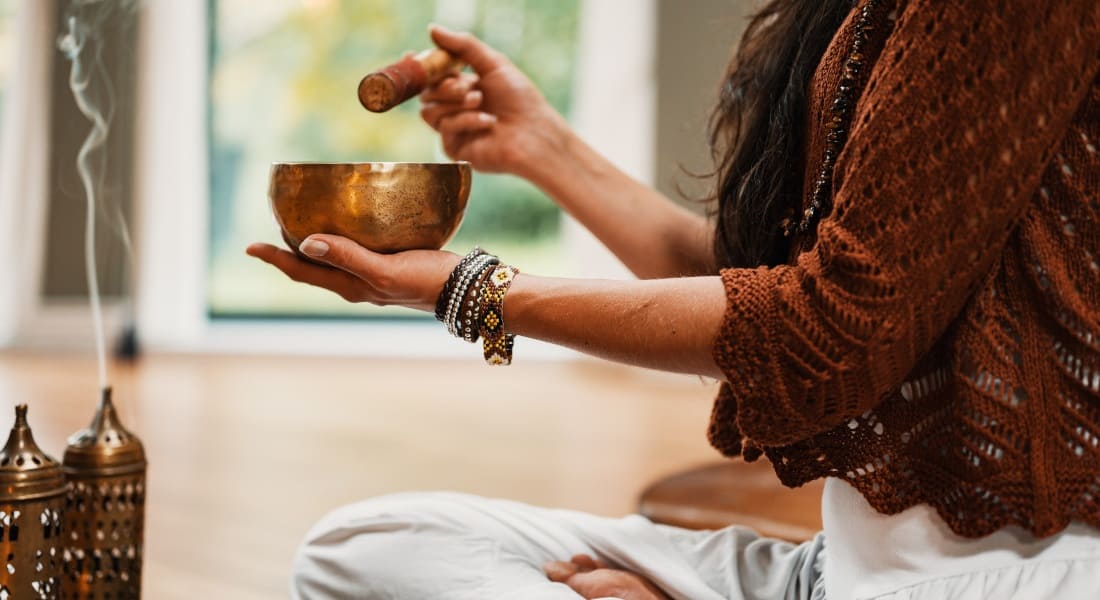
You can absolutely find “standard” Tibetan bowls made from different metal alloys from the Himalayas, Tibet, or Nepal for less than €50. Options include copper, bronze, brass, and—of course—the traditional seven-metal alloy, which is considered a classic blend sold by many Nepalese and Tibetan artisans.
However, don’t expect a large diameter. Most models in this price range will be under 4 in (10 cm) in diameter and weigh around 10.6 oz (300 g). Engraved singing bowls are very rare at this price point because traditional motifs are hand-etched using the so-called “etching” process, which takes time and therefore significantly increases the final price of the bowl.
It’s also worth noting that Tibetan singing bowls sold at this price don’t always include a cushion. Yet it’s a great accessory if you plan to place your instrument on a table or shelf instead of holding it in your hand, since it helps the vibrations resonate more evenly.
Therefore, it’s wise to be cautious of deals that seem too good to be true. If you’re offered a hand-hammered Tibetan bowl with an 8 in (20 cm) diameter and beautiful Buddha engravings for less than €50, the offer isn’t realistic, and it’s best to move on.
Instruments worth between €50 and €200
With a comfortable budget of between €50 and €200, you’ll be able to find a wide selection of truly interesting Tibetan bowls. First, your future instrument’s size will increase significantly, since you may be able to buy a model around 8 in (20 cm) in diameter. The tones will be lower, richer, and deeper than those of a small bowl. Next, you can opt for an engraved singing bowl, which greatly adds to the charm of this object with mysterious origins.

You’ll also be able to be more selective about how you plan to use your Tibetan bowl. For example, you can choose the musical note that will be emitted by the instrument, such as C, D, or G, which can influence the chakra you’re focusing on. Some bowls include engravings traditionally associated with specific intentions—sleep, meditation, sound massage, or recharging healing stones and crystals. You could also treat yourself to a so-called "Full Moon" Tibetan bowl, made only on the night of a full moon so it can be “charged” with positive energy that’s said to benefit the player.
You’ll also often see Tibetan bowls sold with fabric covers to protect them from moisture and corrosion. In my opinion, it’s a great idea because it helps protect your singing bowl. Alternatively, you can complete your purchase with a cover or even a mallet to create a wider range of tones while staying within this budget.
What kind of Tibetan singing bowl can you get for more than €200?
Once you’re over the €200 mark, you have a very comfortable budget to buy a beautiful instrument. These pieces are generally quite large and richly decorated with unique engravings. However, prices tend to skyrocket as the diameter of the Tibetan bowl increases. In fact, don’t assume that a 12 in (30 cm) bowl will simply cost twice as much as a 6 in (15 cm) one. In reality, pricing is exponential, and you can find singing bowls weighing more than 22 lb (10 kg) that cost several thousand euros.
If you have a substantial budget, you could also consider an antique Tibetan bowl. However, the prices of such instruments vary enormously, and some models are priceless—destined for display in a museum or private collection.

How much should you expect to spend on a quartz crystal singing bowl?
Quartz crystal singing bowls are generally more expensive than metal ones. So don’t expect to find one for less than €50—except, perhaps, very low-quality examples, which are not recommended at all.
A rock crystal bowl will cost around €150 for models with an 8 in (20 cm) diameter. The mallet and cushion—a thin rubber ring specific to this instrument—are usually included, and sometimes even a padded cover, ideal for protecting this fragile object during transport. For the same budget, a crystal singing bowl offers a more precise note than a metal model.
By increasing your budget slightly, you can choose the musical note and frequency emitted by the bowl, for example 432 Hz. You may also be able to choose a colored model, a fully transparent one, or one featuring a symbol such as a flower of life. Check out our article comparing Tibetan metal and crystal bowls to help you choose the material that suits you best.
Why are singing bowls so expensive?
Singing bowls, often used in meditation, healing, and other spiritual practices, can sometimes seem expensive for several reasons:
- High-quality materials : Singing bowls are typically made from carefully selected metals. The traditional composition includes an alloy of seven metals—gold, silver, mercury, copper, iron, tin, and lead—each associated with a different celestial body. Some modern bowls may also be made of quartz crystal or other high-quality materials, which affects their price.
- Handcrafted : Many singing bowls are handmade using traditional techniques passed down from generation to generation. This artisanal process is time-consuming and requires a high degree of skill and experience, which contributes to the cost of production.
- Origin and authenticity : Authentic singing bowls, especially those from traditional regions such as Tibet, Nepal, and India, may be more expensive due to their authenticity, history, and cultural origin. Import and shipping costs may also add to the final cost.
- Sound and vibrational quality : High-quality singing bowls produce sounds and vibrations of exceptional clarity and depth, which are believed to have therapeutic effects. The research and development required to achieve this quality can also affect the price.
- Market demand : Growing interest in wellness and spiritual practices has increased demand for authentic, high-quality singing bowls, which can lead to higher prices due to supply and demand.
- Accessories and training : Often, purchasing a singing bowl includes not only the bowl itself, but also accessories such as mallets and cushions, and sometimes access to training or instruction on their use, which may justify a higher price.
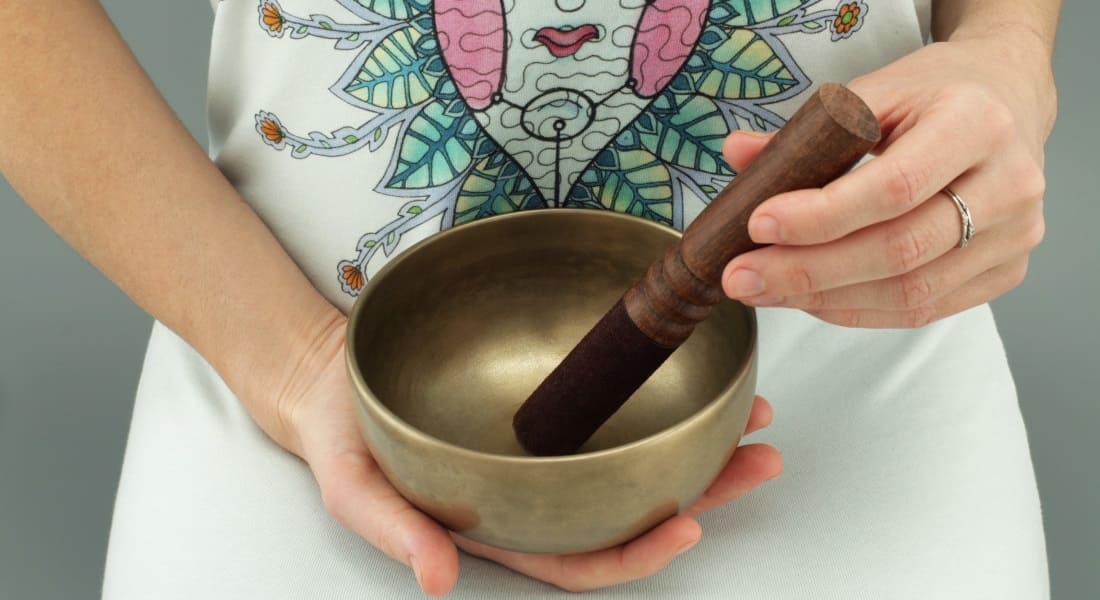
Taken together, these factors mean that singing bowls can be considered valuable objects, both materially and spiritually, and they help explain why prices can be relatively high—though it’s still possible to find attractive deals when you know what to look for.
Get your instrument at the right price
The Tibetan bowl is still relatively unknown to the general public, and it holds many secrets. It’s perfectly normal to be unsure about which bowl you can get for your budget. Now you know what price range to expect depending on the type of singing bowl you’re looking for. That way, you’ll be able to tell whether you’re looking at a good deal—or not.
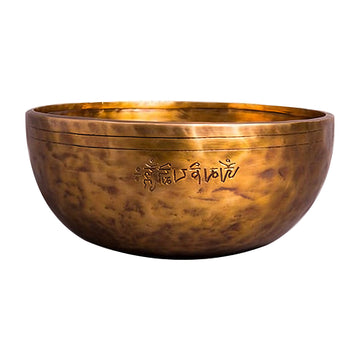
However, there are plenty of tempting offers online, and even with the advice you’ve just read, you might still wonder whether the asking price is truly fair for the instrument being offered. To give you peace of mind, the French store Instruments du Monde offers more than 200 models of Tibetan bowls at very reasonable prices. You’ll be spoiled for choice when selecting your future bowl, such as this lunar singing bowl, which is perfect for a first experience.
Discover this singing bowl by clicking on the image below:
Now you know how much to budget for your future Tibetan bowl. However, there’s still one question left: where can you find enough options to make sure you choose the perfect one? We answer this tricky question in our article on where to buy singing bowls. Still not sure which model to choose? Take a look at our comprehensive guide to the Tibetan bowl. You’ll be able to choose your bowl with confidence.


