



Written by Ambre Montespan - Updated on Sep 14, 2026
Table of contents:
Do you want to take your handpan on a trip and are wondering if it will be allowed in the cabin? Have you read all kinds of conflicting advice about transporting this musical instrument? Are you worried about checking your precious sound object in an aeroplane cargo hold without knowing whether it will come out undamaged?
As someone who has been playing the handpan for over 10 years and has taken it on more than 30 flights, I have experienced just about every situation you can run into at a check-in desk. Because of that, I can tell you exactly what airlines state in writing about this musical instrument.
A standard handpan measures about 55 cm in diameter and weighs 4 kg, which puts it over the cabin baggage size limit for most airlines. Yet it almost always makes it on board, because nearly all carriers accept a fragile instrument in the overhead locker when space allows.
As you read this article, you’ll learn:
- Whether a handpan really fits in an overhead locker
- What each major airline allows, with the exact numbers
- Which case or bag to choose for maximum protection
- What cold and altitude actually do to the steel your handpan is inevitably made from
That way, you’ll know what to say at the check-in desk and you’ll get what really matters: the certainty that your instrument will arrive intact.
Let’s take a look right now at how you can travel with a handpan.

Does a handpan really fit in an aircraft overhead locker?
Like most handpan players who travel, you will probably want to take your precious percussion instrument into the cabin, and therefore into one of the overhead lockers above your head once you are seated. The main challenge is that a handpan is fairly bulky. While it is easy enough to hand it over at the airline desk so it travels in the cargo hold, bringing it into the cabin often comes down to negotiation.
A typical handpan measures 55 cm in diameter by 25 cm high and weighs about 4 kg, although in reality, some instruments range from 53 to 61 cm in diameter at a similar weight. However, since your handpan will inevitably travel with a padded case, you’ll need to account for a total weight of 5 to 6 kg and add a few centimetres to the diameter and height.
It is still rare, but it is worth noting that travel-size handpans have been available for several years, and several makers now include them in their catalogues. Some models go down to 45 cm in diameter and 3 kg, about 10 cm smaller than a standard model. If you plan to travel often and have not yet bought your instrument, choosing a smaller-diameter model will give you more room to negotiate at the desk. However, the selection of scales is a little more limited, and it still does not remove the main issue when flying, namely the instrument’s width, which generally remains above the maximum size allowed in the cabin.
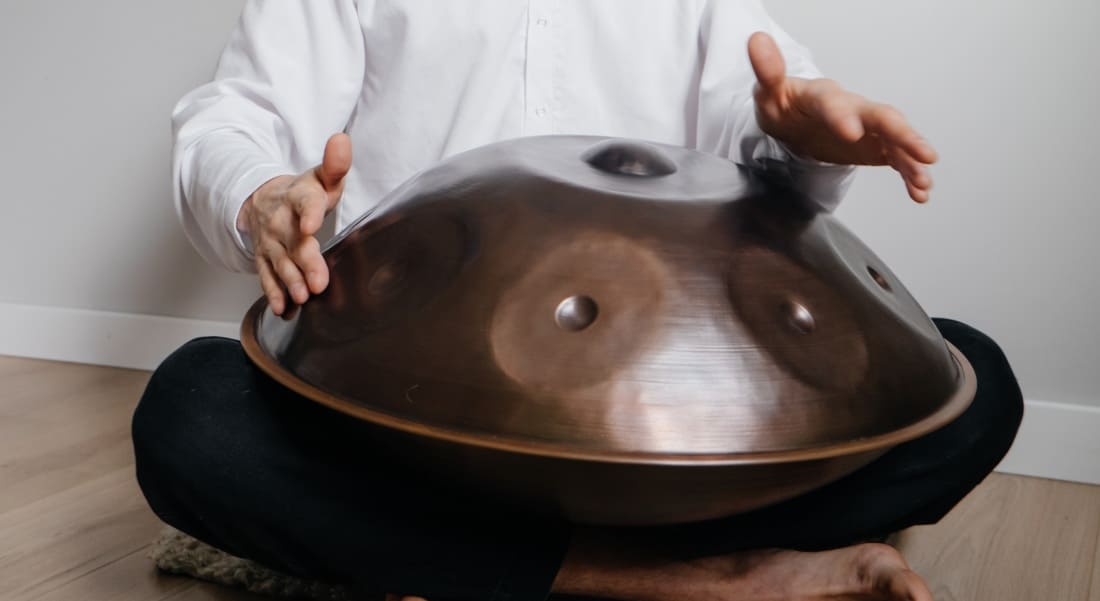
In fact, when it comes to flying, everything comes down to a few centimetres, and the calculation starts before you even book your ticket. The standard cabin baggage size is designed for a rectangular suitcase measuring 55 cm long by 35 cm wide by 20 cm high. But with low-cost airlines, cabin baggage often has to fit under the seat and measure 40 × 30 × 20 cm. As for weight, there is usually enough room for a handpan, since the limit is generally between 7 and 12 kg. So a 55 cm model, and even a 45 cm model, still exceeds the permitted width. Height is also a problem. As a result, if airline staff apply the rules strictly, a handpan can theoretically never be brought into the cabin.
But putting those rules aside, can a handpan actually fit in the cabin overhead locker? The answer is yes, and we’ll see why it can be negotiated and how to do it. Personally, I have already managed to fit a handpan into an overhead locker, and I am far from the only one. David Charrier, a great handpan player who has also been flying with his instrument for ten years, says that, in his experience, the handpan fits in the overhead compartments of 95 per cent of the planes he has taken.
So how do you know which aircraft make up the remaining 5 per cent? One theory is that the overhead locker question depends first and foremost on the aircraft. Planes with rows of fewer than three seats on each side of the aisle often have compartments that are too small, which is especially common on domestic flights in the United States. On those aircraft, you would need a case that can survive the cargo hold, and it is better to know that before you leave. Otherwise, you should ask other handpan players about the specific aircraft model you plan to take so you can find out in advance whether the handpan will fit in the overhead locker.
How can you negotiate to bring your instrument into the cabin when flying?
As I just explained, you are technically not allowed to bring a handpan into the cabin. However, airlines tend to be relatively flexible on this point. According to David Charrier, he has only been refused cabin transport once, on easyJet in Athens on a day with delayed flights. In fact, he estimates that 99 per cent of airlines accept it even when it is oversized, and I can confirm that this matches my experience too.

It seems there are two boarding methods among players: the so-called “polite” method and the “ninja” method.
- The polite method, which I recommend, consists of arriving early, declaring the instrument yourself at the check-in desk while acknowledging that it does not fit the required size limit and, if you have already carried it in the cabin before, showing a photo of the case in an overhead locker on a previous flight. You can also justify cabin transport by pointing to the instrument’s value and fragility, then hope the airline staff are lenient and understanding enough to let you place it in the overhead locker.
- The “ninja” method is simply to board without ever mentioning the handpan, either at the check-in desk or at the gate, so you can enter the cabin without raising suspicions or comments from the crew, especially the cabin crew. This method is fairly bold, and if you get caught, do not be surprised if you have to pay extra fees. To maximise your chances: carry the case at your side rather than on your back, place the bag under the desk during check-in, and remove the backpack straps from the case before going through the aircraft door, since it will look smaller and take up less space in the overhead locker.
Quick note: on full flights, especially on short routes where boarding is not done by groups, the bags of the last twenty or thirty passengers may be sent to the cargo hold for free, so you should get to the boarding gate early to avoid this situation. Early boarding, which costs about A$30 to A$80, acts as a kind of insurance.
When choosing your flight, a non-stop flight is preferable, since every time you board a new plane, you multiply the risk that gate staff will not allow your handpan into the cabin. It is also best to choose a flight outside peak hours, from Tuesday through Thursday, on Saturday afternoon or evening, or on Sunday morning, since competition for overhead locker space is lower.
What steps should you take before checking your hang drum in the cargo hold?
Once your instrument is well protected in its case, attach a clearly visible customs note to the case and state that it is a rare, fragile, and expensive instrument. Customs officials are more likely to open an unusually shaped object, so clearly telling them what it is while also indicating that it is delicate can only help. You can also provide instructions on how to handle the instrument. Remember to mark the case “fragile” and attach a label with your name and phone number. For extra protection, you can slip a GPS tracker into the case. Finally, a photo of the instrument in its packaging with the tickets visible next to it, taken before departure, remains the only way to prove its pre-transport condition if something unfortunate happens.
Did your instrument come back damaged? You should know that most airlines announce a deadline, sometimes only a few hours, for reporting any damage. There is no universal rule here, so speak up as quickly as possible if you notice even the slightest issue. I read about a handpan player whose instrument came out of the cargo hold with a burst zip, a bent metal rim, and three out-of-tune notes after a security inspection, which he believed caused the damage. The player received nothing from the carrier because he had not reported the damage within the required window. It is therefore in your best interest to inspect the instrument as soon as you get off the plane.

Do cold temperatures and altitude make an instrument go out of tune on a plane?
It can be tempting to think that pressure, cold, and altitude make this musical instrument go out of tune during a flight, especially if it is checked in the cargo hold. Contrary to popular belief, both the cabin and the cargo hold are pressurised and kept at a moderate temperature. So there is no reason to think these conditions will make your handpan go out of tune. The bigger danger is impact while the instrument is being handled, but also moisture trapped inside the case before a long trip, which can cause the instrument to rust. That is why, before you leave, I recommend reading my other article dedicated to handpan care and protection.
How do you choose a case suited to transporting your sound object?
Which case should you choose for your instrument? There are three types of cases for a handpan:
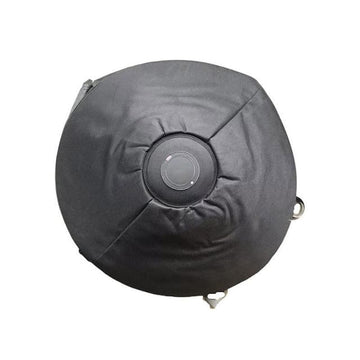
- First, the soft case, which is a flexible, lightly padded bag. It also has the advantage of being water-repellent, meaning water rolls off without soaking through the fabric. This case is useful for everyday use, but not for high-risk transport.
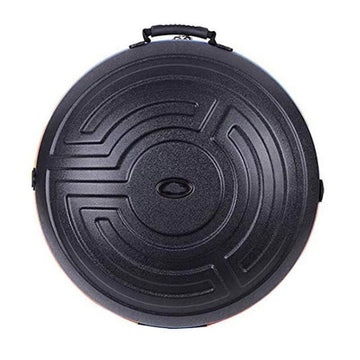
- Next, the hard case, which is a reinforced shell combined with thick foam. This case is stronger and more resistant, but also more expensive, heavier, and bulkier than the soft case. This is the one to prioritise for air travel, especially if the instrument may go in the cargo hold.
- Finally, the flight case, which is an upgraded version of the hard case designed specifically for air travel and adds an extra layer of protection inside the case to compress the instrument so it cannot move in any way. Some models also include a combination lock, just like travel suitcases. The issue is that this type of case is generally very heavy, adding 4 to 6 kg on top of the handpan. This means the whole setup may exceed the maximum cabin weight, giving airline staff one more reason to refuse it. Keep that in mind.
So, in my opinion, the hard case remains the most cost-effective option. It lets you use it every day while still giving your instrument maximum protection.
Take your handpan everywhere with the right protection
A standard handpan exceeds every airline’s cabin baggage size limit, yet it still makes it on board in almost every case when space allows. The real danger is neither pressure nor altitude, but impact, so protection matters more than the airline. Thanks to the information in this article, you can now cite the numbers from the seven carriers and prepare your departure without leaving anything to chance.
There is still one important point to mention. An instrument that is politely declared and boarded early will not survive any better than another if its protection is not optimal. That protection will make all the difference between a stress-free departure and a long, costly retuning for your percussion instrument. That is why Instruments du Monde, a shop specialising in exotic instruments, offers bags and protective cases designed specifically for the handpan, letting you travel with peace of mind.
Discover a hard case that will perfectly protect your handpan right now by clicking the image below:
Now that you have considered these tips, do you know the difference between a hang drum and a handpan? I invite you to find out in this interesting article exploring the historical roots of this sound object.


