



Written by Ambre Montespan on Oct 2, 2023 · Updated on Oct 15, 2026

Table of contents:
Have you ever heard of the djembe, that iconic drum from Africa? Want to know how this extraordinary instrument came to be? Curious about how the djembe has evolved over the centuries? Simply put, what are the djembe’s origins and the story behind it?
If you’re looking for answers, you’re in the right place. I discovered the djembe over 20 years ago, and through all the research I’ve done on this magnificent percussion instrument, I’ll be able to share the key things you should know about this traditional drum.
Born more than 700 years ago in the Sahel region of West Africa, mainly in present-day Mali, the djembe has evolved dramatically from its earliest days to the instrument we know today.
By reading this article, you’ll get a clear look at the djembe’s origins and history. In particular, you’ll learn about:
- The birth of the djembe
- The history of this African drum
- The popularization of the djembe around the world
With everything you’ll discover here, you’ll be able to tell the fascinating story of where the djembe comes from to anyone who’s curious, while also explaining how the instrument has changed over time.
Now, let’s explore this incredible instrument together: the djembe.
What are the origins of the djembe?
You’re probably eager to find out where the djembe comes from and how it has evolved over time. First, I’ll pinpoint the region where the djembe emerged. Then, I’ll share the stories tied to its origins.
When was the djembe created?
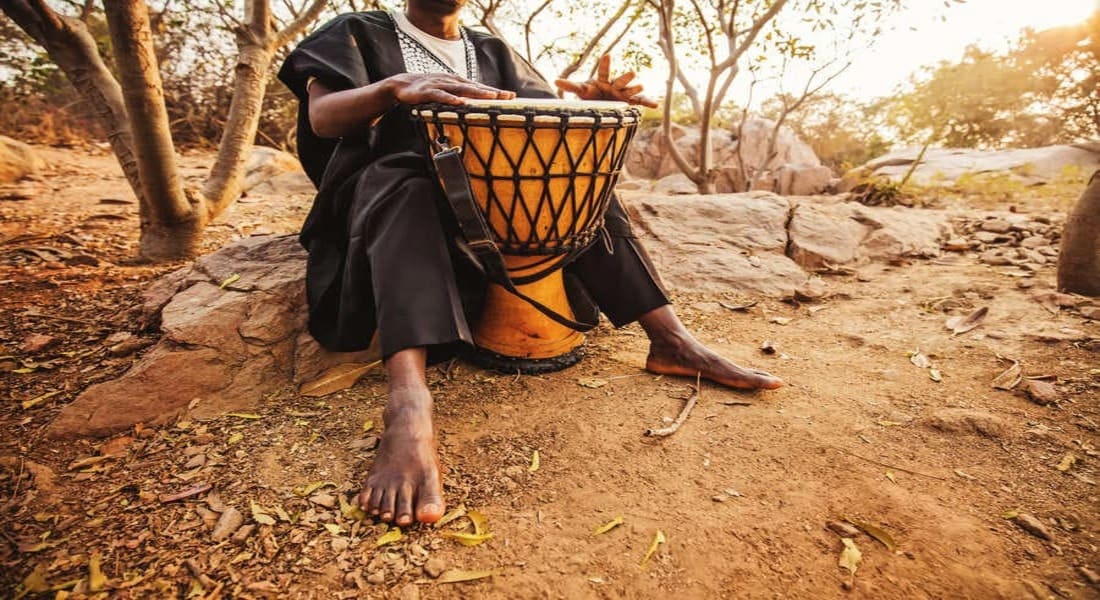
The history of the djembe goes back roughly 700 years. It originated with the Mandinka people, a West African ethnic group that inhabited a vast region including Guinea, eastern Mali, northern Côte d’Ivoire (Ivory Coast), and Burkina Faso. The Mandinka Empire was established by Soundiata Keïta in the 13th century. According to archaeological research, the djembe was adopted within this empire by different ethnic groups, including the Malinkés, Wassoulounkés, Soninkés, Khassonkés, and Bambaras of Kaarta, who lived in the area around present-day Mali.
According to historians, these groups played an instrument resembling a large mortar, with an animal skin stretched across the top. It’s worth noting that several hypotheses exist about the djembe’s origins, since oral tradition plays a major role in West Africa and definitive written proof is limited. One of the most widely accepted ideas connects the djembe to the Mandinka Empire, suggesting it was created in this region. According to the most likely hypothesis, the very first djembe was actually a mortar repurposed into a musical instrument. At the time, mortars were containers used to grind materials into a paste or powder using a stick called a pestle. All it took was stretching a skin over the mortar to create a simple early djembe.
The name “djembe” is just as fascinating, with several intriguing possible origins. One explanation traces it to the Bambaras of Kaarta, who would call out “Anke dje, anke be” to gather the community—literally, “everyone gather together.” In this phrase, “Dje” refers to gathering, while “be” evokes the idea of community, which may have given rise to the drum’s name, often associated with bringing people together. Others suggest that “djembe” derives from the Soninke word “dimmé,” which simply means “drum.”
The djembe also holds a central place in African culture, accompanying all kinds of celebrations, from weddings to baptisms. Its distinctive sound and unique tones have stood the test of time and taken on many roles over the centuries. In the past, the djembe was the percussion instrument most often favoured for ceremonies and traditional events. It was seen as a symbol of the fundamental elements of the universe: wood representing plant life, skin representing the organic world, and iron hoops evoking the mineral world.
Stories, myths, and legends surrounding the origin of this drum
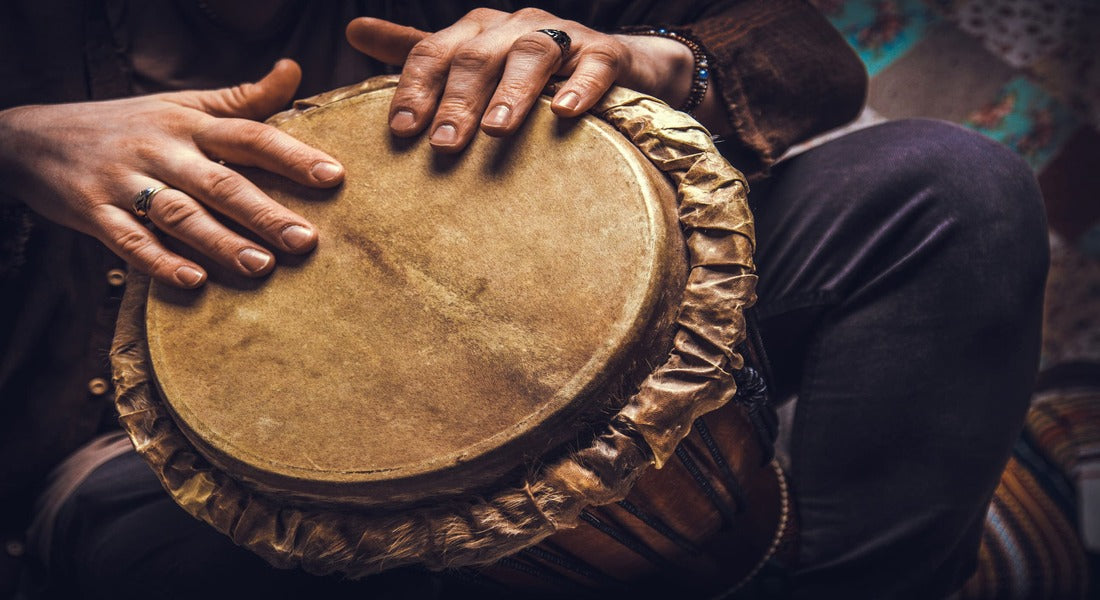
The history of the djembe is wrapped in mystery and shaped by captivating legends that add colour to its origins. As mentioned above, the most likely theory is that the djembe’s solid wooden shell evolved from a large mortar once used to grind grain and millet. A more detailed, widely shared legend in Africa tells of a day when a villager’s wife drilled a hole in the bottom of a mortar while her husband stood nearby with a goatskin. She stretched the skin over the top, and so the djembe was born.
According to Bambara mythology, this drum was made from the skin of a hybrid creature, halfway between a giraffe and a zebra, called the “gebraffe.” Another legend—surely one of the most charming—was preserved in the accounts of ethnomusicologist Hugo Zemp, which appear in Serge Blanc’s book "African Percussion, The Djembe." The story says that, long ago, before humans discovered the drum, it belonged to chimpanzees who played with it in the trees. At that time, a trapper named So Dyeu lived near them and often watched their games. One day, he set a trap to capture the instrument that fascinated him. The next morning, he found one of the young chimpanzee players caught in the trap. So Dyeu took the drum back to his village, where the chief—amazed by this mysterious object—accepted it as a gift. In gratitude, the chief offered So Dyeu his eldest daughter to become his first wife. Since that day, chimpanzees have supposedly been unable to play the djembe, which is why, people say, they’re left to beat their chests with their hands. Legends like these add a touch of magic to the djembe’s story—an instrument that has captivated the imagination for generations.
The story of the djembe’s origin is therefore filled with different tales, passed down orally by many djembe masters over time. Even the most respected experts don’t claim to hold the absolute truth on the subject. In the end, the djembe’s history is a rich patchwork of traditions and legends that continues to intrigue anyone drawn to this musical heritage. The djembe embodies the cultural depth and diversity of West Africa, with fascinating roots and a continuous place in the region’s music and daily life for centuries.
Studying this percussion instrument’s origins through archaeological research
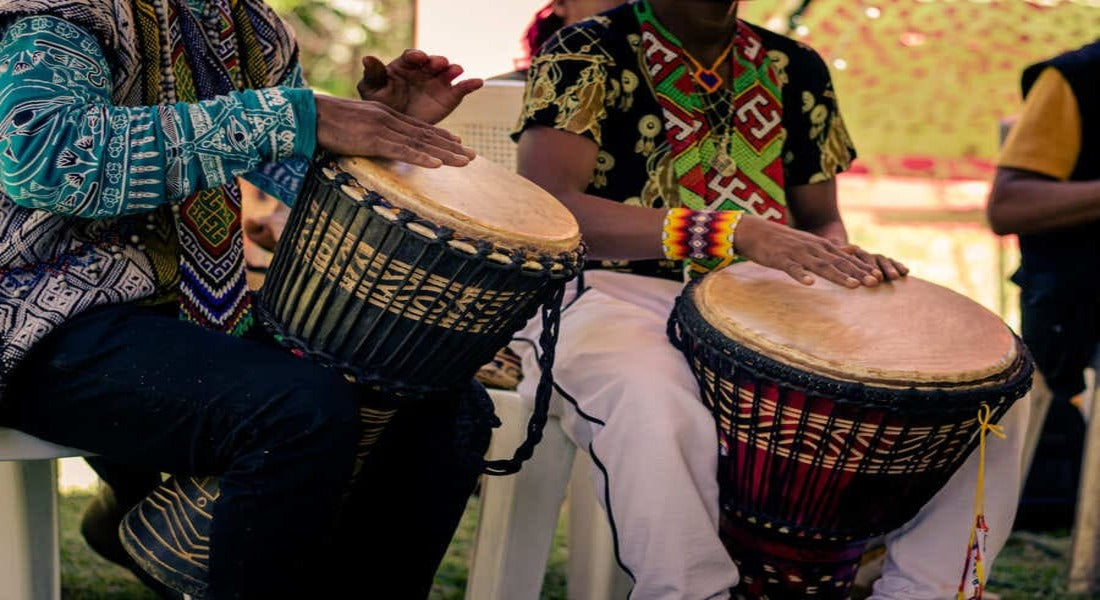
Research into the djembe’s origins suggests that it was initially made by blacksmiths, who crafted each drum specifically for the player who would use it. This made perfect sense, since blacksmiths were also the ones who cut down the trees needed to build djembes. Crafting these drums held deep spiritual significance, and blacksmiths were expected to make offerings to the spirits of the trees before felling them for drum-making. The lengue, a traditional sacrifice ritual, was performed to seek permission to cut down a tree destined to become a djembe.
According to African legend, the drum contains three essential spirits. The belief is that the djembe houses the spirit of the tree from which it was made, the spirit of the animal whose skin became the drumhead, and the spirit of the blacksmith—or the people who cut the tree and assembled the instrument. Many also speak of ancestral spirits, which hold an important place in African culture.
Once the blacksmith had finished his work, the djembe was handed to the percussionist who had ordered it. Generally, these musicians belonged to the griot or jeli caste—poets and bards responsible for preserving their people’s oral history. Originally, only those born into griot families had the right, or the calling, to play the djembe. These castes kept their family names over the years, and the tradition still continues today. The griot caste still exists and remains responsible for keeping traditional music alive among their people. These poets sing and perform during rituals, baptisms, weddings, and sometimes even funerals. They safeguard music passed down by their ancestors, and it’s often in this setting that legends about the djembe’s origins are shared.
How has this type of drum evolved over time?
To start, each cultural or ethnic group that played the djembe developed its own playing style and its own building methods, depending on the materials available. All of this contributed to the djembe’s richness and variety. Over time, the drum’s design also changed. Early players would tension the skin covering the shell at a few key points, but this method didn’t provide lasting durability. Later, iron rings and rope lacing were introduced to reinforce the structure and make the drum sturdier and more resilient. Advances in manufacturing, especially the arrival of industrial models, also made it possible to explore new sounds. Traditional djembes could produce bright, delicate tones, while factory production helped introduce deeper, fuller low-end resonance. This wider range of tones helped expand the instrument’s repertoire.
Once played only by African peoples, the djembe didn’t enter the global music scene until the 1950s. That shift was driven by several artists, especially Fodéba Keïta of Guinea and the African Ballets promoted by Guinean President Sékou Touré. Fodéba Keïta achieved something remarkable by taking the African Ballets on a world tour. European audiences discovered the djembe before North America, where it later gained popularity. Today, Japan is one of the countries most recently swept up in the enthusiasm for the djembe and traditional African dance. China has also joined this ever-growing list. That said, it was in the 1980s that the djembe truly gained international recognition thanks to djembefola masters from African ballet companies, such as Famoudou Konaté, Adama Dramé, Amadou Kiénou, and François Dembélé.
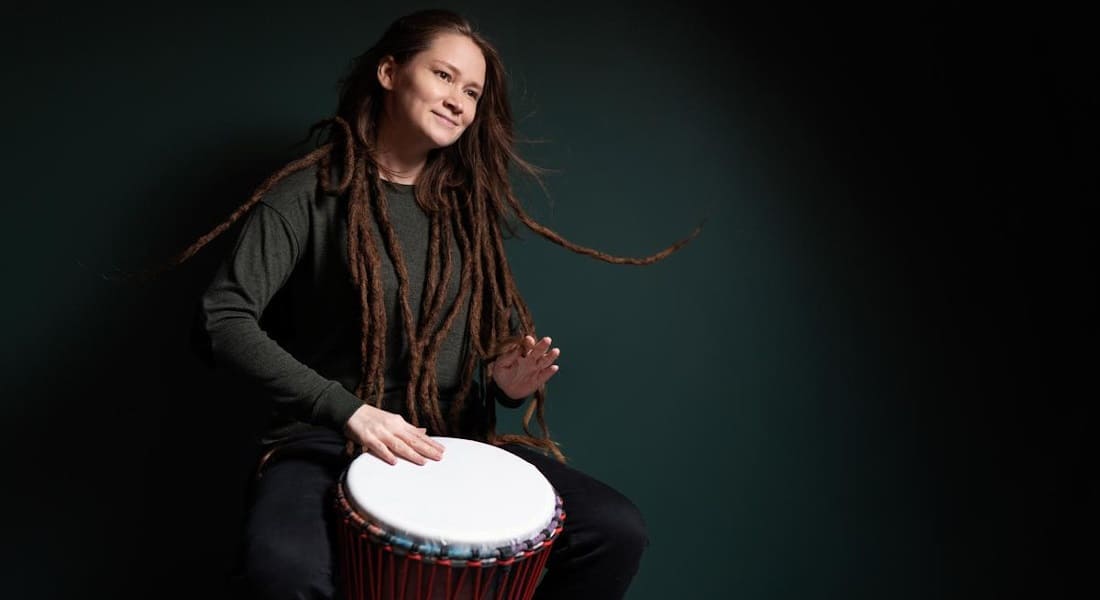
The djembe’s influence continued to spread in the 2000s, as this ancestral instrument found its way into modern music. Renowned percussionists such as Noel Toca Rivera collaborated with international artists, including Jason Mraz, helping bring the djembe into pop-rock arrangements. The djembe, rooted in African traditions, continues to evolve and open up new musical possibilities around the world. It still resonates during all kinds of celebrations, from weddings to baptisms, while remaining a living symbol of West Africa’s cultural richness.
Get a djembe to feel the rhythm of Africa
In the end, what matters most is this: the djembe is a percussion instrument from West Africa, more specifically from the Mandinka Empire. Originally used for ceremonies and traditional events, this drum began to win over the world in the 1950s and continues to grow in popularity among musicians everywhere. You’ll be able to share your passion for the djembe with anyone who asks about its origins or history.
That said, as fascinating as the djembe’s story is, finding a truly high-quality instrument can still be difficult, since it remains relatively uncommon in the Western music world. Few models are made with meticulous attention to detail and top-grade materials to ensure exceptional sound. That’s why we recommend purchasing from Instruments du Monde, which offers djembes that respect the ancestral traditions that made this instrument a true treasure of African musical heritage.
Order your djembe today by browsing all the models available in our store.
Have you ever heard of the tam-tam? Do you know the differences between this instrument and the djembe whose origins you’ve just discovered? That’s exactly what this article will help you do: clearly tell a tam-tam apart from a djembe. Expand your musical knowledge of African percussion instruments.
