



Written by Ambre Montespan - Updated on May 8, 2026
Table of contents:
Do you own a djembe and want to learn how to play it? Not sure which posture to use to really get comfortable with this instrument? Looking for methods and practical tips to play this type of drum effectively and become a better percussionist?
I first discovered the djembe more than 10 years ago, and I’ve had the chance to play it many times, often for hours at a stretch. Over time, I’ve built real skills with this instrument, so I can easily share the techniques I use for playing the djembe effectively.
To play the djembe correctly, you need the right posture and a solid way to hold the instrument. It’s also important to master a few essential strokes.
By the end of this article, you’ll learn:
- How to hold a djembe and what position to use to develop solid technique
- The different striking techniques and basic rhythms
- How to strike and play rolls on the djembe
- Exercises to practise with a djembe to improve
- The steps for attaching the strap and making a harness for your djembe
With all this information at your disposal, all you need to do is practise regularly to become a good percussionist. You’ll be able to truly enjoy playing this African drum while impressing the people around you.
Now, let’s discover how to play the djembe!
How to hold your instrument and what position to adopt when playing it
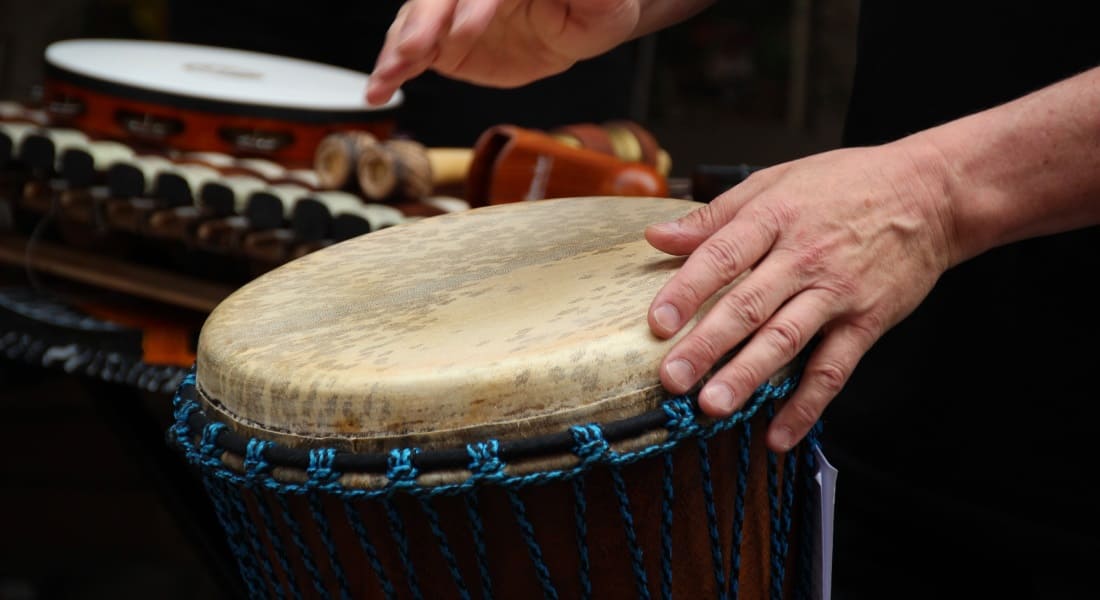
Holding a djembe correctly is essential for playing comfortably, accurately, and with a great sound. How you hold your djembe depends largely on your playing style and personal preferences, but there are a few basic guidelines to help you get started.
1 – Sitting on a chair
- Sit on the edge of a chair without armrests to give yourself freedom of movement
- Place the djembe between your legs, slightly tilted toward you. The base of the drum should rest on the floor
- Keep your feet flat on the floor and your knees slightly apart to keep the djembe stable
- Keep your back straight to avoid fatigue and to breathe more easily
2 – sitting on the floor or on the djembe
- Sit cross-legged or on your knees if that feels comfortable. You can also sit directly on the instrument if it’s large
- Place the djembe between your legs or in front of you, tilted so the drumhead is easy to reach with your hands
- Keep your back straight and use your arms and shoulders to play, not just your wrists
3 – Standing
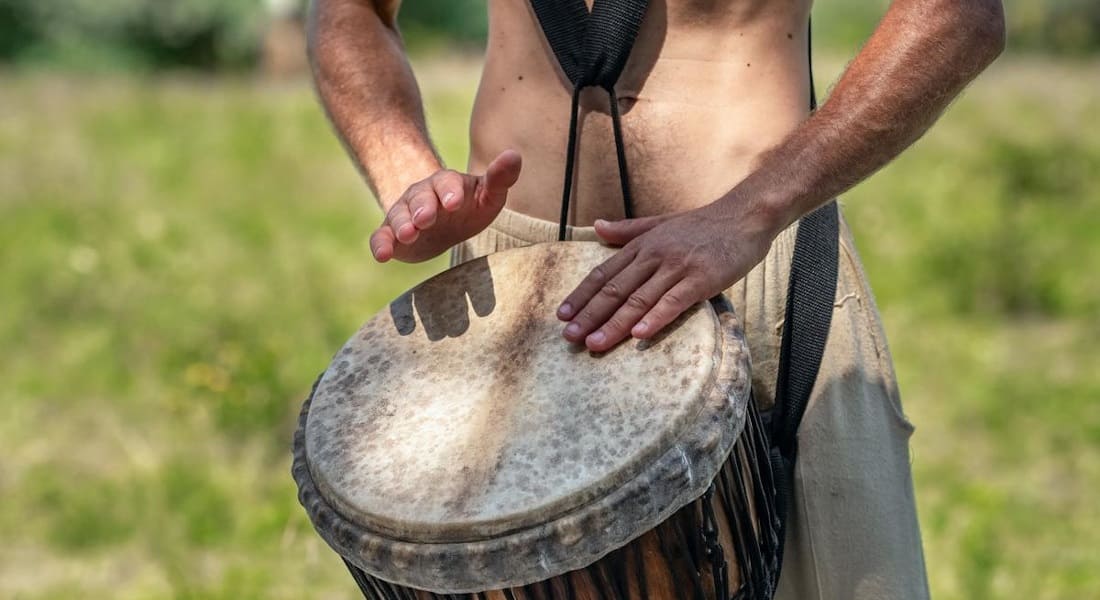
- Use a strap or harness to hold the djembe if you prefer to play standing up
- The strap should go over one shoulder and under the other arm so the djembe hangs vertically in front of you
- Tilt the instrument slightly forward, with the drumhead around hip or stomach height
How to strike or tap a djembe?
Striking a djembe is an art in itself—a way to express yourself and communicate through music. This iconic African instrument has endless rhythmic and expressive potential, and mastering your hand technique is essential to get the most out of it. Start by positioning the djembe between your legs and holding it firmly with your knees. Make sure it stays stable and doesn’t tip while you play. A solid setup lets your hands move freely and naturally.
When you play the djembe, use your fingers, hands, and wrists to produce a range of tones. Fingers create higher-pitched sounds, while the palm produces lower, deeper sounds. The technique you use depends on the rhythm you want: for fast patterns, use quick, light finger strokes; for slower, more powerful passages, use stronger palm strokes.
An essential part of djembe technique is where your fingers and hands land on the drumhead. For different sounds, experiment by striking closer to the centre for bass tones and closer to the edge for brighter, higher tones. Timing and stroke speed also matter a lot. By varying force and speed, you can create complex, expressive rhythms.
Finally, keep in mind that playing the djembe comes down to practice, listening, and building a real connection with the instrument. The more you play, the more you’ll develop your own style and musical voice.
Basic striking methods and rhythms with this percussion instrument
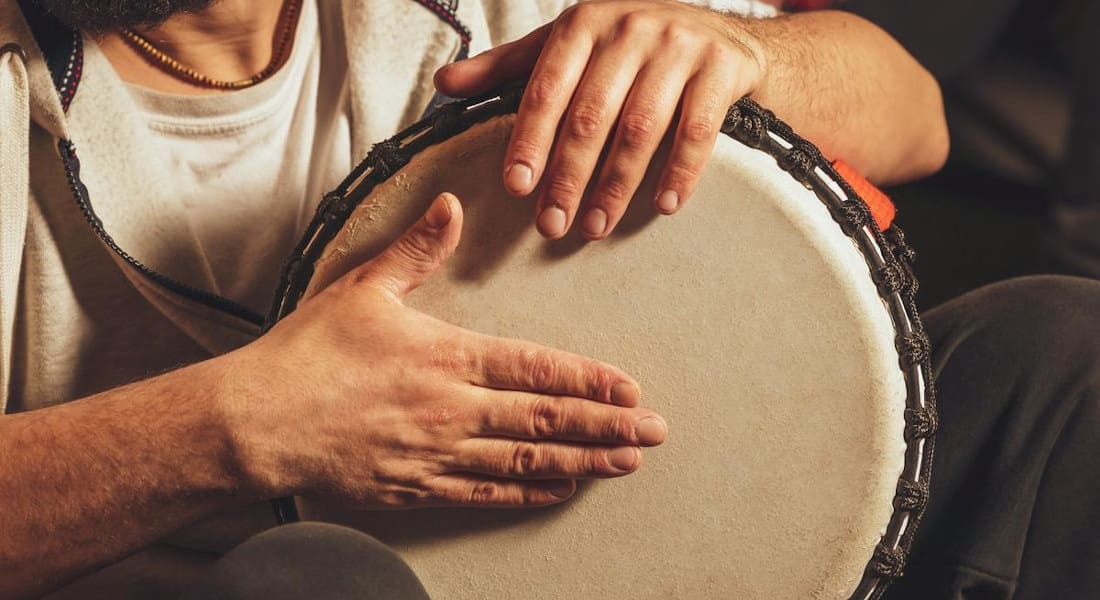
When you start playing the djembe, it’s essential to master the three foundational strokes: the bass, the tone, and the slap.
- For the bass stroke (“bass”), use your whole hand to strike the centre of the drumhead with a straight, downward motion. Let the weight of your arm support the movement. This produces the deep, low sound that’s so characteristic of the djembe. For a muffled note, quickly rest your hand on the drumhead right after striking to stop the resonance
- For the tone (“tone”), use the four fingers of one hand (kept close together) to strike the edge of the drumhead. Only the knuckles of the fingers (not the thumb) should make contact. Keep your palm off the drumhead. This stroke is bright and should be brief, with the hand rebounding slightly after contact
- For the slap (“slap”), you strike the edge of the drumhead with the same four fingers, but spread them slightly and keep your hand a bit rounded. The slap should be very quick, producing an even higher, sharper sound
Watch this video, which shows you these basic strokes as well as a few others:
Once you’ve mastered these techniques, it’s time to learn a few fundamental rhythms. The djembe is built around traditional patterns played in loops that form the foundation of African music. Practise these strokes and basic rhythms to steadily improve your playing.
How do you play rolls (drum rolls) on the djembe?
Playing rolls on the djembe is an advanced technique that adds a level of virtuosity to your percussion. A roll is a fast, continuous series of strokes that creates a complex, hypnotic drum-roll effect. There are several ways to learn this technique, each with its own approach. You can use tone, slap, and bass strokes, or even rely mostly on finger strokes to create the roll.
The first method involves using your fingers and wrists. Start by placing your hand over the djembe with your fingers slightly bent and touching the drumhead. Then, with a quick, precise wrist motion, let your fingers bounce on the drumhead to create the roll. This method takes strong finger dexterity and wrist coordination, but it gives you very precise control over the roll’s rhythm.
Another technique combines the palm and fingers. In this approach, the palm of the hand is placed on the skin of the djembe while the fingers are slightly raised. With a quick shaking motion of the palm, you set the drumhead vibrating, and your fingers add subtle variations to the roll. This approach creates a rich, powerful sound that works especially well for rolls.
Finally, there’s a “tapping” method that uses mostly the fingers. Your fingers touch the drumhead at a specific point, and with a quick tapping motion, the fingers strike the skin repeatedly to generate the roll. This technique requires speed and accuracy, but it offers a lot of flexibility in both rhythm and tone.
Watch this video, which shows you multiple sequences of different rolls:
It’s worth noting that mastering rolls on the djembe takes practice and patience. Start slowly, focus on precision, then gradually increase your speed. Listening closely to traditional djembe rhythms can also help you understand how rolls are woven into the music.
Playing in a group: rhythmic communication with the drum
One of the most fascinating aspects of playing the djembe is how it encourages deep rhythmic communication between percussionists. When you play in a group, you step into a world of musical collaboration where each player helps create a captivating shared groove.
The key to successful group playing is careful listening. Pay close attention to other percussionists—their feel, their rhythmic variations, and how they interact with the drum. This communication often happens without words, because the music itself becomes a shared language. Group percussion sessions are a chance to build complex, exciting rhythmic ensembles. Each percussionist can take on a different role, adding variations, solos, or core patterns. That rhythmic diversity is what makes the music so engaging.
Playing in a group is also a great way to learn from one another. More experienced percussionists can guide beginners by sharing their knowledge and experience. It’s hands-on, immersive learning that goes far beyond traditional lessons.
In short, group djembe playing is a rich musical experience built on human connection and creativity. It’s a chance to develop your rhythm, train your ear, and contribute to music that’s always evolving. Whether at percussion gatherings or within a band, rhythmic communication is at the heart of the djembe experience.
Personal expression and improvisation on the djembe
Personal expression and improvisation are at the heart of djembe playing. Although the instrument is deeply rooted in African traditions, it offers exceptional creative freedom to those who play it. Improvisation allows percussionists to give free rein to their creativity, explore new sounds, and express themselves authentically.
When you improvise on the djembe, you create music in real time, guided by the inspiration of the moment. You react to what you’re playing, to the other musicians around you, and to the atmosphere in the room. It’s a deeply intuitive experience where the boundaries between musician and instrument start to fade.
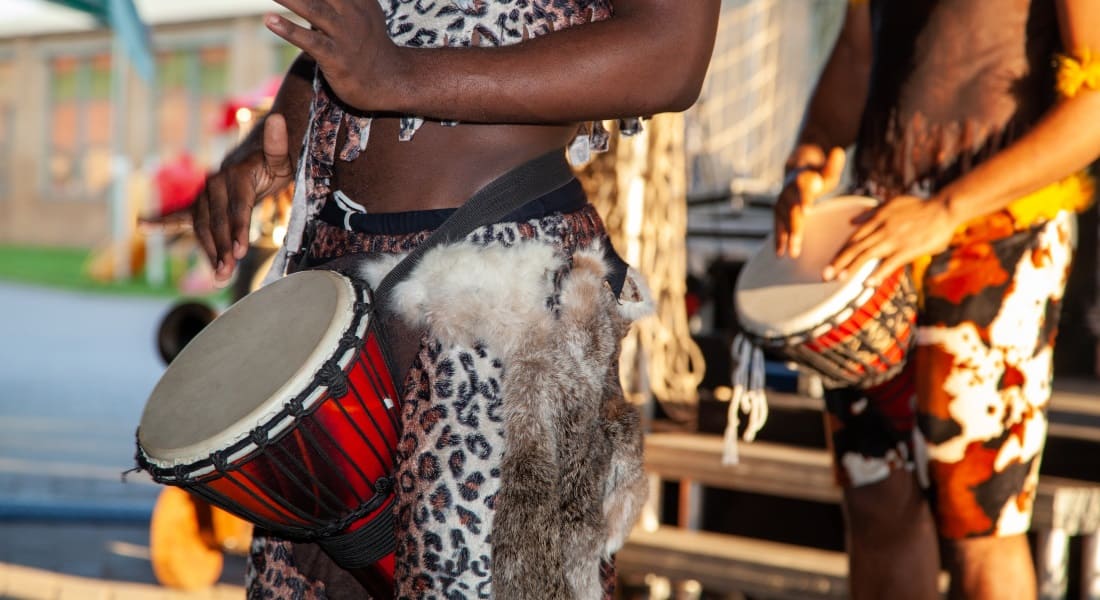
Personal expression on the djembe goes beyond words. It’s a form of musical communication that lets percussionists tell stories, express emotion, and convey messages without speaking—much like griots in West Africa. The rhythms you create become an extension of you and a reflection of your unique musical identity.
Improvisation on the djembe can be practised solo, in a duo, or within a percussion ensemble. Each setting gives you new ways to explore rhythmic patterns, variations, and musical interaction. When you improvise with others, you enter a musical conversation where everyone contributes to the shared creation.
Ultimately, personal expression and improvisation are what give djembe playing its energy and uniqueness. Whether you’re a curious beginner or an experienced percussionist, improvising on the djembe is an invitation to explore your creativity, connect with other musicians, and experience music in a deeply personal, authentic way.
What exercises can I do with my percussion instrument?
When you start playing the djembe, there are many exercises you can practise. These will help you master strokes, rhythms, improvisation, and group playing.
Basic striking exercises
Start by mastering the three essential djembe strokes: the bass stroke for low tones, the tone stroke, and the slap for crisp, high tones. Work on precision by focusing on where you strike the drumhead, as well as the force and speed of each hit. The goal is to produce clear, distinct sounds for each type of stroke.
Rhythm training
Rhythm is at the heart of the djembe. Use a metronome to keep a steady tempo, and start slowly. Practise simple rhythms such as “Djembe Basics” or “Kuku,” paying close attention to timing. Gradually increase the speed of the metronome to improve your consistency.
Hand coordination
Develop coordination between your hands by practising rhythms that require independence. For example, play a different pattern with each hand while keeping a steady pulse with your foot on the floor. This will strengthen your ability to play more complex rhythms—and you’ll gain better control of your hands, which is one of the many rewards of playing the djembe.
Work on your improvisation
Improvisation is an essential aspect of djembe playing. During practice, set aside time to improvise. Try new rhythmic patterns, change the tempo, and play with dynamics. Improvisation strengthens your musical creativity and helps you develop your own playing style. It can also lead you to create your own rhythms.
Practise accents
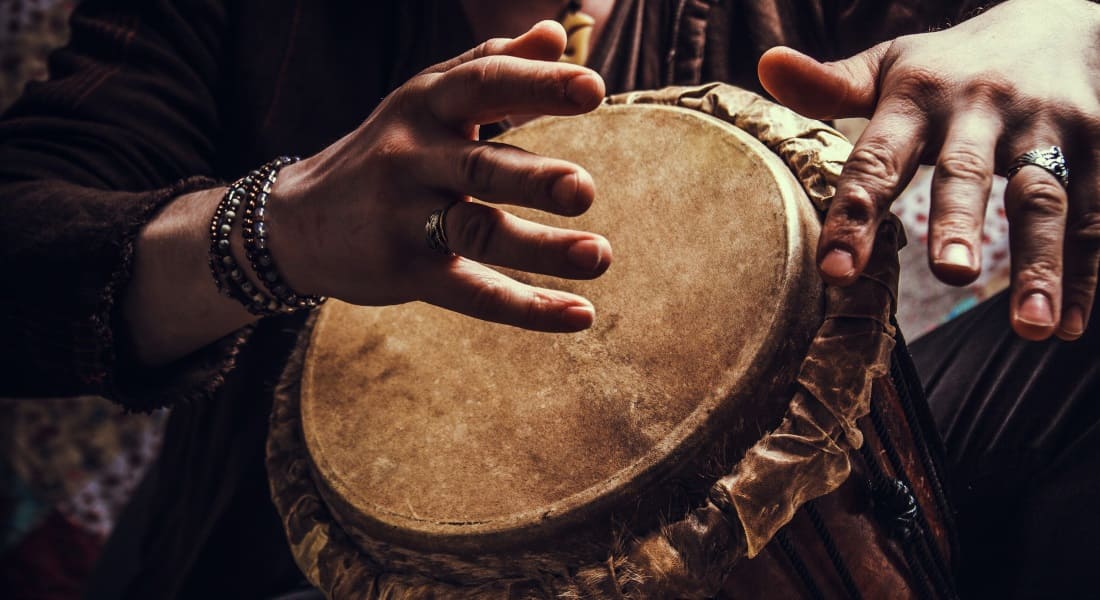
Accents are notes that are emphasized in a rhythm. Practise by playing a basic pattern, then accenting certain notes by striking them harder. This adds variety and expression to your playing. Accents are often used to create more interesting and intricate rhythms.
Working with compositions and ear training
Learn traditional djembe compositions such as “Djole” or “Soli.” Learning these pieces will help you refine your technique and get comfortable with classic rhythms. Playing compositions is also essential for group playing, since they often serve as the foundation for performances. In addition, strengthen your musical ear by listening closely to djembe rhythms. Try to reproduce them after you hear them. This trains you to recognize and play complex patterns without needing sheet music, which is a valuable skill for playing in groups and improvising. You can also listen to renowned djembefolas such as Mamady Keita or Famoudou Konaté.
Playing in a group
Join percussion groups or collaborate with other musicians. Group playing improves your ability to lock in with others, hold a shared groove, and create cohesive music. It’s also a great opportunity to explore new musical styles and expand your experience.
How to attach the strap to your djembe
When you’re getting ready to play your djembe, how you attach the strap matters a lot. It’s a key step that affects both comfort and freedom of movement during your session. Here’s how to attach your djembe strap effectively and practically.
First, choose a high-quality strap. Make sure it’s in good condition, with no signs of wear or weakness. Pick a strap that’s comfortable and strong so you can play with confidence. Where you position your djembe is a matter of personal preference. You can wear it at your side or in front of you—the important thing is finding the spot that feels best and gives you the range of motion you need.
Prepare the strap before attaching it to your djembe. If it’s adjustable, set it to your size. You want a length that feels right and keeps the drum in a good playing position. Once the strap is ready, slip it over your shoulder like a messenger bag. Make sure the buckle or fastening system is on the opposite side from your djembe so it doesn’t get in the way while you play.
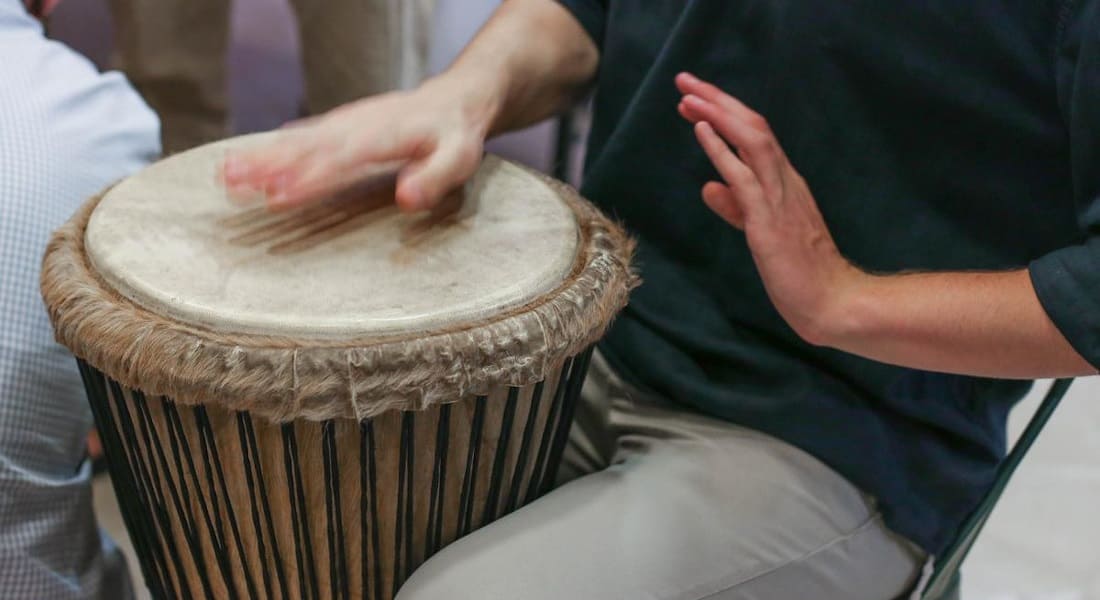
Next, attach the strap to your djembe, making sure the connection is solid and secure. The strap should be firmly in place so it can’t come loose while you play. If the strap doesn’t have a fastening system, you’ll need to create one yourself. You can use carabiners to clip it onto existing knots on the djembe, or tie additional knots directly onto the instrument using the strap. After that, adjust the strap length to find your optimal playing position. The goal is an unrestricted playing experience that lets you express your musicality freely.
Once the strap is properly attached and adjusted, do a final check to make sure everything is secure. Now you’re ready to play your djembe safely and comfortably. Attaching a strap is simple, but it can make a big difference in your playing experience. Follow these tips, stay focused on the music, explore rhythms, and let yourself get carried away by the magic of African percussion. Enjoy the freedom—and play with passion.
How to put on a djembe harness?
To put a harness on your djembe, follow a few key steps. Before you begin, check that your harness is in perfect condition. Make sure all straps, buckles, and fasteners are working properly. If needed, adjust the straps to fit your body. Then prepare your djembe: place the instrument upright with the drumhead level. Secure it in a stand or support to reduce the risk of it falling while you set everything up.
Put the harness on like a backpack. Make sure your djembe is in front of you at chest height. Adjust the harness straps so the instrument sits firmly against your body without restricting your movement. Now it’s time to secure the drum. Use the harness straps to attach your djembe securely. Check that it’s balanced and doesn’t tip forward or backward when you move. You may need to tweak the straps to find the best position.
Walk around for a moment to make sure everything feels comfortable and that the weight is evenly distributed across your shoulders. If necessary, fine-tune the straps to avoid excess strain on your back or shoulders. Once you’ve found the right adjustment and your djembe is securely attached, you’re ready to play standing up. Keep a straight posture to avoid unnecessary tension.
A djembe harness is an invaluable tool for percussionists who prefer to play standing up, whether solo or in a group. It gives you greater mobility and lets you focus fully on your music without worrying about the stability of your instrument. With the right fit, you’ll be able to enjoy playing while protecting both your comfort and your body.
Some practical tips for playing the djembe effectively
Playing the djembe is a captivating musical experience that lets you dive into African rhythms while expressing your creativity. If you want to play more effectively and become a well-rounded percussionist, here are a few tips to help you develop your playing and explore new musical territory.
- Practise regularly : As with any discipline, consistent practice is essential for progress. Set aside time each day to play the djembe, even if it’s only a few minutes. Repeating rhythms and techniques will strengthen your skills
- Study the basics : Before you tackle complex rhythms, make sure you’ve mastered the fundamentals. Learn the core strokes (bass, tone, and slap), how to produce them, and a few simple rhythms. Once your foundation is solid, you can move on to more advanced patterns
- Play with other percussionists : Music is often a shared experience. Join percussion groups, attend drum circles, or play with other musicians. This helps you hear different approaches and improve your ability to play well with others
- Explore African rhythms : The djembe is closely tied to West African rhythm traditions. Take time to explore different styles such as Mandinka, Malinke, or Bambara rhythms. Each style has its own unique richness
- Be creative : The djembe naturally encourages creativity. Don’t hesitate to improvise and develop your own rhythms. Creativity sits at the heart of African music, so let your imagination lead
- Listen to African music : Immerse yourself in African music by listening to well-known artists and groups. This will develop your ear and help you better understand the nuances of the rhythms
The djembe is much more than a musical instrument—it’s a gateway into a world of rhythms and cultures. If you follow these practical tips, you’ll be able to play your drum more effectively.
Enhance your playing experience with a high-quality djembe
Playing the djembe involves learning a range of techniques and methods that help you explore the full musical potential of this instrument. If you’re a beginner, it’s completely normal to have questions about how to learn these skills. Thanks to this article, you now have the key information you need to become a true djembe virtuoso. You know how to develop your artistic side with this African drum.
That said, a low-quality instrument won’t let you get good tone, and it can be very difficult—if not impossible—to truly enjoy playing on that kind of djembe. That’s why we recommend choosing a djembe from the Instruments du Monde store, which offers dozens of instruments selected for their acoustic quality. By investing in a djembe like this, you’re investing in your musical growth. You’ll discover a world of rhythms and melodies that can take you to new horizons. African music is waiting, and with your djembe in hand, you can be part of that sound adventure.
Explore our excellent collection of djembes now!
If you’d like some guidance as you learn the djembe, read our article titled "How to Learn the Djembe?". You’ll get an overview of all the options available to help you make real progress with this percussion instrument.
