



Written by Ambre Montespan on Dec 23, 2024 · Updated on Oct 15, 2026

Table of contents:
Are you thinking about buying an electronic handpan? Wondering if it’s a good idea? What are the pros and cons of this type of instrument? Wouldn’t it be better to invest in a traditional acoustic handpan?
I own more than 10 handpans, and I’ve had the chance to test a few electronic models like the Neotone and the Lumen. In this article, I’ll share my honest opinion on this newer technology.
The biggest advantage of an electronic handpan is being able to switch scales whenever you want, unlike an acoustic model. On the other hand, price, battery life, and long-term durability can be real downsides.
By reading this article, you will learn:
- What exactly an electronic handpan is
- What its pros and cons are
That way, you’ll have everything you need to decide whether buying this kind of handpan makes sense for your goals and your playing style.
Let’s dive right in.
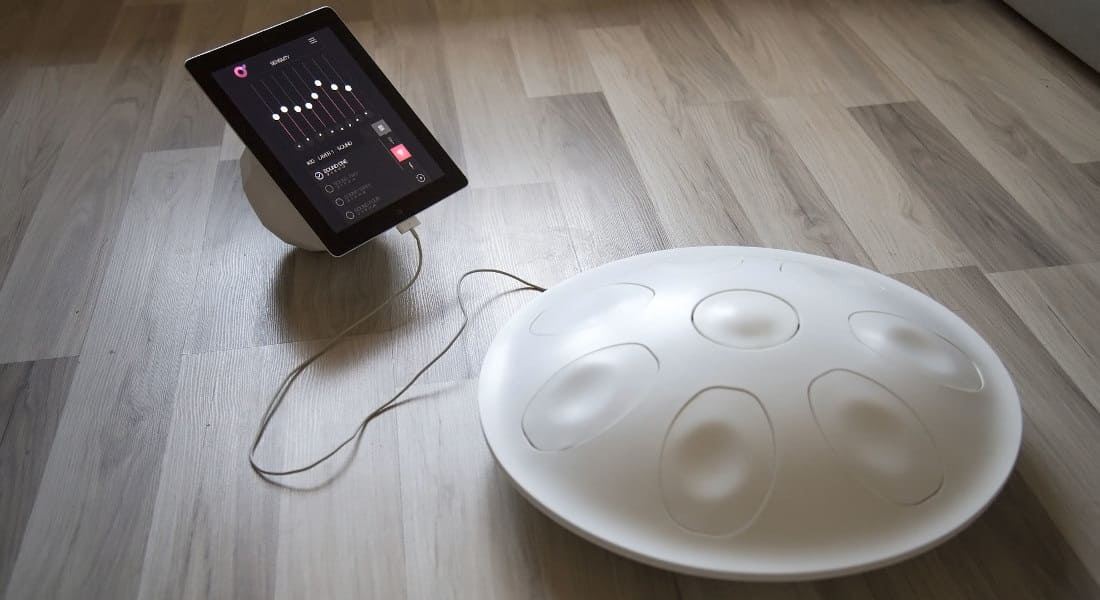
What is an electronic handpan?
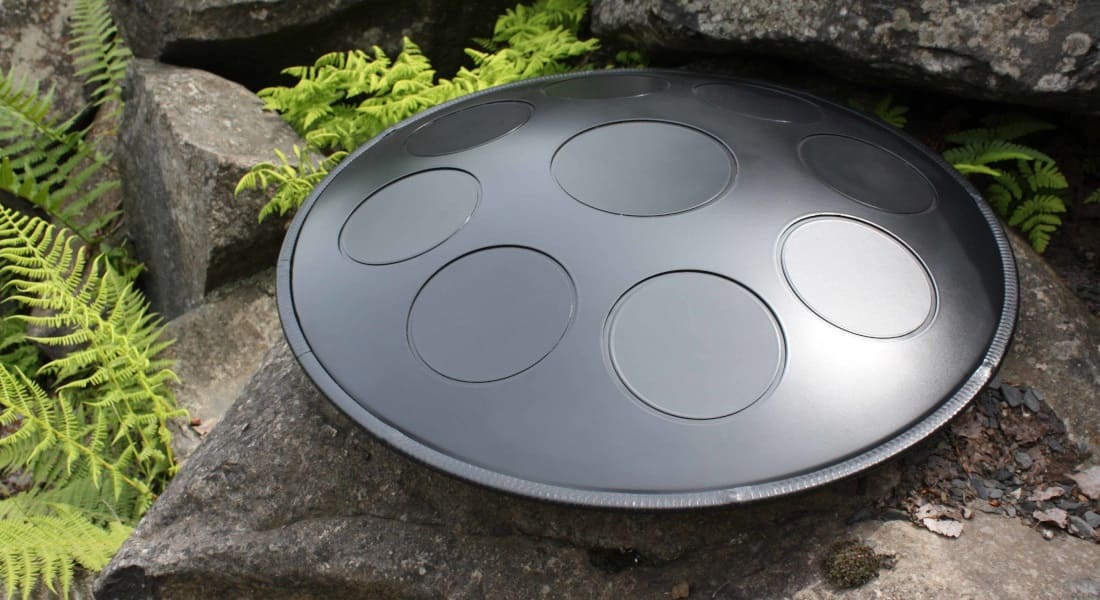
Unlike an acoustic handpan, which is made entirely of metal, an electronic handpan has no resonance chamber and relies on sensors and digital technology to produce sound. Built to replicate the handpan experience, it usually keeps the same lens-shaped silhouette, even though it doesn’t technically need to. It also requires power—either from a battery or a wall outlet—to run the components inside.
Right now, only a handful of brands have ventured into electronic handpans. As of this writing, to my knowledge, there are only four:
- The Oval Handpan by Oval Sound
- The Lumen Handpan by Arclite Projects
- The WavePan by Stefan Christ
- And the Neotone by Soundventure
You can hear the acoustic performance of this type of instrument in the video below, recorded with an Oval Handpan.
What are the advantages and disadvantages of an electronic handpan compared to an acoustic model?
The electronic handpan has both upsides and downsides compared to its acoustic counterpart, especially when it comes to sound, price, and how self-sufficient the instrument is. Let’s go through them one by one.
Does the sound of the electronic handpan stay true to the original?
Let’s start with one of the electronic handpan’s biggest strengths: the sounds it can produce. With today’s technology, it’s becoming genuinely hard for the human ear to tell a traditional handpan from an electronic model, especially with the latest Neotone generations. Of course, experienced players can still hear that the sound is digital rather than acoustic, but the realism is impressive. In other words, you don’t need to worry about “robotic” tones—the sound quality is absolutely there.
Another undeniable advantage is the ability to change the instrument’s scale whenever you want. When you buy a traditional handpan, you choose a scale that stays the same for the life of the instrument, such as D Kurd or Low Pigmy. That’s why many pros and hobbyists end up buying multiple handpans in different scales to explore new sound worlds. With an electronic handpan, you can set the pitch of each note however you like, giving you access to virtually endless scales. Your imagination and creativity are the only real limits. Playing in D Kurd today? Tap a few buttons, and you can jump to Low Pigmy.
So, buying an electronic handpan is a bit like getting several acoustic handpans in one. The only catch is that you’re generally limited to 9 or 10 notes at a time, and then you’ll need to reconfigure the device to switch to another scale. With multiple acoustic handpans set up on stands in front of you, every note is available instantly.
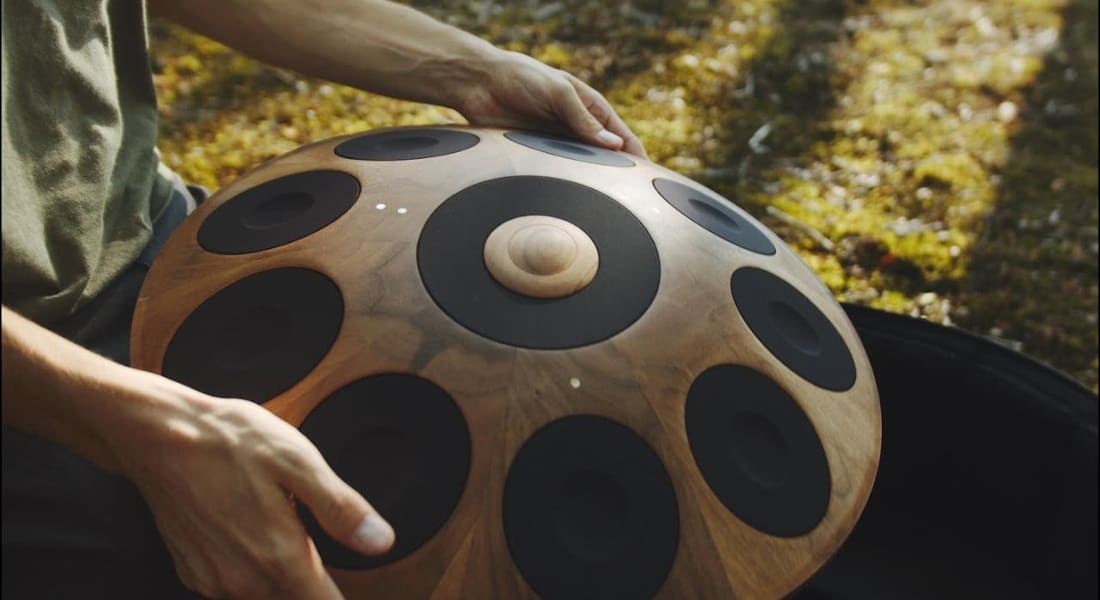
How much does an electro-acoustic handpan cost?
An electronic Hang generally costs more than an acoustic model. On average, expect a little over CA$2,400, except for a Neotone, which runs between CA$4,900 and CA$6,500 including VAT—an especially serious investment for a handpan. Another important detail: almost none of these instruments are currently sold through distributors. In most cases, you’ll need to contact the manufacturer and request a quote, so there’s no straightforward “add to cart” purchase option at the moment.
How autonomous, independent, and durable is this type of Hang Drum?
Now for a major drawback of the electric handpan: battery life and overall independence. With an acoustic model, it’s simple—if you feel like playing somewhere, you just go and play. With an electronic handpan, things get more complicated. First, all of these instruments need power, usually via a battery. Average play time on a full charge is around 6 hours, which means you’ll need to recharge regularly.
Second, some models, including the Neotone, don’t have built-in speakers. That means you can only play for yourself with headphones, or you’ll need to buy an external speaker, which also has to be charged to work. So you’re looking at an extra purchase—either headphones or a speaker—plus the hassle of connecting cables to get everything running. Bottom line: playing outdoors takes more planning.
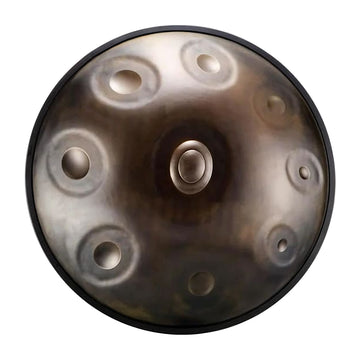
As mentioned above, the autonomy and independence of the digital handpan are much more limited than those of an acoustic model. Another downside is parts availability for a device that can fail without warning. Something I didn’t mention earlier about electronic handpan brands is that they tend to disappear quickly. For example, it’s now impossible to buy an Oval Handpan except on the second-hand market: the small Spanish company behind the project launched in 2015 and shut down in 2018. The Lumen Handpan, made by South Africa’s Arclite Projects, has shown as sold out on the official website for months. WavePan, created by a small German company, hasn’t posted any updates on social media for months, either.
That mainly leaves the Neotone from the Hungarian company Soundventure. They’re fairly active right now, but the company is still young (founded in 2021). So I can’t help but ask: if the company were to close, how would I replace the battery, which will inevitably lose capacity over time? What happens if, one morning, the Neotone won’t turn on anymore? Or if a key simply stops working? This is still an investment of over CA$4,900, which is substantial. When you buy an electronic piano, for example from Yamaha, you can find models under CA$1,600, and more importantly, you’re buying from a well-established Japanese company founded in 1887, which is a strong sign of stability. At the moment, Soundventure’s share capital is just over €7,000, which is fairly low and suggests the company could shut down quickly if the economy takes a hit. That’s one of the reasons I decided not to buy this instrument.
Are there any positive reviews of these instruments?
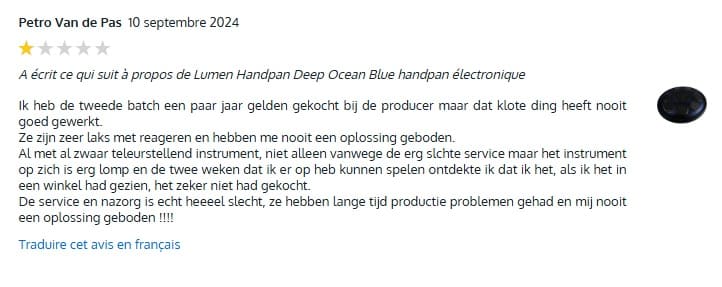
For the models that are still being sold, I found very few reviews from real customers. In fact, I found only one review of the Lumen Handpan from a Dutch buyer who was extremely unhappy, mainly because the after-sales support was allegedly terrible after the instrument stopped working. And that was exactly one of my concerns.
As for the Neotone, plenty of YouTubers talk about it, both in France and internationally. But in the vast majority of cases, these are sponsorship deals where the brand works with ambassadors or provides the instrument so it gets promoted. For example, MegaTone is a brand ambassador and regularly shares 10% promo codes for Neotone purchases while posting frequent videos about the instrument. I assume there’s an affiliate commission involved, which, in my opinion, doesn’t qualify as an unbiased review.
Is an electro-acoustic handpan worth the investment?
In my opinion, if your goal is to write more complex compositions and use multiple effects by plugging the handpan directly into a computer or a mixing console, then an electronic handpan could be a good fit. But that really only applies to a small slice of the handpan community. If you mainly want to play in a calm, relaxed way, an acoustic handpan is still the better choice, especially for long-term durability.
It’s also worth noting that an electronic handpan loses some of the natural, handcrafted feel of the acoustic version. In practice, you’re just tapping on pads connected to electronic chips, much like an electronic piano—except that the key layout is circular, with notes arranged around the centre. When you show an acoustic handpan to someone who has never heard one before, they often wonder how a metal object can produce such rich, resonant tones. That’s not really the case with a digital handpan, because people already assume electronics can reproduce almost any sound. A certain magic is missing.
Record all your handpan compositions
The electronic handpan is a fascinating instrument for its versatility, since it lets you play as if you owned multiple handpans. However, this technology also comes with drawbacks tied to price, durability, and battery life. Now that you’ve read this article, you should be able to decide whether buying this kind of handpan is truly a good opportunity for you.
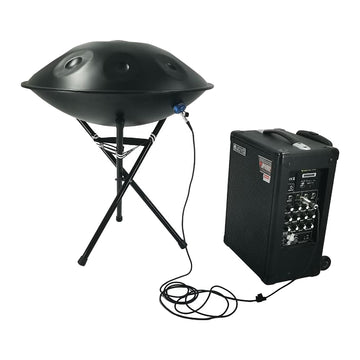
That said, one advantage of the electronic handpan—connecting to a computer to record easily—can also be done with an acoustic handpan using a microphone. For that reason, Instruments du Monde sells a microphone specifically designed to capture handpan vibrations, delivering excellent audio quality. It’s an accessory I recommend to any percussionist who wants to record the sound of their instrument.
Discover this excellent microphone now by clicking on the image below:
When it comes to buying a handpan—whether electronic or traditional—the question of buying new or second-hand always comes up. Find answers to all your questions by reading our article titled "New or Used Handpan?" to see which option makes the most sense for you.


