



Written by Ambre Montespan on Aug 26, 2024 · Updated on Oct 6, 2026

Table of contents:
Thinking about buying a handpan soon? Have you noticed that this instrument can be made from several different materials? What are the differences between models made from nitrided steel, stainless steel, and Ember steel? Does the sound or overall quality of a handpan change depending on the material it’s made from?
Having played the handpan for over 10 years, I’ve had the chance to watch the materials used to build this percussion instrument evolve. I’ve also had my hands on models made from nitrided steel, stainless steel, and Ember Steel. So I can break down the pros and cons of each option and help you choose your next handpan the smartest way possible.
Stainless steel handpans are usually a great fit for beginners thanks to their versatility and low maintenance, while nitrided steel handpans shine for fast, percussive playing. Ember Steel handpans, which are more expensive, are aimed at advanced percussionists who prefer slower styles.
Once you’ve finished reading this article dedicated solely to the materials used to make handpans, you’ll know:
- The advantages of a nitrided steel Hang or handpan
- The advantages of a stainless steel model
- Recent developments in Ember Steel instruments
- The rarer cases of plain steel models
- And how to choose between these different metal alloys
As a result, you’ll get a clear picture of what different makers offer. You’ll be able to decide which material best matches your needs and choose the perfect handpan.
Now, let's start with nitrided steel handpans.

What are the advantages of a nitrided steel handpan?
Nitrided steel is generally considered the first material used to create the handpan. Back in 2000, the Swiss company PANArt Hangbau AG surprised everyone by releasing a new instrument, the Hang, which a few years later became the handpan (a new name adopted to avoid infringing on the Swiss company’s intellectual property). The Hang was crafted using a patented alloy called Pang, which was actually nitrided steel.
To craft this material, handpan makers typically select DC04 steel sheets—a mild, non-alloyed, cold-rolled steel commonly used in the automotive and home-appliance industries. It’s worth noting that steel sheets range from DC01 to DC07, indicating their carbon content. DC01 steel, which remains the most basic, has a higher carbon content than DC07 steel. However, this means that DC01 steel is less malleable, or more precisely, less formable and ductile than DC07 steel. On the other hand, DC07 steel is more expensive. For handpans, the well-balanced DC04 grade is often preferred. Once the steel is chosen, it undergoes nitriding: the metal is heated and then infused with nitrogen. This process forms a protective layer on the instrument’s surface, making it stronger and more resistant to rust than plain steel.
The result is a handpan that resists rust somewhat but not completely, so it should be maintained regularly—about once a week—to prevent rust from appearing. The sound is warm and ceramic-like, and the sustain, meaning how long a note rings after you strike the instrument, is relatively short. That’s ideal for fast playing because the notes are less likely to overlap—something that often appeals to drummers and djembe players. This type of handpan also tends to project more than others, making it a great choice for outdoor playing. Price-wise, it’s in the range you’d typically expect for a handpan. Finally, keep in mind that nitriding only creates a protective surface layer on the handpan shell. So if a scratch appears, the bare steel underneath will be exposed to air and can rust. Keep a close eye on scratches and treat them quickly.
Watch the video below for an overview of the sound of a nitrided steel handpan:
Is stainless steel a good material for your future instrument?
Stainless steel is an alloy where chromium, and sometimes nickel, are added to help prevent the oxidation of iron, the base metal used to produce steel. Just as there are many types of plain steel, there are also several types of stainless steel with varying amounts of chromium and nickel. When it comes to making handpans, manufacturers began to pay closer attention to stainless steel around 2010. They typically select AISI 430 stainless steel, which has a high chromium content (18%) and no nickel. That combination offers excellent corrosion resistance while staying easy to bend and shape, which matters when hammering the instrument to tune each note. However, you may also come across handpans crafted from AISI 441 stainless steel.
In terms of acoustic characteristics, a stainless steel handpan delivers longer sustain. In other words, each note takes longer to fade after you strike the instrument, which works especially well for players who enjoy a calmer, more tranquil, even meditative approach. This type of handpan is also more touch-sensitive and produces brighter, less ceramic-like tones than a nitrided steel model. That said, “stainless” doesn’t mean “rust-proof.” A stainless steel handpan can rust, but it’s much less prone to it than a nitrided steel one. This lets you space out your maintenance sessions: while a nitrided handpan should be checked weekly, you can often go several months between checkups with stainless steel.
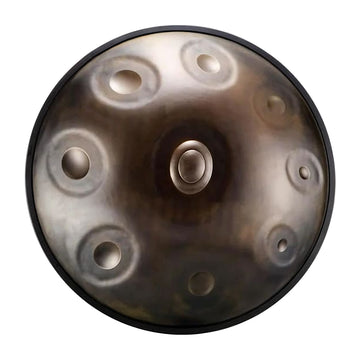
Stainless steel handpans are also less susceptible to scratches because, unlike nitrided models that only have a protective surface layer, the entire shell is stainless steel. So scratches are much less likely to compromise the instrument’s corrosion resistance. Price-wise, a stainless steel handpan is usually similar to a nitrided model. Even though stainless steel costs more than plain steel, the nitriding process is also quite costly, so the two options often end up in the same price range.
For all the reasons mentioned above—both in terms of maintenance and sound—stainless steel handpans are generally the ones I recommend for beginners. Finally, you may hear a rumour that stainless steel handpans are less stable than their nitrided steel counterparts, meaning they would go out of tune faster over time, especially if played while warm from direct sun or another heat source. I’ve never personally noticed this across many models and brands, so I wouldn’t give that rumour much weight. Watch the short clip below to hear the sound of a stainless steel handpan:
What is Ember Steel in the world of hang drums?
Ember Steel is a special type of stainless steel that was developed for handpans in 2020, making it more recent than the other materials we’ve covered. The name “Ember” was chosen because this alloy has a brighter, warmer look than nitrided steel or standard stainless steel, with a colour that evokes glowing coals—though it’s ultimately a marketing name.
In terms of acoustics, Ember Steel handpans offer an even longer sustain than those made of conventional stainless steel, making them ideal for slow, or even very slow, playing. If you try to play fast on an instrument made of this material, notes tend to blur together, which usually isn’t very pleasant to listen to. Experienced and professional players can counter this by muting a note—keeping a finger on the corresponding tone field to stop residual vibration—but that technique can be difficult for beginners. In addition, Ember Steel requires longer, more meticulous work. It also needs to be heated to a higher temperature so it can be shaped into a handpan. As a result, this type of handpan costs, on average, about twice as much as the same model in stainless steel or nitrided steel. And because demand currently far exceeds supply, some makers have waitlists longer than 18 months for these instruments.
You can find a video example of an Ember Steel handpan below:
How to choose between these three materials?
To choose between these three materials, start by defining what you expect from your future handpan. As I mentioned earlier, a beginner will usually do best with a stainless steel model for its medium sustain, lower maintenance, and reasonable price for a first instrument. Other musicians are drawn to a short, punchy, percussive sound that stays as close as possible to PANArt Hangbau AG’s original Hang drum. It’s up to you, but keep in mind that this is a key point to consider when selecting a handpan.
You’ll find a summary of the characteristics of these three materials in the table below:
| Nitrided steel | Stainless steel | Ember Steel | |
| Sustain | Short | Medium | Long |
| Maintenance | Very regular | Occasional | Occasional |
| Price | Average | Average | High |
| Availability | Immediate | Immediate | Up to 18 months waiting period |
| Level | Beginner | Beginner | Advanced |
| Playing style | Fast, percussive | Versatile | Slow, meditative |
Choose the Handpan That Meets All Your Expectations
In the world of handpans, it’s easy to feel lost when you’re shopping—especially when it comes to the material used to craft the instrument. And yet, choosing between nitrided steel, stainless steel, or Ember is crucial. With the tips and information you’ve picked up in this article, you’ll now know how to choose the right alloy for your handpan. From there, you’ll be able to truly enjoy your instrument and grow with it.
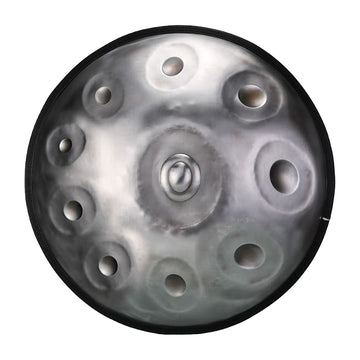
That said, very few stores offer high-quality handpans across every type of steel. Some shops focus on a single alloy, convinced it’s the best, and ignore the others—even though they can be a perfect fit for certain players. That’s why I personally recommend Instruments du Monde, which carries a varied selection of handpans for every kind of musician. For example, this beginner-friendly stainless steel handpan is ideal if you’re looking for a versatile model.
Discover this exceptional instrument now by clicking on the image below:
Now that you have everything you need to choose the right metal for your handpan, there’s just one more step: deciding on the tuning standard. In practice, you have two options. Read my article to help you choose between a 440 Hz handpan and a 432 Hz handpan. It’s an important criterion that shouldn’t be overlooked.


