



Written by Ambre Montespan on Mar 14, 2023 · Updated on Oct 15, 2026

Table of contents:
Wondering whether the word kalimba is masculine or feminine? Should you say “le kalimba” or “la kalimba”? What do the rules of the French language say about determining the gender of a word?
Having studied the etymology and origin of the word kalimba for more than 10 years, I’m confident I can shed light on this seemingly simple yet surprisingly complex question. Is the word kalimba masculine or feminine?
In the case of the word “kalimba,” it turns out that it is masculine in French. Therefore, you should write “le” or “un” kalimba.
By reading this short study on the word kalimba, you will finally know:
- How to determine the gender of a word in French
- What about the gender of the word “kalimba” and its synonyms such as “mbira” and “sanza”?
You’ll not only get a clear answer like masculine or feminine, but you’ll also see how that choice was made. The ongoing debate among musicians who say “le” or “la” kalimba will finally be put to rest!
Let’s find out.
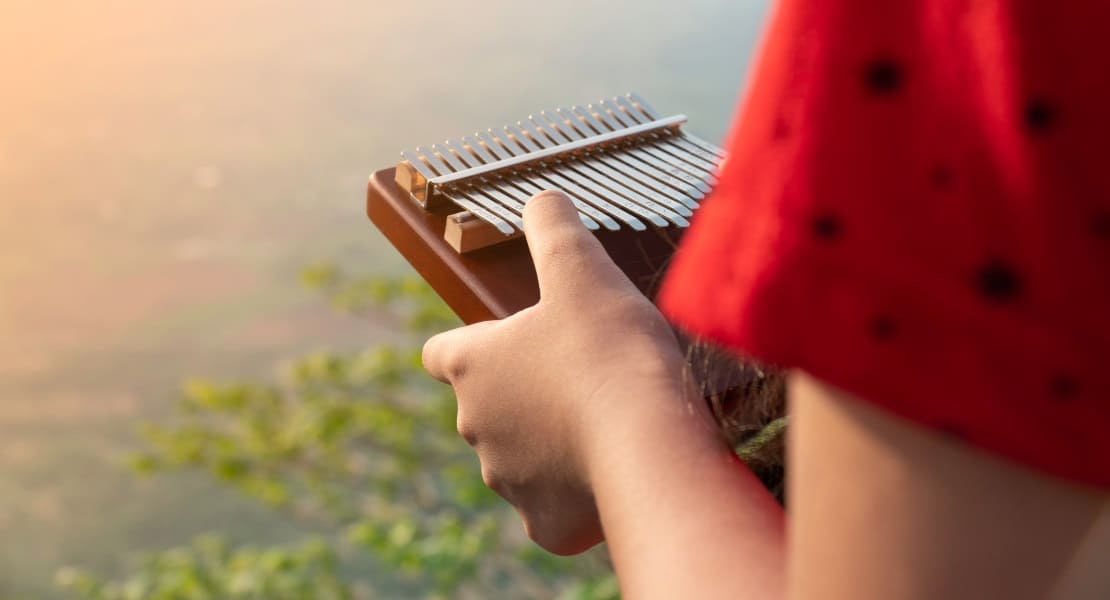
How do you determine the gender of a word in French?
To confidently pin down the grammatical gender of kalimba, it helps to review the basic rules of French that determine the gender of all words.
The assignment of masculine or feminine gender to French words is largely unpredictable. There are no hard-and-fast rules; instead, the choice hinges on factors such as the word’s origin (its etymology), its letter composition, or—when everyone agrees—simple consensus.
Other languages aren’t much help, either. For example, while “livre” is masculine in French, it’s neuter in German and feminine in Russian. Relying on another language to determine gender is therefore impossible, as each language has its own gender-classification system.
However, certain markers can indicate a word’s gender. Suffixes—the final letters added to create a derivative—often provide a clue. For example, words ending in “age,” “teur,” or “ment” are usually masculine, while those ending in “ade,” “ette,” or “euse” are typically feminine. Of course, this isn’t a hard-and-fast rule—there are exceptions—and it doesn’t apply to the word “kalimba.”
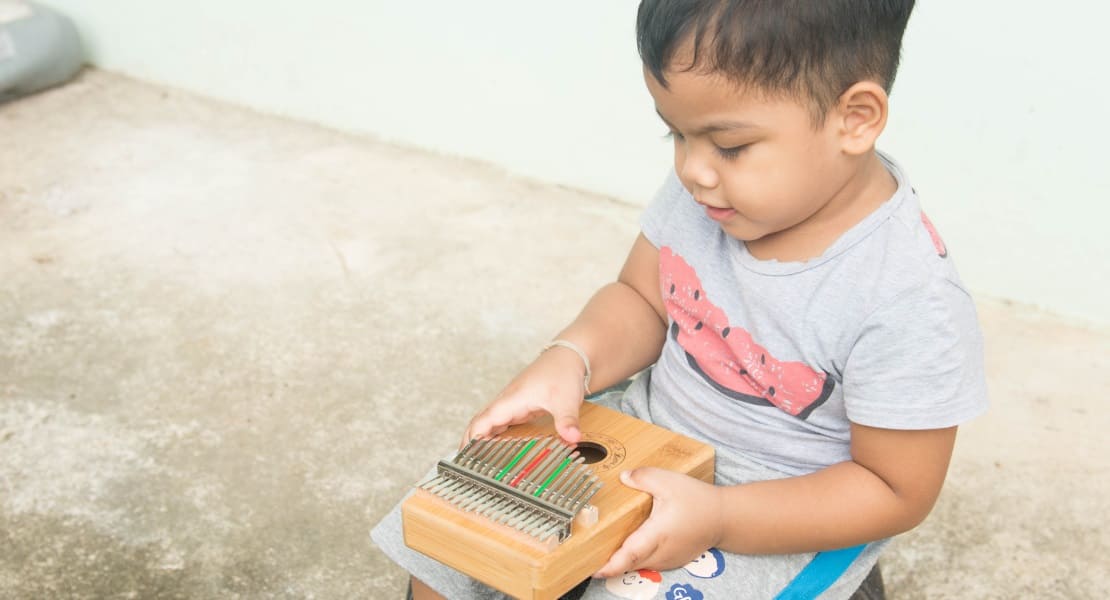
A common rule of thumb in French is that when a word ends in “e,” it’s feminine. However, this doesn’t apply to kalimba.
So what is the gender of the word “kalimba”?
Now, let’s take a closer look at the word kalimba and its origin to try to determine its gender.
In 1921, ethnomusicologist Hugh Tracey travelled to Africa, to what is now Zimbabwe, formerly known as Rhodesia, to help his brother run a tobacco farm. Fascinated by African musical culture, he studied several musical instruments in detail, including one called “mbira,” “karimba,” or “kalimba,” depending on the region. Literally translated, the word “kalimba” in the indigenous language means “little music.” In 1950, a University of Cambridge newspaper article titled “The Kalimba of the Lala Tribe of Northern Rhodesia” described this very special musical instrument.
In 1954, Hugh Tracey proposed a redesigned version of the traditional African instrument. He used the name “kalimba” for his instrument and registered it as a trademark. The popularity of this new model has grown worldwide, so much so that now the word “kalimba” is predominantly used to refer to thumb pianos. Read this article detailing the origins of the kalimba to learn more about this magnificent percussion instrument.
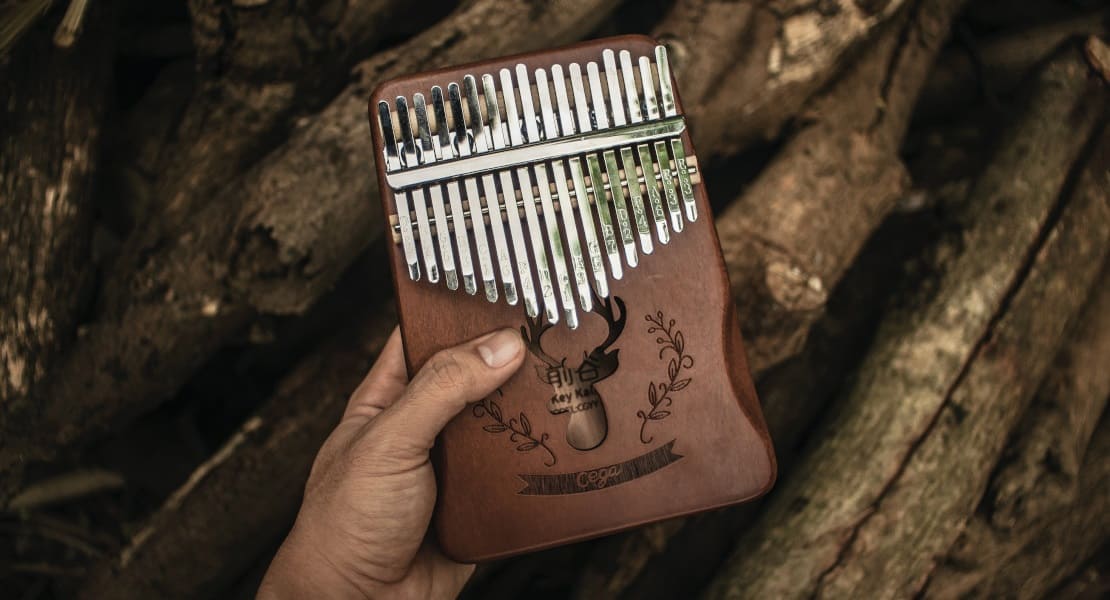
But if the word “kalimba” comes from a foreign dialect and was trademarked in the 1950s, how is its gender determined? Much like the brand name “Frigidaire,” which is also used as a common noun, a choice had to be made. Without any real official explanation, it appears that the word kalimba is masculine. This is clearly stated in various dictionaries that include this word, such as Wikipedia or the Dictionnaire des francophones. The word is so uncommon that it doesn’t appear in some well-known references like Larousse or Le Petit Robert, but the consensus is that you should write le kalimba.
Is the word “mbira” masculine or feminine?
As mentioned above, the term mbira is also used to refer to a musical instrument similar to the kalimba. It turns out that this word is also masculine, so you’ll say un mbira or le mbira.
Should we say “le sanza” or “la sanza”?
Depending on the region of Africa where the thumb piano originates, it may be called sanza. In this case, you should say la sanza. This is because sanza is feminine. The word sanza appears in the dictionary, which confirms its grammatical gender.
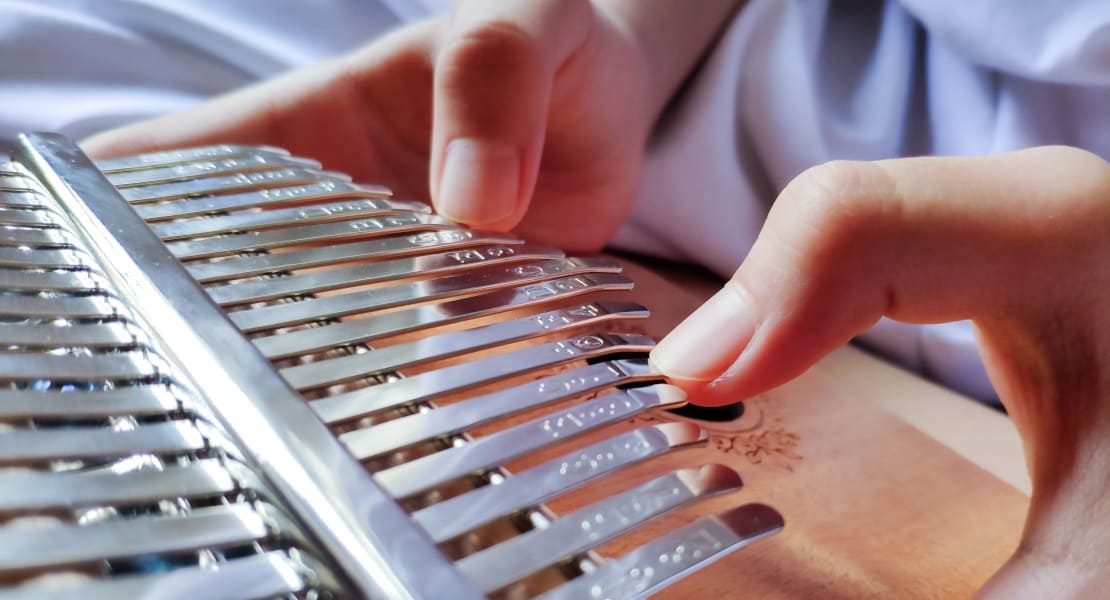
Can the grammatical gender of these musical instruments change?
Yes, it can. For example, at the beginning of the 19th century, it was proper to say “un automobile” (a motor car). This came from the expression “un véhicule automobile” (a motor vehicle). But over time, the word “véhicule” was dropped, and through common usage, “un automobile” gradually changed to “une automobile” (a motor car). This has already happened with many other words in the French language. Therefore, a change in grammatical gender is always possible in the years to come. In reality, it is general usage by the majority of the population that will determine the gender.
It’s also possible that the Académie française, the institution created in 1635 that defines the French language and maintains its official dictionary, will examine the etymology of the word kalimba. For now, the official dictionary does not include the word kalimba or any of its synonyms. So it’s possible that if the Académie française makes a decision about the word kalimba, its gender could be officially changed.
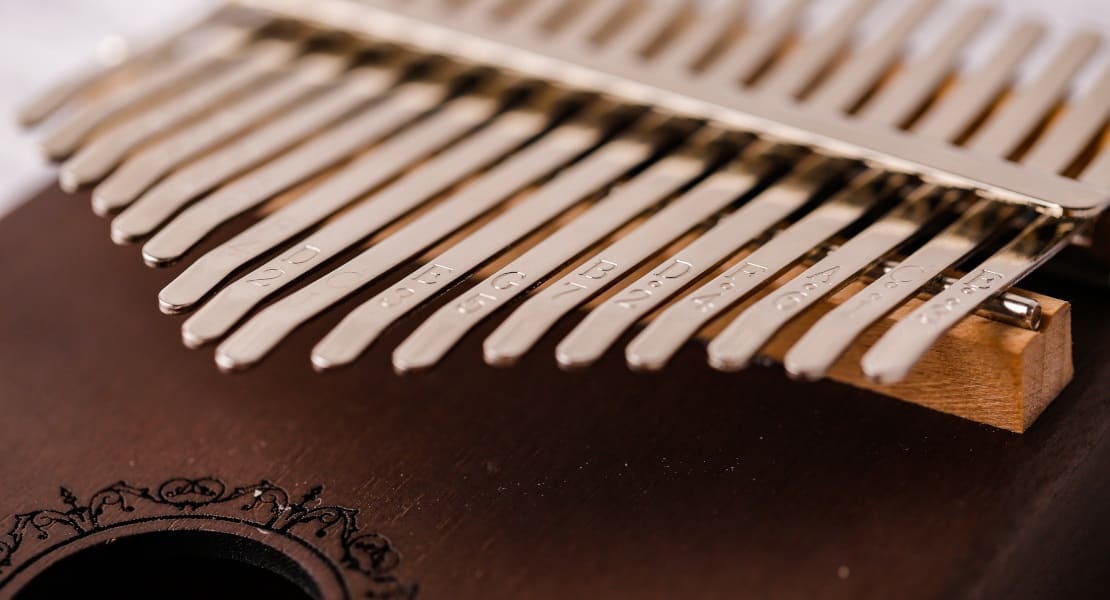
Play with a high-quality thumb piano!
It’s perfectly reasonable to wonder about the grammatical gender of synonyms for thumb pianos. These terms are particularly exotic and relatively recent additions to the French language. But now you know that the word kalimba is masculine, just like mbira. Sanza, on the other hand, is feminine. You’ll therefore be able to write your sentences correctly and maybe even answer friends who find themselves asking the same tricky question.
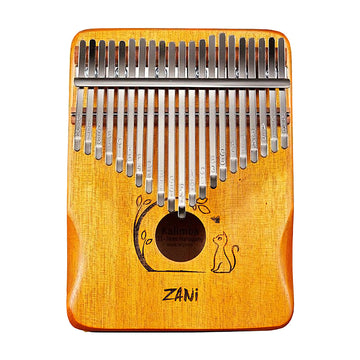
While etymology is fascinating, playing a quality instrument is even better! That’s why the Instruments du Monde store invites you to discover a high-quality mbira with a choice of 17 or 21 tines, so you can play the vast majority of melodies available on this instrument.
Discover this mbira now by clicking on the image below:
Although the word kalimba is considered masculine, we have seen that this is not the case for all its synonyms. This is simply because they have different origins! Whether it’s kalimba, mbira, sanza, or sansula, discover their differences in our dedicated article on the subject. As you read it, you’ll see at a glance whether the word used is the right one! And dive deeper into this instrument with our in-depth article on the kalimba.


