



Written by Ambre Montespan on Aug 14, 2023 · Updated on Oct 15, 2026

Table of contents:
Are you looking to buy a high-quality kalimba soon? Not sure which brand to choose for your future thumb piano? Have you noticed that Meinl offers several kalimba models and you’re wondering whether they’re actually worth considering? Would you like a comparison between Meinl and other brands?
After immersing myself in the world of the kalimba for over 10 years, I’ve had the chance to test several brands of this percussion instrument, including Meinl. So I can share my honest opinion on this German manufacturer and distributor of musical instruments.
Meinl kalimbas offer only average value for the money. You can find better brands with truly premium performance, as well as more appealing generic options.
By reading this informative article on Meinl kalimbas, you will learn:
- The origins of the Meinl brand and its subsidiary Meinl Sonic Energy
- The advantages and disadvantages of this brand’s instruments
With all these details in hand, you’ll be able to decide whether buying a Meinl kalimba makes sense for your needs.
Let’s start by taking a closer look at Meinl’s origins.
Discover the history of Meinl and Meinl Sonic Energy
The company “Roland Meinl Musikinstrumente”, abbreviated to Meinl, was founded in 1951 by Roland Meinl. It is based in the town of Gutenstetten in Germany. Originally, the company produced wind instruments before focussing solely on cymbals from 1952 onward. Each cymbal was handcrafted by Roland Meinl himself, who then delivered them directly to customers on his motorcycle. At that time, Roland was the company’s sole employee, and it wasn’t until 1964 that he hired his first team member. The quality of Meinl cymbals was excellent, and the company became a true benchmark in the music world. Today, Meinl cymbals are exported all over the world. In 2007, Roland Meinl passed away at the age of 78.
But what’s the connection between cymbals and kalimbas? In the 1990s, Meinl decided to leverage its reputation by selling other types of instruments besides cymbals. Several brands were created, such as Meinl Cymbals, specializing solely in cymbals; Meinl Percussion, dedicated to traditional percussion instruments; Nino Percussion, a brand aimed at children; Ortega Guitars for stringed instruments; and the one that’s especially relevant here: Meinl Sonic Energy.
Meinl Sonic Energy is a trademark registered by Roland Meinl’s descendants in 2014. This brand offers a wide range of musical instruments used for sound therapy. You can find Tibetan bowls, shamanic drums, tongue drums, handpans, and, of course, kalimbas. It was in this context that Meinl began offering thumb pianos. The Meinl Sonic Energy brand emphasizes how musicians can explore, create, and experience new kinds of sounds.
What is the quality of the thumb pianos sold by Meinl?
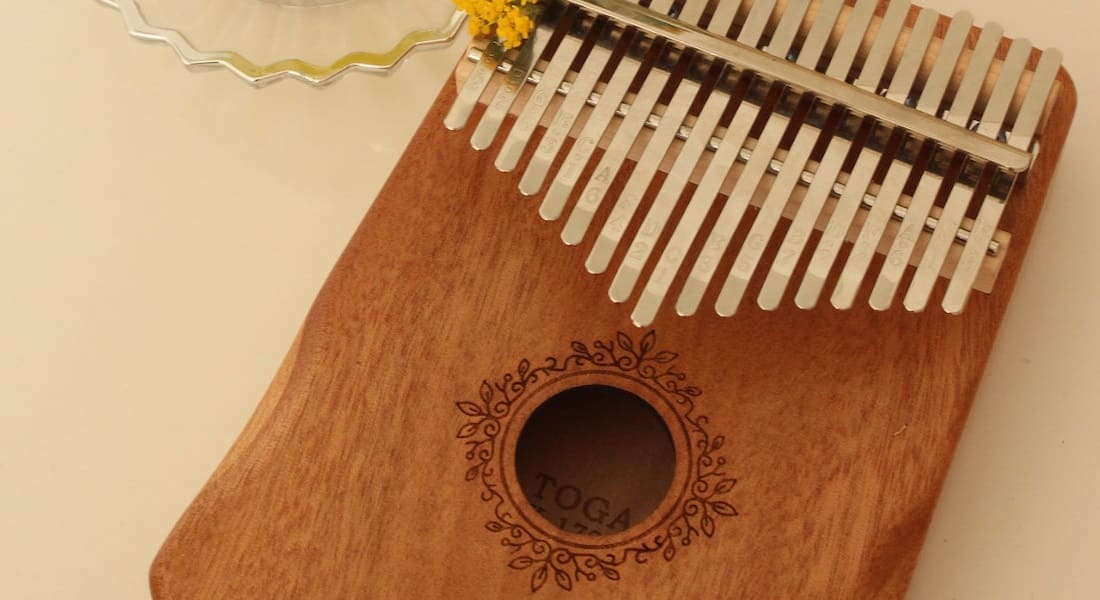
I’m pretty mixed on the quality of Meinl kalimbas. Not that they’re bad, but you can definitely find much better. It’s important to understand that you won’t get the same level of craftsmanship that made Meinl cymbals famous. Make no mistake: when it comes to cymbals, Meinl is among the best. However, that’s not the case with kalimbas, and the reason is fairly simple. On the two Meinl Sonic Energy models I’ve had in my hands, the packaging indicates that the products were manufactured in China and not in Germany, which is what many people might reasonably expect.
China isn’t necessarily a deal-breaker since the country has produced some excellent kalimbas in recent years. Still, don’t expect a kalimba that’s 100% made in Germany after decades of R&D like the cymbals. In practical terms, you’re getting a mid-range instrument made in China. Because Meinl doesn’t share details about this, it’s impossible to know whether any of its teams were involved in developing the kalimba or whether it’s simply a generic model with the Meinl logo printed on it.
To get to the heart of the matter, I find the tone of Meinl kalimbas to be fairly mediocre. The main issue I ran into is that the tines tend to rattle and buzz quite often when you play. On some kalimba models, a design flaw can cause some of the tines to buzz, which is very unpleasant. Both models I tried, with and without a resonator box, had this defect, and I wasn’t able to eliminate it or even reduce it. What’s more, this issue seems to affect all of their kalimbas—you can even hear it in Meinl’s official presentation video. Listen closely and you’ll notice the buzzing:
What’s more, the accessories provided by Meinl are very basic: a tuning hammer, a cloth, and a case. With other brands, you may get stickers to help you learn, an instruction booklet and sheet music, a pickup microphone, a tremolo chain, silicone finger protectors, and even a decorative tassel.
That said, this doesn’t mean Meinl kalimbas are completely unusable. Overall, their thumb pianos look nice and can produce decent sounds. But the reality is that better brands are available at the same price. Finally, it’s worth mentioning that the selection at Meinl Sonic Energy is quite limited. You won’t find any chromatic kalimbas or acrylic glass models. Only a few wood types are offered in 8-, 10-, 17-, or 21-note formats, which is still pretty limited.
In comparison, for similar or slightly higher prices, it’s more interesting to look at Gecko or at Lingting kalimbas. You’ll have more choice when selecting your future kalimba, you’ll get more accessories, and most importantly, the sound is on a whole different level, with no buzzing. Watch this video of the K17K model from Gecko to get an idea:
In fact, I didn’t keep the Meinl models and ended up sticking with the Gecko ones. So unless you have a very good reason specific to your situation, it’s in your best interest to see what other brands have to offer. You’ll very likely find a better deal.
Aim for perfection with your next instrument
Meinl is an internationally recognized cymbal brand, so it can be surprising to see other types of instruments sold by the company, especially kalimbas. It’s therefore a good idea to question the quality of the thumb pianos sold by Meinl. As you’ve seen, while this brand shines when it comes to cymbal finishing, that isn’t the case for its kalimbas. Other brands such as Gecko and Lingting offer better overall performance, and it’s strongly recommended that you look into them to determine the best choice for you.
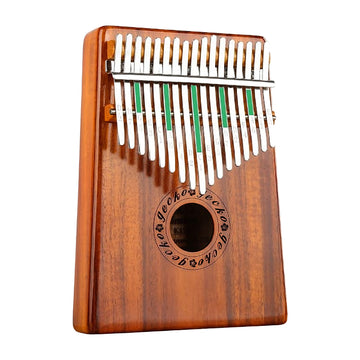
Unfortunately, there are counterfeits of all these brands on the kalimba market. Unscrupulous sellers don’t hesitate to pass off a generic instrument as a luxury model from a major brand. To make sure you’re getting a genuine instrument, it’s important to stay vigilant and buy from a trusted professional. That’s exactly what the Instruments du Monde store offers, working directly with the brands to ensure you get authentic kalimbas. Like the sumptuous K17K model from Gecko, crafted from beautiful koa acacia wood with a glossy red sheen.
Discover the finesse of this kalimba by clicking on the image below:
After buying your first kalimba, you’ll probably want to learn how to play songs. Perfect timing: we also offer a curated list of the best beginner-friendly sheet music for this instrument. You’ll be able to approach your thumb piano the right way and grow into a skilled musician. You may also want to learn more about the kalimba by reading our in-depth article that covers every aspect of this musical instrument.


