



Written by Ambre Montespan on Mar 14, 2023 · Updated on Oct 15, 2026

Table of contents:
Want to introduce a child to musical play? Have you heard of the kalimba, a small African instrument that’s a bit like a mini piano, and you’d love to gift one to a little one who’s still growing and learning? Not sure which model to choose from the many kalimbas on the market so it’s truly right for their age?
As a devoted kalimba fan for more than 10 years, I’ve had the opportunity to have several children of various ages test different models of this instrument. As a result, I can confidently guide you toward the best choice so your child can fully thrive with the help of this thumb piano.
A kalimba for a child should be chosen with care. Look for a simple model with fewer keys than an adult version, ideally in a cute, playful design that makes kids want to pick it up and play.
Once you have read this informative article in its entirety, you will know:
- The difference between the needs of an adult and a child in terms of kalimbas
- What is the ideal number of tines for a young child
- What designs are available to appeal to your little one
- The relevance of the material and whether or not there is a sound box
This knowledge will help you choose the ideal instrument to give a child a high-quality introduction to music.
Let’s take a look at the perfect kalimba for a child.
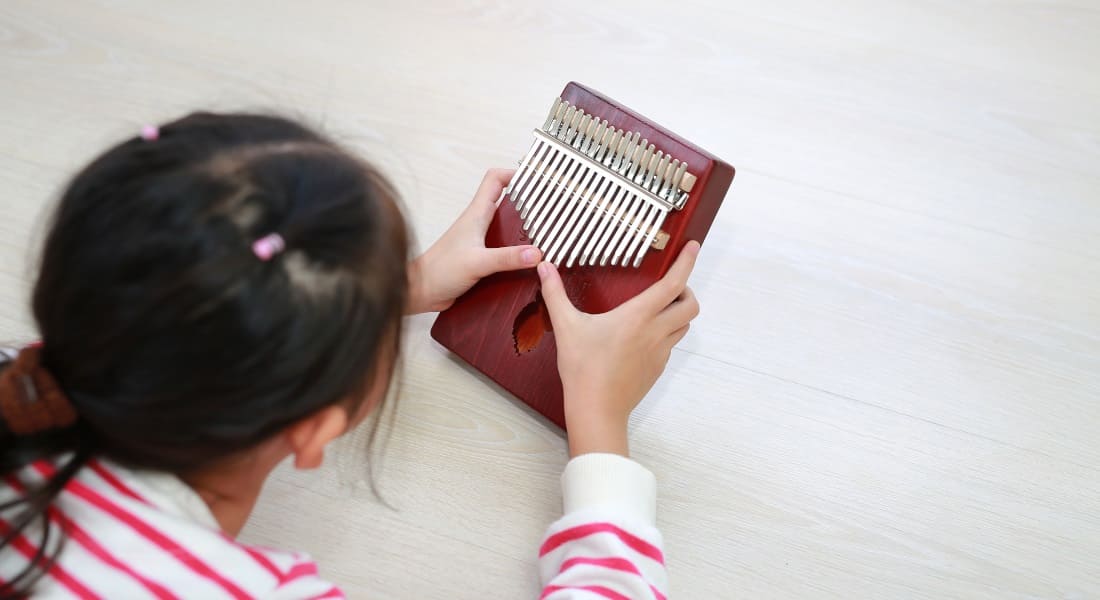
Why would a child need a different kalimba than an adult?
As in most areas, children have very different expectations from adults when it comes to the kalimba. Young children are in the midst of physical, psychological, and psychomotor development, and they won’t reach full maturity for many years. On top of that, some kids will (very naturally) have moments of frustration, anger, or impulsiveness.
While the kalimba is much easier to play than a violin, for example, it can still frustrate a child if the wrong model is chosen. Give a child an instrument that’s too complicated, and they’re likely to give up very quickly. On the other hand, an instrument that’s too simple may quickly become boring. Therefore, it’s best to choose a kalimba that’s truly a good fit for your child.
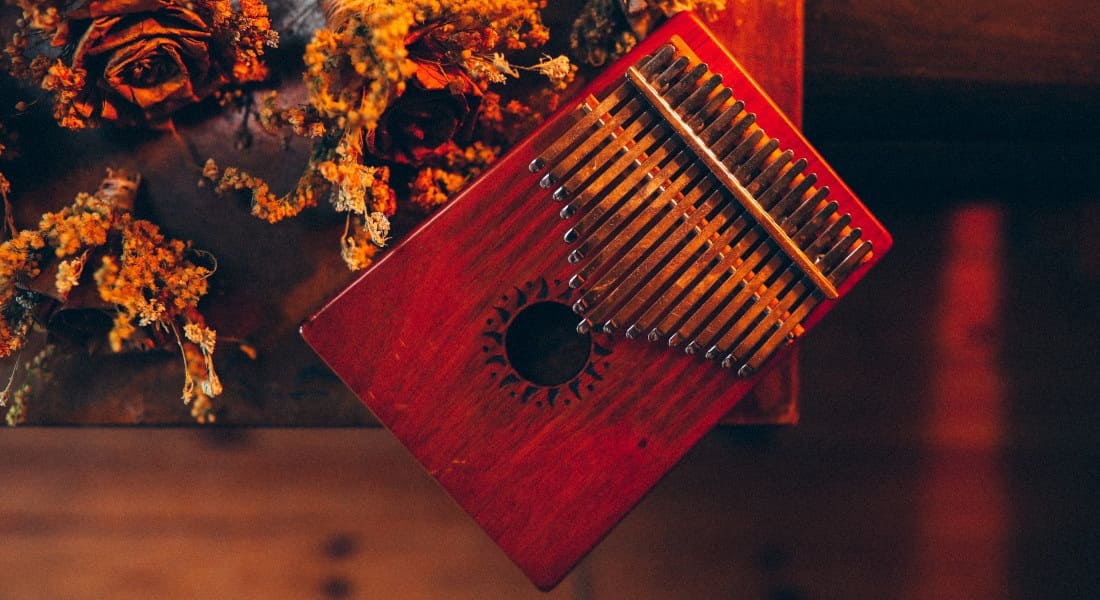
How many tines should the instrument have for a preteen?
The number of keys on the kalimba will have a huge impact on the difficulty, but also on the potential of the instrument. This number corresponds to the number of musical notes that can be played by the musician during a melody. Thus, a 17-tine kalimba will play 17 notes, while a 10-tine kalimba will play only 10 notes. Obviously, the fewer tines the thumb piano has, the easier it will be to play, since the possibilities are more limited. On the other hand, with a small number of tines, very few well-known melodies can be played, even though this is one of children’s favourite activities. Don’t expect to play Frère Jacques on a 6- or 8-tine kalimba; the range is simply too limited.
For children, it’s generally wise to choose a kalimba based on their age to determine the ideal number of keys. For a 10-year-old, a kalimba with around 10 tines is usually recommended (that’s the golden rule I explain in detail in my article on the age to start playing the kalimba). However, this guideline should be taken with a bit of perspective.
If the child already has some musical background, such as learning music theory, it may be a good idea to increase the number of tines. The same applies if you feel that your child is fairly calm and doesn’t tend to give up easily. You can also limit the number of keys your child can play for a while by removing them from the bridge or placing coloured stickers on the ones they shouldn’t touch. That way, the kalimba becomes “progressive,” and you can adjust the difficulty to suit your child.

How can you attract young children with the design of the thumb piano?
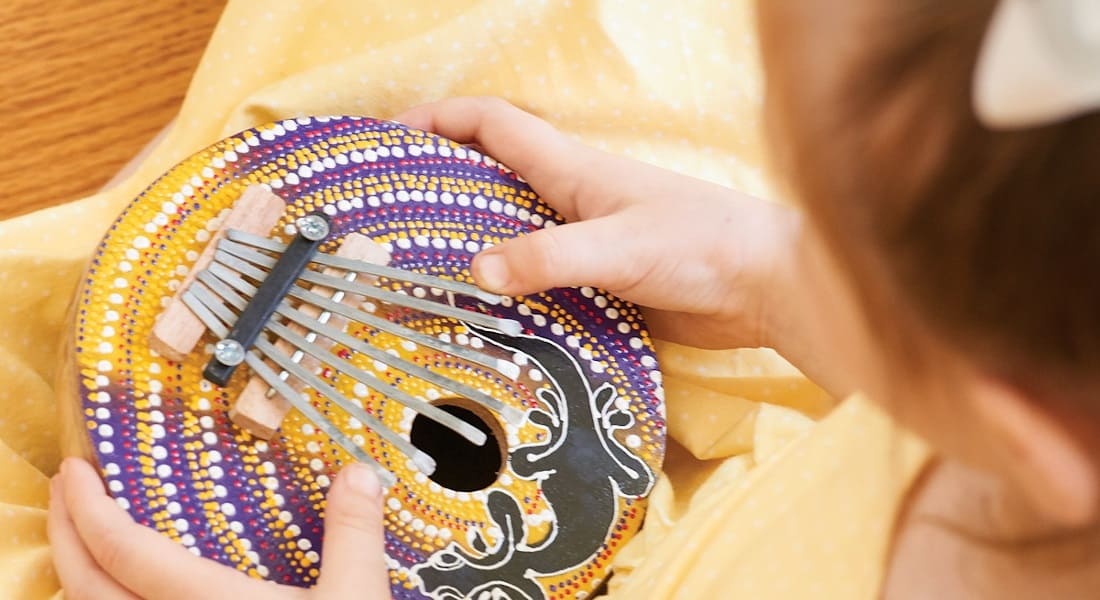
After the number of keys, the most important aspect for a child is the aesthetic appearance or design of the kalimba. While this instrument was traditionally made in a rectangular or round shape from wood or calabashes, manufacturers now offer a wide variety of models to appeal to young children and encourage them to play the mbira. So forget about the plain solid-wood instrument that might be perfect for an adult.
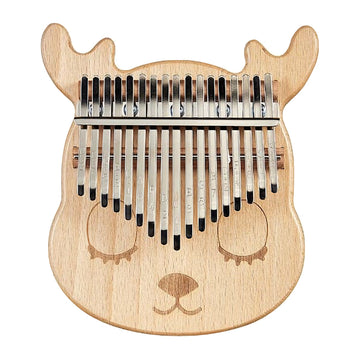
Depending on the child’s tastes and sensibilities, it’s highly recommended to choose a playful, colourful, kid-friendly kalimba that can become a real companion. You’ll find models shaped like deer, bears, cows, pigs, butterflies, frogs, and foxes. Others keep a more classic look but feature an illustration on the soundboard, such as a whale flying through the sky or an adorable cat gazing upward. Try to make that very first meeting between your child and the kalimba a real “love at first sight” moment. It naturally sparks the desire to play, which is already the first step into the wonderful world of music.
When it comes to younger children, should you buy a mbira with or without a sound box?
You may have already noticed that there are two main types of kalimbas: those with and those without a sound box. It’s easy to tell them apart, as models with a sound box are hollow and have visible holes on their backing, while the others do not. We detail all the differences between kalimbas with and without soundboxes in this other article.
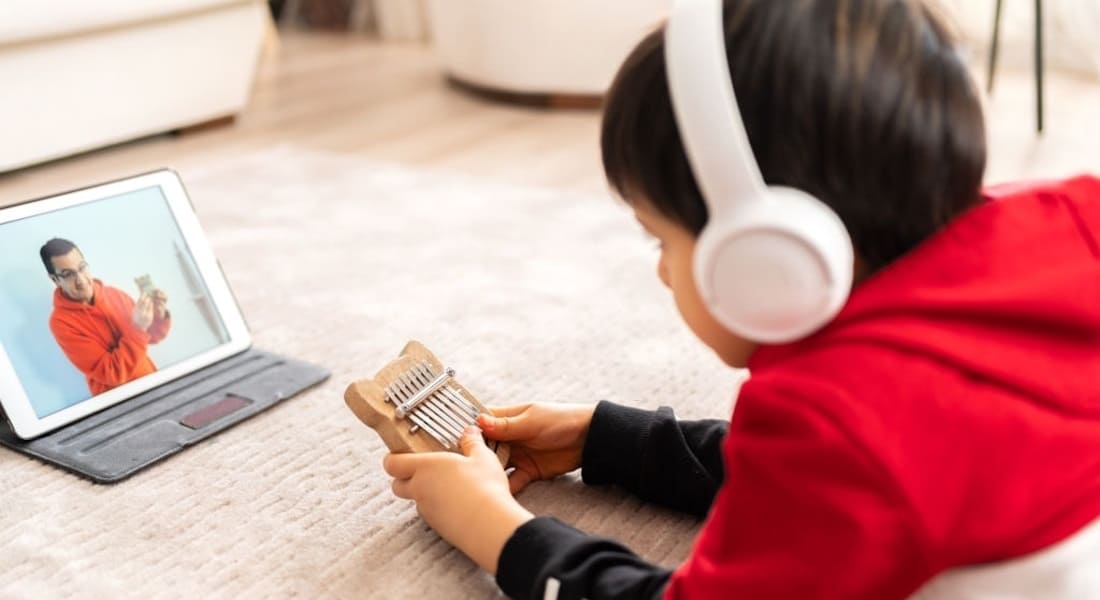
When it comes to children, they rarely appreciate the subtle advantages and disadvantages of these two types of thumb pianos. The focus here is different: it’s about durability. Kalimbas with sound boxes are much more fragile than the others, which makes sense because of the hollow cavity inside. If too much weight is placed on the instrument, or someone accidentally steps on it, the soundboard may crack or break. So, if your child is generally careful with their belongings, you can choose either type. If everything they touch seems to break sooner or later, it’s best to go with a model without a sound box.
It’s also worth mentioning that in most cases, kalimbas without a sound box are thinner, which can make them easier for younger children to handle—especially those with small hands.
What material is best for a toddler?
In terms of materials, two main types of kalimbas stand out: those made of wood and those made of acrylic glass. While wood needs no introduction, acrylic glass is a transparent plastic polymer, more commonly known by the brand name Plexiglas.
Solid wood has the advantage of being a warm, living material that is favoured in the Montessori educational method for making toys. Acrylic glass, on the other hand, delivers an innovative look, greater hardness than wood, and virtually no maintenance. Scratches will show more clearly on this material than on wood, and it is also heavier. Ultimately, taking these factors into account, the choice depends on the child you’re buying for and your educational preferences.
Find the right kalimba for your child
A kalimba for a child should not be chosen at random, as it may become a source of frustration that will put them off playing. This instrument should be selected carefully, while taking into account the maturity, age, and personality of the child who’s growing up. Now you have all the information you need to make the best possible choice. Your child will then have every chance of spending dozens—or even hundreds—of hours having fun with this little African instrument.
However, the kalimba remains a fairly rare and little-known instrument. Many retailers carry only a few models that are not at all suitable for young children. The Instruments du Monde store offers more than 250 different kalimba models, with dozens designed for children, such as this one shaped like a deer’s head.
Make your child happy and give them this kalimba by clicking on the image below:
Now that you know which model of instrument you want to buy, it’s important to know which notes will be on your kalimba. This will make it easier for you to learn how to play sheet music. If you already know this information, you should take a look at our general article about the thumb piano. You’re sure to discover something interesting about this percussion instrument.


