



Written by Ambre Montespan - Updated on Sep 25, 2026

Table of contents:
Are you thinking of buying a Tibetan singing bowl? Have you noticed that this musical instrument comes in a wide range of sizes and are wondering what difference this makes? Does the size of the singing bowl affect the sound it produces or its properties? Are the dimensions of a bowl an important factor to consider?
I’ve been passionate about Tibetan singing bowls for over 10 years and have owned bowls of every size, from the smallest to the largest, comparing their sounds along the way. I can easily explain the advantages, drawbacks, and unique characteristics associated with each size of this instrument.
The size of a Tibetan bowl has a major impact on its tone, weight, and price. While smaller bowls are typically chosen for a stimulating, energizing effect, larger bowls are ideal for relaxation, meditation, or yoga, creating a deeply calming experience.
Once you’ve read this article from start to finish, you’ll understand exactly how the size of a Tibetan singing bowl can influence:
- its sound
- its weight
- its price
- whether or not it has engravings
With this knowledge, you can confidently choose the singing bowl that fits your situation and avoid the kind of mistake that leads to buyer’s regret.
Let’s dive into this fascinating topic together.
Do the dimensions of a singing bowl affect its sound?
Tibetan bowls are often classified into three categories: small, large, and medium. It’s helpful to explore these three sizes one by one to understand their sound properties, but first, let’s look at the inseparable link between size and sound.

The size of the bowl defines its acoustic properties
Anyone who has played Tibetan bowls of different sizes can confirm that the tone, vibrations, and volume are directly tied to the instrument’s dimensions, making size a crucial factor to consider when buying.
In fact, for bowls made by the same craftsperson and from the same alloy, the main note can be completely different depending on the size. And that note can have a big impact on the benefits you can expect from this bowl. To hear the difference for yourself, watch this video showing seven similar bowls with different diameters, and compare their sounds.
Small bowls
Generally, small Tibetan bowls are defined as those measuring less than 12 cm (4.75 in) in diameter. These bowls tend to produce very high-pitched, softer sounds and offer only light vibrations. Because their frequency is quite high, these instruments are often associated with spirituality and are used to create a stimulating, energizing effect on body and mind. In sound massage sessions, they’re often placed near the head to support the recipient’s sense of spirituality.
Thanks to this energizing effect, small singing bowls are often preferred for recharging stones used in lithotherapy. They’re also used to purify a room or space by dispelling negative energies that may have built up. So, if you’re considering either of these practices, it’s usually best to choose a small singing bowl with a bright, high pitch.

Large singing bowls
In contrast, large bowls with a diameter of more than 20 cm (8 in) produce much lower, deeper sounds with stronger vibrations and more volume. Their low frequency naturally encourages calm and relaxation while supporting grounding between body and mind. During a sound massage, they’re typically placed near the feet.
Large bowls are often recommended for energy work because recipients tend to love their powerful vibrations. Many people can feel the energy flows moving through their body, which amplifies the overall effect of the session. These larger instruments are also excellent for purifying water by making it vibrate inside the bowl—something that’s hard to do with a small bowl, which simply won’t have the same vibrational power. For yoga, meditation, or reiki sessions, the depth of the sound is also a major plus. If any of this sounds like your use case, go with a large Tibetan bowl.

Instruments with an intermediate diameter
Singing bowls with a diameter between 12 and 20 cm (4.75 and 8 in) sit right in the middle. They generally combine the advantages of both small and large Tibetan bowls, making them great all-purpose instruments. However, they’re less effective if you want to focus specifically on one of the areas mentioned above. In that case, you should choose a smaller or larger bowl.
The size of the Tibetan bowl affects the weight of the instrument
It’s only natural that a Tibetan bowl’s size directly affects its overall weight. Because these bowls are crafted from a metal alloy, larger pieces can become quite heavy—you can even find models weighing over 10 kg (22 lb). This issue is even more pronounced with quartz crystal bowls, which are generally heavier at the same diameter because they’re thicker than metal ones. Some players like to carry the bowl while playing or hold it at arm’s length. So it’s important to be aware that, depending on your body type, the bowl’s weight could become uncomfortable.
In addition, size also has a direct impact on the instrument’s footprint. While carrying small singing bowls regularly isn’t a problem, carrying several 30 cm (12 in) bowls quickly becomes a burden. This is a common challenge for professionals who travel to clients’ homes. So if your lifestyle includes frequent travel or you’re an avid globetrotter, a smaller Tibetan bowl will usually suit you better. On the other hand, if you’re more sedentary, a larger instrument won’t be an issue.
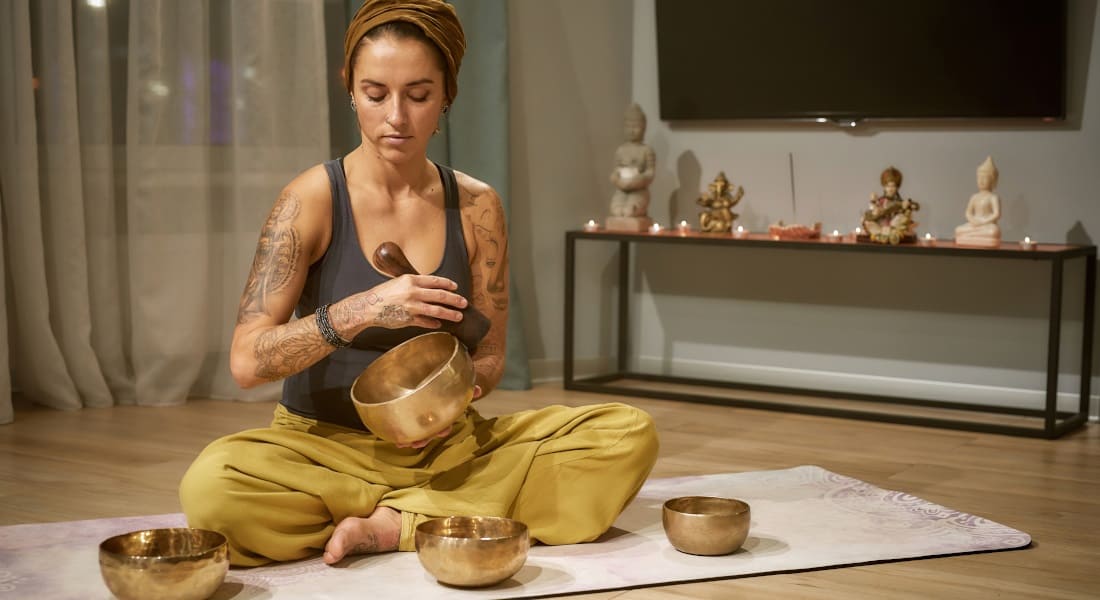
The price of a Tibetan singing bowl is directly related to its diameter
Again, this is obvious, but it’s worth mentioning. Generally speaking, the larger the Tibetan bowl, the more expensive it will be, although there are a few nuances. So if your budget doesn’t exceed CA$160, don’t expect to get a 30 cm (12 in) quartz crystal Tibetan singing bowl. Set a realistic budget that matches the instrument you’ve selected based on how you plan to use it.
A 10 cm (4 in) metal bowl can start around CA$65, while the same model at 20 cm (8 in) typically costs about CA$250. Similarly, a 20 cm (8 in) crystal singing bowl runs around CA$200.
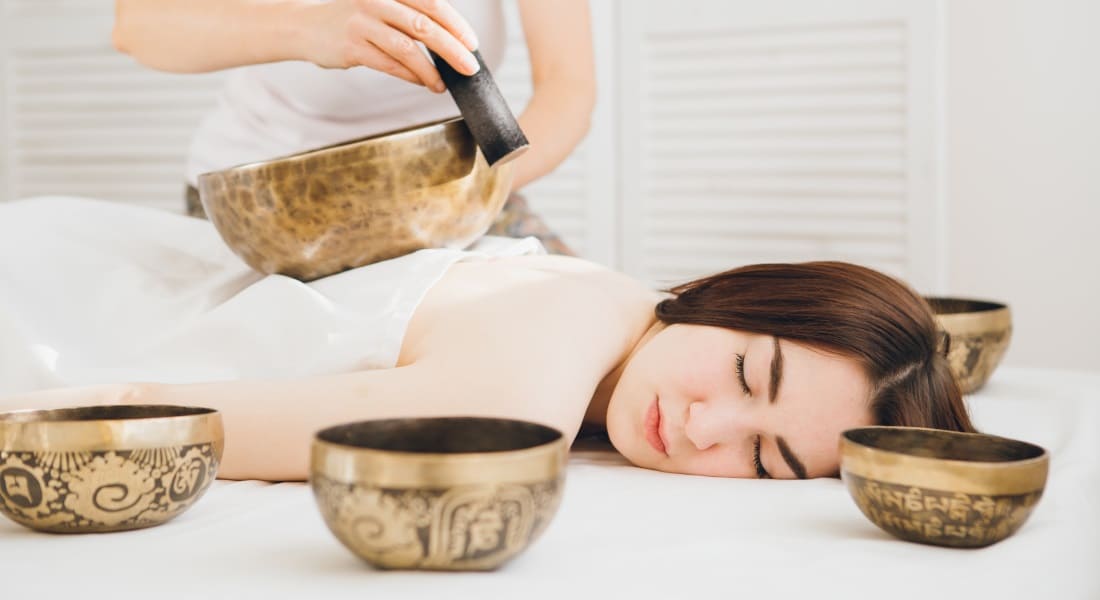
Big bowls for beautiful traditional engravings
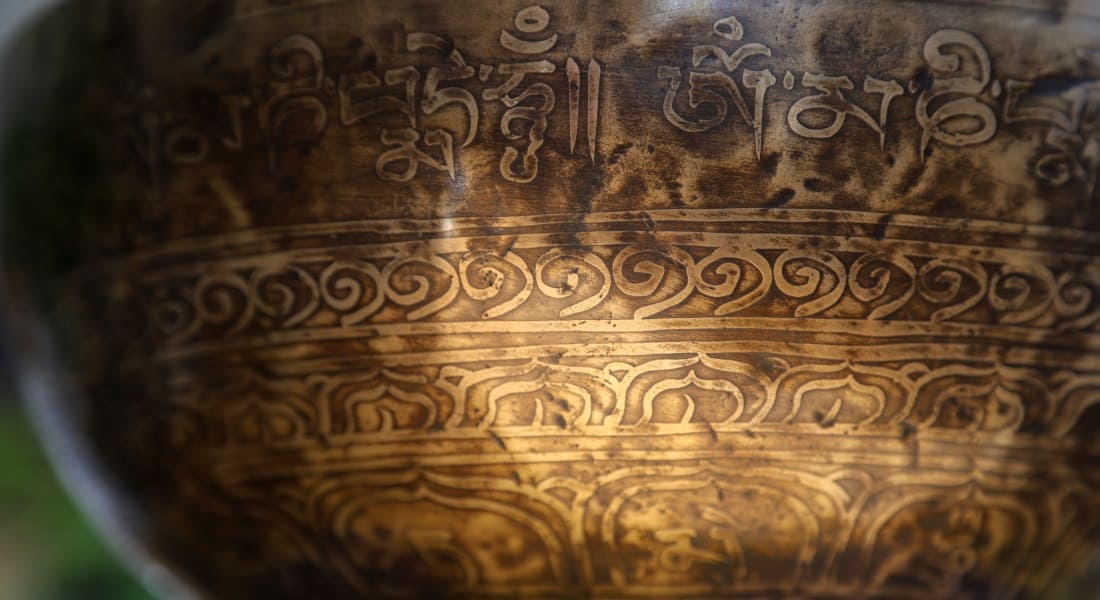
One final aspect that few people think about is whether the bowl has traditional engravings on the inside and/or outside. This type of engraving—often depicting a flower of life, a mantra, or a divine figure—can only be done on bowls of a certain size (around 20 cm (8 in)), and the larger the Tibetan bowl, the more detailed and precise the engravings can be.
This is simply due to the surface area available for artisans to apply their craft. With a small instrument, there just isn’t enough room to do clean, detailed work. That’s why you’ll see very few bowls of this size with engravings. So, if engravings are essential for you, it’s best to opt for a large Tibetan bowl.
Find the perfect size for your relaxation instrument
When it comes to finding the right Tibetan bowl, size is always a deciding factor because it affects the sound, the price, the footprint, and whether or not the bowl can be engraved. It’s well worth taking a moment to think it through so you don’t end up disappointed with your future instrument. Now, thanks to everything you’ve learned in this article, you’ll clearly know which size to choose for your singing bowl.
However, stores that offer instruments in every size are still relatively rare, as Tibetan bowls remain fairly unknown to the general public. That’s why Instruments du Monde recommends this Tibetan singing bowl available in 8 different sizes, so you can pick the one that perfectly matches your needs.
Discover these Tibetan bowls by clicking on the image below:

Have you always wanted to know what the seven metals in Tibetan bowls are? Learn exactly what this ancient musical instrument is made of and why this particular alloy is used specifically to match the seven major chakras of the human body.


