



Written by Ambre Montespan on Apr 8, 2024 · Updated on Oct 15, 2026

Table of contents:
Do you own a Tibetan singing bowl, or are you planning to buy one in the next few days? Do you already practise cardiac coherence, or are you seriously interested in this breathing technique? Would you like to learn how to use a Tibetan singing bowl to support cardiac coherence and boost your well-being?
With over 10 years of experience using Tibetan singing bowls for therapeutic purposes, I regularly practise a few cardiac coherence exercises with this percussion instrument. I’m truly happy to share my experience and guide you through techniques and tips that will help you use your singing bowl effectively during a cardiac coherence session.
Practising cardiac coherence with a Tibetan singing bowl offers several benefits. However, it does require a few key points—especially how you hold and position the instrument—along with a few essential steps.
By reading this article in its entirety, you will discover:
- What exactly cardiac coherence is
- The benefits of combining this breathing practice with the Tibetan singing bowl
- How to perfectly combine cardiac coherence with this Asian musical instrument
All this information will allow you to maximise the benefits of your Tibetan singing bowl during a cardiac coherence session, offering you not only personal benefits, but also the opportunity to support your loved ones in discovering this unique experience of well-being.
Let’s explore together, without further ado, how to practise cardiac coherence with a Tibetan singing bowl!
What is cardiac coherence?
To fully understand cardiac coherence, we first need to define it, note its few contraindications, explain how to practise it, and then explore the benefits it offers.
How exactly can cardiac coherence be defined?
Cardiac coherence is a practice that aims to regulate your breathing rhythm to positively influence the autonomic nervous system, which controls involuntary bodily functions such as heart rate, digestion, and stress response. Cardiac coherence seeks to harmonise heart rate, reduce stress, improve focus, and promote an overall sense of well-being.
This practice is based on the fact that the heart and brain are in constant communication via the autonomic nervous system. By breathing at a specific rate—usually around 5 to 6 breaths per minute—you can induce a state of coherence where the parasympathetic nervous system (responsible for rest and digestion) and the sympathetic nervous system (responsible for the fight-or-flight response) work in synergy.
Cardiac coherence is accessible to everyone and requires no special equipment, although it can be guided and enhanced with the use of a Tibetan singing bowl. It usually consists of breathing sessions during which the person breathes consciously, following a specific cycle (for example, inhaling for 5 seconds, then exhaling for 5 seconds) for a few minutes, several times a day.
Are there any dangers or contraindications associated with this breathing practice?
Cardiac coherence is considered a safe practice for most people. It is non-invasive and can be performed by individuals of all ages, including children and older people. However, as with any practice involving breath manipulation, there are certain situations where caution is advised or adjustments may be necessary:
- Respiratory disorders : People with acute or chronic respiratory disorders (such as severe asthma or chronic obstructive pulmonary disease) should consult a healthcare professional before beginning any controlled breathing practice to ensure that it is appropriate for their condition and will not exacerbate their symptoms.
- Heart problems : Although cardiac coherence may be beneficial for certain cardiovascular conditions by helping to regulate blood pressure and heart rate, individuals with heart disorders should also consult a doctor before beginning the practice. This is to ensure that it is safe and appropriate in the context of their specific condition.
- Mental health : For people with anxiety or panic disorders, although cardiac coherence may be helpful in managing stress and anxiety, it is possible that some breathing techniques may initially cause or exacerbate feelings of panic or discomfort. In these cases, it is recommended to begin the practice under the guidance of a mental health professional.
- Pregnancy : Cardiac coherence is generally considered safe during pregnancy, but as deep breathing can sometimes affect blood circulation and oxygenation, it is wise to consult a doctor before starting the practice, especially in cases of complications or pre-existing conditions.
In all cases, it’s important to listen to your body and never force your breathing. If you experience discomfort, dizziness, or any other negative symptoms during practice, stop immediately and, if necessary, consult a healthcare professional. Cardiac coherence is primarily a stress management technique and should not replace medical treatment for specific illnesses or conditions. It can be a useful addition to an overall care plan, but always in accordance with the recommendations of a healthcare professional.

How do you practise cardiac coherence? What is the best rhythm for the exercises?
The most commonly recommended rhythm for practising cardiac coherence is known as “365”. This involves practising three times a day, with six breaths per minute (five seconds of inhalation and five seconds of exhalation, repeated six times) for five minutes. This rhythm is considered optimal for most adults to induce a state of cardiac coherence, where the parasympathetic nervous system and the sympathetic nervous system work in harmony to improve overall well-being.
To enjoy a productive session, start by finding a quiet spot. Sit or lie down in a comfortable position where you won’t be disturbed. Then, focus on your breath. Close your eyes to help you concentrate and begin to breathe in a more conscious and controlled manner. You can use a guide, such as a Tibetan singing bowl, or a counter to maintain a rhythm of 6 breaths per minute, but you can also count in your head. Finally, practise regularly to fully benefit from the advantages of cardiac coherence. As I mentioned earlier, it is recommended to practise for at least 5 minutes, three times a day, because the immediate positive effects last for about 4 hours.
Once you’re comfortable with the technique, you won’t need ideal conditions—you can practise cardiac coherence on public transport, at work, or almost anywhere amid surrounding noise. You’ll also be able to do sessions standing up, not just sitting or lying down.
What are the benefits of this breathing technique?
Cardiac coherence has been the subject of numerous scientific studies that have explored its effects on physical and mental health. This research, such as this study published in 2023, tends to show positive results, indicating that the practice can be beneficial in several ways. These include:
- Reduction of stress and anxiety : Several studies have shown that regular practice of cardiac coherence can help reduce levels of stress and anxiety. It works by modulating the response of the autonomic nervous system, thereby promoting better management of emotional reactions to stress.
- Improved emotional regulation : By helping to regulate the activity of the autonomic nervous system, cardiac coherence can also contribute to better emotional management, allowing individuals to react in a more measured and less impulsive manner when faced with emotionally charged situations.
- Effects on blood pressure : Some research has suggested that cardiac coherence may have a beneficial effect on reducing blood pressure in people with mild to moderate hypertension, probably by promoting relaxation of the cardiovascular system.
- Improved concentration and cognitive performance : By reducing stress levels and improving emotional management, cardiac coherence may contribute to better concentration and improved cognitive performance, including memory and attention.
It’s worth noting that, while the results are promising, research on cardiac coherence is still ongoing. Scientists are still exploring the exact mechanisms behind its benefits, and more studies are needed to fully understand its impact on different populations and clinical contexts. As with any wellness practice, the effects of cardiac coherence may vary from person to person. We recommend integrating it into a comprehensive approach to stress management and health promotion, complementing other scientifically validated practices and appropriate medical supervision when necessary.
What are the benefits of combining Tibetan singing bowls with this breathing technique?
The sound of the Tibetan singing bowl also offers a profound sensory experience, acting on the nervous system to soothe mental tension. By integrating these vibrations into the practice of cardiac coherence, the relaxing effect extends beyond simple heart rate regulation, positively influencing mental clarity and emotional stability. Together, cardiac coherence and the sound of the Tibetan singing bowl offer a synergistic approach to improved physical and mental well-being. The potential benefits of this blend of meditative practices are many, contributing to a holistic experience of relaxation and renewal.
In fact, Tibetan singing bowls offer many benefits and virtues, some of which have been validated by scientific studies, that are completely independent of cardiac coherence. I invite you to read my article dedicated to the benefits of singing bowls to learn more. When cardiac coherence is combined with the soothing sound of a Tibetan singing bowl, the relaxing effects are amplified. The bowl’s harmonious vibrations act as a natural guide, helping you maintain a steady breathing rhythm. This enhanced coherence between breath and heart fosters physiological balance, reduces stress, and promotes relaxation.
Another notable feature of this combination is its impact on meditation. The sound of the Tibetan singing bowl creates an environment conducive to concentration, facilitating immersion in the present moment. This can promote stress management, improved sleep quality, and a more balanced perspective on daily challenges. Finally, normal use of a Tibetan singing bowl carries no danger, contraindications, or side effects, which makes it an excellent match for cardiac coherence, which also has very few.
How can this Asian musical instrument be incorporated into this breathing practice?
There are two main ways to incorporate the Tibetan singing bowl into a cardiac coherence session. The first is when you are alone. You will therefore need to manage your percussion instrument in addition to your breathing. The second is during a group session. In this case, you can either enjoy the session by focusing solely on your breathing and the sounds, or guide the session for the other participants by striking the singing bowl(s) at regular intervals.
Whether you’re practising alone or with a group, the technique stays the same: strike the Tibetan singing bowl at regular intervals—ideally every 5 seconds, like a metronome—to guide each breath. Each time the bowl sounds, you’ll either inhale or exhale. Personally, I recommend using two singing bowls with diameters that differ by at least 5 cm (2 in). This will give you two distinct sounds—one for inhaling and the other for exhaling. Focus on the sounds while breathing, and you’ll feel the first relaxing effects very quickly.
I don’t recommend making your Tibetan bowl “sing”—it requires more technique and produces a more diffuse sound. To maximise the benefits of cardiac coherence, a clean, dry strike is ideal. Also, rest the bowls on cushions designed for this purpose to get the best acoustics possible.
Of course, you can also use a recording of a Tibetan singing bowl if you do not have this musical instrument. However, the sound quality will not be quite the same as with a singing bowl placed right next to you. To give you an idea of what a cardiac coherence session with a Tibetan singing bowl might be like, I’ve provided a 5-minute video below. This is the recommended duration:
Try this video by synchronising your inhalations and exhalations with the strikes of the Tibetan singing bowls. If you feel a sense of well-being at the end of the session, it looks like singing bowls are made for you.
Can Tibetan singing bowls be used before or after a cardiac coherence session?
In addition to using it during a cardiac coherence session, you can absolutely play the Tibetan singing bowl before or after. Personally, I prefer the latter option, as I find that cardiac coherence is very effective for starting a relaxation or meditation session, or even reiki with a Tibetan singing bowl. Ending a cardiac coherence session with a few strikes of the singing bowl creates a smooth transition back to everyday life. This final phase can reinforce the benefits of the practice, ensuring a harmonious integration of calm into your day. To learn more, check out my article on how to meditate with a Tibetan singing bowl. You will then have the opportunity to treat yourself to a moment of true relaxation and calm.
Choose the best Tibetan bowl for your breathing exercises
An increasingly popular practice, cardiac coherence can be perfectly adapted when combined with a Tibetan singing bowl. This combination creates a unique relaxing experience, enhanced by the soothing vibrations of this Asian instrument. Now you have all the keys to enhance the effectiveness of your sessions by adding the singing bowl to this breathing practice. The benefits you will reap will only be greater.
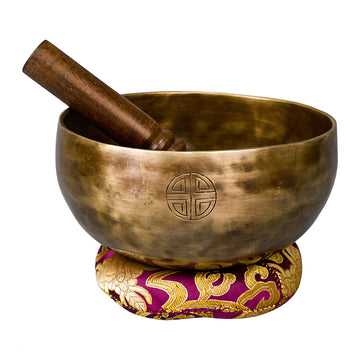
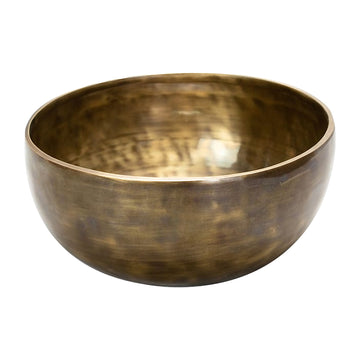
However, it’s not easy to find a reliable shop that sells authentic Tibetan singing bowls. Poor-quality models will never produce the intense vibrations that allow for complete relaxation. That’s why I recommend Instruments du Monde, which has carefully selected more than 200 authentic singing bowls. You’ll be able to relax more deeply during your cardiac coherence sessions. For example, this large Tibetan singing bowl delivers superb low-frequency vibrations that are ideal for achieving absolute calm.
Purchase this Tibetan bowl now by clicking on the image below:
While cardiac coherence is a great practice to do with a singing bowl, it’s far from the only wellness technique you can explore. You can also practise hypnosis with a Tibetan singing bowl for therapeutic purposes. And that’s just one of the many ways you can use your instrument. To discover them all, read our guide to Tibetan singing bowls. All their secrets will be revealed.


