



Written by Ambre Montespan on Apr 1, 2024 · Updated on Oct 15, 2026

Table of contents:
Do you own a Tibetan singing bowl? Do you regularly practise Reiki, or are you curious to discover this Japanese energy-healing method? How can you bring a Tibetan singing bowl into your Reiki practice to combine the benefits of both?
With over 10 years of experience using Tibetan singing bowls for therapeutic purposes, I’ve taken a special interest in pairing Reiki with this percussion instrument. I’ve also experienced multiple sessions both as a practitioner and as someone receiving this type of care. So I’m happy to share my techniques and tips so you can use your singing bowl effectively in your Reiki practice.
There are several ways to combine Reiki with a Tibetan singing bowl. You can simply play the instrument during a session, but it can also be used as a meditation focus or to target specific chakras.
By taking the time to read this article, you’ll discover:
- What Reiki is
- The benefits of using a Tibetan bowl in the practice of this discipline
- How to effectively integrate the singing bowl into this Japanese healing method
With all this information at your disposal, you’re sure to get the most out of your Tibetan singing bowl during a Reiki session, not only for your own benefit, but also to support loved ones who want to explore this unique approach.
Let’s find out how to practise Reiki with a Tibetan singing bowl!
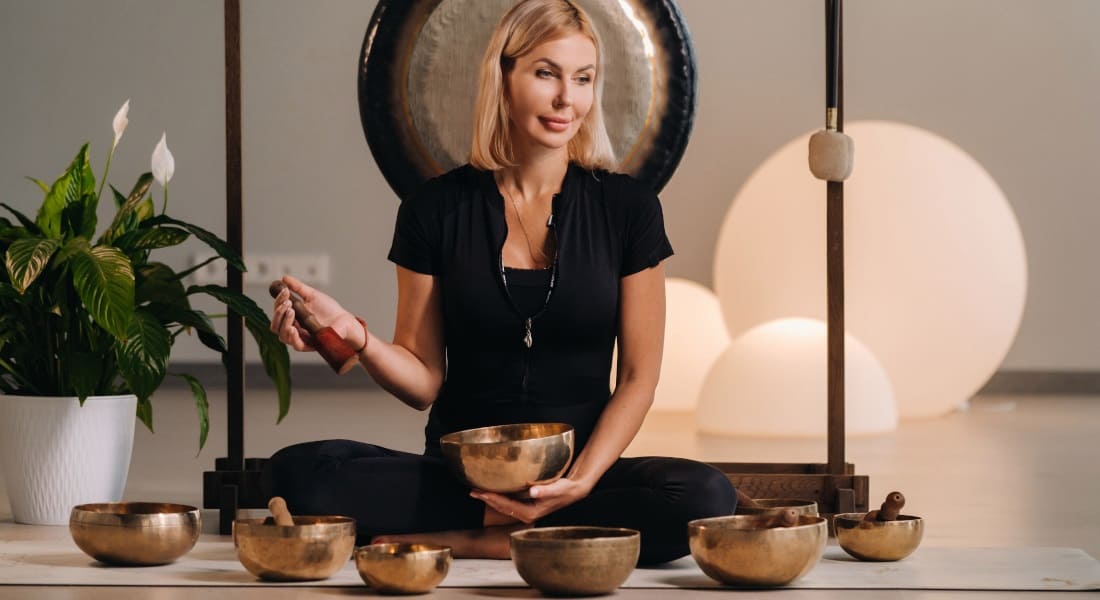
What is Reiki?
Reiki is an energy-healing method that originated in Japan. It was created in 1922 by meditation master Mikao Usui. His goal was clear: to offer a simple, secular approach to supporting well-being and inner healing. This method is based on the idea that universal energy can be channelled by a trained practitioner and directed towards a person to restore energetic balance. Unlike some medical approaches, Reiki doesn’t require direct physical contact. Practitioners generally use their hands to transmit energy, holding them slightly above the recipient’s body. This is known as the laying on of hands.
One of the distinctive features of Reiki is its holistic approach. It aims to harmonise not only the physical body, but also the mind and soul. In this way, Reiki treats the person as a whole, seeking to restore energetic balance to support overall health. This energy-healing method comes from the oral transmission of Mikao Usui’s teachings, as he left no written record. Over time, this has given rise to different interpretations and schools of Reiki, each with its own techniques and practices.
Reiki sessions usually take place in a calm, relaxing environment. Practitioners may use specific hand positions to target different energy centres in the body, called chakras. During the session, the recipient may feel warmth, tingling, or simply deep relaxation. Although Reiki is not a recognised medical method, many people report benefits such as reduced stress, improved sleep, and enhanced emotional well-being. In addition, a scientific study conducted in October 2017 by Dr. David E. McManus suggests that the effectiveness of Reiki may be greater than a simple placebo effect. In summary, Reiki offers an alternative and complementary approach focused on universal energy to promote harmony of body and mind. You can watch a Reiki session in the video below:
Why use a singing bowl to complement this hands-on healing method?
In the context of Reiki, Tibetan singing bowls help create an atmosphere that supports energy healing. They encourage relaxation, help release tension and stress, and can support the easing of energetic blockages. Their sound vibrations may also amplify Reiki energy, allowing for a deeper connection with the universal life force. Through their powerful resonance, singing bowls can become valuable allies for encouraging smoother energy flow throughout the body. Reiki and Tibetan singing bowls are therefore highly complementary.
Focusing on the sounds coming from the Tibetan bowl also plays a key role. It helps quiet the mind, setting everyday thoughts aside and making space for a calmer inner state. This sound harmony can bring you back to what feels essential. In addition, according to some practitioners, the vibrations emitted by this musical instrument travel deeply through the organs and spine, moving from the first to the seventh major chakra of the human body. This process is said to help lift energetic blockages and support inner balance.
The sound waves of the singing bowl may also help release negative energy, soothe the mind, and create a deep sense of relaxation and inner peace—important elements in the Reiki healing process. Furthermore, by placing the bowl on specific areas of the body, such as the solar plexus or the heart chakra, the vibrations can be focused on these areas, helping release tension and blockages and improving energetic circulation. As a result, these two disciplines can complement each other beautifully to maximise well-being.

How can Tibetan bowls be integrated into Reiki practice?
To integrate a Tibetan singing bowl effectively and harmoniously into Reiki, start by creating a supportive space, then put a few simple techniques into practice.
How can you create a space conducive to the practice of Reiki with a Tibetan bowl to support relaxation and healing?
For a harmonious Reiki session, creating the right environment is essential, and using a Tibetan singing bowl can greatly enhance relaxation and healing. Choose a quiet place, free from distractions, where the person receiving Reiki can fully immerse themselves in the session. A soothing atmosphere is key, so opt for soft, even dim lighting—add candles, for example—to create a calming ambience.
Incorporate natural elements, such as plants or healing crystals, to support grounding. Make sure the space feels inviting with cushions, soft blankets, and supportive elements like a massage table so the recipient can relax physically. Place the Tibetan singing bowl thoughtfully, either near the person or at an appropriate distance, so its sound vibrations can fill the room. Take a moment to centre your energy before the session begins.
Encourage mindful breathing during the session to maximise the benefits of Reiki. Deep, steady breathing supports relaxation and helps energy flow freely. Create an opening ritual—whether it’s a short meditation, a healing intention, or simply a few moments of silence—to mark the beginning of the session. These simple steps will help you create an ideal environment for practising Reiki with a Tibetan singing bowl. This supports relaxation, healing, and a deeper connection with universal energy, contributing to a more soothing and meaningful Reiki experience.
How to use the singing bowl in Reiki healing?
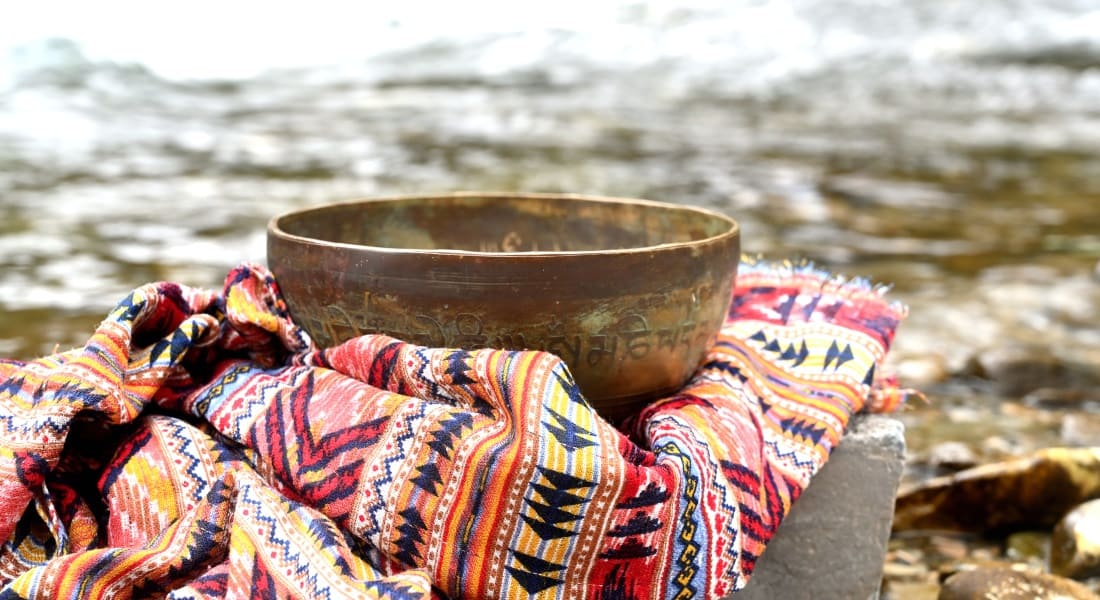
Sound therapy, also known as sonotherapy, combined with Reiki is one of the key techniques for making the most of the benefits of the Tibetan singing bowl. Whenever you feel it’s useful—before, during, or after the laying on of hands—begin by gently striking the instrument, allowing its sound vibrations to fill the space. To do this, hold the mallet in one hand and lightly tap the rim of the Tibetan bowl. You can also move the mallet in a clockwise circular motion around the rim. This will make the Tibetan bowl sing. Continue playing until you feel a sense of calm and relaxation.
Then, while continuing to play your Tibetan bowl, you can slowly move it around the person’s body, allowing the vibrations to unfold from different angles. Finally, hold the singing bowl above the person’s head, strike it, then gradually move the instrument down towards the lower body. This practice, called “aura cleansing,” uses sound vibrations to cleanse and purify the aura, releasing negative energy and supporting inner clarity.
Many practitioners also believe that setting an intention adds an important spiritual dimension. Before a Reiki session, you can write a healing or well-being intention on a piece of paper and place it in the Tibetan bowl. Leave the paper inside the bowl for the duration of the session, letting the sound vibrations carry that intention into the energy transmitted through Reiki hand positions. As you grow more comfortable with your Tibetan singing bowl, you’ll naturally develop your own techniques. Trust your intuition and let the energy flow.

What are the specific points or chakras to target when using the Tibetan bowl during a Reiki session?
When the Tibetan bowl is incorporated into a Reiki session, you can place the instrument on or near certain points of the body to specifically target certain chakras. This can significantly amplify the benefits of the practice. Here are some simple suggestions to guide this targeted use of the Tibetan bowl.
- Root Chakra (Muladhara): Start with the root chakra, located at the base of the spine. The Tibetan singing bowl can be placed near this area to promote grounding and connection to the earth. The vibrations of the bowl help to balance energy and strengthen stability.
- Sacral Chakra (Svadhisthana): The sacral chakra, located in the pelvic region, can be targeted to stimulate creativity and vital energy. Position the Tibetan bowl about 3–5 cm (1–2 in) above this chakra to allow the vibrations to reach the area.
- Solar plexus (Manipura): The solar plexus, located in the abdominal region, is associated with self-confidence and vitality. Place the singing bowl in this area, and the vibrations will help release energy blockages and stimulate energy flow.
- Heart chakra (Anahata): To open the heart to love and compassion, focus on the heart chakra. Position the instrument near this area to allow the vibrations to work on the heart’s energy and promote emotional harmony.
- Throat Chakra (Vishuddha): The throat chakra governs communication and self-expression. Use the Tibetan bowl near the throat to release tension and encourage fluid, authentic expression.
- Third eye (Ajna): To stimulate intuition and mental clarity, focus on the third eye, located between the eyebrows. Place the Tibetan singing bowl near this point to support the opening of inner perception.
- Crown Chakra (Sahasrara): Finally, for a deep connection to spirituality and the universe, target the crown chakra by placing the singing bowl above the head. The vibrations will help open this higher energy centre.
Targeted use of the Tibetan bowl on these specific points or chakras during a Reiki session can intensify the impact of the healing energy and support holistic balance. By experimenting with these different positions, you may enjoy deeper exploration and a more complete healing experience during your Reiki sessions.
How can you meditate with this musical instrument as part of Reiki?
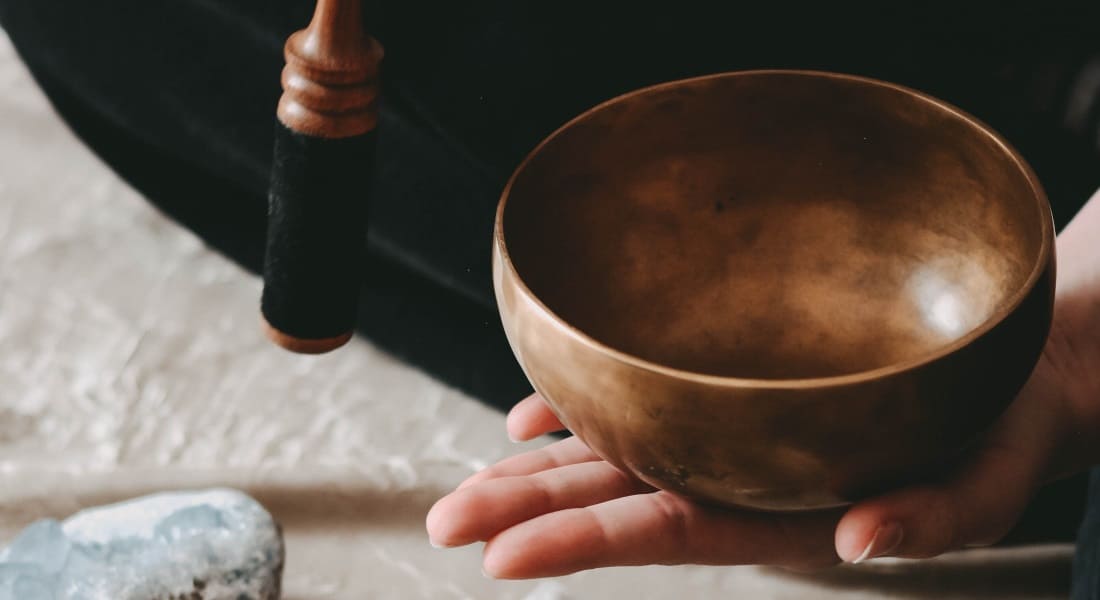
Mikao Usui, the founder of Reiki, was first and foremost a master of meditation. Thus, Reiki originally combined the laying on of hands with meditation to optimise benefits for the body and mind. A Tibetan singing bowl is also a practical tool for reaching the contemplative state sought by meditators. Meditating with this Asian instrument involves focusing your attention on the sounds it produces. In this way, it acts like a mantra, helping to clear the mind.
I’ve already discussed how to meditate with a Tibetan bowl in another article—I invite you to read it so you can enjoy the full benefits of meditation and Reiki with your singing bowl.
Choose a high-quality instrument for practising Reiki
The harmonious integration of the Tibetan singing bowl into the Reiki therapeutic process has been thoroughly explored. From meditative techniques to chakra-balancing methods, the singing bowl offers a wide range of possibilities to enrich your healing experience. With all the information you’ve gained from this article, you now know how to use this instrument to maximise the results of your Reiki sessions.
However, at the heart of this quest for well-being lies a major challenge: finding an authentic Tibetan singing bowl in order to experience clear, high-quality vibrations. The market is flooded with options, making it hard to find an instrument that meets high standards and the specific needs of Reiki practitioners. That’s why I strongly recommend shopping at the trusted store Instruments du Monde. They offer a selection of genuine Tibetan bowls crafted by master artisans from the Himalayas, like this model specially designed for Reiki work.
Invest in a quality singing bowl and click on the image below to discover this instrument:

Now that practising Reiki with a singing bowl holds no secrets for you, you may want to expand what’s possible with your Asian instrument even further. In that case, learn how to practise cardiac coherence breathing with a Tibetan bowl. It’s an excellent relaxation technique. Or discover all the mysteries of the singing bowl by reading our guide dedicated specifically to this subject.


