



Written by Ambre Montespan on Jul 22, 2024 · Updated on Oct 15, 2026

Table of contents:
Do you practise yoga and would like to try adding a Tibetan singing bowl to your routine? Do you already own a singing bowl and want to explore new possibilities by incorporating yoga? Looking to boost your day-to-day well-being through these two complementary practices?
Having practised yoga and worked with Tibetan singing bowls for over 10 years, I’ve done extensive research on the subject and developed my own techniques to improve the combination of these two practices. In this article, I’m sharing everything I’ve learned so you can confidently bring a Tibetan singing bowl into your yoga practice, too.
To integrate a Tibetan singing bowl into yoga, start by preparing the mind with a short meditation using the instrument. Then use its sound to mark transitions between postures and support relaxation, deepening calm and encouraging energetic balance.
By reading this entire article, you will gain a clear understanding of:
- Yoga and its different types, such as yoga nidra and yin yoga
- The benefits of using singing bowls during a yoga session
- A clear protocol for using this musical instrument during a yoga session
This will give you the opportunity to dramatically enhance your relaxation, meditation, and mindfulness sessions through the combined use of Tibetan singing bowls and yoga. If you’re a yoga teacher or professional, you’ll also be able to share these techniques with your students.
Now, let's dive in.
What do we mean when we talk about yoga?
First, it’s helpful to define what yoga is before exploring how a singing bowl can enhance the practice.
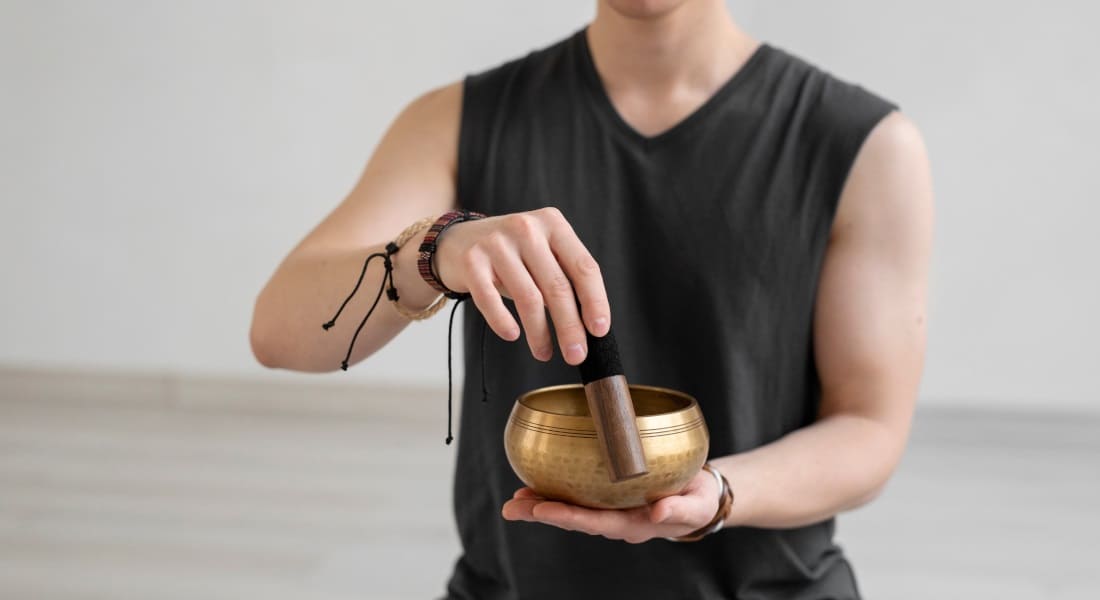
What is yoga?
Yoga is an ancient practice originating in India that aims to harmonise the body, mind, and soul. It is much more than just a series of physical postures; it is a discipline that encompasses physical, mental, and spiritual aspects. The word "yoga" comes from the Sanskrit "yuj," meaning "to join" or "to unite," and brings that unity to life through physical postures (asanas), breathing techniques (pranayama), meditation, and ethical and philosophical principles.
There are several branches of yoga; here are some of the best known:
-
Hatha yoga: the most well-known type of yoga in the West, which focuses on postures (asanas) and breathing techniques (pranayama). It aims to prepare the body and mind for meditation.
-
Raja yoga: also known as royal yoga, it emphasises meditation and mental control.
-
Bhakti yoga: the yoga of devotion, it focuses on love and devotion to a deity or the divine.
-
Jnana yoga: the yoga of knowledge, it emphasises the study of sacred texts and wisdom.
-
Karma yoga: the yoga of selfless action, it focuses on serving others without expecting reward.
Yoga incorporates several essential components that work synergistically to harmonise the body and mind. Asanas, or physical postures, improve flexibility, strength, and balance, preparing the body for meditation by removing energy blockages. Pranayama, or breathing techniques, control the flow of vital energy (prana) to balance the body and mind. Meditation (dhyana) calms the mind and helps you reach a state of inner peace. Ethical and moral principles, known as yamas and niyamas, guide the yogi’s behaviour. Yamas include practices such as non-violence (ahimsa) and truthfulness (satya), while niyamas encompass personal disciplines such as purity (saucha) and contentment (santosha). Together, these components form a practice that aims to unify the body, mind, and soul for a balanced and harmonious life.
Can anyone practise yoga?
Yes, anyone can practise yoga. This discipline is extremely adaptable and accessible to people of all ages, fitness levels, and health conditions. Yoga can be modified to suit each person’s needs and abilities. Whether you’re a child, an adult, or a senior, there are styles of yoga and simple adjustments that can meet your specific needs.
-
Children: For kids, yoga is often taught through games and playful exercises that encourage flexibility, balance, and focus. Simple poses and stories connected to the postures make the practice fun and engaging.
-
Adults: Adults, whether beginners or experienced, can find styles of yoga that match their wellness goals, whether it's building strength, reducing stress, or increasing flexibility. Styles such as hatha, vinyasa, and yin yoga are among the most popular.
-
Seniors: For older adults, yoga can help maintain mobility, balance, and joint health. Gentle options, such as chair yoga, make it possible to practise safely while benefiting from mindful breathing and meditation.
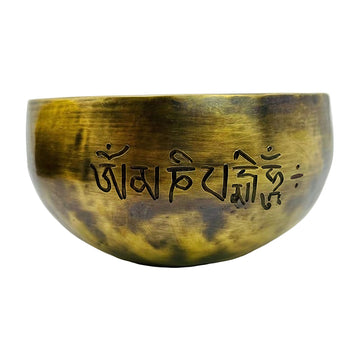
-
People with physical limitations: Yoga can be adapted for people with physical limitations or specific health conditions. Therapeutic yoga focuses on modified poses and props such as blocks, straps, and cushions to support safety and comfort.
-
Pregnancy: Prenatal yoga is tailored to expectant mothers, emphasising poses that strengthen the muscles used during childbirth while improving breathing and relaxation.
-
Athletes: High-level athletes often use yoga to complement their training, improve flexibility, help prevent injuries, and support muscle recovery.
Thus, yoga is an incredibly flexible practice that can be adapted to suit almost anyone, regardless of age, physical condition, or experience. Whether you’re looking for relaxation, a way to improve your fitness, or a spiritual practice, yoga offers tools and techniques that can be tailored to your unique needs. It’s always a good idea to consult a healthcare professional or a qualified yoga instructor for personalised guidance, especially if you have specific health conditions or concerns.
Are certain practices such as yoga nidra, yin yoga, or chakra yoga more suitable for use with Tibetan singing bowls?
Certain yoga practices such as yoga nidra, yin yoga, and chakra yoga are particularly suitable for use with Tibetan singing bowls because they emphasise deep relaxation, meditation, and energetic balance. Let’s look at each one in turn.
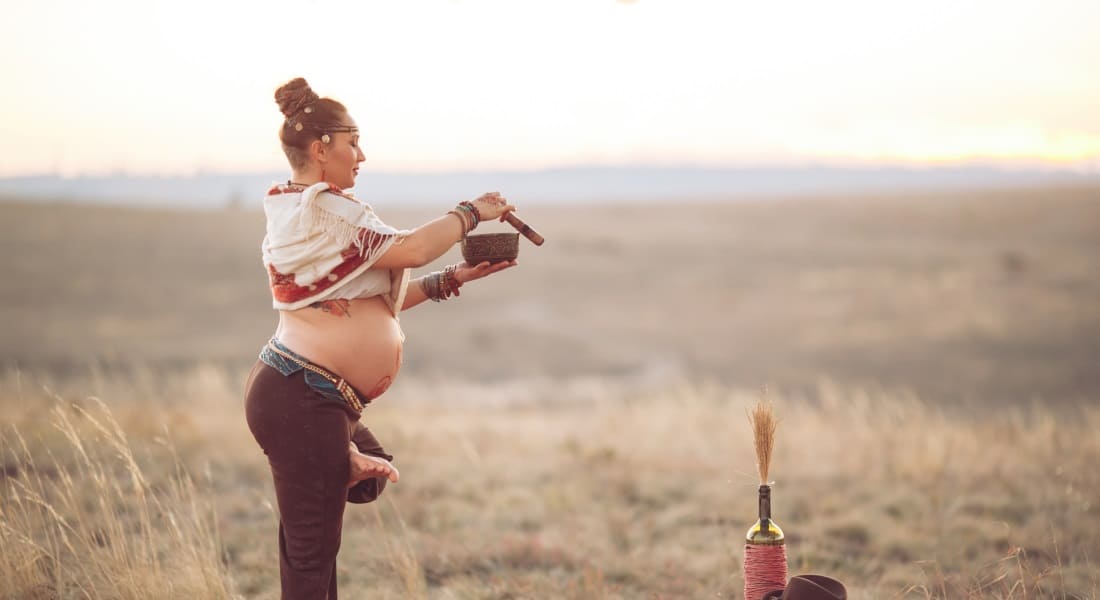
Yoga nidra
Yoga nidra, also known as "yogic sleep," is a deep relaxation technique that guides the practitioner into a state between wakefulness and sleep. This form of yoga is particularly well suited to the use of singing bowls for several reasons:
-
Deep relaxation: The sounds and vibrations of Tibetan singing bowls help induce a state of deep relaxation, similar to that sought in yoga nidra. The sound vibrations calm the mind and release physical and mental tension.
-
Guided meditation: During a yoga nidra session, the instructor guides participants through a series of visualisations and progressive relaxation, similar to Wakan meditation. Tibetan singing bowls can be used in the background to support this guided practice, helping practitioners stay focused and sink deeper into a meditative state.
-
Energy balance: The vibrations of Tibetan singing bowls can harmonise the chakras and balance vital energy (prana), which perfectly complements the goals of yoga nidra.
Yin yoga
Yin yoga is a slow, meditative practice that targets deep connective tissues such as ligaments, bones, and joints. This approach to yoga is especially beneficial when combined with Tibetan singing bowls:
-
Long holds: In yin yoga, poses are held for long periods of time, usually between 3 and 5 minutes or even longer. The soothing sound of Tibetan singing bowls helps you stay relaxed and present in each pose.
-
Stimulation of the chakras and prana: The vibrations of Tibetan singing bowls can be aligned with the specific chakras targeted in certain yin yoga poses. This can help release energy blockages and stimulate the flow of prana in the body.
-
Relaxation and meditation: The sounds of Tibetan singing bowls can encourage deeper meditation, which is essential for maximising the benefits of yin yoga. Practitioners can use the vibrations to enter a meditative state more easily.
Chakra yoga
Chakra yoga focuses on activating and balancing the seven main energy centres in the body. Using this Asian musical instrument can be particularly effective in this practice:
-
Frequency correspondence: Each chakra corresponds to a specific vibrational frequency. Tibetan singing bowls can be chosen and used according to these frequencies to target and balance specific chakras. For example, a bowl tuned to the musical note E is ideal for the solar plexus chakra.
-
Meditation and visualisation: During chakra yoga, meditations and visualisations focused on the chakras can be deepened by the sound of Tibetan singing bowls. This helps practitioners concentrate their energy on specific centres and feel the healing vibrations.
-
Overall harmonisation: The sound vibrations of Tibetan singing bowls help harmonise all chakras, supporting overall energetic balance. Practitioners may experience improved well-being and greater mental clarity.
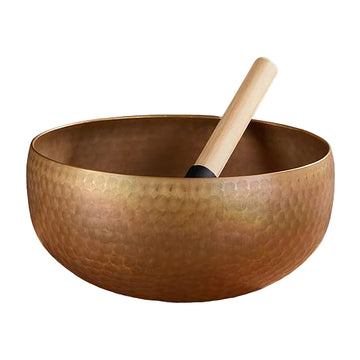
What are the benefits of combining Tibetan bowls and yoga?
The combination of singing bowls and yoga offers a multitude of benefits on the physical, mental, emotional, and spiritual levels. Blending sound vibrations with yoga’s deep relaxation techniques creates a synergy that amplifies the benefits of both practices. Read this article to learn about the main virtues of Tibetan bowls. Otherwise, here are the key benefits of this combination.
Physical benefits
-
Deep relaxation: The soothing sounds of Tibetan singing bowls induce a state of deep relaxation, helping to release muscle tension and reduce physical discomfort. This allows the body to soften more fully during yoga postures.
-
Flexibility and balance: The relaxation created by Tibetan singing bowls helps muscles loosen more easily, making it easier to access deeper stretches and improve flexibility and balance.
Mental benefits
-
Stress and anxiety reduction: The vibrations of Tibetan singing bowls can have a calming effect on the nervous system, helping lower stress and promote a sense of peace. Combined with yoga, this supports better stress and anxiety management.
-
Improved concentration and mental clarity: The sound of Tibetan singing bowls helps anchor the mind in the present moment, improving focus and mindfulness during yoga practice. This can lead to greater mental clarity and stronger concentration.
-
Reduction of mental fatigue: Yoga sessions with singing bowls can create deep mental relaxation, helping reduce mental fatigue and refresh the mind. This can also support better sleep quality and mental recovery.
Emotional benefits
-
Emotional balance: The harmonious sounds of Tibetan singing bowls can help release stuck emotions and bring emotional energy back into balance. Combined with yoga, this can support a steadier mood and a more grounded emotional state.
-
Release of negative emotions: Yoga and Tibetan singing bowls can help you let go of difficult emotions such as anger, fear, and sadness, supporting emotional healing and a greater sense of inner peace.
Spiritual benefits
-
Chakra harmonisation: Each Tibetan singing bowl can be tuned to a specific frequency corresponding to a particular chakra. Using these Asian instruments during yoga can help harmonise and balance the chakras, supporting the flow of vital energy (prana) throughout the body.
-
Elevation of spiritual consciousness: Meditation and deep relaxation practices with Tibetan singing bowls and yoga can deepen spiritual awareness, making it easier to access more profound meditative experiences and a stronger connection with your inner self.
-
Amplification of meditative practices: The sounds of Tibetan singing bowls can make it easier to enter deep meditative states, helping meditation feel more accessible and allowing a deeper exploration of consciousness.
How can you integrate this Asian musical instrument into your yoga practice?
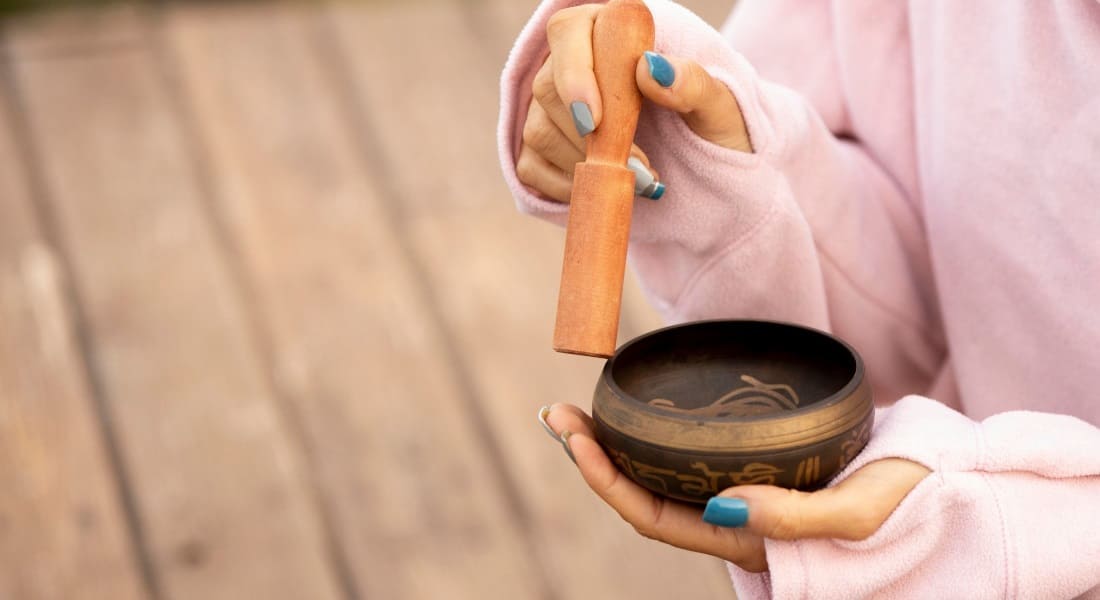
Integrating Tibetan singing bowls with yoga can enrich your practice by adding new layers of relaxation, focus, and energetic support. Here is an effective method for incorporating Tibetan singing bowls into your yoga sessions. However, to fully enjoy the benefits, it’s important to learn how to use your singing bowl, especially the striking and rubbing techniques.
1. Before the session: mental preparation and meditation
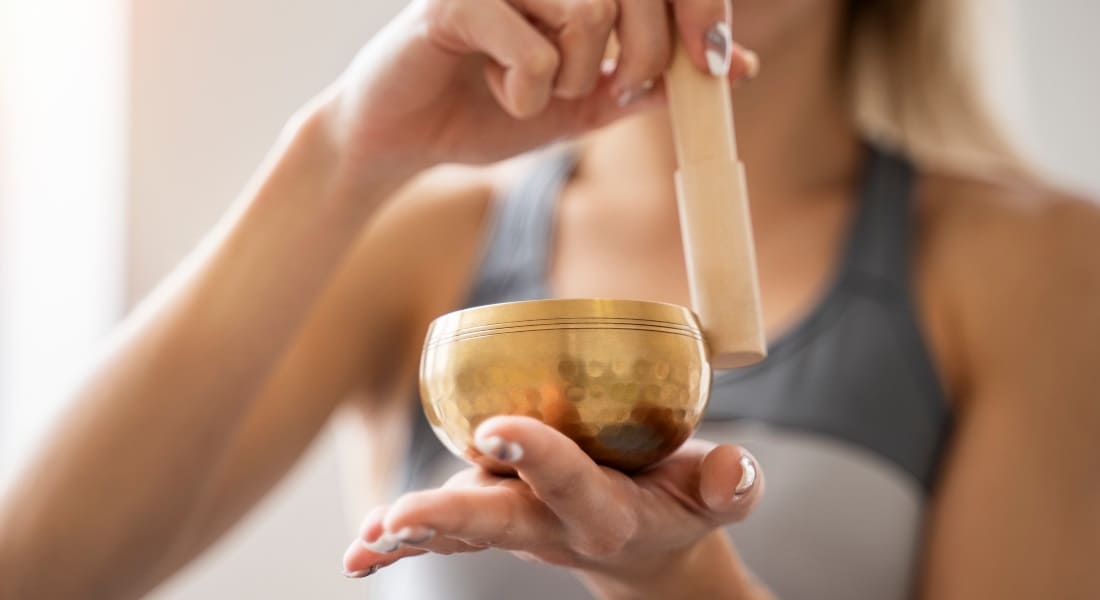
Begin your yoga session by gently striking the Tibetan singing bowl or rubbing its rim with the mallet. This helps centre the mind and create a peaceful atmosphere. Sit in a comfortable position, close your eyes, and take a few deep breaths. Gently strike the Tibetan singing bowl and focus on the sound and vibrations. Use this moment to set an intention for your session—relaxation, healing, or mindfulness.
2. During the session: transitions and relaxation
Incorporate the Tibetan singing bowl throughout the session to mark transitions between poses or to accompany relaxation poses. Use the Tibetan singing bowl to mark the transition from one pose to another. Strike the bowl once to signal the beginning and end of each pose. During relaxation poses such as savasana (corpse pose) or balasana (child's pose), gently rub the rim of the bowl to release soothing vibrations that deepen relaxation.
3. After the session: closing and returning to consciousness
End your yoga session with the Tibetan singing bowl to slowly bring your attention back to your surroundings and close the practice in a harmonious way. Lie down in savasana and let the Tibetan singing bowl vibrate softly in the background. Use the sounds to help you gradually come out of your deep state of relaxation. Sit up, strike the instrument one last time, and take a few deep breaths to close the session.
Invest in the best singing bowl possible to elevate your yoga sessions.
While Tibetan singing bowls and yoga come from neighbouring regions, combining them isn’t always as intuitive as it seems at first. In practice, blending these two meditative experiences can raise plenty of questions about how to do it well. But thanks to the guidance and step-by-step method you’ve discovered in this article, you’ll have no trouble combining the benefits of singing bowls and yoga in your future relaxation sessions.
To maximise these benefits, choose a high-quality Tibetan singing bowl. Lower-end models offer little resonance and can produce unpleasant vibrations. That’s why I recommend shopping at Instruments du Monde, which offers a singing bowl specially suited for yoga—ideal for truly restorative moments of relaxation.
Start exploring yoga combined with Tibetan singing bowls now and treat yourself to this instrument by clicking on the image below:
During a sound massage, Tibetan bowls are placed directly on the individual's body so they can fully enjoy the vibrations produced by the instruments. However, it’s important to know how to place these Tibetan bowls on the stomach, head, and rest of the body. If you don’t do it correctly, the person may feel discomfort, and the singing bowl may fall to the ground, which would greatly compromise the success of such a relaxation practice.


