



Written by Ambre Montespan - Updated on Sep 25, 2026
Table of contents:
Want to make your djembe more visually striking? Dreaming of turning your drum into a musical work of art? What supplies do you need to decorate a djembe? How can you easily decorate a djembe shell?
Having already successfully embellished more than 20 djembes by decorating their solid-wood shells, I can guide you step by step so you can customize the body of your African percussion instrument yourself.
To decorate your djembe successfully, start by gathering the right supplies and choosing the technique you want to use. You can paint it or add traditional patterns and symbols to the shell.
As you read through this article, you will discover:
- The importance of decorating the body of your djembe
- The materials to use to cover the base of the drum
- The materials you need to successfully embellish your drum
- How to personalize the decoration of your instrument
- How to incorporate traditional African elements
After reading this article, you’ll be ready to easily and effectively decorate your djembe’s shell. You’ll then be able to customize your instrument exactly how you like, which is always deeply satisfying.
It's time to discover together how to decorate the shell of your djembe!
Why is it important to decorate the shell of your djembe?
Decorating the shell of your djembe offers a unique opportunity to personalize this percussion instrument. First, it allows you to express your creativity and personality. Second, this drum has long been a traditional way to share and pass on African culture. Let's take a closer look.

What are the benefits of decorating your djembe shell?
Decorating your djembe can have a real impact on your musical experience. You’re not just playing music anymore—you’re also creating a piece of functional art. It can become a constant source of inspiration, motivating percussionists to practice more and refine their technique.
By adding cultural elements, such as traditional patterns or symbols, decorating the djembe helps establish a meaningful cultural connection. It pays homage to the African origins of this instrument, deepening the musician's bond with African culture. Customizing the djembe’s shell can also influence the sound of the instrument. By lining your drum with specific materials, such as beads or shells, you can slightly alter the instrument’s acoustics, giving it a more distinctive character.
Ultimately, decorating your djembe shell is an artistic endeavor that goes far beyond aesthetics. It lets you express creativity, stay motivated, strengthen your connection to African culture, personalize the instrument’s sound, and craft a musical experience that is both personal and culturally rich.
The structure of this musical instrument, considered in African culture as a canvas for expression
The djembe, which originated in West Africa, offers a rich artistic canvas for aspiring percussionists. It is a percussion instrument that allows musicians to express themselves creatively. Think of it as a blank page for artists, much like a painter would use brushes to create a magnificent work of art.
In Africa, the djembe has a long tradition of artistic ornamentation. Local artists have used this instrument as a medium to create patterns, add vibrant colors, and incorporate meaningful cultural symbols. Indeed, the decoration of djembes can take many forms. One popular option is to wrap different colored cords around the head of the drum for decorative purposes. Just remember to remove these purely decorative strings when tuning the drum. Djembes can also be embellished with cowrie shells, colorful paints, decorative tacks, or other metalwork elements.
When present, traditional carvings usually focus on the foot of the instrument. Designs vary depending on the country of origin, but traditional carving styles tend to remain simple and clean. However, in the 2000s, growing demand in the West and competition among carvers led to increasingly elaborate carvings that could cover the entire foot of the djembe and even include the head of the drum in some cases.
In Guinea, for example, drum makers have adopted a trend of mounting motorcycle tires on the base of a djembe. This practice is decorative, but it also helps prevent the drum from slipping when played while sitting on a slick surface. This trend emerged in the late 1990s and evolved from the custom of attaching timing belts to the base of djembes. These details make each djembe unique and tell a visual story while producing rich musical rhythms.
Yet the beauty of djembe decoration lies in its diversity. You are not limited to traditional patterns. Modern percussionists have pushed the boundaries of creativity, adding personal and contemporary elements to their designs, so each djembe becomes a unique expression of its owner's creativity. Above all, remember that a djembe is not just a musical instrument—it’s a canvas for self-expression. Drummers can blend tradition with personal style, turning every performance into a multidimensional work of art that resonates with emotion and creativity.

How to decorate a djembe?
To decorate your instrument beautifully, start by listing the necessary materials, explore the creative options at your fingertips, walk through the practical steps of adding embellishments, and finish by protecting your work with a high-quality varnish.
What materials should you use to decorate the cylindrical base of this musical instrument?
First, acrylic paints are a popular choice for this task. They offer a bright color palette and are easy to apply, making them ideal for covering the wooden surface of the djembe shell. In addition, acrylic paints adhere well to wood and are durable and wear-resistant, which is essential for a percussion instrument. If you prefer finer details or intend to add specific symbols and patterns, permanent markers or paint pens are a great option. They give you precise control over your design.
For a three-dimensional touch, materials like beads, shells, nails, or mirror fragments can add unique texture to your djembe’s shell. Simply glue them on for an eye-catching effect. Finally, don’t underestimate the power of decorative adhesive tape. It comes in a variety of colors and patterns, making it a quick and easy way to personalize your djembe’s shell without requiring advanced artistic skills.
Depending on your preferences, you may also want to purchase foam, fabric, rubber, ropes, and carpentry tools such as wood chisels to create raised designs in the wood.
What can be used to cover the base of this African drum?
When it comes to covering the base of the djembe, musicians looking to personalize their instrument have several options. One common approach is to use fabric or canvas to create a soft and comfortable covering. This is particularly popular with percussionists who play seated, as it provides comfortable support during performances. In addition, fabric allows you to customize the appearance of the djembe with colorful or traditional patterns, giving the instrument a unique aesthetic. Other musicians suggest going a step further by using leather or goatskin to decorate the base of their djembe.
If you’re aiming to blend comfort with style, rubber or foam are smart choices for covering the foot of your djembe. These soft, flexible materials deliver a more comfortable feel, absorbing shocks and, in particular, pressure on the legs and knees during long playing sessions. They can also be customized with patterns, colors, and artistic decorations to create a djembe with a modern and original look.

Finally, many players love to push creativity to the max by adding more elaborate artistic decorations to the foot of their djembe. This approach can include hand-painted designs, relief carvings, beads, shells, or other artistic elements. These decorations add a personal and creative touch to the instrument, transforming it into a true musical work of art.
The choice of material and decoration method depends on the percussionist’s personal preferences, musical style, desired sound, and desired aesthetic. Each option offers specific advantages in comfort, looks, and tone—so feel free to mix and match until you create the setup that fits you best. This step lets every player personalize their djembe and make it uniquely theirs, reflecting their creativity and artistic style.
Can you paint, draw, or engrave on the wood of the djembe?
When it comes to decorating the shell of your djembe, there are several techniques you can use to create a design that suits you. One of the most common methods is to draw directly on the wood. This technique requires drawing skills, but it offers complete freedom to create custom patterns, symbols, or illustrations. To do this, you can use colored pencils, paint, or permanent markers. You can create abstract designs, landscapes, portraits, or any other artistic expression that inspires you. Drawing offers a wide variety of styles and finishes, allowing you to personalize your djembe in endless ways.
Adding traditional elements offers a unique cultural and symbolic dimension. Traditional symbols and patterns stem from the rich African history of the djembe, and percussionists often incorporate them into their designs to honor this tradition. Combinations of geometric shapes, lines, and symbols create visually captivating designs. This traditional aesthetic can bring an authentic cultural dimension to the instrument. These symbols can have deep meanings, ranging from spirituality to the celebration of life. They serve to tell stories, convey values, and recall ancestral experiences. By incorporating these symbols on the shell of their djembe, percussionists create a link with African culture and share these meanings with their audience.
If you prefer a more precise approach, stencils are an excellent tool. They let you create repetitive patterns or exact symbols consistently, and they work with traditional paints, spray paints, or even markers for clean results.
Finally, you can engrave directly into the wood to create stunning reliefs. Most artisans use wood chisels and a hammer for this, though it demands experience to achieve a satisfying result. Unlike painting, you can’t undo a mistake once wood has been removed, so proceed with patience and care. Remove too much, and you may weaken or even perforate the djembe’s shell. Watch the video below to see how traditional artisans work:
Protect your musical creation with varnish
Once you have carefully decorated the body of your djembe, it is essential to ensure its long-term protection. This will not only preserve the appearance of your decoration, but also the quality of the instrument's wood. A protective layer will help guard against wear, scratches, and possible damage. This is especially important if you play outdoors frequently or in changing conditions. A high-quality wood varnish is essential for protecting your work; it not only provides a protective layer but can also enhance the final look of your decoration. Depending on the type of varnish you choose, you can achieve a matte or glossy finish that adds an extra aesthetic dimension.
Add the finishing touch to the decoration of your African drum
Whether you’re an amateur or a professional musician, customizing your djembe is an artistic endeavor that strengthens your connection to music. It’s a celebration of tradition and innovation, a fusion of the old and the new. Thanks to this article, you now have a much clearer idea of how to decorate your drum and will certainly be able to create a unique instrument.
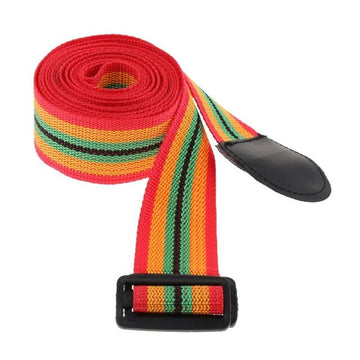
However, it is not possible to completely customize a djembe yourself. Some parts of the instrument can’t be crafted by hand—notably the strap that lets you rest the drum against your body while playing standing up. The French company Instruments du Monde offers a richly decorated strap in the colors of the African continent, in line with the traditional ornamentation found on many djembe shells.
Get your strap now by clicking on the image below:

Did you know that some percussion instruments look very similar? This is the case with the djembe and the conga. Find out the differences between these two instruments by reading our dedicated article on the subject. You’ll learn a lot about these two instruments from around the world.
