



Written by Ambre Montespan - Updated on Sep 28, 2026

Table of contents:
Ready to treat yourself to a djembe but unsure which size to pick? Should you pay attention to the dimensions before choosing your instrument? Does the height of this African drum influence its sound?
For over 10 years, I’ve had the opportunity to play dozens of djembes in all different sizes. I also own a few djembes in a wide range of dimensions myself. As a result, I’ve learned what really changes from one size to another. So I can help you choose the ideal size for your djembe based on what you’re looking for.
The dimensions of a djembe are a key factor when selecting your instrument. They influence the sound, the volume produced by the drum, as well as its portability and price. It’s important to choose based on all of these criteria.
After reading this article, you’ll have all the information you need about:
- The impact of size on the sound of the djembe
- Criteria to consider when choosing the size of your instrument
- The advantages of small djembes and large djembes
- The ideal size of a djembe for children and beginners
With this information in hand, you’ll have a clear idea of which size makes sense for your future djembe. You can then choose your instrument with complete peace of mind.
Now let’s take a look at what would be the best size for your djembe.
How does size affect the sound of a djembe?
When exploring the vast world of the djembe, it is essential to understand how the size of this percussion instrument can have a significant impact on the sounds it produces and its performance. Djembe drums come in different sizes, each offering distinct sound characteristics. This variation in size is not just a matter of personal preference; it profoundly influences the versatility, range, and sound character of the djembe. Understanding this influence is crucial for percussionists of all levels.
The djembe’s tonal depth
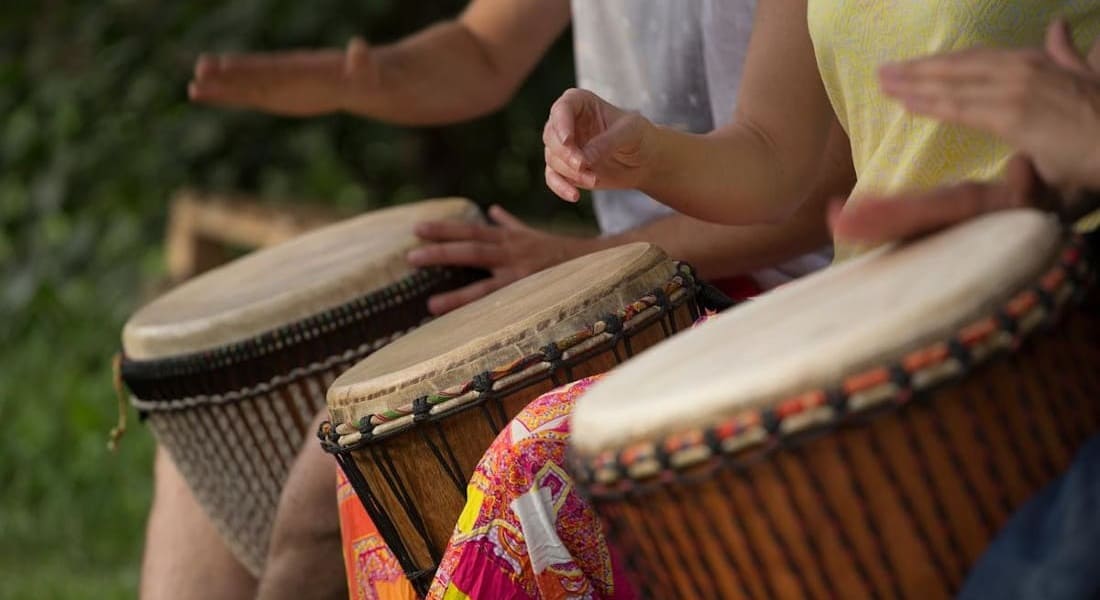
The size of the djembe has a direct impact on the sound depth of the instrument. Larger djembes tend to produce richer, deeper bass frequencies, making them an ideal choice for performances requiring a strong sound presence and powerful rhythmic grooves. Smaller djembes, on the other hand, offer higher-pitched sounds and less resonance in the lower frequencies.
Sound projection
Size also affects how well the drum “throws” sound. Larger djembes project more, which means they can be heard from farther away. That makes them a great fit for outdoor performances, where projection is key for reaching a bigger audience. Smaller djembes are better suited to indoor playing, where less projection is often preferable.
Resonance and responsiveness of this African drum
Larger djembes inevitably have a larger skin surface area, as the diameter of the instrument is often proportional to its height, resulting in more pronounced resonance and greater responsiveness to strikes. This allows percussionists to explore a wider range of sound nuances. Smaller djembes, while less resonant, offer increased responsiveness, which can be ideal for fast rhythms and solos.
Versatility
The choice of djembe size will also depend on its intended use. Medium-sized djembes usually offer a balance between low and high frequencies, making them versatile for a variety of musical styles. Experienced percussionists often choose different sizes of djembes to suit their specific performance needs.
The portability of the djembe
Finally, size affects portability. Smaller djembes are easier to transport, making them convenient for musicians on the go or for beginners looking for an instrument that is simpler to handle. Many percussionists like instruments they can set up, carry, and move around without hassle. Keep in mind that larger djembes can weigh more than 22 lb (10 kg), so they may be harder to move around.
What factors should you consider when choosing the size of this percussion instrument?
Before choosing the size of your djembe, it is essential to consider several factors to ensure that you choose the instrument that best suits your needs and musical preferences. The size of the djembe plays a crucial role in how it sounds, how it is played, and how it is transported. Below are a few factors to consider when making your decision.
Musical genre
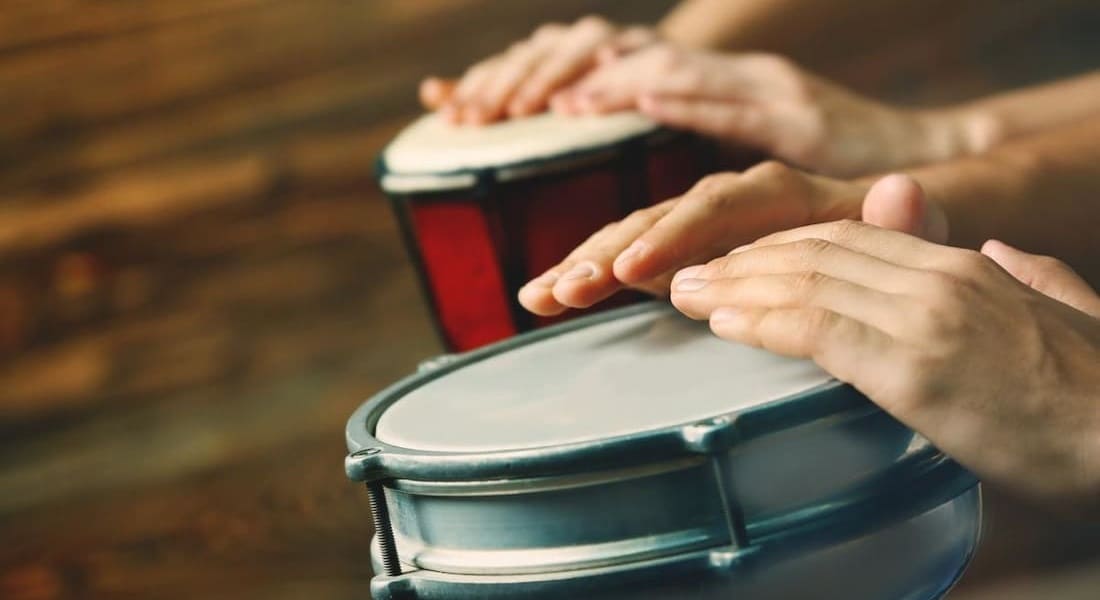
The style of music you want to play is one of the most important factors to consider. If you mainly play traditional African music, you may prefer a standard-sized djembe, about 22 in (55 cm) tall, to get an authentic sound. On the other hand, if you are interested in more contemporary musical styles, such as jazz or jazz-rock, a different, slightly larger size may better suit your needs.
The percussionist’s experience
Your level of experience as a percussionist is also a key factor. Beginners often find it easier to start with a medium-sized djembe, as it offers a balance between low and high frequencies, making it simpler to learn the basics of rhythm. More advanced percussionists can choose specific djembe sizes to suit their performance needs.
The musician’s intended use
Think about where you plan to use your djembe. If you intend to play mainly outdoors or in large spaces, a larger size will offer better sound projection. For indoor playing or traveling, a smaller size may be more practical. Portability is also an essential factor, especially if you need to transport your djembe regularly. Smaller models are easier to transport and are suitable for traveling musicians. On the other hand, large djembes can be more cumbersome, but often offer better resonance.
The musician’s sound preferences
Your personal sound preferences also matter. If you prefer deep bass and powerful rhythms, a larger djembe may be more suitable for you. If you prefer higher-pitched sounds and less resonance, opt for a smaller size.
The price of the djembe
Finally, your budget may also influence your choice. Large or handcrafted djembes are generally more expensive, sometimes running into the several-hundred-dollar range, while smaller or more common models may be more affordable. So, depending on the budget you plan to allocate to your future djembe, your size options may be somewhat limited.
Small djembes: compact and portable
Small djembes, traditionally under 20 in (50 cm) tall, are all about compactness and mobility. Their smaller build makes them ideal for musicians on the go who want to bring their music anywhere. With less weight and a more compact shape, these djembes can fit into luggage, backpacks, or even a car’s storage space, making them a popular choice for musical travel.
One of the most obvious advantages of small djembes is their affordability. Typically more affordable than larger models, they offer a great opportunity for beginners and music students who want to discover African percussion without a major investment. However, make no mistake: a smaller size doesn’t automatically mean “less sound.” In fact, these djembes can still deliver rich, expressive tones. Watch the video below for an example of what you can play on a small djembe:
What’s more, their versatility is a major asset. Small djembes can produce a wide range of sounds, from deep bass tones to crisp, punchy highs. This versatility makes them suitable for a variety of musical styles, including traditional African music, world music, jazz, and contemporary musical experimentation. Percussionists love using these djembes to express their creativity, whether in solo performances or improvisation sessions.
Plus, these small djembes are popular in music education. Schools, music workshops, and percussion teachers favor them for their ease of use, making them ideal for learning rhythms and percussion techniques, whether for young students or adults looking to build new musical skills.
Large djembe: power and depth of sound
Large djembes, generally measuring 24 in (60 cm) tall or more, are imposing instruments that stand out for their power and depth of sound. These giants of African percussion are true gems for percussionists seeking rich tones and captivating rhythms. The first striking feature of large djembes is their powerful sound. Their large drumheads and spacious resonant chambers produce deep, percussive bass tones that carry with impressive force. When you strike the drum, you can feel the vibration throughout your body, creating a musical experience that is both sensory and auditory.
Large djembes are particularly well suited for group performances, especially when used as solo djembes. Their powerful sound allows them to be heard above the percussion ensemble, making them an ideal choice for the foundational rhythms that drive traditional African dances. These djembes are also prized for outdoor performances, where their sound can fill the space with an impressive sonic presence.
The depth of sound produced by large djembes offers a wide range of musical possibilities. Percussionists can play with nuances and variations in tone, creating complex rhythms and captivating melodies. These djembes are particularly well suited for exploring the grooves and polyrhythms that characterize African music. Hear the sounds produced with a large djembe in the video below:
However, it’s worth noting that large djembes can be heavier than their standard-sized counterparts. Transporting them can be a challenge, as they often require a sturdy stand to play comfortably. Percussionists who opt for these instruments must be prepared to master playing techniques, because their size may require additional physical effort to produce powerful and controlled sounds. Finally, a larger djembe will inevitably require more regular maintenance than a smaller instrument, and the cost of this upkeep will also be higher.
What size should a beginner choose for a djembe?
When you enter the enchanting world of the djembe, choosing the ideal size of instrument is particularly important. For beginners, finding the right balance between playing comfort and sound is essential, and this is where the dimensions of the djembe come into play. For most novices, a standard-sized djembe is an excellent starting point. These djembes are generally about 20–24 in (50–60 cm) tall. This size offers a perfect balance between ease of playing and rich sound, making it a smart choice for your first djembe purchase. Beginners will find these djembes comfortable to handle while still producing a satisfying sound.
The standard size is ideal for learning basic striking techniques, ornamentation, and keeping time, and it helps you get used to the correct playing posture and hand coordination. Plus, the sound of a standard-sized djembe offers deep bass and clear treble, inviting you to immerse yourself in the world of traditional African rhythms. However, it’s worth noting that the ideal size can vary depending on the player’s body type. Shorter individuals or those with shorter arms may prefer a slightly smaller djembe, while taller percussionists can comfortably go with a standard size.
Ultimately, remember that choosing the ideal djembe size for beginners will depend on your own comfort and musical goals. The key is to choose an instrument that will allow you to progress while enjoying yourself. Whether you opt for a standard-sized djembe or a variation adapted to your body type, learning this iconic African instrument promises a rewarding musical adventure for novices of all ages.
What size djembe should you choose for children?
The djembe, that iconic African drum, is not just for adults. It also offers an enriching musical experience for children, stimulating their creativity, coordination, and appreciation of music from an early age. However, for the youngest aspiring percussionists, it is essential to choose options that are adapted to their size, strength, and specific needs.
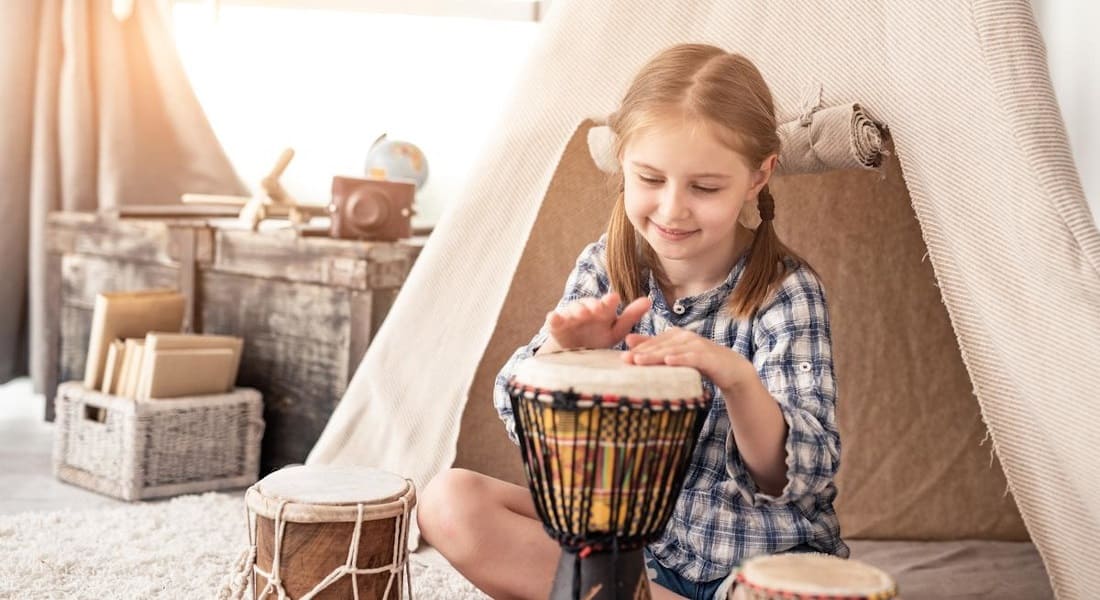
Djembe drums designed specifically for children have features that make them accessible and enjoyable to play. One of these features is their smaller size. Children’s djembe drums are more compact and usually measure around 12–16 in (30–40 cm) tall. This reduction in size allows children to easily handle the instrument and play with ease.
In addition, lightness is a key aspect. Children’s djembes are sometimes made from lightweight materials, such as ABS plastic, which makes them easy for young musicians to carry around. Children can take their djembe to school, music lessons, or even outdoor outings without any difficulty. What’s more, these djembes are built to withstand vigorous use. High-quality materials and solid construction ensure the instrument can handle energetic play, letting young percussionists express themselves freely without fear of damage.
Children’s djembes are not only suitable in terms of size and weight, but they are also available in attractive colors and patterns that appeal to younger children. This playful aesthetic makes learning the djembe even more fun and engaging for children.
Some practical tips for choosing the right size African drum for your needs
Choosing the ideal size of djembe depends on your specific needs, whether it's for playing, learning, or simply enjoying music. Here are some practical tips to guide you in your choice:
- Define your objectives : start by determining the purpose of your purchase. If you are a beginner, you may want to opt for a standard-sized djembe, about 20–24 in (50–60 cm) tall, which is ideal for learning the basics of playing. If you are an experienced percussionist looking for a particular sound, consider a specific size based on your needs.
- Consider your body type : the size of the djembe should be comfortable to play. Make sure it suits your body type. People who are shorter or have shorter arms may prefer more compact models, while taller percussionists may opt for standard sizes.
- Consider the type of music : the size of the djembe can affect the sound. Larger djembes often have deeper bass tones, while smaller ones have more percussive treble tones. Think about the type of music you want to play and choose accordingly.
- Consider portability : if you plan to travel frequently with your djembe, portability is essential. Smaller djembes are easier to transport, while larger ones may require more cumbersome transportation.
- Explore options for children : if you're shopping for a young player, look for a djembe that matches their size and strength. Child-specific djembes are a smart choice.
By following these practical tips, you can choose the perfect size djembe to suit your needs and musical style, allowing you to fully enjoy this fascinating African instrument.
Find the perfect djembe for you
With its rich sound, fascinating African culture, and unlimited musical potential, the djembe is much more than just an instrument. It becomes a musical companion, a tool for personal expression, and a gateway to discovering captivating rhythms. Choosing the perfect size for your djembe is a crucial step in your musical journey, whether you are a beginner or an experienced percussionist. With the information you have gained from this article, you will be sure to select the right size for your African drum.
However, many djembes are low quality, regardless of their size. That kind of instrument won’t be enjoyable to play, so it’s important to buy from a trusted specialist. For the best possible choice, visit Instruments du Monde. We offer carefully selected, high-quality models that are just waiting to be played. Your musical journey is just beginning, and the djembe can be there with every heartbeat. Let yourself be carried away by its rhythms and create patterns that truly resonate with you.
Explore the collection of djembes available at Instruments du Monde now.
Have you always wanted to make your own percussion instrument? Find out how by reading my tutorial on how to make a djembe. You'll have the opportunity to create a 100% personalized African drum.
