



Written by Ambre Montespan on Sep 19, 2021 · Updated on Sep 25, 2026

Table of contents:
Does the legend of the famous ninja with Kyûbi, the nine-tailed fox, sealed inside him fascinate you? Want to play songs from the Naruto anime on your kalimba? Then you’re in the right place with our sheet music and tablature for “Sadness and Sorrow” from Naruto. This melody has already won over hundreds of players—and you’ll be just as thrilled the day you can play it flawlessly.
Join Naruto, Sasuke, and Sakura, the iconic trio, for an unforgettable musical journey on the kalimba.
An essential step to playing Sadness and Sorrow from Naruto well on the kalimba
The melody Sadness and Sorrow takes a bit of kalimba experience to play well. To read the tablature, you’ll need to understand triplets, dotted notes, and ties. If you’re not sure what these symbols mean, check out our guide to learning how to read the musical symbols used in kalimba tablature. After that, you’ll be able to play all kinds of songs and melodies on your thumb piano with confidence.
This is also a great time to make sure your kalimba is properly in tune. To do that, read our article on how to tune a mbira. That way, you can be sure the notes and melody you play sound great to you—and to anyone listening.
Listen to the Konoha ninja melody before playing it on the thumb piano
It’s always helpful to have a general feel for the tempo and rhythm before you start playing on the kalimba. So watch this video—it will also show you exactly when to pluck the right tines:
And for comparison, you’ll find the original track below:
The song Sadness and Sorrow from Naruto in numerical notation for mbira
Below is a simplified version of the mbira tablature written with numbers:

The score for sanza in Anglo-Saxon notation from the manga
Exactly like the numbered score, the sheet music below has simply been converted into Western letter notation.

A tablature designed for finger piano of Naruto's sad and sorrowful melody
To make sure you’ve got the rhythm right, tablature is ideal. That said, it’s harder to read than simple sheet music with numbers or letters.


Download the PDF file for kalimba from the famous Japanese anime
Access the sheet music and tablature anywhere by downloading the PDF files containing all the documents you need to play “Sadness and Sorrow” from Naruto on the kalimba. You can also print the pages you need to perform this song.
What is Naruto?
Naruto is a Japanese shonen manga (aimed primarily at boys and teens ages 8 to 18) written and illustrated by Masashi Kishimoto between 1999 and 2014 and published in Weekly Shonen Jump. Outside Japan, the series became widely known through its anime adaptation (2002–2017), which ran for a little over 700 episodes.
The story of Naruto unfolds in an imaginary world where, despite the presence of some modern technology, ninjas and samurai remain the primary military power across the various nations. In addition, nine giant supernatural creatures called “tailed beasts” exist in this world and can be sealed inside humans so that they can harness their power.
Naruto—also the name of the main character—is a young boy aged 12 or 13 at the start of the manga, inside whom the nine-tailed demon Kyûbi was sealed when he was still an infant. Readers and viewers follow Naruto’s adventures as he dreams of becoming a ninja and, ultimately, the top ninja in his village—a leader known as the Hokage.

Who composed the music for Sadness and Sorrow?
The track “Sadness and Sorrow” from the Naruto soundtrack was composed by Japanese musician Toshio Masuda. He was part of the Musashi Project, a music group founded in 1991, best known for producing the music for Naruto. Toshio Masuda also composes music for video games and commercials.
His work on the Naruto anime was especially praised because he skillfully blended familiar Western instruments—like guitar, piano, and bass—with traditional Japanese instruments such as the shamisen, a kind of three-stringed lute, and the shakuhachi, a five-hole bamboo flute once used in Japanese puppet theater known as bunraku.
This blend of traditional and contemporary styles really shines in “Sadness and Sorrow,” where the piano pairs beautifully with the shamisen.
It’s worth noting that Toshio Masuda and the Musashi Project produced music only for the first part of the anime, from 2002 to 2007. The sequel, Naruto Shippuden, was entrusted to other artists. Now 61 years old, Toshio Masuda has kept a fairly low profile since 2009, when he last contributed to an anime soundtrack for Higepiyo.
What does "Sadness and Sorrow" mean?
“Sadness and Sorrow” can be understood as sadness and grief—which fits perfectly with the track’s slow, melancholy feel.
In fact, this melody appears in the anime whenever a character—mainly Naruto—expresses sadness, and the music reinforces that emotion to move the viewer. It first plays in the very first episode of Naruto, when Iruka, Naruto’s mentor, is seriously injured while trying to save him from a shuriken attack (a star-shaped metal weapon). The music then returns frequently throughout the first part of the anime, but is much rarer in Naruto Shippuden.
How can Naruto's success be explained?
Just as Dragon Ball Z marked the generation of children born between 1980 and 1990, Naruto—the ninja with the Konoha headband—is undeniably a massive hit, especially for those born around the 2000s. But why? Here are a few possible answers.

For one thing, Naruto’s story felt truly unique when it launched in 1999. It stood out from the competition and brought fresh energy to the manga world. A coherent universe mixing ninjas, samurai, supernatural powers fueled by an invisible force called chakra (which everyone has within them), and gigantic creatures inevitably caught the attention of readers and viewers.
Just as importantly, Naruto is carried by its charismatic cast. That includes Naruto’s friends and allies—like Kakashi, Sakura, Jiraiya, and Hinata—as well as enemies like the members of Akatsuki, Itachi, and Orochimaru. The line between friend and foe can be thin, since shifting alliances often turn friends into enemies and vice versa. Gaara and Sasuke are great examples.
Each character brings a unique personality and set of ninja techniques, which means most readers and viewers can see a bit of themselves in the psychology or charisma of someone—whether it’s a hero or a villain.
Finally, one of the big strengths of the series is the sheer intensity of its battles. The author never seems to run out of ideas, regularly introducing new techniques—simple or complex—that keep fans of the little ninja skilled in cloning and summoning frogs on the edge of their seats.

Is the Naruto manga over?
Yes and no. Strictly speaking, the Naruto manga and anime did end in 2014 and 2017, respectively. However, Masashi Kishimoto hasn’t closed the book on this universe. Since 2016, a new manga titled “Boruto: Naruto Next Generations” has taken place in the same world and follows Naruto’s son. The story focuses on Boruto’s growth as he lives in the shadow of his father’s fame, works to prove himself in the ninja world, and even aims to surpass Naruto’s talents. Since 2017, it has also been adapted into an anime.
Although Masashi Kishimoto, the author of the original Naruto, didn’t initially take part directly in Boruto’s development, he returned as the main writer starting with chapter 52, released April 30, 2021, in Japan, replacing Ukyō Kodachi. That’s more than enough to keep fans invested in this distinctive ninja world for years to come.

In what order should you watch the Naruto anime?
It’s best to watch the episodes in chronological order: start with Naruto, then move on to Naruto Shippuden. That said, some episodes aren’t strictly necessary. At one point in the production of the anime, which had to follow a weekly release schedule, the series caught up to the manga chapters.
As a result, so-called “filler” episodes were created to give the manga time to get ahead while still keeping the one-episode-per-week rhythm. These episodes aren’t in the original manga and usually don’t add much to the main story. Think of them as bonus content you can safely skip (especially since some episodes are considered weaker from a storytelling standpoint).
In addition, Naruto movies, known as OVAs, were also released and fit chronologically between certain episodes of the anime. For example, the first movie takes place between episodes 5 and 6. However, these OVAs aren’t essential to understanding the story either, and they remain optional.

To play Naruto well on the kalimba, quality is key!
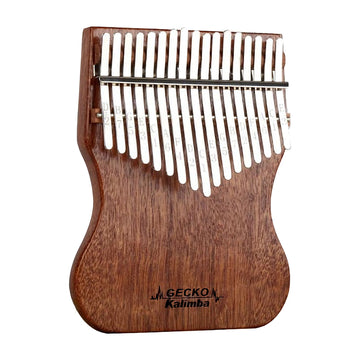
Now you have all the key documents you need to play “Sadness and Sorrow” from Naruto on your 17-tine kalimba. This instrument is perfect for bringing out the song’s emotional, melancholy feel. All that’s left is to practice regularly until you can switch smoothly between the different tine combinations.
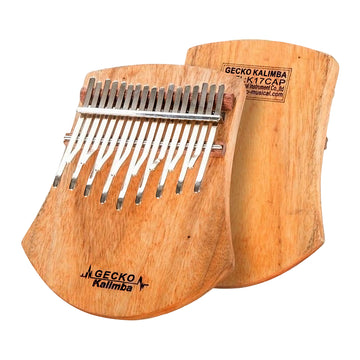
However, you may have noticed that this melody often uses the outer tines, which are the shortest. Sometimes those tines don’t vibrate much, which can make the piece feel a little flat. This can happen with a worn-out or low-quality instrument. To play in the best possible conditions—and to own a thumb piano whose outer tines resonate clearly—Instruments du Monde offers a high-quality Gecko kalimba with guaranteed vibration across every tine.
Play all your sheet music and tablature flawlessly by getting this kalimba—just click the image below.
Grow your repertoire even more by learning one of the greatest classics in popular music—written by the founder of The Beatles! By checking out the sheet music and tablature for John Lennon’s “Imagine”, you’re sure to win over your audience with this melody inspired by a poem from Yoko Ono. Or, browse our wide selection of sheet music for 17-tine kalimbas. You’re bound to find a melody you’ll love.


