



Written by Ambre Montespan on Mar 14, 2023 · Updated on Sep 25, 2026

Table of contents:
So, you want to treat yourself to a kalimba, that beautiful African musical instrument. However, you’ve realized that there are two main types of kalimbas: wooden and acrylic. What are the differences between these two materials? Will your decision affect the sounds produced by the instrument? How can you make the best choice between wood and acrylic?
I’ve been playing kalimba for over 10 years, and I own both wooden and acrylic models, so I’ve had plenty of time to compare the real-world characteristics of each material. That puts me in a great position to answer this crucial question as you choose your future thumb piano.
To choose between a wooden or acrylic kalimba, musicians should consider criteria such as design, price, weight, and the sound they’re looking for. That said, beginners are generally better off starting with a wooden kalimba.
After reading this article, you will finally know:
- What acrylic used in kalimbas actually is
- What the differences are between a wooden and an acrylic instrument
- The advantages and disadvantages of these two materials
The secrets of wood or acrylic kalimbas will be revealed, so you’ll be able to choose confidently based on your own criteria.
Now, let’s explore this fascinating topic together.
What is the acrylic used for a kalimba?
While wood is easy to understand, it’s helpful to know what acrylic is so you can more clearly grasp the differences between these two materials.
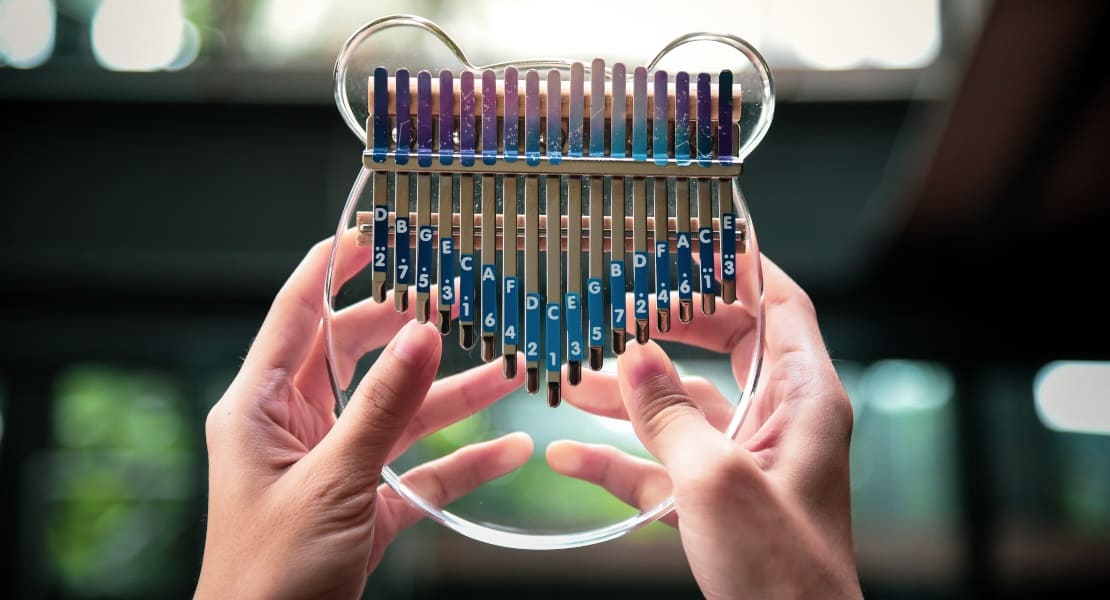
Acrylic is a broad term for a polymer used in many products, from paint to textile fibers. When we say “acrylic” in the context of kalimbas, we mean polymethyl methacrylate (PMMA), also called acrylic glass or Plexiglas, the brand name that popularized this material.
Acrylic glass, as its name suggests, is transparent like glass or crystal, yet it is a plastic material derived from petroleum. This material is prized for its high transparency with brilliant reflections, a smooth surface, a lighter weight than traditional glass but much greater strength, and excellent resistance to UV rays and corrosion.
What are the differences between a wooden kalimba and an acrylic kalimba?
Now that we’ve covered the unique qualities of acrylic, let’s explore how it compares with the wood traditionally used for kalimbas.

Kalimba design
The first difference that stands out when comparing a wooden kalimba and an acrylic kalimba is, of course, their design.
Wood represents the traditional side: it is opaque and features grain or veining that varies depending on the species. A mahogany kalimba, for instance, will show a different grain pattern than a black walnut kalimba. The wood may be carved into a shape like a cat or a deer, but most wooden thumb pianos generally resemble rectangular blocks.
Acrylic, on the other hand, offers a transparent instrument with a decidedly modern vibe. Rainbow-colored reflections can be inserted into this plastic to make the kalimba even more dazzling to the eye. The instrument is then called a "Rainbow." Since acrylic is easily moldable once melted, the vast majority of kalimbas made from this material have a distinctive shape, often that of an animal, to appeal to musicians who wish to purchase one.
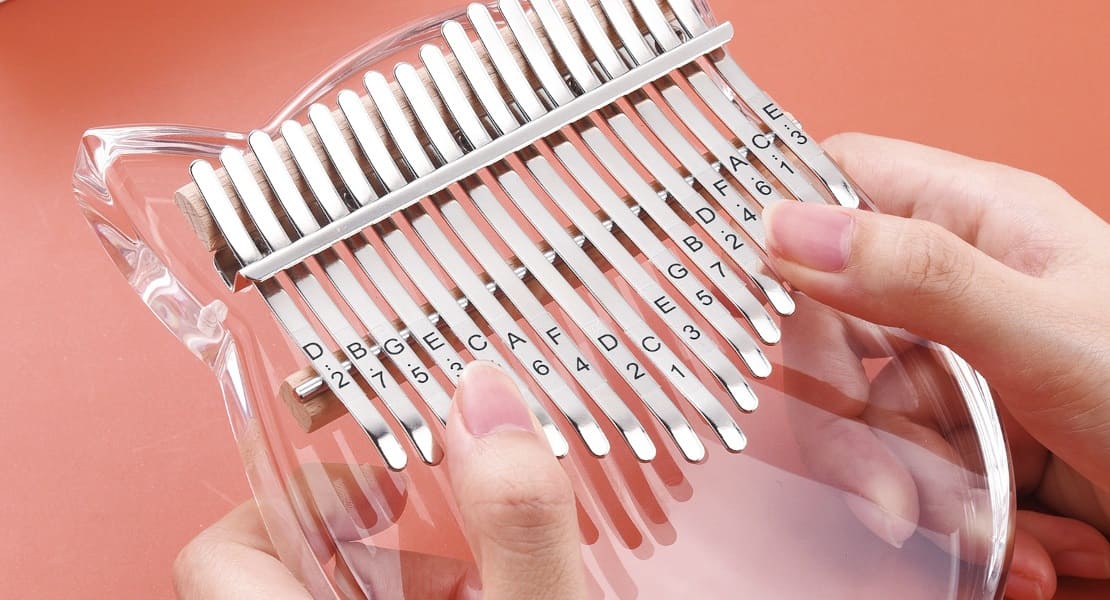
When it comes to design, there’s no right or wrong choice—it all comes down to personal taste. Some players gravitate toward the classic warmth of a wooden kalimba, while others are drawn to the modern, magical look of acrylic.
The sounds of the musical instrument
The material you choose will inevitably influence the sound of the kalimba. Depending on the material, the mbira’s tines will resonate differently. Even if the difference isn’t dramatic, an acrylic kalimba is often recommended if you want to play softer, calmer music and lullabies. The notes tend to sound clearer, too. If you want to create a kalimba-based bedtime ritual for a child or infant, acrylic can be a great fit.

On the other hand, a wooden kalimba produces rich notes that are perfect for upbeat music. It’s ideal if you plan to play popular tunes such as the Game of Thrones theme or the Pirates of the Caribbean theme. Below is a video comparing two similar kalimbas, one wood and one acrylic:
The volume of the thumb piano
In addition to the two main materials, acrylic and wood, you can also choose between a kalimba with a sound box, known as a "hollow" kalimba, and a solid-body kalimba, which has no sound box and is called a "flat" kalimba. The latter type of instrument is shown in the video above. Solid-body instruments produce a much lower volume than those with a sound box.
So what does this have to do with choosing the material for your kalimba? Simply put, acrylic kalimbas with a sound box are quite rare; a few models exist, but most are "flat." Choose wood, however, and you can pick either a "hollow" or "flat" design.

Additionally, to achieve the same volume, you’ll need to press harder on the tines of an acrylic kalimba than on a wooden one, which can be tough for beginners and players without long fingernails.
By nature, the kalimba is a small instrument that doesn’t produce a lot of volume. So if you plan to play in an intimate setting with little or no audience, the "flat" format is ideal, and you’ll still be able to choose between an acrylic kalimba and a wooden model.
However, if you plan to play your kalimba in front of an audience, even a small one, choose a model with a sound box. In this case, you may need to select a wooden kalimba.

The ability to produce sound effects with the musical instrument
Some kalimbas have one or more holes, often two, located at the back. When playing your instrument, you can cover or uncover these holes by moving your fingers back and forth. This changes the properties of the sound box and creates a sound effect called "vibrato." Watch the example below:
You can also create a second effect called "wah-wah," this time using the central hole on the front of the kalimba. Watch how it’s done in the video below:
However, as you’ve probably guessed, these techniques can only be done with a "hollow" kalimba with a sound box. Consequently, since acrylic kalimbas with a sound box are very rare, thumb pianos made from this plastic material will very often be of the "flat" type, and you will not be able to produce these sound effects.
This is an important factor to keep in mind when making your choice! While these effects may not be a priority for beginners, with time and experience you may want to develop new techniques and create effects that add real depth to your melodies. Read this guide to learn everything you need to know about techniques for playing the kalimba better. You will learn more about these famous sound effects.
Caring for your African instrument
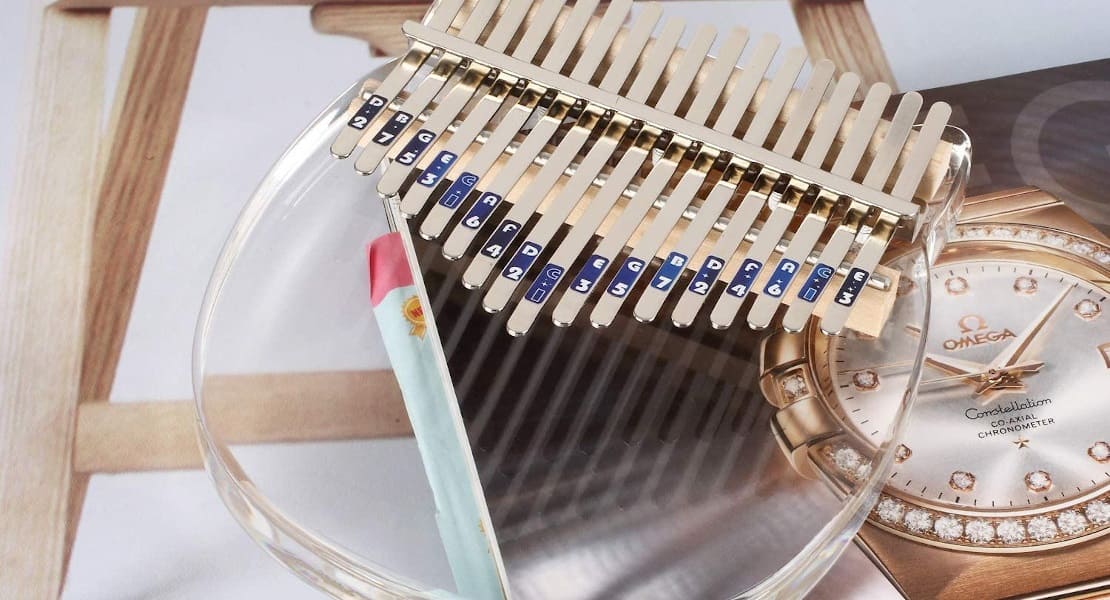
As we mentioned earlier, acrylic is a sturdy material that holds up extremely well over time and is highly resistant to corrosion and ultraviolet light. This type of kalimba requires little maintenance, and you can be a bit less careful about how you store it.
On the other hand, wood is considered a living material. It must be protected from the elements, not left exposed to too much light, and varnished or nourished regularly with maintenance oil. Therefore, choose wood if you’re willing to take care of it and pay special attention to it.
The weight of the kalimba
Another factor to consider is the weight of your musical instrument. Generally, wood will be lighter than acrylic, but this will depend on the type of wood used. For the kalimba, the difference is only a few hundred grams, which may seem insignificant.
However, in reality, weight matters. You’ll be holding the instrument in your hands for dozens of minutes, or even several hours if you really get into it. That seemingly minor gap in weight, which may not bother you at first, can feel more and more noticeable over time and lead to wrist cramps. If you have slender wrists or forearms, it’s often worth choosing the lightest kalimba you can—typically a wooden model.

The price of the thumb piano
Obviously, the price will vary depending on the material. If you are attracted to a common wood such as mahogany, then a wooden kalimba will be cheaper than one made of acrylic. On the other hand, if you opt for a noble or rare wood such as black walnut, an acrylic thumb piano may be less expensive than its natural-wood counterpart. Read this article about all the woods used in kalimba design to learn more.
The durability of the musical instrument
Here again, there is a difference in terms of durability. Generally, wood is more fragile than acrylic. For example, if you drop a kalimba on the floor, it is likely to be dented (or even broken) if it is made of wood. An acrylic musical instrument, on the other hand, will withstand the fall rather well. However, micro-scratches will be more visible on acrylic kalimbas because of their very smooth and shiny surface.

Of course, the durability of a wooden kalimba depends on the wood species. While mahogany, spruce, and pine are relatively soft, sandalwood, padauk, and acacia are harder and therefore more resistant. If you’re buying a kalimba for a child or plan to travel with it often, acrylic or hardwood models are great options to take advantage of their natural toughness.
The ecological impact of the kalimba
Wood has a low environmental impact because it is biodegradable. The same cannot be said for acrylic. As we have already seen, it is a plastic polymer derived from petroleum, and producing it can have negative effects on both the environment and human health.
When incinerated, acrylic releases harmful vapors into the air, particularly hydrogen cyanide, which is highly toxic to all living beings. When discarded in the environment, acrylic breaks down into plastic microparticles that pollute the environment. Furthermore, the French government has deemed pollution from this material to be a cause for concern, signing a green growth commitment in 2016 to create a new acrylic-glass recycling stream, known as the REVERPLAST project.
Therefore, the ecological impact of acrylic will necessarily be greater. This is something you may be sensitive to, so it seemed important to mention it.

What are the advantages and disadvantages of a wooden or acrylic kalimba?
To help you see more clearly, here is a table of the advantages and disadvantages of these two materials:
| Wooden kalimba | Acrylic kalimba | |
| Design | Traditional | Modern and original |
| Sounds | Upbeat songs, pop | Soft songs, lullabies |
| Volume | Moderate | Low |
| Sound effects | Yes, in "Hollow" model | No |
| Maintenance | Essential and regular | Low |
| Weight | Lightweight, but depends on the wood | Heavy |
| Price | Low, but depends on the wood | Average |
| Environmental impact | Low | High |
After reviewing all these factors, it appears that wooden kalimbas are more suitable for beginners. Being lighter, producing a louder sound more easily without pressing too hard on the tines, and often being more budget-friendly makes them a perfect match for novice thumb piano players.

Wood or acrylic, choose wisely when starting out with the kalimba!
As you can see, the material of your kalimba is an important factor to consider. This choice should be made based on what you expect from your musical instrument and your experience level. Now you’re equipped with all the information you need to make the right choice, and you can confidently select either a wooden or acrylic kalimba based on your needs or those of someone you’re shopping for.
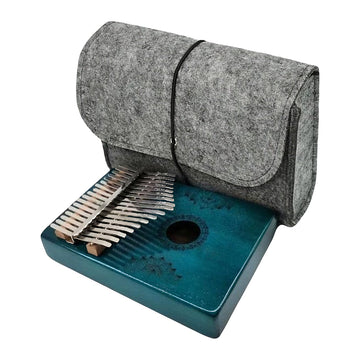
If you’re just starting out, you might be unsure which of the many kalimbas on the market is right for you. With different numbers of tines, wood types, and accessories to choose from, it’s easy to feel overwhelmed. To help, the Instruments du Monde store has handpicked a kalimba model tailored for novice players who want to ease into this relaxing African musical instrument.
Discover the kalimba for beginners by clicking on the image below:
Now that you know which material you prefer for your African musical instrument, will you choose a model with or without a sound box? To help you decide, we recommend reading our comparison of kalimbas with and without holes. You’ll soon understand the strengths and weaknesses of these two types of thumb pianos. To learn everything there is to know about this instrument, check out our comprehensive kalimba manual.


