



Written by Ambre Montespan on Mar 14, 2023 · Updated on Sep 25, 2026

Table of contents:
You’ve decided to buy a kalimba to enjoy the enchanting melodies of this African musical instrument. However, when it came time to choose, you realized there are two main types of thumb pianos: one with a sound hole in the middle and one with no hole at all. So what is that famous hole actually for? What are the differences between a kalimba with and without a sound box? And how do you choose between the two?
As a die-hard kalimba fan for over 20 years, I’ve had plenty of opportunities to test thumb pianos with and without holes. In this article, I’ll answer all your questions about what sets these two types of African instruments apart.
Whether your kalimba has a hole or not affects, among other things, how loud it can get. That hole is actually the sound-hole opening of the kalimba’s resonating chamber. So if the instrument has a hole, it will naturally project a louder sound than one without a cavity.
By reading this article in its entirety, you will finally learn:
- What the hole in the middle of a kalimba is actually used for
- The differences between a model with and without a cavity
- The advantages and disadvantages of these two types of musical instruments
With this knowledge in hand, you’ll be able to choose the kalimba that best suits your needs and expectations.
Let’s explore this interesting topic together now!
What is the hole in the middle of the kalimba for?
Before discussing the differences between the two kalimba models, it’s important to first understand what the hole in the middle of this musical instrument is for. This foundation will help you fully grasp the advantages and disadvantages covered later.
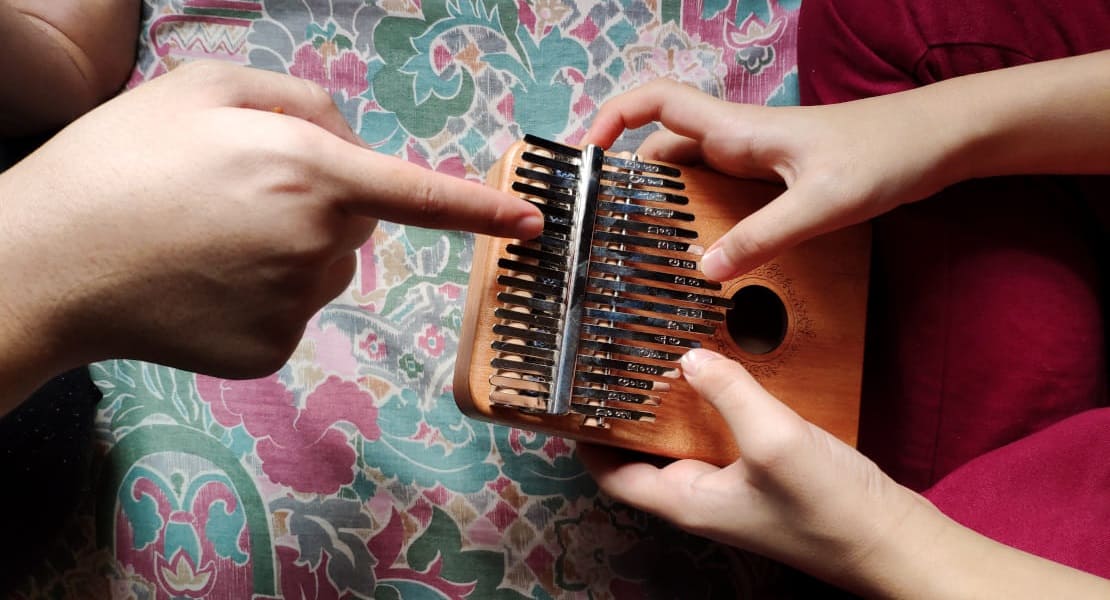
As we saw earlier, the hole in the wooden body of the kalimba is the instrument’s sound hole. This means that when a kalimba has a hole, it’s hollow inside, much like a guitar or violin. This type is often called a “hollow” kalimba.
When the musician plucks the tines of their thumb piano, the vibrations travel through the wood and enter the resonating chamber, where they bounce off the inner walls and boost the volume. It’s a bit like when someone shouts with their hands cupped around their mouth—they amplify their voice so it carries farther. In short, the hole’s main job is to increase the kalimba’s volume.
The cavity is not always circular; to create more eye-catching designs, some kalimba makers shape the opening into forms such as a deer, a cat, or even a flamingo.

Conversely, a kalimba without a hole is simply a solid piece of the material it’s made from—most often wood or PMMA acrylic. There’s no resonating chamber to amplify the sound. This style is often called a “flat” kalimba.
What are the differences between a thumb piano with and without a cavity?
Now that you know exactly what the hole in a kalimba is for, it's time to discuss the differences between thumb pianos with and without a cavity.
An influence on the sound of the kalimba
The presence or absence of a sound box changes how the kalimba vibrates and projects. If you’re looking for an instrument to play for a group, a thumb piano with a hole is a great fit thanks to its higher volume. If you want a kalimba for a more intimate, quieter setting, opt for a “flat” model without a resonating chamber.
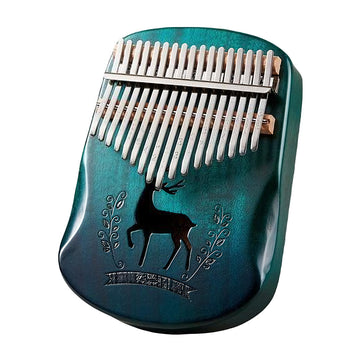
There is also a difference in tone between a kalimba with and without a hole. When the instrument has a sound box and the cavity sits in the center, the middle tines tend to benefit more from the amplification than the tines on the far left and right, which are farther from the sound hole. This can feel a bit unpleasant to the player, with the central tines ringing out more than the outer ones.
Compared to a kalimba without a hole, a solid-body model will feel more even. Without a resonating chamber, the volume is generally more consistent across all the tines. To hear the subtle difference between these two kalimba styles, watch the video below:
The presence or absence of a hole is related to the material of the thumb piano
The presence or absence of a hole in your kalimba greatly impacts which materials can be used for the body. The two main materials for thumb pianos are wood and acrylic.
If you choose a kalimba without a sound box, you can pick either wood or acrylic. However, with a hollow model (with a sound hole), the vast majority are made of wood. So if you want a hollow kalimba in acrylic, it can be hard to find—and if you do find one, you likely won’t have many design options. Check out our other blog post to help you decide between a wooden kalimba and an acrylic kalimba. You’ll then know which material best matches your expectations.

The ability to create sound distortions with the musical instrument
You may have noticed that on some kalimbas, there are one, two, or even three holes on the back of the instrument. These holes can be covered or uncovered with your fingers while you play notes to create sound distortions. These rear holes let you create a vibrato effect. It’s also possible to cover the front cavity to create a wah-wah effect.
Of course, these holes are only found on thumb pianos with a sound box. Consequently, if you opt for a flat kalimba without holes, you will not be able to create this type of sound distortion. Below are two videos showing what can be achieved with a hollow kalimba:
How the instrument is held
Next, the hollow or flat format of the kalimba influences its ergonomics and how it is held by the player. In most cases, a kalimba without holes will be thinner than a model with holes, since there needs to be space to create the sound box.
This means kalimbas without a cavity will be easier to hold for children and adults with smaller-than-average hands. Conversely, if you have rather large hands, a thicker kalimba with a hole will be ideal for helping you learn this African instrument. In addition, a flat kalimba will generally be lighter than a model with a hole, further reinforcing its suitability for children and those with small hands. For young players in particular, we invite you to read our article dedicated to helping them choose the right kalimba.
The sturdiness of kalimbas with and without a cavity
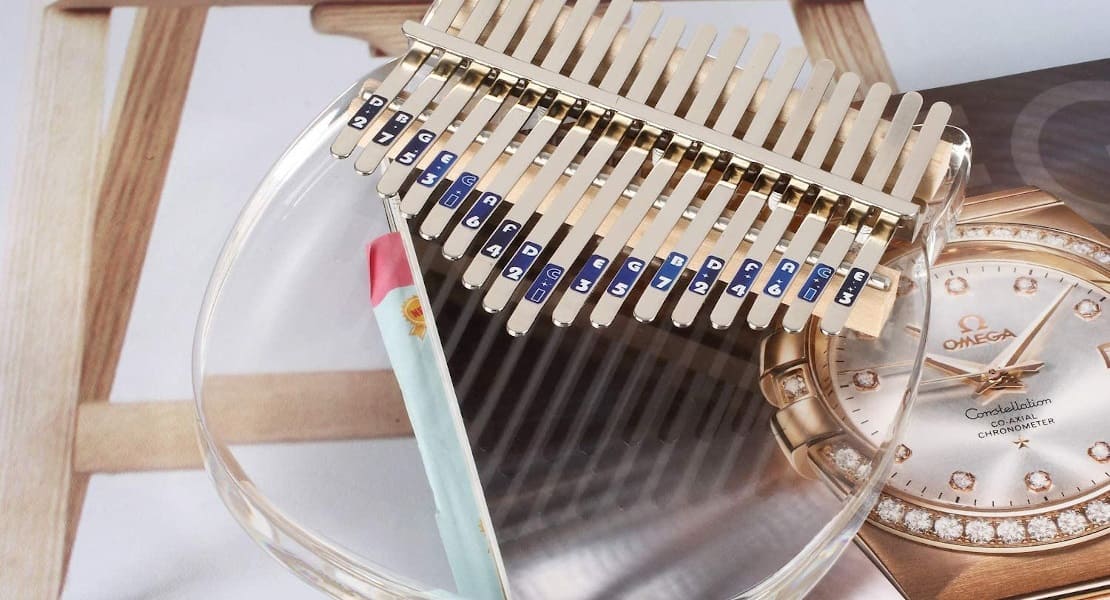
Once again, the two types of models will have different characteristics. Because the kalimba with a hole includes a sound box, the inside of the instrument is hollow. As a result, it will inevitably be less resistant to impact than a thumb piano without a hole, which is made from a single block of material.
So, if you want a kalimba for traveling and taking with you to many places, we recommend choosing a model without a hole, which is more robust and will withstand transport and impact better. On the other hand, if you are more sedentary, you can choose a thumb piano with or without a hole without it mattering. Additionally, kalimbas without holes can be crafted from acrylic, a plastic polymer that is generally far more durable than wood.

Design of thumb pianos with and without holes
Your choice between a hollow or non-hollow kalimba also affects the available designs. A hollow kalimba with a sound box will always resemble a box with one or more holes. As mentioned, the front hole might be circular or shaped like an animal, but that’s usually the extent of the design.
For flat kalimbas without a sound box, the shape of the solid body has little effect on projection. So while some kalimbas remain very classic, even traditional, with a rectangular shape, others come in more unusual forms. You can find kalimbas shaped like cats, dogs, frogs, cows, pigs, or deer, which are ideal for children.
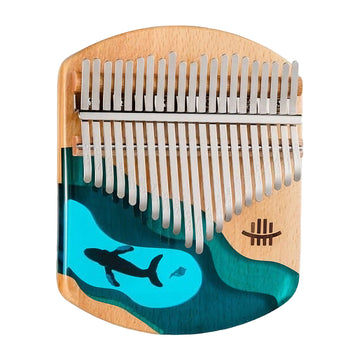
Some kalimbas without holes even feature resin in their block that lets decorative objects be encased inside—like this beautiful ocean-themed kalimba below:
Storing your musical instrument
One small detail that few musicians think about, but which turns out to be important, is how to store your kalimba. After spending a lot of time looking for cases to store my musical instruments, one thing became clear: rigid boxes for transporting or storing kalimbas are not very suitable for kalimbas without holes.
While it’s easy to find the right case for kalimbas with sound boxes, flat kalimbas present a challenge. The latter tend not to fit the shape of the foam inside the case perfectly and will therefore move around during transport. This is something to take into consideration.
Maintaining kalimbas with and without holes
When it comes to instrument maintenance, kalimbas without holes have a clear advantage. Since they’re crafted from a single piece, no dust or dirt can slip into an opening and end up inside the sound box, which makes upkeep much easier.
 Many flat kalimbas are made of acrylic, which can be cleaned with a single wipe of a cloth, whereas wood must be regularly treated with a suitable oil to maintain its shine and strength.
The possibility of a jack plug with a kalimba with a sound box
Another advantage of kalimbas with holes is that their hollow shape lets you place a piezo pickup connected to a jack output inside them. This jack, built directly into the body, lets you connect a speaker, amplifier, or recorder to get the most out of your thumb piano.
Of course, you can attach this same type of sensor to a kalimba without a sound box. However, the pickup will be glued directly beneath the tines with adhesive, which some players find a bit unattractive. That’s why many musicians prefer the hollow model, where the jack output is cleanly built right into the kalimba.

Advantages and disadvantages of a sound box for musical instruments
To help you decide whether you need a kalimba with or without a sound box, a table summarizing the various advantages and disadvantages is available below:
| Kalimba with hole |
Kalimba without hole |
|
| Sound | Moderate volume, but less even across tines | Lower volume, but balanced across tines |
| Available materials | Wood and, very rarely, acrylic | Wood and acrylic |
| Sound distortion effects | Possible | Not possible |
| Grip | Ideal for medium and large hands | Ideal for small hands or children |
| Sturdiness | Average | High |
| Design | Limited, few options available | Very varied |
| Weight | Average | Low |
| Storage | Case that fits easily | Case difficult to adapt |
| Care | Average | Low |
| Built-in jack plug | Possible | No |
Kalimba with or without a hole? Yes, but in acrylic!
As you can see, a kalimba with or without a hole won’t offer the same experience. Your choice will inevitably affect things like volume, durability, and the ability to produce sound-distortion effects. So it’s worth thinking it through before you decide. But now you’re an expert on the topic, and you’ll be able to choose a kalimba with or without a hole for yourself or your loved ones, based on what you’re looking for!
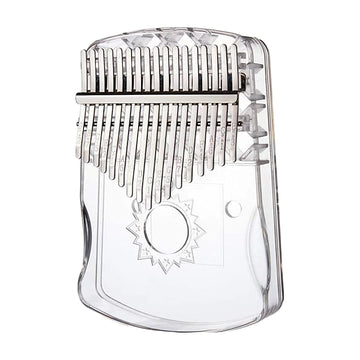
Acrylic musical instruments offer an innovative, original look that can’t be replicated in wood. As it turns out, kalimbas with acrylic sound boxes are rare and uncommon. However, if you want to combine the advantages of a thumb piano with a hole and an acrylic instrument, Instruments du Monde offers a kalimba that combines these two features.
Buy it now by clicking on the image below:
Once you’ve chosen the wood for your kalimba, your search for the perfect instrument isn’t over. Next, decide whether you want a 17-key or 21-key thumb piano. This choice will affect both how easy it is to learn and the range of sounds you can create. To learn everything there is to know about the kalimba, take a look at this guide.


