



Written by Ambre Montespan on Oct 31, 2022 · Updated on Oct 15, 2026

Table of contents:
Are you looking to buy a Tibetan singing bowl soon? Have you noticed that there are several different types of instruments and you’re not sure which model is right for you? Do the material, size, musical note, or frequency produced matter? How do you choose the right singing bowl?
I’ve been passionate about this Asian musical instrument shaped like a bowl for over 10 years. Over that time, I’ve had the chance to come across countless Tibetan singing bowls. I’ve observed what sets these models apart, and I can share a few essentials to help you choose the perfect singing bowl.
To choose the right Tibetan bowl, it’s important to pay attention to the material it’s made of, its size, weight, frequency, appearance, and the musical note it produces.
By reading all the information in this article, you will learn:
- Whether you should choose a Tibetan singing bowl made of metal or crystal
- Which weights and dimensions are preferable
- The importance of the note and frequency produced by the instrument
- Whether appearance and intended use should be taken into consideration
As a result, you’ll be able to make the right choice when purchasing your future instrument, and you can be confident it’s suitable for the use you intend.
Now let’s look at how to decide which Tibetan singing bowl to buy.
Metal or crystal: which material should you choose for your singing bowl?
When you’re ready to purchase a singing bowl, the first criterion to consider is the material used to craft the instrument. There are two main types: metal alloy bowls and quartz crystal bowls.
Should you opt for a Tibetan metal alloy bowl?
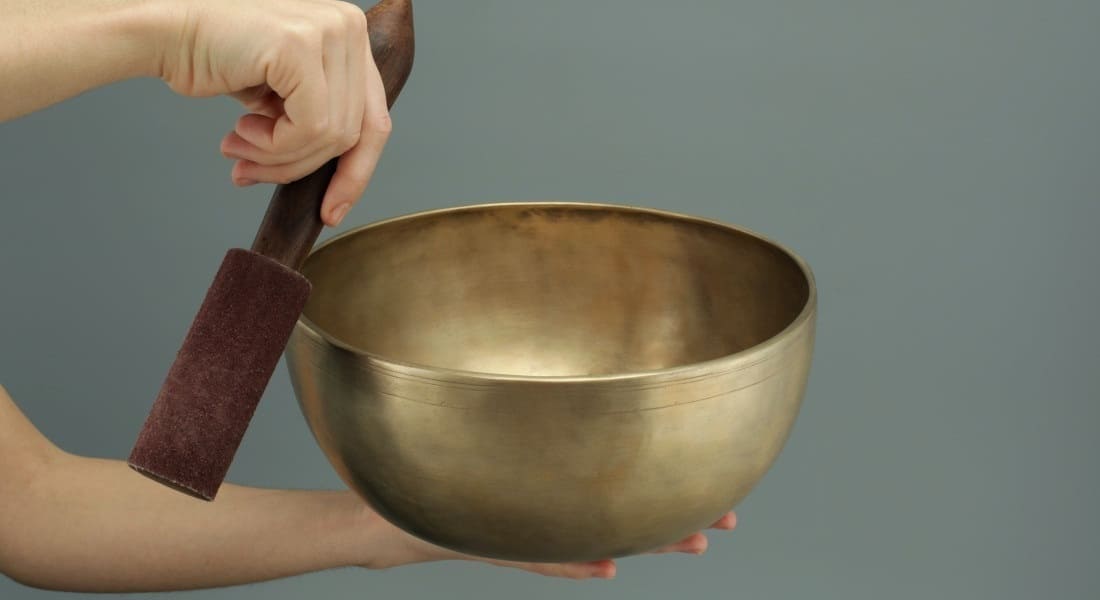
Tibetan metal bowls are the classic models traditionally produced in Tibet and a few other countries bordering the Himalayan mountain range. These instruments embody tradition and are hand-hammered by artisans who have passed down their know-how for generations. So if you’re looking for a singing bowl rooted in heritage and craftsmanship, metal is the right choice for you.
Compared to crystal models, their vibrations are generally deeper and their sounds more diffuse. At the same diameter, these bowls are also lighter, making them easier to carry for anyone who plans to travel with them regularly. Plus, beautiful hand-engraved designs can be added to the inside and/or outside of the instrument, giving it undeniable character.
Finally, it’s worth noting that not all Tibetan bowls are made from the same metal alloy. While the combination of seven metals—gold, copper, silver, mercury, lead, tin, and iron—is the most popular for its sound quality, some models are made of brass, bronze, or an alloy of 10, 12, or even more metals. If you’re curious about the exact composition, check out our other article on the seven metals found in Tibetan singing bowls; you’ll discover their significance in Tibetan tradition.

Why choose a quartz crystal or rock singing bowl?
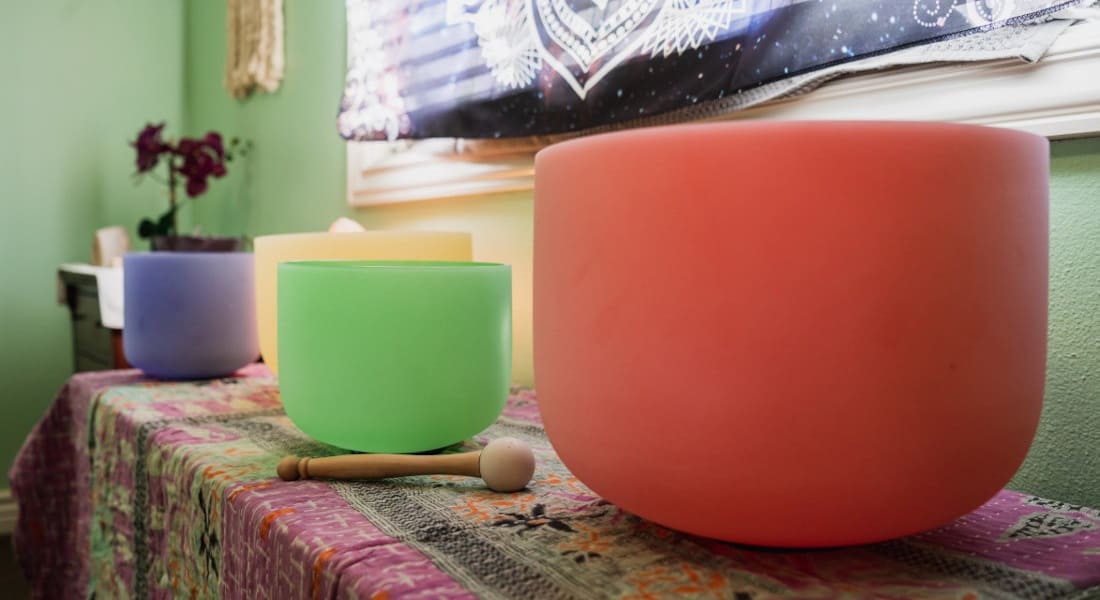
Quartz crystal singing bowls are much more recent than their metal counterparts, as the first examples were created using modern technology in the 1980s. The process involves taking quartz, reducing it to a fine powder, melting it, and pouring it into a bowl-shaped mold. Quartz wasn’t chosen at random, as it’s considered a crystal with many beneficial properties by practitioners of lithotherapy.
Tibetan quartz crystal bowls also benefit from a more industrial manufacturing process than metal ones, allowing greater precision than the manual hammering required for alloy bowls. This precision is especially useful when you want an instrument tuned to a specific musical note or frequency. These notes and frequencies are then used by practitioners to harmonize or unblock chakras or perform energy work on the body and mind.
So if you’re seeking a particular note in your singing bowl, a quartz model is the best choice, delivering crystal-clear, more delicate tones that a metal bowl—even when tuned to the same note—often can’t replicate. Plus, you may love the unique frosted white or transparent design of crystal bowls. To be sure you make the right choice, we recommend reading our article comparing metal and crystal singing bowls. You will then have no doubt about which model is right for you based on your preferences.
What size or weight of Tibetan bowl should you choose?
The size and weight of the instrument are also important factors to consider. The diameter of the Tibetan bowl will have a direct impact on the sounds it produces. Smaller bowls produce higher-pitched sounds, while larger ones emit lower, more intense, and deeper vibrations. For an energizing effect, reach for a small bowl; for relaxation and calm, a larger bowl is ideal.
Weight is an important factor if you plan to travel with your singing bowls, which can be crucial for energy healers who travel to the homes of people who request their services. With Tibetan bowls, weight increases exponentially with diameter: a 6.3 in (16 cm) bowl won’t just weigh twice as much as a 3.15 in (8 cm) version of the same model—it’s usually much more. This detail matters, as Tibetan bowls can quickly exceed 2 lb (1 kg). Some musicians also like to hold their Tibetan bowl at arm’s length while playing, so a heavier piece may quickly become impractical. Read this guide on the size of Tibetan bowls for even more details about the dimensions of this Asian instrument.
 Our pickChoose a Tibetan singing bowl crafted from seven metalsView the 7-metal Tibetan singing bowl
Which musical note should you choose for your percussion instrument?
At first glance, it might seem that the musical note produced by the Tibetan bowl does not really matter. However, in Tibetan tradition, each musical note corresponds to one of the seven major chakras. Therefore, if you want to work on the root chakra called Muladhara, it is advisable to choose a singing bowl tuned to the note C.
To discover the correspondence between musical notes and chakras, as well as to learn about the benefits that each of these sounds can bring you, read our article on how to choose the musical note for your Tibetan singing bowl—you’ll undoubtedly be able to determine the note you need.
Should you decide on a specific frequency when buying a Tibetan singing bowl?
In the same vein as choosing a musical note, you can choose a Tibetan bowl that plays sounds at a specific frequency. If nothing is specified, your instrument is probably tuned to 440 hertz, which has been the standard in contemporary music since its normalization in the 20th century. This means that the A in the third octave (A4) corresponds to a sound that oscillates 440 times per second. This note then serves as the basis for all other notes, such as C, B, and G in all octaves.
It appears that music has not always been tuned to A at 440 hertz. In fact, there have been regular changes in this area, and there was a time when the A in the third octave was tuned to 432 hertz. According to some instrumentalists and musicians, 432 hertz is a frequency connected to nature and in harmony with our bodies. It is said to have beneficial effects on the body and mind of human beings. This is why you can sometimes find singing bowls tuned to 432 hertz, or even 528, which is another frequency with healing properties.
If you’re set on selecting a specific frequency, keep in mind that Tibetan metal bowls cannot be tuned with such precision, so you’ll want to explore quartz crystal models instead.
Why does your budget affect the instrument you buy?
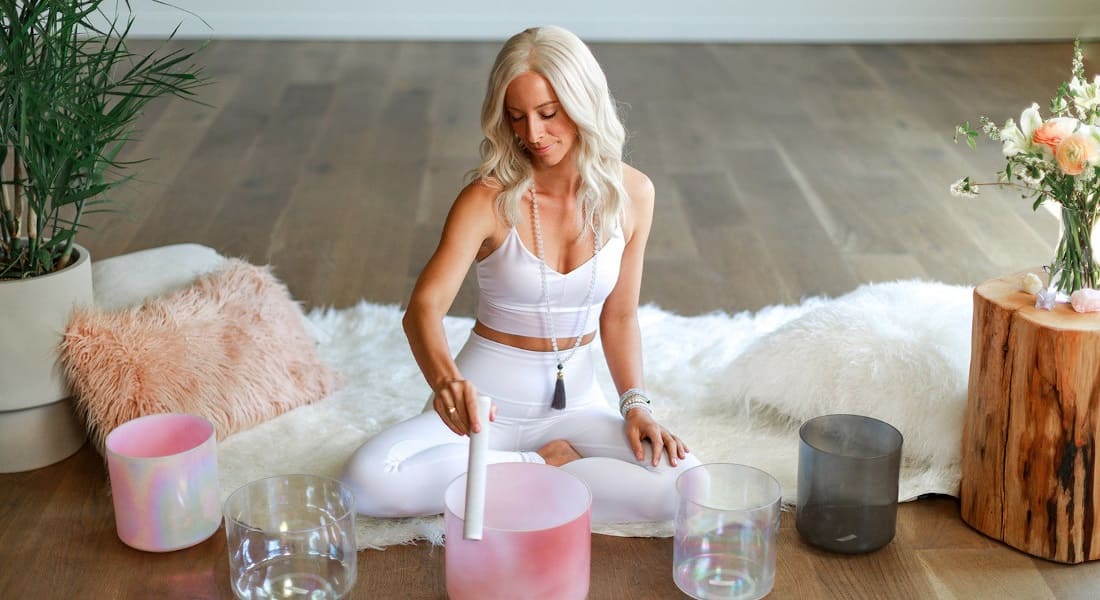
It goes without saying that your budget will inevitably influence your choice of Tibetan singing bowl. For example, rock crystal bowls are relatively expensive, with prices starting at €100 for the smallest ones, whereas metal bowls can be found for less than €50.
If you’re eyeing a hand-engraved design or extra accessories, plan for a higher budget. For a detailed breakdown, check out our article on Tibetan bowl prices to see what fits your budget.
How to choose singing bowls according to your needs?
You may also find yourself in a situation where you want to purchase a Tibetan bowl for a specific practice. Lithotherapy practitioners often use them to recharge stones, some musicians enjoy making water vibrate in their Tibetan bowl, while others seek a Full Moon bowl, crafted only during a full moon night to capture lunar energy.
So, depending on your needs, you will have to make a choice. If you are not really sure what you want to do with your instrument or want to test all the possibilities, it is best to choose a general-purpose singing bowl. Otherwise, there are Tibetan bowls that specialize in a particular area, such as recharging crystals for lithotherapy, as mentioned above. I therefore recommend that you carefully consider why you want to use a Tibetan bowl, so that you can then make the best possible choice for your future instrument.
Are appearance and visual appeal important when choosing a bowl?
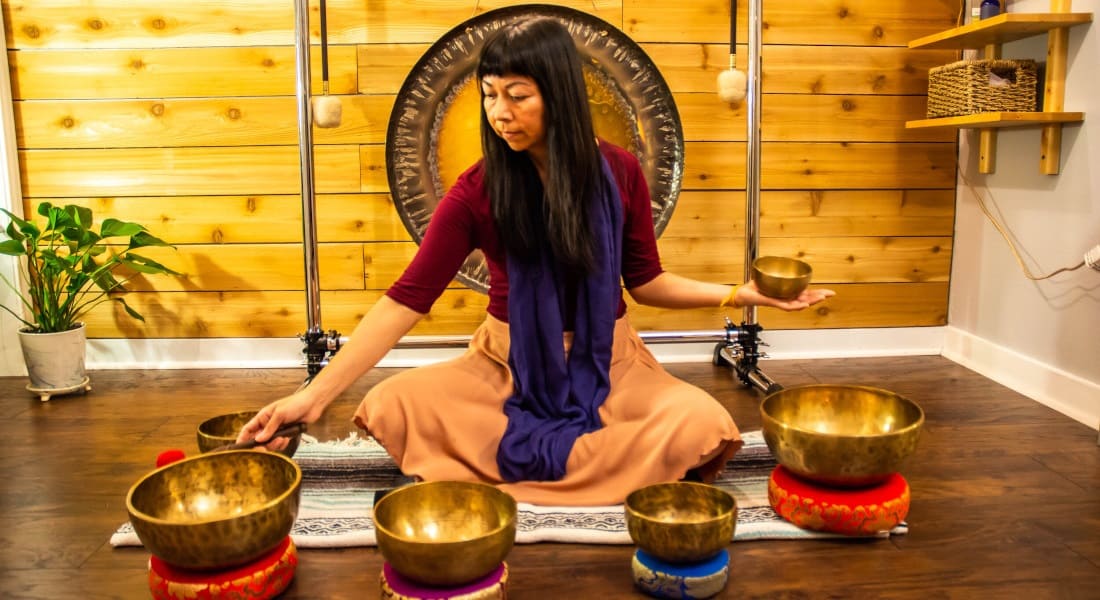
The overall appearance of your future Tibetan bowl should be pleasing to the eye. This will help create a gentle and soothing relationship between you and your instrument, which will encourage you to use it as often as possible to enjoy all its benefits and virtues. So, my final piece of advice is to listen to your feelings when you see the singing bowl. If you fall in love with it because you like the engravings, color, shine, or shape of the bowl, then it’s obviously the right choice, even if at first glance you wouldn’t necessarily have thought of buying this bowl because of its specific use, for example. In short, listen to yourself!
How to choose a Tibetan bowl for someone else?
A Tibetan singing bowl makes a thoughtful gift for the holiday season or a special occasion such as a birthday. However, choosing the right instrument can be challenging, especially if you don’t know the recipient very well. My advice is to keep it simple and versatile to maximize the chances of pleasing the recipient, especially since they may not have any particular affinity for this musical instrument. Therefore, consider a metal singing bowl of medium size, between 4.75 and 6.7 in (12–17 cm) in diameter, depending on your budget. If the recipient later develops an interest in Tibetan singing bowls, there will always be time to explore the subject in greater depth, for example by choosing a specific musical note with a crystal bowl.
Make the right choice for your future Tibetan singing bowl
With so many Tibetan bowls on the market, it can be tough to find the one that matches your needs. But now, after reading this article, you’ll be ready to choose the right singing bowl every time—and you’ll even be able to advise friends who have the same questions.
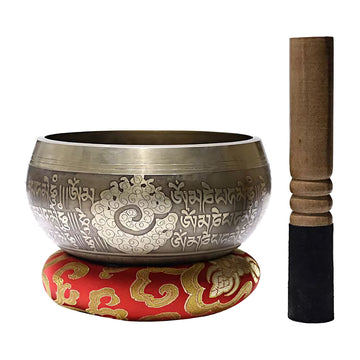
However, most shops carrying Tibetan bowls rarely stock a wide selection, so your options can be limited. That’s why we recommend shopping with the French company Instruments du Monde, which offers more than 200 distinct singing bowls—you’re sure to find the perfect match. Take this particular bowl, renowned for purification and adorned with beautiful engravings.
Treat yourself to this singing bowl now by clicking on the image below:
You now have all the information you need to choose your future singing bowl. But do you know how this small musical instrument was designed? Find out by reading our article on the manufacture of Tibetan bowls. You will see that there are two main methods of production for this instrument. Or, discover everything there is to know about singing bowls by reading our article, which covers all aspects of this mysterious object.


