



Written by Ambre Montespan - Updated on Jun 12, 2026
Table of contents:
Have you recently removed the drumhead from your djembe because it was torn? Do you want to replace your djembe’s old skin with a new one? Are you looking to change your drum’s tuning by tightening or loosening the head? What’s the right way to tighten the drumhead on this drum to tune it properly?
I’ve owned more than 10 djembes over the years, and I’ve had to adjust head tension many times. So I can walk you through the complete process of tightening the drumhead and changing the tuning of this magnificent African drum.
To tighten the drumhead and tune a djembe properly, you’ll use a lever tool and tie several tension knots to reach the tone you’re after.
By reading this article, you’ll learn everything you need to know about tensioning and tuning a djembe. More specifically, you’ll find information on:
- Preparing the instrument before tuning
- Techniques for tensioning the djembe drumhead
- How to make a tool for tightening djembe ropes
- Tips for knowing if the drumhead is tight enough
As a result, you’ll be able to tune your djembe yourself by applying the right tension to the head to achieve the tone you want. You’ll be fully independent when it comes to replacing a torn skin or fine-tuning your sound.
Now, let’s look at how to tighten the drumhead and tune a djembe.
Preparing the musical instrument by warming up its skin
Before diving into the process of tuning a djembe, it’s essential to prepare carefully and make sure the instrument is truly ready to be tuned. This preliminary step matters a lot if you want a stable tuning and a great sound.
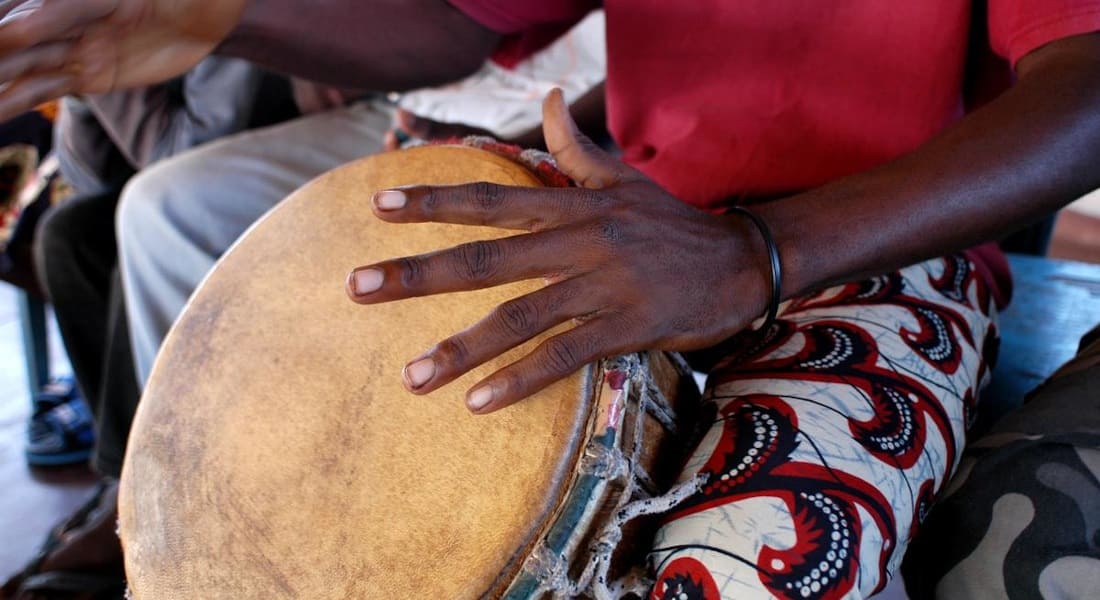
Setting up the percussion instrument and checking its environment
The first step is to make sure the instrument is properly positioned and stable. Place the djembe on a suitable stand that lets you work comfortably. Check that the resonating body is solid and that the tuning ropes are in good condition. If needed, inspect and retie the knots that hold the skin tight against the shell. If you notice the rope starting to fray or tear, you’ll need to replace it.
Also make sure the environment is conducive to tuning. Avoid drafts and sudden temperature changes that could throw the process off. A stable room temperature is best. You should also wear a pair of non-slip gloves. Tuning a djembe takes real physical effort—you’ll be pulling on the rope repeatedly. Gloves help prevent blisters and protect your hands if they slip on a tool or the rope.
The importance of warming up the djembe skin
Before starting the tuning process, it’s strongly recommended that you warm up the djembe head. Play the instrument gently for a few minutes so the fibres can relax and adapt to the tension you’ll apply later. This quick warm-up improves flexibility and makes tuning easier.
This step is essential for preparing the head for tension adjustments. It can also help prevent deformation if you increase tension too quickly without any warm-up.
Finally, keep in mind that careful preparation and warming up the head are crucial steps before you begin tensioning a djembe. These preliminary measures create the ideal conditions to adjust head tension accurately and get the sound you’re looking for.
How to tighten the skin of your djembe?
When it comes to tightening the drumhead—and therefore the ropes—of your djembe, there are two commonly used methods: the lever technique and the tension knot technique. Either method is essential for achieving precise rope tension, which directly affects the sound and playability of the instrument.
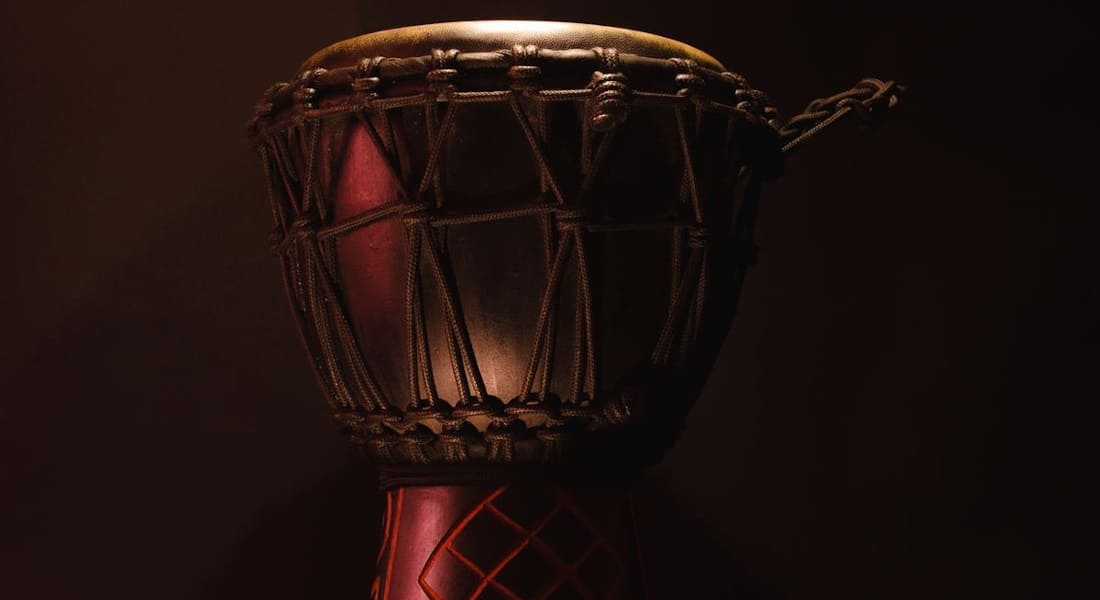
Method 1 – the lever technique
This technique tightens the vertical ropes that run from the head of the djembe down to the junction between the shell and the base, after you’ve set them by hand. It should be done every time you change the skin. If you’re unsure which skin to choose, click here for guidance. To do this, you’ll need locking pliers (Vise-Grip–style) and a tool that will act as a lever.
- Lay your djembe on its side on the ground and sit astride its base.
- Find the spot where the rope begins—this is where the first knot was tied and is called the starting loop.
- From that first knot, take the lever and insert it, about one-third of its length, from left to right, under the second wrap you come to. The first wrap, blocked by the starting loop, won’t give you enough leverage.
- Pull the handle toward you to rotate it clockwise, using the rope’s contact point on the lever as the pivot.
- If there’s still too much slack in the rope and you can’t reach the tension you want, wrap the excess around the handle, then pull the lever again.
- Lock the rope just after it passes through the upper ring using the locking pliers. Slide the excess rope to the next wrap, loop that new wrap around the lever, then pull the handle again.
- Repeat this process for each wrap, continuing until the final pass back to the starting loop.
- Make sure you lock the rope beyond the last back-and-forth. For this lever system to work well, you need resistance at both ends of the length you’re tightening.
The final pass through the starting loop should end back at the same ring it came from before you start tying tension knots to fine-tune your djembe.
2nd method – creating tension knots
This second method lets you fine-tune rope tension after you’ve already done the lever tightening. You don’t necessarily need tension knots on every djembe. But don’t start tying them unless you’ve first tightened the rope using the lever method described above. You can also add knots after days, weeks, or months of playing if you notice the metal ring pressure dropping or the head loosening.
Tension knots are made by crossing the vertical ropes in pairs, creating lace-like turns that add extra pressure to the head. The point is to bring two vertical ropes closer together to increase tension. Start tying the knots in the same direction as the original lacing to keep tension even and consistent. Also, make these knots as low as possible toward the base of the djembe. The tighter the crossings are at the bottom, the more effective the tension will be and the better the drum will sound.
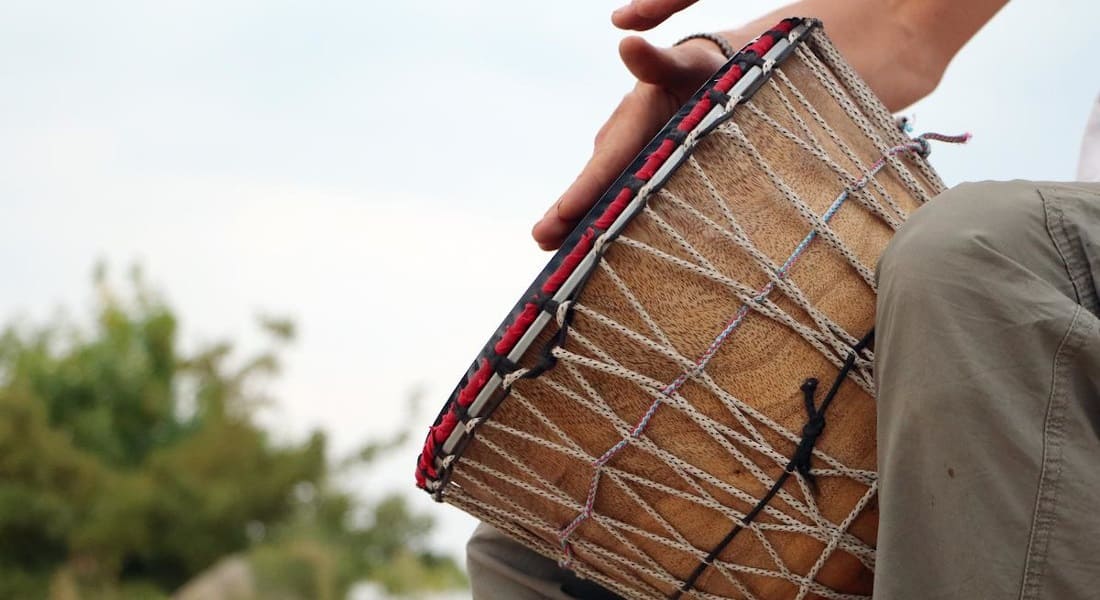
Here’s how to create the tension knots:
- Start by passing the remaining tuning rope between the djembe shell and the first back-and-forth of the lacing.
- Go back over the last of the two verticals you previously passed under.
- Reinsert the remaining rope between the two verticals so it passes under the first one.
- Pull the rope to cross the two verticals. Repeat as many times as needed to reach the sound you want.
By using one of these two methods, you’ll achieve precise tension on your djembe’s ropes. This step is essential for sound quality and lets you fine-tune the tuning to your preferences. Be sure to lock the ropes in place to maintain tension, and don’t forget to remove the locking pliers when you’re ready to make the final adjustments and tune your djembe to perfection.
How to make a string tensioning tool for the djembe?
You can make your own lever or buy a ready-made one. A rope-tensioning tool is essential for adjusting the ropes on your djembe, ensuring accurate tuning and the best possible sound.
To make one yourself, start with a length of hard, sturdy wood, then cut it to about 60 cm (24 in) long and about 3–5 cm (1.25–2 in) in diameter. A chair leg or broom handle can work well. You can taper and sand one end to help it slide under the rope more easily. That may already be enough, but if you want to improve it, you can create an H shape by adding a wooden or metal crossbar to the top and bottom. Finally, you can add a simple rope-hooking system near the middle of the bar.
Once your rope-tensioning tool is made, it’s ready to use. Test it to loosen or tighten the ropes as needed, letting you adjust the tuning until you get the sound you want. Making your own tool also has the advantage of customization: you can choose the handle length, the material, and the rope attachment method based on your preferences and your djembe’s specific needs. However, you’ll never get the same precision as a professional tool made specifically for this job. Plus, a “homemade” tool can damage your djembe. That’s why it’s best to use a high-quality, professional tuning tool designed to protect your instrument.

How do you know if the djembe skin is tight enough?
Djembe head tension is a key factor that affects the sound and playability of this African percussion instrument. Knowing whether your djembe head is tight enough is essential for getting the tone you want and enjoying the best playing experience. Here are a few ways to assess the tension of your djembe drumhead.
The sounds produced by the djembe
The first indication of head tension is the tone the djembe produces. When the head is properly tensioned, the djembe delivers a crisp, clear sound with a full range of tones, from deep bass to bright, cutting highs. If the head is too loose, the sound will be muffled and lacking in clarity and resonance. If it’s too tight, the sound can become shrill and unbalanced.
As you play, listen closely to what you hear. A well-tensioned head will sound balanced and clean. The bass will be deep, the mids will be rich, and the highs will be punchy. If the head is poorly tensioned, you may notice missing tones or unwanted vibrations.
The feel of the skin to the touch
You can also assess head tension by touch. When you gently press the head with the palm of your hand, it should give slightly, but not too much. If it feels soft and sinks easily, it’s probably too loose. On the other hand, if it feels very stiff and doesn’t give at all, it’s too tight.
The flex test on the instrument
Another way to check head tension is to gently pinch the djembe head between your fingers and pull it outward. If it flexes slightly without excessive resistance, it’s well tensioned. If it stretches a lot and forms deep folds, it’s too loose. If it resists strongly and barely flexes at all, it’s too tight.
The musician's feedback
If you’re experienced with the djembe, your playing feel will tell you whether the head is properly tensioned. A well-tensioned head helps you play comfortably, produce a wide variety of sounds, and feel an immediate response from the instrument. If the head is poorly tensioned, you’ll feel limitations, frustration, and less control over your tone.

How to tune a djembe?
Tuning a djembe is both an art and a science, and it requires careful attention to detail. It involves tightening the head to achieve the sound you want, balancing low and high tones to create a consistent, expressive voice. Here’s an overview of the tuning process, step by step.
Initial tension and basic tuning of the musical instrument
To begin, apply initial tension to the head. This tension must be even across the entire surface to avoid distortion. Make sure the tuning ropes are properly set, then tighten them gradually. Go slowly to avoid overstretching the head. At this stage, you’re aiming for a balanced baseline sound—don’t worry about perfect tuning yet. You just want a solid foundation to work from.
Repetition, adjustments, and maintaining drum tension
Once you’ve reached that baseline, play the djembe in different spots to find any areas where tension is uneven. You may hear zones that sound too low or too high. This is where the real tuning work begins. You’ll need to adjust the ropes to even out the tension across the entire head.
As you make adjustments, keep head tension uniform by alternating between different sections of rope rather than working in just one area. This ongoing back-and-forth is essential to reach the tuning you want, which ultimately depends on the specific sound you’re after. Most players agree that when you press with your thumb in the centre of the head, it should sink only about 3–4 mm (1/8 in) for the djembe to be properly tuned. However, some musicians, such as Mamady Keita, prefer higher or lower tension. It all comes down to your preferences.
By following these steps, you’ll ensure your djembe delivers great sound and excellent playability for your upcoming performances.
How do you change or add a string to retighten a djembe?
Changing or adding a new rope to retighten a djembe is essential for any percussionist who wants to maintain their instrument’s sound quality. Over time, djembe rope can loosen, which changes the drum’s tone. And if a rope breaks or shows signs of wear, replacing it is necessary for reliable tuning and a satisfying playing experience.
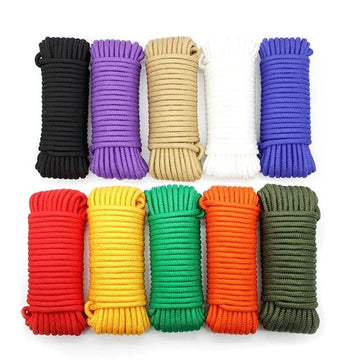
To do this, start by gathering the tools you’ll need. You’ll need a new rope sized for your djembe—usually a djembe rope—as well as a pair of scissors to cut it to length. A djembe tensioner is also essential for setting the right rope tension.
If you’re replacing an existing rope, start by removing the old one. Loosen it by undoing each knot. If needed, don’t hesitate to cut the rope in a few places. Make sure you note how the rope was attached, because that will help you install the new one correctly.
Next, prepare the new rope by cutting it to the right length. It’s best to leave a little extra for tying knots. Plan on about 6 m (20 ft) for a standard-size djembe, but you may need much more. You can lightly melt the ends with a flame to prevent fraying. Once the new rope is ready, reinstall it the same way the previous one was laced, then follow the steps above to tighten it properly.
If you want to add a new rope to give yourself a bit more slack, simply tie a knot between the old rope and the new one. You can use a simple knot or a figure-eight knot. This will allow you, for example, to tie additional tension knots without completely removing the old lacing.
Once you’ve finished either process, play the djembe to check the tuning. If needed, make final tweaks until you get the sound you want. Be sure to re-check rope tension regularly, since it can shift over time or with changes in temperature and humidity.
How do you fold the excess rope on a djembe?
When playing the djembe, adjusting rope tension, or getting ready for a performance, you may end up with excess rope that’s especially annoying, and not very attractive, either. It can also cause practical issues: the rope can snag on objects, create unwanted noise while you play, and generally get in your way. That’s why it’s important to know how to secure the extra rope properly.
Folding the excess rope is fairly simple, but it must be done carefully so it stays in place and doesn’t interfere while you play. The goal is to make an accordion fold, similar to how you’d store an electrical cable. Start by taking the extra end of rope and folding it back, then keep forming even loops of roughly the same size. You can usually make two to three loops, depending on how much rope is left.
Once you’ve made the loops, tuck them into one of the eyelets on the djembe’s shell. Make sure each loop sits neatly and the rope is evenly distributed. You can adjust the tightness of each loop so it stays secure. If the rope is very long, make additional loops so it’s stored more cleanly.

A few tips for maintaining the tuning and tension of your African drum
Once you’ve successfully tuned your djembe, it’s important to follow a few practical tips to keep that tuning stable and maintain your instrument over time. Here are some key recommendations to help your djembe keep sounding great and stay in good condition.
Collaborate with other musicians
If you play in a group or with other musicians, it’s essential to work together so your djembe tuning fits with the other instruments. Make sure your djembe blends well with the ensemble to create a cohesive sound. That can require small adjustments to lock in the best overall harmony.
Mark the tension points and ensure regular maintenance
Once you’ve reached the tuning you want, it’s a good idea to mark the rope at key tension points. This makes retuning much easier later on, whether due to frequent playing or changes in the environment. Marking these points helps you quickly and accurately return to the tuning you previously set.
Monitor skin tension over time
Head tension can change over time, whether from temperature and humidity shifts or from the natural relaxing of the skin after intense playing sessions. It’s important to monitor head tension regularly to make sure your tuning stays where you want it. If you notice significant changes, make the necessary adjustments to maintain your desired sound.
Signs that it's time to retune
As a percussionist, it’s essential to recognize the signs that your djembe needs retuning. If you hear tonal distortion, muffled sounds, or harmonics that no longer feel balanced, that’s a sign your tuning needs to be revisited. Don’t wait—retune as soon as possible to keep your djembe sounding its best.

Apply perfect tension to your djembe with a professional tool
Tuning your djembe is a key step in unlocking the full potential of this African percussion instrument. It’s rare for this type of drum to come with instructions, so tuning can be especially challenging for beginners. But thanks to this article, you’ve learned how to adjust rope tension to create sounds ranging from deep bass to crystal-clear highs, customize your instrument to match your musical style, and even refine the feel of the head for a better playing experience.
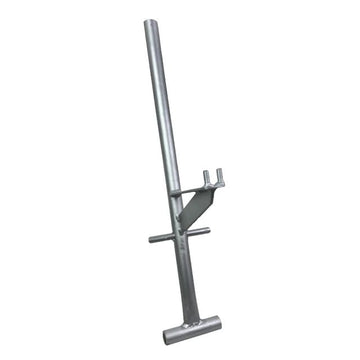
However, tightening a djembe head with a handmade tool isn’t the best approach. A DIY lever can damage your instrument, break while you’re applying tension, and even cause injury. On top of that, you’ll waste more time and energy tuning your African drum. That’s why it’s best to use a tool designed specifically for this job, like the one sold by Instruments du Monde. With a professional-quality tool, tuning your djembe becomes much easier.
Get a better sound from your djembe and grab this tool by clicking the image below:
Want to learn more about the djembe? If so, read our article on the history and origins of this traditional African drum. You’ll learn more about where it comes from and how different African peoples have used it over time.
