



Written by Ambre Montespan on Sep 9, 2024 · Updated on Sep 28, 2026

Table of contents:
Are you thinking about buying a handpan soon? Have you noticed that some models have more notes than others? Are you wondering what the ideal number of notes would be based on your musical experience? Is it better to get as many notes as possible? But wouldn’t that make the instrument too complicated to learn?
I’ve been playing the handpan for over 10 years, and during that time, I’ve helped many players get started with this percussion instrument. Based on that experience, I can help you make the best choice when it comes to the number of notes.
For beginners and intermediate players who don’t have a specific musical project in mind, I generally recommend a handpan with 8 to 12 notes, without any bottom notes. Advanced percussionists, on the other hand, can absolutely consider models with more notes.
By reading this article, you’ll discover:
- Why handpans generally have fewer notes than other instruments
- The ideal number of notes for your handpan purchase
Since the number of notes is a deciding factor you can’t change once you have the instrument in your hands, you’ll have everything you need to choose the Hang drum that best matches your expectations.
Let’s dive into the fabulous world of the handpan together.
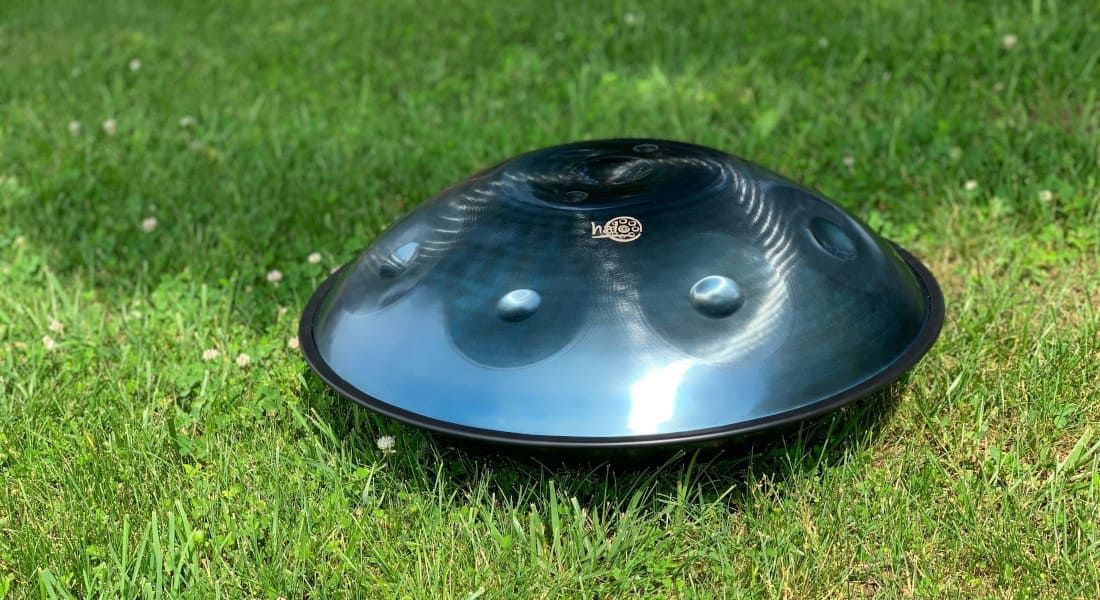
Why does the handpan have a fairly limited number of notes?
When the Hang was first introduced by the Swiss company PANArt Hangbau AG in 2000, it had a total of 8 notes, sometimes referred to as 7+1, where 7 symbolizes the 7 notes located around the outside of the instrument and 1 represents the ding, the note in the centre of the Hang. For simplicity, the rest of this article counts the number of notes including the ding. Later, the handpan, which was largely inspired by the Hang, emerged with models offering more and more notes. This is because handpan makers want to explore broader musical possibilities.
However, you’ll never come across a handpan with 50 or 88 notes like a standard piano. Forging notes on a handpan takes space, and the playing surface is so limited that it’s simply impossible to fit dozens and dozens of different notes on it. As a result, the handpan remains limited in how many notes it can hold, although, to my knowledge, the model with the most notes is a 30-note handpan from an independent, experimental Brazilian maker, which you can see in the video below:
The problem with handpans that cram in a very large number of notes is that they can suffer from diaphony, also called crosstalk. Diaphony is when one sound wave interferes with another. With a handpan, this can happen when you strike one note, but nearby notes vibrate too, even though you didn’t intend to trigger them. That usually leads to an unpleasant overall sound. The issue is that there isn’t enough space between notes to prevent this, or at the very least, the player must control their touch extremely precisely to avoid this acoustic effect. Makers are then faced with a tradeoff: either they build simpler instruments, which greatly reduces the risk of diaphony, or they try more complex builds with many notes, but run a much higher chance of sounding multiple notes when the musician only struck one. As is often the case in music, it’s all about balance.
This usually leads manufacturers to offer handpans with between 8 and 20 notes, which is still quite low for a musical instrument. Now let’s look at the advantages and disadvantages of the handpan depending on the number of notes it has.
What is the perfect number of notes when buying a handpan?
The first and most obvious point to mention is that, in general, the more notes the instrument has, the wider its range will be. In other words, the handpan’s musical and artistic possibilities tend to be greater when it includes more notes. It’s often said that 8- and 9-note handpans are best suited for beginners, while 10- and 11-note instruments are recommended for experienced players, and that models with 12 or more notes are reserved for experts. I don’t really agree with that. After several years of experience, I can tell you that you’ll be better off getting as many notes as your budget allows, while keeping a few criteria in mind so you don’t make the learning process unnecessarily complicated.
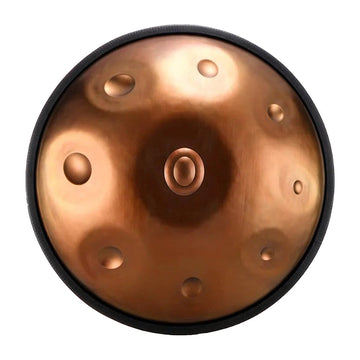
First, it’s important to understand that adding one or two notes won’t completely change the way you play your handpan. For example, on a D Kurd handpan in a diatonic tuning, going from 9 to 10 notes simply adds the C note in the 4th octave (C4). If, at some point, you feel the 10-note instrument is too complex, you can just memorize where that note is, or mark it with a sticker, to remind yourself not to play it. In that case, your 10-note handpan effectively becomes a 9-note handpan as long as you consciously avoid that extra note. The reverse, however, is strictly impossible, which is why it makes sense to choose a handpan with the highest possible number of notes.
That said, more notes come at a price. Starting from the base cost of a handpan, which can vary depending on its material, its tuning, or its build quality, you can expect to pay around CA$250 per additional note. Your budget may therefore limit how many notes your future handpan can include. Next, I strongly advise beginners and intermediate players against choosing an instrument with “bottom notes,” meaning notes located on the lower shell of the handpan. Bottom notes are one way makers increase the note count while avoiding diaphony, since those notes aren’t placed on top. However, they’re also harder to strike. Depending on the instrument and where those bottom notes are positioned, you may need to rotate the handpan mid-session to access them when you need them. You might also need a special stand or music stand to really take advantage of those bottom notes. The added complexity is best left to expert players.
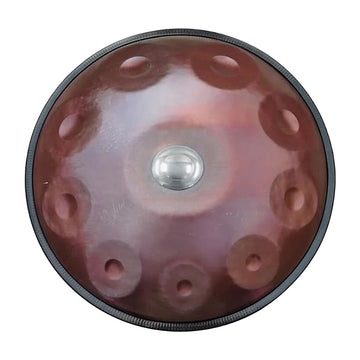
Finally, to sum up everything above: if you want as many notes as possible while avoiding diaphony issues and the difficulty of bottom notes, I personally recommend a handpan with between 8 and 12 notes, with a slight preference for 10-note models. The sound combinations are so rich that most players quickly feel at home, and the budget stays relatively reasonable for this kind of instrument. As for the placement of the notes, it doesn’t matter much as long as they’re on the upper shell. For example, some handpans have all their notes laid out in a single circle, with the ding in the middle. Others add extra notes between the ding and the outer circle. These are called mutant handpans, because they’re quite far from the original Hang concept invented by Felix Rohner and Sabina Schärer of PANArt Hangbau AG. If a mutant handpan appeals to you and fits your style, it can be a perfectly valid option.
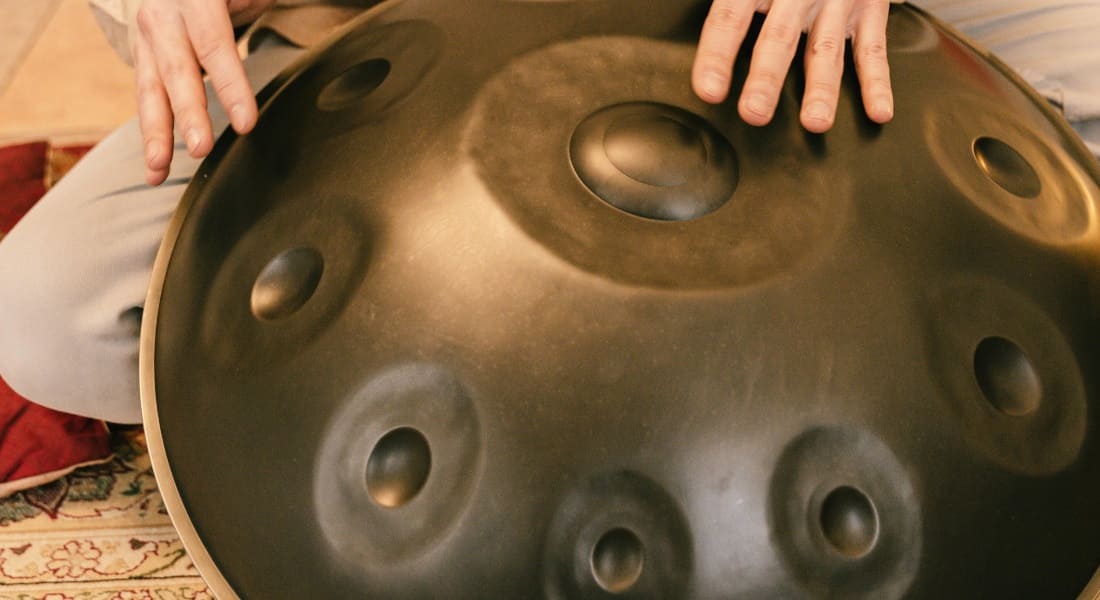
Choose an instrument with 10 notes
The number of notes on a handpan is a key factor that affects how easy the instrument is to pick up, as well as its potential for musical composition. As is often the case, more isn’t always better, and choosing a large number of notes for your handpan isn’t necessarily the smartest move. With the help of this article, you’re sure to choose the ideal instrument for you.
That said, shops offering a wide selection of handpans are relatively rare. In most cases, sellers specialize in either simple models or very complex ones. That’s why it’s worth checking out the handpan range from Instruments du Monde, which offers many options to suit every percussionist. You’ll find, for example, an excellent 10-note handpan that I recommend to anyone ready to start this amazing acoustic adventure.
Learn more about this 10-note handpan by clicking on the image below:
Once you’ve chosen the number of notes, one essential question remains: which scale should you choose for your handpan? It’s a choice you’ll live with for the life of the instrument, so it’s worth thinking through carefully.


