



Written by Ambre Montespan on Apr 3, 2023 · Updated on Sep 25, 2026

Table of contents:
Have you decided to treat yourself to a quartz or rock crystal singing bowl? With so many options available, you might not be sure how to choose the perfect one. What factors should you consider when selecting this percussion instrument?
Having advised more than 100 people in the past on choosing their Tibetan crystal singing bowl, I’ll do my best to help you sort through the options so you can find the bowl that truly fits you.
Crystal bowls have many unique characteristics, such as a specific musical note, a particular frequency, or a distinctive design. All of these elements should be taken into consideration when choosing a singing bowl.
Reading this short article will help you select your singing bowl based on:
- Its design
- Its frequency
- Its dimensions
- Its musical note
- And the accessories provided
This will give you everything you need to find the best crystal bowl for what you’re looking for. You’ll be able to fully enjoy this instrument and its many benefits.
Let’s start by looking at all the selection criteria for your future quartz singing bowl.
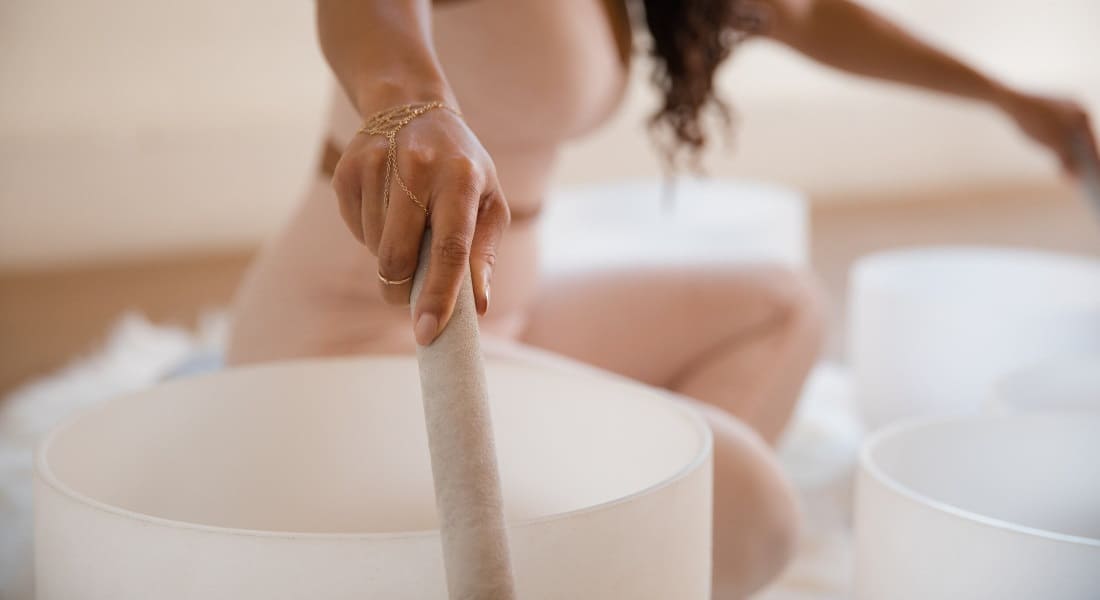
Does the choice of instrument design influence the sound?
There are several types of crystal singing bowls with very different designs. Depending on your choice, the sounds won’t be exactly the same from one bowl to another. Let’s take a look at the different types of this percussion instrument.
Frosted crystal singing bowls
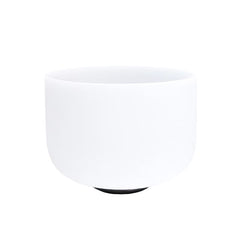
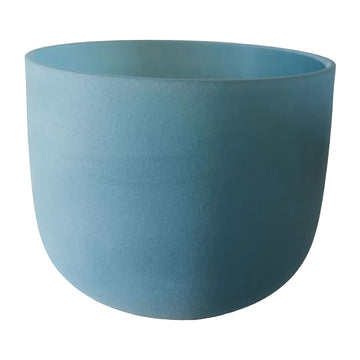
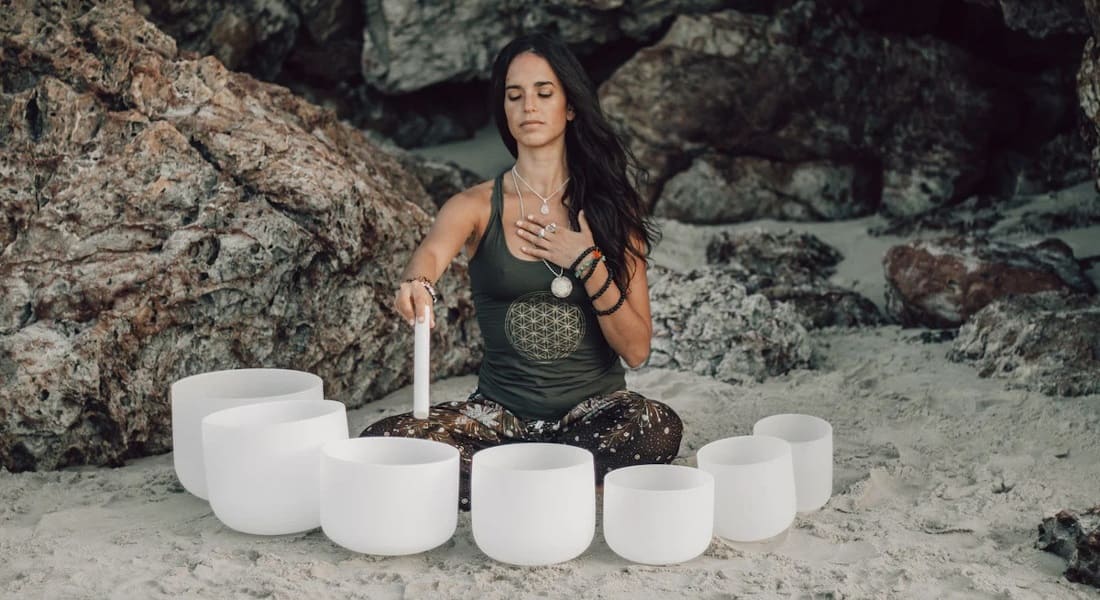
Frosted crystal bowls are the most common type. They are usually white, although pigments may be added to give them the desired colour. They are available in black, blue, green, and red, and may also feature symbols such as the flower of life or engraved inscriptions, often Tibetan mantras. These bowls are called “frosted” because, while their walls are smooth, the outer surface has a slightly textured finish that resembles frost on windows in very cold weather. However, it should be noted that some models have also been sanded on the outside, making them completely smooth. The latter type is called empyrean.
Tibetan frosted crystal singing bowls typically measure about 15 cm (6 in) to 50 cm (20 in) or more for the largest ones—so there’s a wide range of sizes to choose from. They are widely used by beginners because they are more affordable compared to other types of crystal bowls, and they are very easy to play. The sound produced by this instrument is loud, so use it with caution in small enclosed spaces to avoid auditory discomfort; it’s perfect for outdoor use. Finally, these singing bowls are relatively heavy because they are quite thick.
Tibetan singing bowls made of clear or transparent crystal
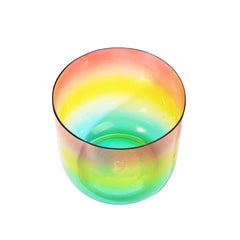
This type of bowl may look like glass, but in fact, they are made of quartz crystal or rock crystal. The distinctive feature of this instrument is that it is partially or completely transparent. A very light tint may be applied to add charm while maintaining transparency. Generally, the bowls offered for sale are smaller in diameter than those made of frosted crystal.
Clear crystal bowls are much thinner and more fragile than their frosted crystal counterparts, yet they weigh considerably less. They do cost significantly more—at least twice as much as the same opaque model—and they are slightly more difficult to play. I find the sound of this type of bowl much more pleasant, especially when several instruments are played together. The volume is lower, and this is the type of crystal bowl that I personally recommend for sound therapy treatments or energy healing sessions, if your budget allows.
Instruments fused with precious stones
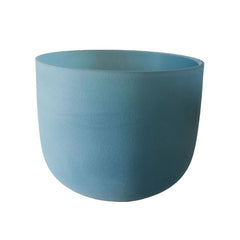
Then there is another category of bowls that are very similar to frosted crystal bowls, except that gemstone powder has been mixed with the quartz during the creation of the instrument. These bowls often have a pale colour depending on the stone that has been added, and it’s important not to confuse them with a simple frosted crystal bowl that has been dyed.
Crystal bowls with precious stones have similar acoustic properties to frosted crystal bowls. However, they are rarer and more difficult to find. For example, sapphire, morganite, or obsidian powder can be incorporated with quartz. These types of bowls are more suited to practitioners of lithotherapy, who will then reap the benefits of the stones in addition to those of the instrument.
Glass singing bowls with handles
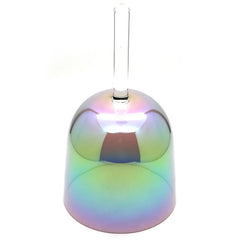
Some quartz crystal bowls feature a handle or grip underneath. They are crafted from either frosted crystal or clear crystal, so they inherit the acoustic qualities of their respective material. The main advantage of adding a handle is that the singing bowl can be used in all directions, particularly to focus on a specific area of the body by positioning the instrument in the optimal way. The main disadvantage is that the musician playing it can only use one instrument at a time.
Singing bowls with handles are therefore mainly reserved for professionals who offer sound massages, but they may also be suitable for you. Obviously, the price will be higher than for the same bowl without the handle. It should also be noted that this type of crystal bowl requires even greater care than usual, as the handle can easily be broken if handled incorrectly.
Alchemy crystal bowls
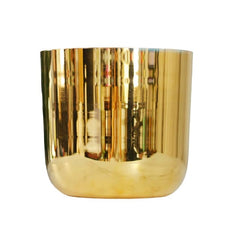
Finally, you can also find quartz crystal singing bowls that are completely or partially covered with precious metals such as gold. This type of bowl is called an alchemy bowl in reference to the practice of metal transmutation dating back to the Middle Ages. True gems of craftsmanship and goldsmithing, alchemy singing bowls are very expensive. Expect to pay around CA$1,600 for a bowl of average diameter. Like bowls containing precious stones, alchemical bowls combine the unique benefits of the embedded metals with the bowl’s sound vibrations. Above all, they are stunning to behold.
What musical note should you choose for your crystal bowl?
One of the specific features of crystal singing bowls is that, unlike Tibetan bowls made of metal alloys that are hammered or moulded by hand, they are made in industrial moulds that rotate at high speed and are heated to extreme temperatures. This industrial aspect allows for greater precision in their design, resulting in musical notes that are as accurate as those produced by more traditional musical instruments such as the piano or guitar.
As such, you will often be asked to select a note when purchasing a crystal bowl. The note you choose is directly linked to one of the seven major chakras in the human body, according to Hindu beliefs. To find out how these notes correspond to the chakras, refer to the diagram below:
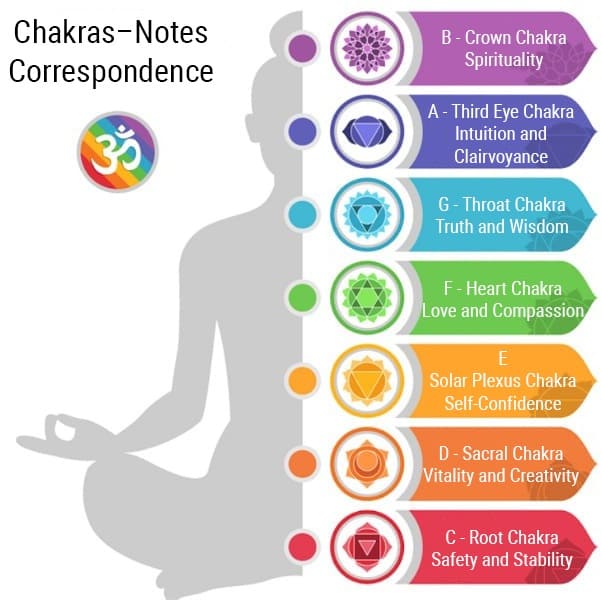
For example, choosing the note C for your singing bowl focuses the instrument on Muladhara, the root chakra, which is associated with dynamism, self-confidence, and the need to defend your values. Each chakra, and therefore each musical note, has its own characteristics, and we highly recommend reading this article to help you determine the note of your future singing bowl.
How to choose the frequency of your future quartz singing bowl?
As we’ve just discussed regarding musical notes, the precision with which quartz singing bowls are manufactured is so high that you can also choose a specific frequency. Normally, almost all musical instruments are tuned to 440 Hz. This has been an international standard for several decades, and all the melodies or songs you hear on the radio, on television, or at concerts are played at this specific frequency.
However, some sound therapy practitioners believe that other frequencies could be beneficial for the body and mind. This would be particularly true for 432 Hz, a frequency that resonates with living beings, the earth, water, and nature. It is said to have enhanced therapeutic properties, although no scientific studies have yet been able to validate this theory. Other frequencies, such as 528 Hz, are also popular with sound therapists. Personally, I have always preferred models tuned to 432 Hz, which I find more soothing.
However, if you plan to play several singing bowls together or accompany other instruments, it’s essential that they share the same frequency; otherwise, the resulting tones may clash and sound unpleasant.
What size should you consider for this glass musical instrument?
Once you’ve chosen the type, note, and frequency, all that’s left is to select the size of your future crystal instrument. Size refers to the diameter of the singing bowl, and it’s often listed in centimetres. Unlike metal bowls, you won’t find tiny crystal bowls under 10 cm (4 in) in diameter, so you’ll need to choose one that measures at least 15 cm (6 in) across. The average standard size is 20 to 30 cm (8 to 12 in), which is the size I personally recommend, as the instrument remains portable while still being powerful.
In fact, the larger the singing bowl, the more intense the vibrations it will produce and the louder the sound. The sustain, which is the length of time the note continues to be audible after striking the bowl, is also longer with a larger bowl. On the other hand, large crystal bowls are more expensive than smaller ones, so you’ll want to make your choice based on your budget. Read this article for advice on the size of your crystal bowl.
What are the essential accessories for your rock crystal bowl?
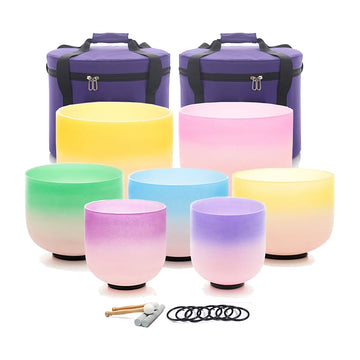
Finally, be sure to check which accessories are included with your future singing bowl. The minimum should be a stick or mallet and a rubber ring-shaped support, sometimes called an "O-ring," which allows the instrument’s vibrations to develop fully. Read our guide on cushions for singing bowls to learn more.
Above all, I strongly recommend purchasing a cover specifically designed for crystal bowls. On the one hand, this cover will protect the instrument in the event of an impact, whether at home or during transport. It would be disastrous to crack the bowl due to an unfortunate accident. Second, the bowl stays protected from dust, which can be especially tricky to remove from frosted crystal models since it tends to settle in the textured outer surface. Many high-quality singing bowls include this type of cover, which also lets you store the stick or mallet—a handy bonus.
Choose your crystal singing bowl with care
Crystal bowls are still a relatively unknown musical instrument to the general public, and it can be particularly difficult to find relevant information when looking to purchase one. Beginners sometimes find it difficult to navigate the different frequencies, multiple musical notes, and unique bowl designs. But thanks to this article, you now have all the information you need to select your future crystal bowl and can choose with confidence.
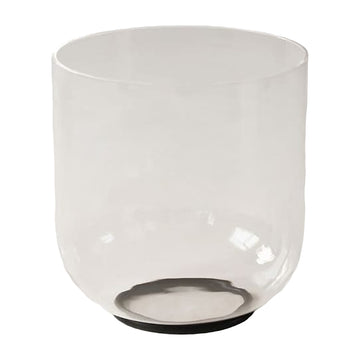
However, few stores offer a wide range of models to suit your specific needs. It would be counterproductive to buy a bowl that doesn't suit you perfectly. That's why the French store Instruments du Monde recommends its wide selection of singing bowls, with over 200 bowls to choose from. Like this clear crystal model, which will delight all amateur singing bowl players.
Get your transparent crystal singing bowl now by clicking on the image below:
If you already know all there is to know about quartz crystal singing bowls, do you know how Tibetan bowls work in general? This is a fascinating topic that has been explored in several scientific studies. Feel free to consult the reference article on Tibetan bowls, which will provide you with an impressive amount of information about this percussion instrument.


