



Written by Ambre Montespan - Updated on Sep 25, 2026

Table of contents:
Have you recently purchased a Tibetan singing bowl, or are you planning to buy one soon? Have you noticed that there are several types of mallets available to play this instrument, but you’re not sure how each one will affect the sound? Which mallet is recommended for your singing bowl?
With more than 20 different mallets and strikers at my disposal, I’ve had plenty of opportunities to test them all and figure out which tool works best for each type of Tibetan bowl. That way, I can share what I’ve learned and help you choose the right mallets for your instrument.
Choosing the right mallet for a Tibetan singing bowl is important and depends on both the material the instrument is made of and its size. The musician’s intended use is also a factor to consider.
By reading this entire article, you will learn:
- The importance of choosing the right mallet for your Tibetan singing bowl
- The different types of mallets available
- What type of stick you need depending on your singing bowl
As a result, you can be sure you’ll always get the most out of your Asian musical instrument. You’ll enjoy beautiful tones, along with all its virtues and benefits.
Let’s take a look at everything you need to know about Tibetan singing bowl mallets.

Why is it important to choose the right mallet for your Tibetan singing bowl?
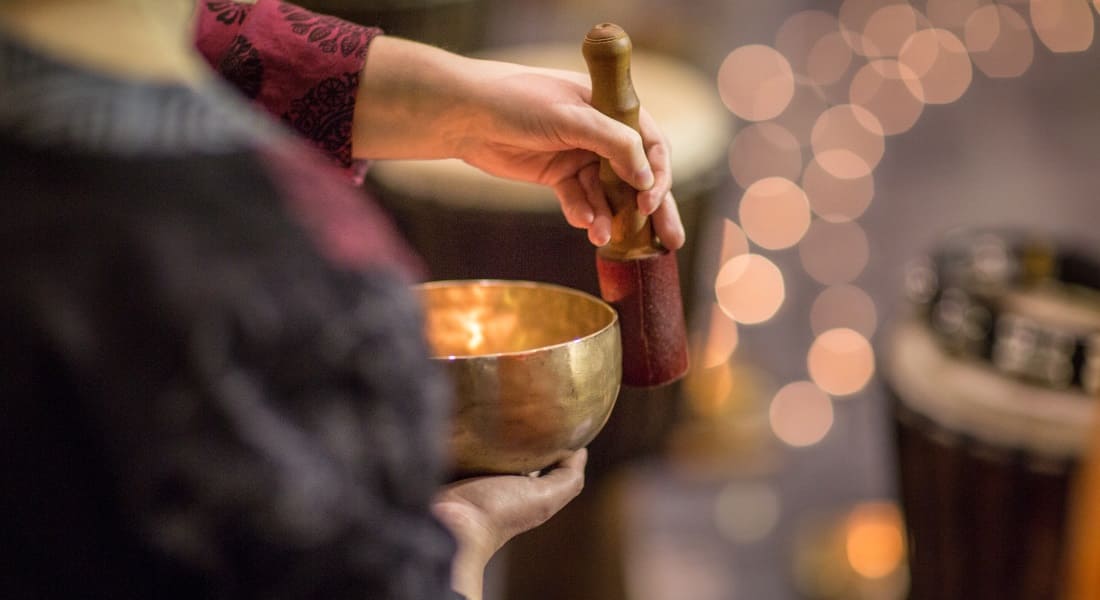
While choosing a Tibetan singing bowl is undoubtedly essential, the choice of mallet is often overlooked. However, this is a big mistake because the two are really a pair that only works together. Without a bowl, there will obviously be no sound, but if the mallet is low quality or poorly chosen, the result can be disappointing—or even non-existent—since some mallets are unable to make the Tibetan bowl sing. This small tool comes into direct contact with the bowl’s walls, so it has a direct impact on the tones that are produced.
That’s why it is important to pay particular attention to the mallet or striker used. It would be a mistake to brush this off as a minor detail. Most of the time, a mallet comes with the Tibetan singing bowl. However, if you don’t like it, you’ve misplaced it, or you want to explore new sounds with your instrument, you’ll want to look more closely at this accessory. The mallet is therefore a crucial part of playing a Tibetan singing bowl.
What are the different types of mallets for Tibetan bowls?
There are four main families of mallets for singing bowls: sticks, mallets, hybrids, and those designed for instruments made of quartz crystal. Let’s go through them one by one.
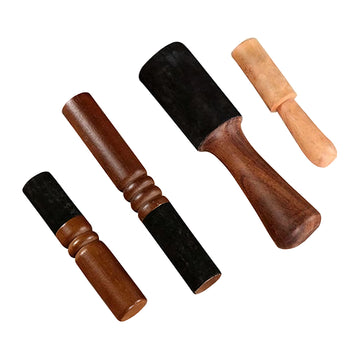
The singing bowl stick called puja
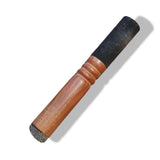
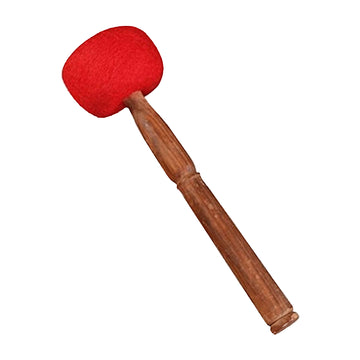
This is the most classic and commonly found option. It consists of a simple wooden stick wrapped and glued with felt, wool, faux suede (also called microsuede), or leather. This model is often simply called a stick or mallet, and you may also see the term stick. However, its proper name in Tibetan tradition is puja, which literally means “homage” in Sanskrit. Also, although it’s becoming harder to find today, the wood traditionally used was sheesham, scientifically known as Dalbergia sissoo, a dense, high-quality hardwood from the Himalayan region.
This type of mallet can range from about 8–30 cm (3.15–12 in) in length and reach up to roughly 7 cm (2.75 in) in diameter for the largest models. Some handles are sometimes finely engraved with Buddha heads or ornamental motifs. You’ll also find pujas without fabric or leather—in that case, it’s simply a piece of wood.
The mallet specific to this Asian musical instrument
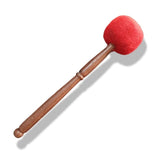
This mallet is a style of beater that was originally used for gongs, another Asian musical instrument. Some musicians started using it with Tibetan bowls and found that it can produce different, very interesting tones. This tool is sometimes called a striker, hammer, or club because it’s only used to strike the percussion instrument.
It’s built like a drumstick, meaning a wood or plastic handle about 20–30 cm (8–12 in) long, with a ball- or cylinder-shaped head made of felt or wool. Some models even include a rubber ball inside the fabric head to enhance the rebound effect when striking.
Hybrid mallets consisting of a stick and a mallet
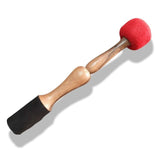
Manufacturers quickly realized how useful it is to have both a stick and a mallet. So, they created a convenient hybrid that lets the musician use one side or the other as needed. It’s mainly a space-saving option for people who frequently travel with their singing bowls.
Mallets for Tibetan quartz crystal bowls
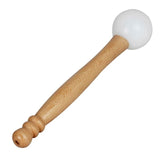
Finally, there are mallets reserved for quartz crystal or rock crystal singing bowls. In this case, the mallet is designed to match the bowl’s specific material, although in practice there will always be two main types: sticks and mallets. Mallets typically have a rubber head. Sticks often have a quartz crystal body like the bowl and are fully wrapped in suede or silicone.
What type of mallet should be used to play a singing bowl?
The type of mallet you choose will mainly depend on the size of your Tibetan bowl, how you plan to use it, and the material the instrument is made of.
Which mallet should you choose based on the size of your Tibetan bowl?
When choosing your future mallet, it’s important to match the tool’s size to the dimensions of the Tibetan bowl. Using a small stick for a bowl with a 30 cm (12 in) diameter isn’t a good idea because you won’t be able to make it sing properly. The opposite is also true. For a medium-sized singing bowl, between 15 and 20 cm (6 and 8 in) in diameter, it is advisable to choose a stick that is about 18 cm (7 in) long and about 2.5 cm (1 in) in diameter. For the mallet, choose a model that is about 25 cm (10 in) long. Using this as a baseline, try to stay proportional if your Tibetan bowl is smaller or larger. That’s the best way to keep a full, balanced tone.
Finally, if your singing bowl is small—under 12 cm (4.75 in) in diameter—you’ll need to pay attention to the size of the mallet head if you plan to use this type of mallet. Mallets aren’t very effective on small Tibetan bowls. So, if you really want to use one, choose a model with a small head. Otherwise, you won’t be able to create interesting vibrations.
Does the material of the singing bowl matter when choosing a mallet?
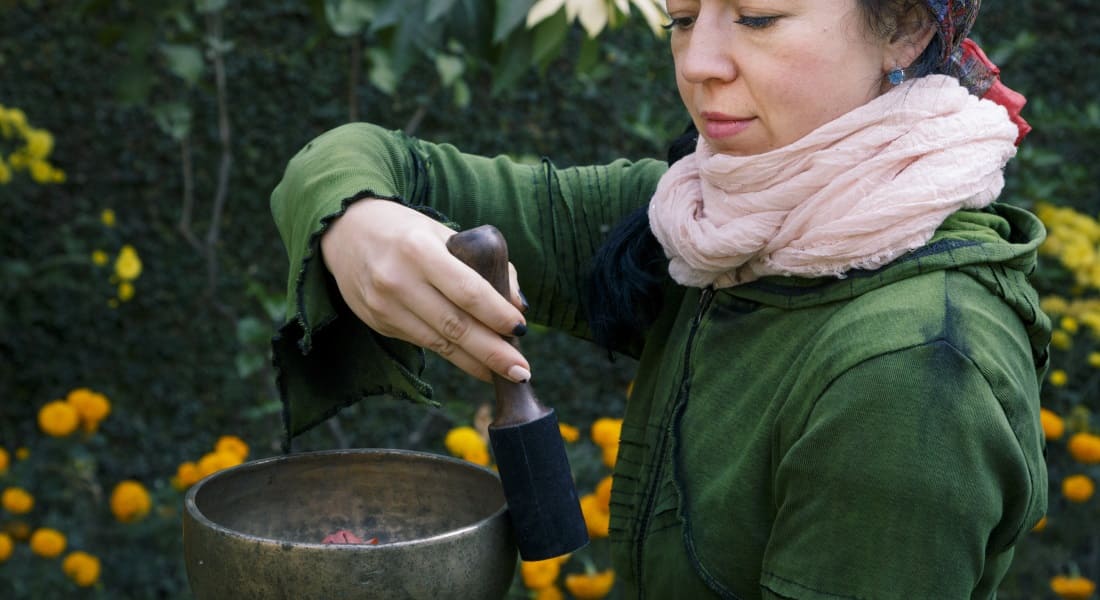
Whether your bowl is made of metal or crystal, you’ll still need a mallet. However, there’s a good reason why sticks for crystal instruments are often covered with silicone: a bare wooden stick, or even one covered with felt, can make the crystal bowl squeak, which is a very unpleasant experience. Because crystal is harder than metal, it can also wear down the mallet more quickly. In addition, mallets for rock crystal bowls are made of silicone because they’re generally heavier than their metal counterparts. With a wool mallet, the sound produced will be too muffled.
Consequently, we recommend that you use the type of mallet that is designed to work with your type of Tibetan bowl, whether metal or crystal. After that, you can always experiment by swapping mallets, but most of the time, the results aren’t very convincing.
Unlock the instrument’s full potential with the right stick
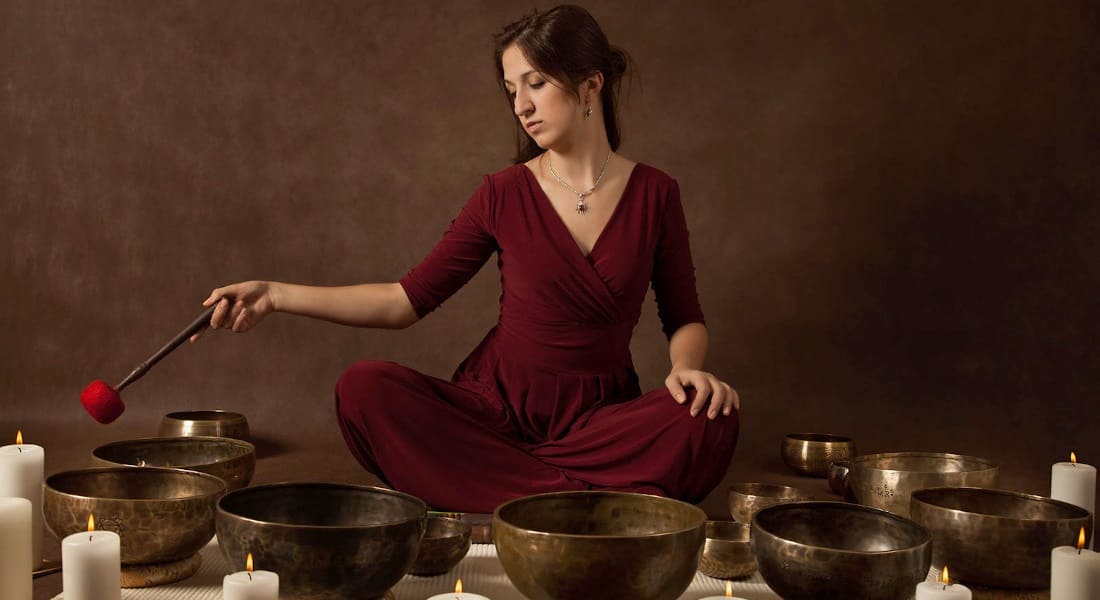
Depending on what you want to do with your instrument, it’s also worth thinking about the type of mallet you’d like to buy. For instance, if you absolutely want to make water vibrate with your singing bowl, do not buy a fabric or wool mallet. Those are made for striking only, because they aren’t grippy enough to vibrate the bowl’s walls effectively. A bare wooden stick has the same problem since it doesn’t have much traction on the bowl’s rim, which makes it harder to build vibration. On the other hand, a rubber mallet can make liquid vibrate inside a Tibetan bowl because it grips the edge better, as you can see in the video below:
Next, it’s important to know that a Tibetan bowl does not produce just one musical note. Depending on the mallet used, you can vary the notes generated. This can be helpful if you want to work specifically with a particular chakra. That’s why a set of several different mallets and strikers can help you bring out a wider range of distinct notes.
How much does an effective mallet cost?
Prices for Tibetan bowl mallets range from CA$16 to CA$250, and generally, the larger the tool, the higher the price. From my personal experience, I recommend spending no more than CA$50 on this type of accessory if you’re a beginner. Above that, you’re usually looking at mallets made for Tibetan singing bowl professionals who are chasing maximum precision and have mastered multiple playing techniques.
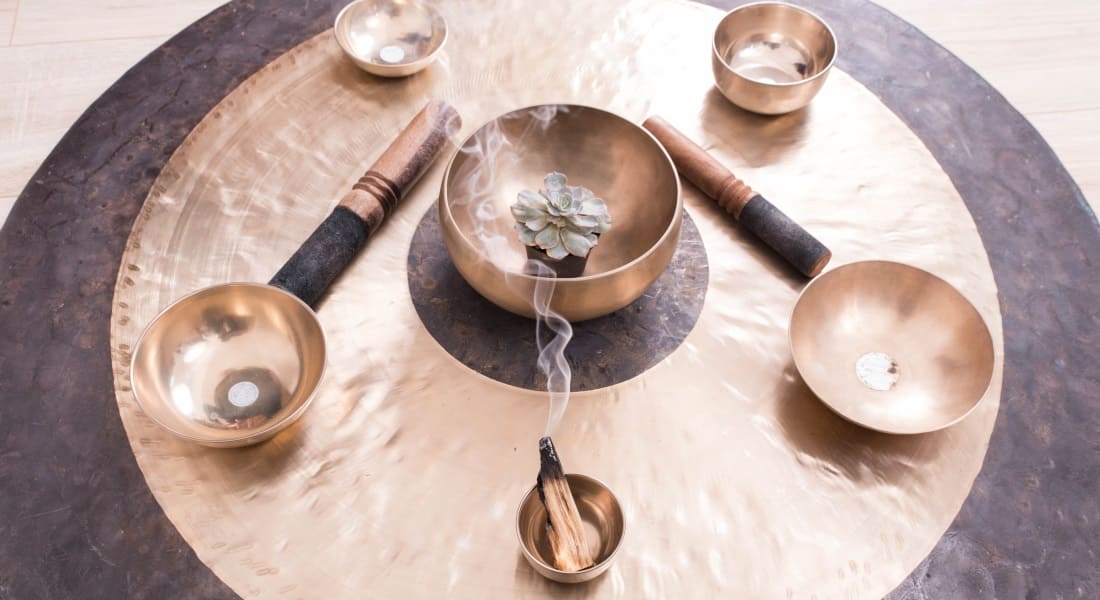
Make your instrument sing to perfection with a quality tool
Your choice of mallet must be suited to your singing bowl so you can fully enjoy the rich sound this Asian instrument has to offer. Now that you’ve read this article, you know how to choose the right accessory to pair with your Tibetan bowl in the best possible way.
However, it’s not easy to find a full range of high-quality mallets that work well with most Tibetan bowls. Nearly all suppliers offer only one or two models. That’s why Instruments du Monde offers a wide selection of different mallets so every player can find the accessory that best suits their own singing bowl.
Explore all these mallets now by clicking on the link below:
By now, choosing the right mallet for your singing bowl should feel much easier. But did you know it’s possible to cleanse a space with this Asian musical instrument? Learn everything you need to know by reading our article dedicated to this use of the Tibetan singing bowl.


