



Written by Ambre Montespan on Nov 9, 2026

Table of contents:
Have you heard about Tibetan singing bowls for weight loss and wondered whether this musical instrument can truly help you lose weight? Are you looking for a gentle way to complement your daily diet and exercise? How can you get the most out of a singing bowl?
I've been passionate about Tibetan singing bowls and their effects on well-being for over 10 years, and I've taken the time to read the scientific studies on this instrument. Here's what a Tibetan singing bowl can offer when you're trying to lose weight.
A Tibetan singing bowl can help with weight loss indirectly. Its sounds promote relaxation and can improve sleep, both of which are linked to appetite. Playing it for a few minutes before a meal encourages you to eat more calmly, alongside a balanced diet and physical activity.
By reading this entire article, you'll discover:
- What studies have measured about Tibetan singing bowls
- Three ways a singing bowl can help with weight loss
- Misconceptions about vibrations, chakras, and the bowl's frequencies
- How to use a Tibetan singing bowl every day when trying to lose weight
You'll be able to choose a Tibetan singing bowl that suits your pre-meal breaks and evenings. You'll also know exactly what to expect when you make this percussion instrument part of your daily routine.
First, let's look at what scientific studies have measured.

Have studies measured the effect of Tibetan singing bowls on weight?
Studies on Tibetan singing bowls primarily measure the relaxation they provide. No published study to date has measured their direct effect on weight loss. In 2017, a team from the University of California, San Diego, led by Tamara Goldsby, published a study titled “Effects of Singing Bowl Sound Meditation on Mood, Tension, and Well-Being.” After about an hour of sound meditation using primarily singing bowls, the 62 adults who participated reported less tension, anger, and fatigue. Their depressive mood had also decreased. However, the study did not include a control group. It measured what participants felt but could not distinguish the effect of the sound from that of lying down to rest.
In 2023, a randomised trial yielded encouraging results for Tibetan singing bowls. Coordinated by Cristóbal Río-Álamos as part of a Chilean team affiliated with the Autonomous University of Barcelona, the study was published in the European Journal of Investigation in Health, Psychology and Education. The researchers randomly assigned adults who experienced everyday anxiety but had no diagnosed disorder. They found that a single session of Tibetan singing bowl sounds was more soothing than Jacobson's progressive muscle relaxation, a well-known technique. The bowl sounds reduced the anxiety participants felt and improved their heart rate variability, a sign that the body is entering a state of rest.
Systematic reviews point in the same direction. These reviews bring together all published studies on a question. In 2020, a review by Stanhope and Weinstein published in Complementary Therapies in Medicine included only 4 studies. According to its authors, the data suggested positive health effects, but they could not yet recommend these sessions. In 2025, a review by Cai and colleagues published in Integrative Medicine Research examined 19 clinical studies published between 2008 and 2024. It identified the Tibetan singing bowl as a potential way to ease anxiety and improve sleep quality. However, the randomised trials it evaluated were judged to have a high risk of bias, meaning the way they were conducted could skew their results. That same year, a review published in Healthcare also reported decreases in anxiety and heart rate. None of these studies measured participants' weight.
Cortisol, often called the stress hormone, is also being studied. Music perceived as relaxing is known to lower cortisol levels. For Tibetan singing bowls themselves, however, no systematic review has confirmed this decrease to date. I would therefore call it a possibility rather than a proven effect. To learn more, read this article on Tibetan singing bowls for stress and depression.

How can a singing bowl help with weight loss?
Now, let's look at how a singing bowl might help with snacking and support more mindful meals.
Can this Asian instrument help curb stress-related snacking?
Stress is one reason we eat when we aren't hungry. In 2000, a Yale University study by Epel and colleagues followed 59 premenopausal women exposed to several stressful situations in a laboratory. Those with a larger waist relative to their hips secreted more cortisol, even when they were thin. However, the direction of the relationship between cortisol and waist circumference has not been established. Stress can drive us to eat more and choose sweeter or fattier foods. That's where a relaxing moment with your Tibetan singing bowl can help you take a real break.
Can better sleep with a Tibetan singing bowl reduce your appetite?
Sleep also plays an important role in appetite. In 2004, Spiegel, Tasali, Penev, and Van Cauter published a study of healthy young men in Annals of Internal Medicine. When participants slept less, their levels of leptin, the hormone that signals fullness, decreased, while their levels of ghrelin, which stimulates hunger, increased. Their hunger and appetite increased as well. If an evening routine with a Tibetan singing bowl helps you sleep better, it could indirectly help regulate your appetite. The bowl's effect on sleep remains understudied. For practical guidance, read this article on whether Tibetan singing bowls help you sleep.
How can a singing bowl support mindful eating?
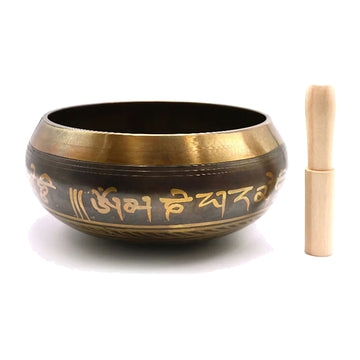
Mindfulness is perhaps the most promising approach for people who want to lose weight. In 2018, Carrière and colleagues published a systematic review of mindfulness programmes. Participants lost an average of about 3 kg (6 lb 10 oz). These were programmes focused on meditation and attention to the present moment, not singing bowl sessions.
Mindfulness results aren't always as clear-cut. For example, a 2011 study by Daubenmier and colleagues at the University of California, San Francisco, involving 47 women who were overweight or obese, found no difference in weight between the groups after 4 months. However, participants with obesity in the mindfulness group maintained their weight, while those in the control group continued to gain weight.
A Tibetan singing bowl can work perfectly as a mindfulness aid, even though none of these studies used one. Its sound clearly marks the beginning and end of a meditation and gives you a point of focus to return to when your mind wanders. That's how I use mine most often. It can make it easier to focus on what you're eating. To learn how to meditate with one, read my guide to meditating with a Tibetan singing bowl.
Do this instrument's vibrations, chakras, or frequencies cause weight loss?
The vibrations of a Tibetan singing bowl don't melt away fat. Some sound massage practitioners point out that our bodies are 70% water and suggest that the vibrations massage every cell. It's a compelling image, but it hasn't been demonstrated to date. Neither have claims about detoxification, drainage, or a boosted metabolism. I remain convinced, however, that these vibrations provide a pleasant feeling of relaxation.
Sound massage on the abdomen doesn't make belly fat disappear either. In Peter Hess's method, called Klangmassage, bowls are placed on the clothed body, first on the back and then on the abdomen, for relaxation rather than weight loss. Massaging one part of the body doesn't make fat disappear from that specific area, whether you use a bowl or something else.

To date, no study has linked a chakra or a frequency to weight. In the chakra tradition, the solar plexus chakra, called Manipura, is associated with inner fire. You can explore how to open and unblock your chakras with a Tibetan singing bowl. No ancient text prescribes bowls for excess weight, even though Tibetan singing bowls are sometimes presented as a millennia-old weight loss method. Their use for relaxation and care developed primarily in the West beginning in the 1970s.
How can you use this Asian musical instrument every day to lose weight?
I recommend using your Tibetan singing bowl at three points in the day. First, before a meal, strike your bowl and follow its sound until it fades, then take a few slow breaths. This short pause will help you sit down to eat more calmly and eat mindfully. Chewing thoroughly is also recommended, since it takes about 20 minutes for your body to feel full.
This video offers a short 5-minute meditation in English. The bowl is struck once a minute to bring your attention back to the present moment:
When you feel like snacking after a stressful day, spend 5 to 10 minutes meditating with your bowl, then ask yourself whether you're truly hungry. Before bed, try a 10- to 20-minute sound meditation session with your screens turned off to prepare for sleep. If you have a heavier bowl weighing about 1 kg (2 lb 3 oz), you can also place it in turn on your thighs, pelvis, abdomen, and chest for about 20 minutes. This gives you a sound self-massage.
These relaxing moments complement a balanced diet and regular physical activity without replacing them. If you have obesity or an eating disorder, medical care remains essential, and your Tibetan singing bowl can simply complement it.
What precautions should you take with this musical instrument?
It's best not to eat from your Tibetan singing bowl, as its alloy may contain traces of lead. If you place the bowl on your body, other precautions apply. Practitioners of the Peter Hess method advise against sound massage in cases of acute illness, severe heart disease, ongoing chemotherapy, or pregnancy, especially during the first three or four months. Other sound massage practitioners also advise against it in cases of epilepsy, a pacemaker, metal or hearing implants, psychotic disorders, or severe depression, or recommend it only after consulting a doctor. These recommendations come from practitioners' experience rather than clinical trials, but they are worth following. You'll find all the situations to watch for in this article on the side effects and contraindications of Tibetan singing bowls.
Which Tibetan singing bowl should you choose for these relaxing moments?
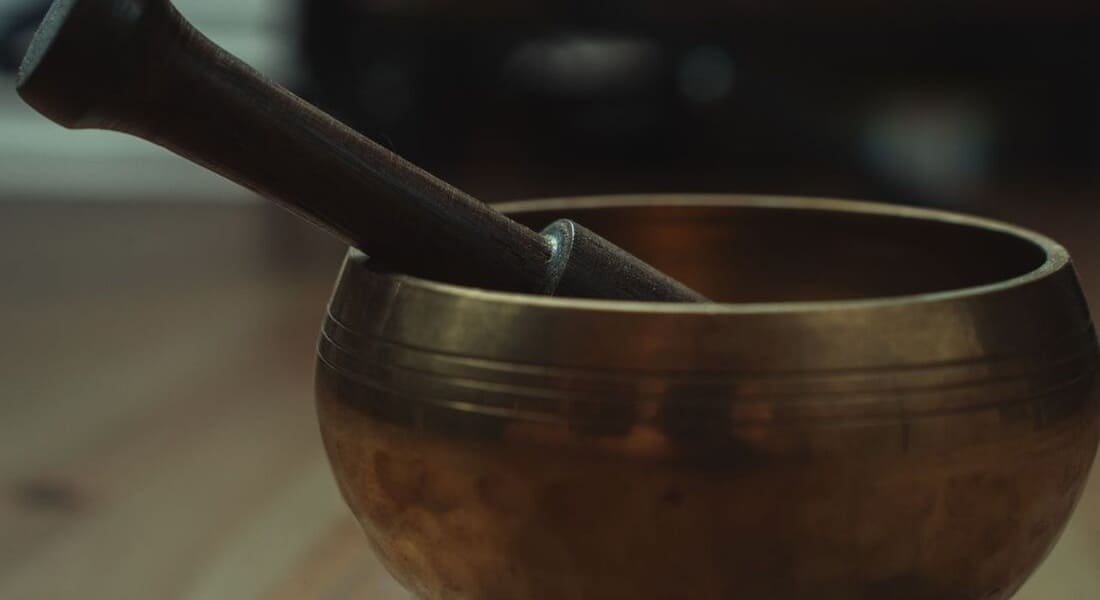
Above all, I recommend choosing a bowl whose sound you enjoy, because that's what will make you want to use it every day. For a pre-meal break, a small, lightweight bowl measuring 12–15 cm (4.75–6 in) in diameter is usually enough. You can easily set it near the table, and it produces a clear sound that encourages calm. For an evening sound massage, choose a medium-sized bowl that's thicker and heavier, weighing about 1 kg (2 lb 3 oz). You'll feel its vibrations more strongly when it's placed on your body.
Make a Tibetan singing bowl your daily relaxation companion
A Tibetan singing bowl can help you better manage your stress, sleep, and meals, three things that matter when you want to lose weight. You now know what studies have actually measured and how to make this instrument part of your daily routine.
For these relaxing moments to become a real ritual, you'll need a bowl you'll want to play every day, before meals and in the evening. That's why I personally recommend Instruments du Monde, which offers a wide selection of singing bowls for meditation, sound massage, and relaxation. This Tibetan singing bowl designed for sound massage, for example, will be a perfect companion for your evenings.
Treat yourself to this Tibetan singing bowl today by clicking the image below:

Now that you know how the Tibetan singing bowl relates to weight loss, are you aware of the benefits that each of the notes produced by this musical instrument can bring? We invite you to find out by reading our guide to choosing the musical note when buying a Tibetan singing bowl. You will then be able to choose your next bowl with complete peace of mind. Otherwise, you could learn a great deal more by browsing our article covering everything you need to know about the singing bowl. This Asian instrument will no longer hold any secrets for you.


