



Written by Ambre Montespan - Updated on Oct 5, 2026

Table of contents:
Have you just heard a handpan for the first time and can’t stop thinking about it? Would you like to place this musical instrument on your lap and try it for yourself? Are you looking for a handpan for beginners and wondering what to expect between choosing this sound sculpture and playing your first melodies?
As someone who has been playing the handpan for over 10 years, I’ve helped many people with their first purchases, and it’s striking how often beginners ask exactly the same questions. So I can tell you what really matters if you’re completely new to the fascinating world of the handpan.
For a beginner’s first handpan, I strongly recommend choosing a 9- or 10-note model in D Kurd, tuned to 440 hertz, with a budget of €700 to €2,000. No music theory is required, and pleasant sounds come out of the instrument within the first few minutes.
By reading this article in full, you’ll learn:
- The scale, notes, and budget to allow for when choosing a first instrument
- The musical background and age required to start playing the handpan
- The beginner mistakes that can unintentionally damage your instrument and could easily happen to you
This way, you’ll be able to confidently choose your handpan for beginners while avoiding the traps and mistakes commonly made by newcomers.
Let’s take a look straight away at how to take your first steps with this percussion instrument!
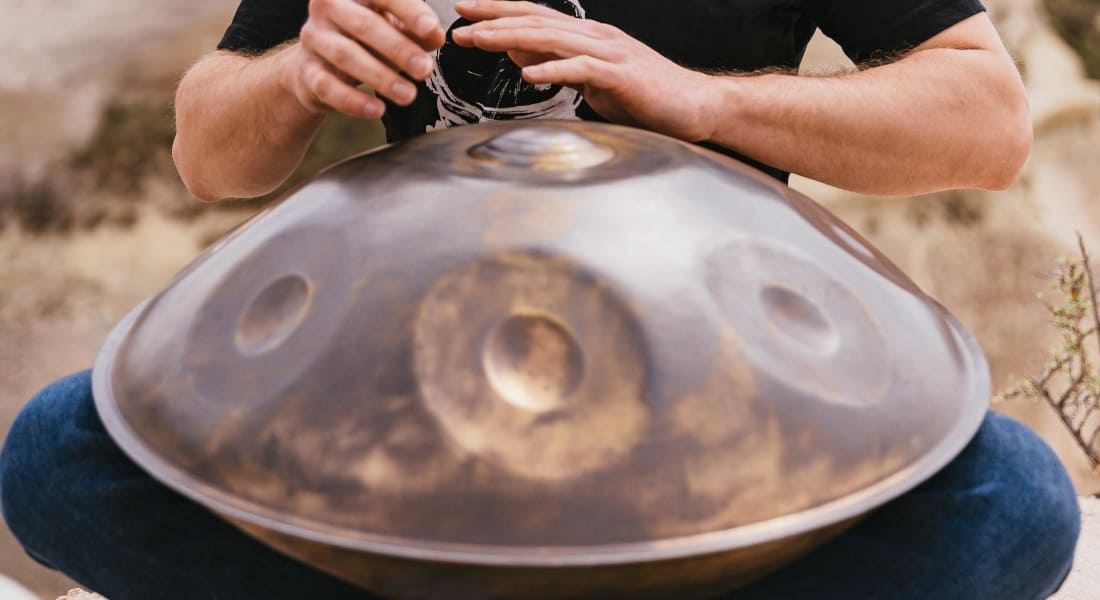
Which handpan should a beginner choose: scale, notes, material, and frequency
This is THE first question every beginner asks. How do you choose your instrument in the best possible way? It’s true that beginners are often lost, because the world of handpans is vast, and it’s easy to make the wrong choices. First, I recommend watching this video, which will help make things clearer:
Next, you should know that there are four criteria to consider when selecting this instrument, and for each one, I’ll tell you which option is best suited to new players. Let’s go through these four factors one by one:
- Number of notes: This factor determines how many possibilities your handpan offers. More notes allow you to play richer, more complex melodies, while fewer notes limit your options. For beginners, I recommend a 9- or 10-note handpan, which strikes an ideal balance between difficulty, price, and creative possibilities. To learn more, read my article dedicated to the number of notes a handpan can have.
- The scale: The scale refers to the combination of notes that make up your handpan. Scales sometimes have exotic-sounding names such as Kurd, Pygmy, or Amara, which can be confusing for beginners. For a first instrument, D Kurd is the ideal choice, because nearly 80% of handpans tuned worldwide are in this scale. And there’s a good reason for that: this scale is easy to approach, and you’ll find plenty of tutorials for it. Check out my article reviewing the best-known handpan scales to learn more about them.
- Material: There are three main types: nitrided steel, stainless steel, and ember steel. I always recommend stainless steel for handpan beginners. It’s the easiest metal to maintain and the least prone to rust. In addition, the notes sustain longer, which naturally encourages a calm, grounded playing style. To understand all the nuances between the different steels, read my comparison of nitrided, stainless, and ember steel for handpans.
- Frequency: 440 hertz has been the international standard since 1939. I specifically recommend 440 hertz for new percussionists, because choosing another frequency isolates you from other musicians. There is one other main frequency, 432 hertz, but two instruments tuned to different frequencies cannot play together, which can create difficulties. Take a look at this other article comparing 440- and 432-hertz handpans, and choosing between the two won’t hold you back for long.
To sum up, unless you have a good reason, if you’re a beginner, I strongly recommend choosing a 9- or 10-note handpan in 440 hertz D Kurd, made from stainless steel.

How much does a first handpan cost for a new player?
Handpans are listed between €170 and €400 on general online marketplaces. These instruments are rarely playable, because their harmonics, meaning the higher notes that accompany each strike, are often poorly tuned. The recommended mid-range budget for a beginner is between €700 and €2,000. Check out my article on handpan prices before making your choice, and you’ll understand what each price tier actually includes.
Do you need to already know how to play a musical instrument to start the hang drum as a beginner?
This is one of the most appealing advantages the handpan offers beginners. No musical knowledge is required when you start, and music theory is not a prerequisite. In fact, all the notes belong to a single scale set during manufacturing, and that scale will not change afterwards. So, on one hand, it’s impossible to play a wrong note on this musical instrument, and on the other, it’s very easy to use because the notes chosen by the maker naturally sound harmonious together. That said, if you already know the basics of reading traditional sheet music, it will save you time with theory, but it won’t give you any head start on technique, which is learned only with your fingers. In fact, this percussion instrument has its own notation systems, replacing the stave with simple numbers.
So, as you can see, even though previous experience with another musical instrument is a plus, it is absolutely not an obstacle to getting started with the handpan. Especially since you can easily achieve very interesting, harmonious results within a few months of playing, particularly if you have all the information you need to start well. To that end, read my article explaining how to play the handpan well. You’ll find plenty of tips and advice to become an expert at mastering this musical instrument.
At what age can you start learning to play this musical instrument?
I personally know handpan virtuosos who are 8 years old. This means even children can get started. The only limitation is that a standard handpan measures 55 to 60 cm in diameter, and it can be difficult for a young boy or girl to reach the notes placed farthest away, although mini handpans measuring 45 cm in diameter are available. It’s also important to make younger players aware that this musical instrument is relatively expensive and should be handled with care. Once these two points are addressed, anyone can play the hang drum or handpan.
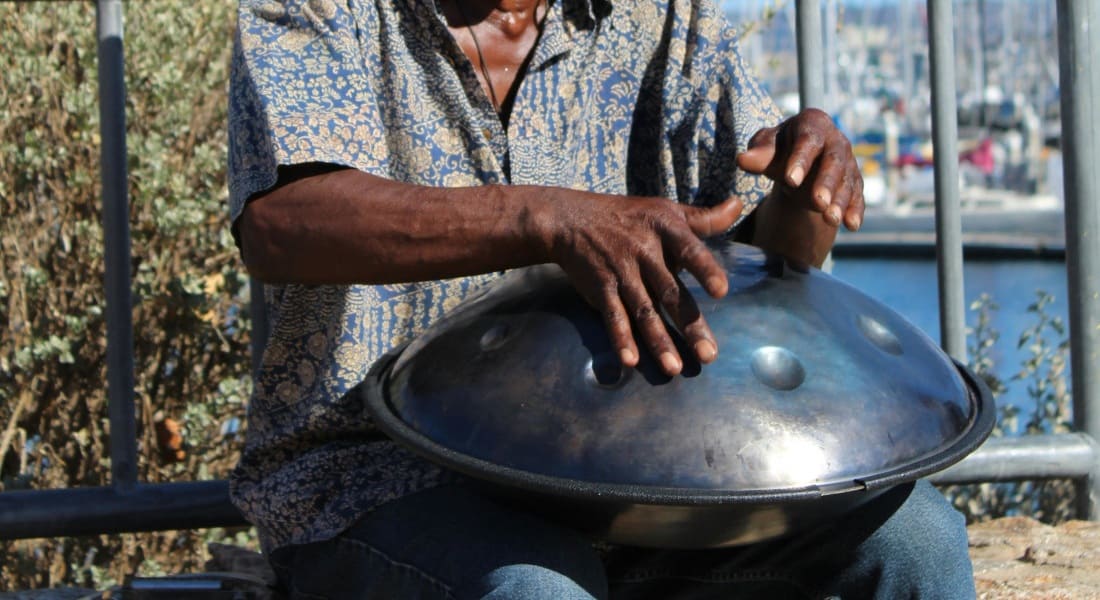
And if you’re older, the handpan is also a good choice. It will work your memory, sense of rhythm, and dexterity, which tend to decline with age. This is also why playing a musical instrument is often recommended by doctors, since recent scientific research highlights the benefits of music for adults over 40.
What beginner mistakes can damage a handpan
The steel of a handpan scratches easily. So the first mistake I often see beginners make is playing with rings on or with nails that are too long. Take off your rings and keep your nails short if you want to enjoy your instrument for many years. Another mistake is striking too hard. New players often hope this will produce a louder sound. But when you hit a handpan hard, even though its shell is only 1 to 1.2 mm thick, the main risk is deforming that shell by denting it, which will alter the tuning of the different notes. As a result, play with care without going to the opposite extreme.
In addition, clean your instrument after each use with a cloth. The handpan will inevitably come into contact with your hands during playing sessions, leaving sweat, and therefore moisture, on a metal object. You need to remove that moisture to prevent rust from appearing. Along the same lines, leaving a handpan permanently inside its case is a bad idea. Moisture can remain trapped inside the case, which is often waterproof and therefore relatively airtight. This can cause your instrument to rust, and you’ll be in for an unpleasant surprise if you open the case several weeks later and discover the damage.
Finally, protect your percussion instrument from overly harsh environments. Leaving your handpan in direct sunlight for several hours can make it heat up significantly. Heat causes the metal to expand, and it may not necessarily contract back to its original position as it cools, which can throw it out of tune. It’s therefore best to store your instrument away from moisture, in a room that stays between 15 and 24°C. And if you transport your handpan often, take it out of the boot as soon as you arrive instead of leaving it there overnight.
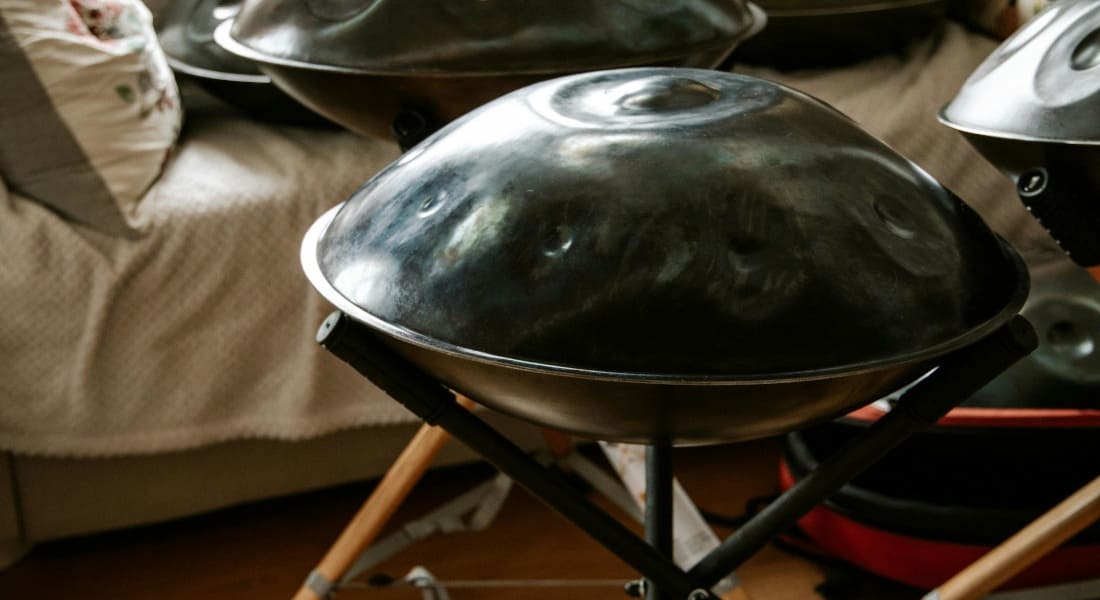
Treat yourself to a first handpan designed for beginners
Choosing your first handpan comes down to a few criteria, such as the scale, notes, and material. But the selection is so wide that you need to stay alert to avoid making a mistake. Thanks to all the information you’ve found in this article, you now know exactly what to look at before making your choice, as well as the pitfalls beginners often fall into.
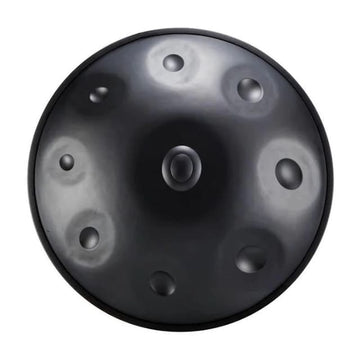
However, even when you have the right criteria in mind for buying your future handpan, there are still many models and shops to choose from. That’s why I personally recommend ordering from the trusted shop Instruments du Monde. Specialising in exotic musical instruments since 2021, they are experts who offer handpans of rare quality, including one specifically designed for people just starting out.
Discover this handpan for beginners now by clicking the image below:
Now that you’ve taken these tips into account, do you know the difference between a hang drum and a handpan? That’s what I invite you to discover in this interesting article exploring the historical roots of this sound sculpture.


