



Written by Ambre Montespan on Nov 2, 2026

Table of contents:
Have you recently discovered an unusually shaped musical instrument called the handpan and wondered how this flying saucer produces its notes and where it came from? Are you thinking about buying a handpan but unsure how to choose among the available scales and materials? How much should you budget, and what should you know before deciding? How do you play it well, clean it, and transport it safely? What can it bring to your daily life?
Having played the handpan for over 10 years, I’ve had the opportunity to watch this percussion instrument evolve and to test many models. I can answer all your questions and much more.
In this complete guide, you’ll learn exactly:
- What a handpan is and where it comes from
- How to choose its scale, number of notes, and material
- How much to budget, where to try one, and which artisans make them around the world
- How to learn to play one and care for it
- What the hang drum offers the body and mind
The handpan will hold no more secrets for you. You’ll be able to choose the model that best suits your needs and know how to start learning to play it. Then all that’s left is to enjoy its sound.

What is a handpan?
Before choosing an instrument or learning to play it, it helps to understand what a handpan is. Let’s start with the basics: how it produces notes, its history beginning with the Swiss Hang, what lies between its two shells, how it’s made, and what sets it apart from its cousin, the tongue drum.
How does a handpan work?
The handpan is a percussion instrument in the idiophone family: the metal itself produces sound when you strike it with your hands. It is made entirely of steel, with two shells that the artisan hammers for tens or even hundreds of hours before joining them into a flying saucer shape.
On the top shell, the central note is called the ding. It is usually the lowest note, most often raised in an apex and less often recessed in an inpex; the sound is very similar in either case. Around it, each note has a tonefield (the flat surface that vibrates) and a dimple (the small indentation at its centre), which dampens certain unwanted frequencies, particularly in the upper register. The larger a note field is, the lower its pitch, which explains why you can’t fit dozens of notes on one instrument. The areas between notes aren’t tuned, but you can play slaps or taks there to add rhythm. Underneath, the gü is an opening that lets the sound develop and allows the artisan to fine-tune the instrument without separating its shells.
The handpan has grown considerably in popularity over the past several years because you don’t need to read music to play it. Even people who have never played an instrument can compose melodies with ease. To understand what each part does, read my complete explanation of how the instrument works.
Where did the Hang drum come from, and is it the same instrument as the handpan?
The Hang, the handpan’s predecessor, was created in 2000 in Bern at the Swiss workshop of Felix Rohner and Sabina Schärer, founders of PANArt. Rohner had known the steel drum since 1976: it’s a metal drum from Trinidad and Tobago whose hammered sections produce notes. But percussionist Reto Weber provided the spark in 1999 when he introduced them to the ghatam, an Indian clay pot, and suggested they imagine a metal version. The name Hang, meaning both “hand” and “hill,” was chosen for the rounded shape of this new musical instrument.
PANArt made only about 400 Hangs a year, and from late 2005 onward, buyers had to travel to Switzerland with a letter explaining why they wanted one. Other makers began producing similar instruments. In 2007, Kyle Cox proposed the word handpan for them, especially as PANArt registered the name Hang internationally in 2008. Today, more than 400 handpan makers work around the world.
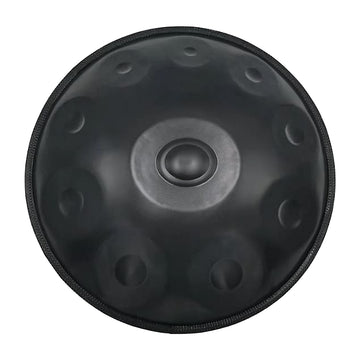
Hang and handpan therefore refer to the same type of instrument, but the first is a brand name while the second is the generic name for other models. Since 2020, PANArt has brought legal action against makers and retailers, claiming rights to the lens shape, ding, and gü. In July 2024, a Bern court also recognised copyright protection for the Hang as a sound sculpture.
If you enjoy a good story, explore the handpan’s origins, from Bern to the present day. To keep the two names straight, read what really distinguishes the Hang from the handpan.
What’s inside this percussion instrument?
Despite what many people imagine, a handpan contains no mechanism: no spring, battery, or electronic circuit. It consists simply of two steel shells joined at their edges. The upper shell carries the ding and the notes; the lower shell is usually smooth, apart from the gü opening. Most artisans join the shells with strong adhesive and many clamps around the edge, then add a rubber rim to protect the instrument if it falls.
There’s only air inside. Together with the gü, the cavity acts as a Helmholtz resonator: it makes the air vibrate at a low pitch, much like blowing across a bottle. When you strike the ding, an additional bass tone, generally around 65 to 98 Hz, can sound; its pitch falls if you close the gü. The artisan also passes a special tuning hammer through this opening to adjust the notes.
I recommend leaving that work to a professional because one misplaced strike can make an out-of-tune note worse. To clean the inside, occasionally pass a soft cloth dampened with 70% rubbing alcohol through the gü. Avoid touching the seam or oiling the interior: the steel must be free to vibrate. Discover everything inside your instrument in this look inside a handpan.
How is a handpan made, step by step?
Handpan making still holds some mystery because PANArt revealed almost nothing about its methods. Artisans who started making them in 2007 therefore had to reinvent nearly everything. The process begins with a choice of regular or stainless steel, which affects the sound and sustain (how long a note continues to ring).
The starting point is a flat sheet of steel, 1 to 1.2 mm thick. The artisan shapes it into a dome by hammering, metal spinning (pressing an arm against the sheet as it rotates), hydroforming (using pressurised water), or stamping. Stamping, which presses the metal between two moulds, is now the most common method. PANArt used it for the Hang. Many artisans also buy preformed shells; a pair of upper and lower shells costs less than €150.

Next, the artisan marks the notes with a felt-tip pen or magnetic templates. At this stage, both the scale and tuning reference (generally 440 or 432 Hz) are set for good. The dimples are almost always formed with a hydraulic press. Then thousands of hand-hammered strikes tune each tonefield, checked with a strobe tuner. Once tuned, the instrument spends a few hours in an oven at around 200°C, or is heated with a torch, to stabilise the metal before another round of tuning. Finally, the shells are glued together under dozens of clamps before finishing. You can see why a handpan costs so much and why it pays to choose one from professionals. Read about every manufacturing step, from the steel sheet to the finishing touches.
What is this flying saucer-shaped instrument, and how does it differ from a tongue drum?
If you’ve spotted a metal instrument resembling a flying saucer, it could be one of two things: a handpan or a tongue drum. A handpan measures about 55 cm across and 25 cm high. It has no cutouts because its metal is hammered into shape. A tongue drum, developed in 2007 by American Dennis Havlena from a 13 kg gas cylinder, instead usually has 6 to 14 tongues cut into its surface.
The handpan resonates more and responds more sensitively, but it costs at least €1,000 and can exceed €3,000 for luxury models. A tongue drum costs €50 to €600. Both are easy to learn and won’t produce a wrong note, although the tongue drum is simpler still and the handpan offers more playing techniques. The handpan is also sensitive to heat, and having an artisan retune it after 4 or 5 years, sometimes sooner, is recommended. It’s the right choice if you have around €1,500 to spend and want to explore richer techniques. Watch a tongue drum video below:
To tell the two apart at a glance, take a look at the flying saucer-shaped instrument, then compare them point by point in this tongue drum and handpan comparison.
How to Choose a Hang Drum
Choosing a handpan takes some thought because several features, including its scale and number of notes, can’t be changed once you own it. Before deciding, it helps to understand every consideration, from tuning reference and material to the best-known models. Let’s go through them together.
What should you check before buying a handpan?
Before looking at the instrument itself, I recommend checking the seller’s credibility. Look for the company’s legal information and read customer reviews on independent sites such as Trustpilot. Short-lived shops often appear around the festive season, offering very low-quality models with no after-sales service; some are outright scams.
In most cases, a model with 9 to 12 notes, all on the top shell, will be enough. Remember that its scale can’t be changed later. Minor scales sound meditative, while major scales sound more cheerful. The minor D Kurd scale remains the most popular thanks to its intuitive layout. As for material, nitrided steel is vulnerable to moisture and has the shortest sustain. I personally recommend stainless steel for its moderate sustain and minimal maintenance. Budget around €1,000 for a quality entry-level model; a handpan under €500 won’t satisfy you.
There are many more points to consider, all covered in my guide to what to check before choosing a handpan.
Which pantam should you choose as your first instrument, and what mistakes should you avoid?
If you’re a beginner, you can take up the pantam (another name for the handpan) with no musical background, even if you can’t read music. All its notes belong to a scale fixed during manufacture, so you can’t play a wrong note. Age is no obstacle either: children as young as 8 already play it. Their only challenge is reaching the farthest notes, since a standard handpan is 55 to 60 cm across, compared with 45 cm for mini handpans.
Handpans priced at €170 to €400 on large general marketplaces are rarely playable. For a first instrument, the €700 to €2,000 mid-range is the safest choice. Once it’s home, avoid a few common mistakes. Its shell is only 1 to 1.2 mm thick, so striking it too hard can warp it and knock notes out of tune; rings and long fingernails can scratch it. To limit rust, wipe down your handpan after each session and keep it in a room at 15–24°C, out of direct sunlight and outside its closed case.
You’ll find more advice in my guide to a beginner’s first handpan, including which scale, steel, and tuning reference to favour. It will give you what you need to start on the right foot.
Which scale should you choose for your handpan?
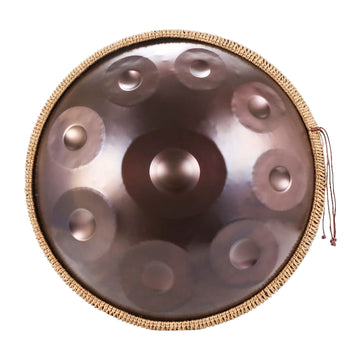
A handpan scale is the set of notes the instrument will have, arranged in intervals of whole tones and semitones. Each note takes up considerable space on the shell, so most models have around ten, far fewer than a piano’s 88 keys. You must choose which notes you want: the choice is permanent, and changing scales means buying another handpan. The main scale families include major, minor, Eastern, chromatic, and pentatonic (five-note) scales. Most handpans, however, use a minor scale. Names such as Kurd, Hijaz, Akebono, and Amara were coined by makers and are commercial labels, although handpan players understand them.
If you’re unsure, I recommend D Kurd, also called Annaziska, for beginners. It’s the most neutral and common minor scale. Amara is very similar, except that its B♭3 gives way to a higher C. Hijaz, with its Middle Eastern sound, is better suited to experienced musicians. Akebono has a Japanese character and is easy to play but is less widely made and often more expensive. Pygmy offers African sounds, especially in its Classic and deeper Low Pygmy versions.
To explore the notes of each scale, read my guide to handpan scales and their sounds. You’ll know which one suits the music you want to play.
How many notes should a hang drum have?
When the PANArt Hang appeared in 2000, it had 8 notes, sometimes written as 7+1: seven notes surrounding the ding. Today, makers usually offer models with 8 to 20 notes. The number of notes is limited by the instrument’s surface area. The most I know of is 30, on an instrument by an experimental Brazilian maker. Too many notes create crosstalk, meaning neighbouring note fields vibrate when you play one.
An extra note won’t change how you play. You can always ignore one you don’t need, but you can’t add one later. On a D Kurd handpan, moving from 9 to 10 notes can add the C in the fourth octave for about €150 per extra note. Bottom notes, placed on the lower shell, add range without crosstalk, but they are harder to play and may require turning the instrument over or using a stand. I therefore reserve them for experts.
If you’re a beginner or intermediate player without a particular musical project, choose as many notes as your budget allows: between 9 and 12, with a slight preference for 10-note instruments. Placement matters little as long as the notes are on the top shell, including on mutant handpans with notes between the ding and outer ring. You’ll find more detail in my advice on the ideal number of notes for your hang drum.
Should you choose an instrument tuned to 440 Hz or 432 Hz?
The tuning reference is the frequency of the note A on which the instrument’s other pitches are based. It’s measured in hertz, or oscillations per second. This reference pitch is called concert pitch. Before the 20th century, A varied by place and period: 466 Hz in the 16th century, 392 Hz in French Baroque music, and 415 Hz in Bach’s time. In 1884, Giuseppe Verdi had 432 Hz standardised in Italy, giving rise to the name “Verdi’s A.” In 1939, 440 Hz was adopted internationally, then reaffirmed in 1953 and by ISO 16 in 1975.
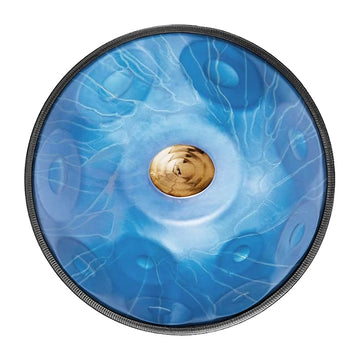
Two otherwise identical handpans tuned to 440 Hz and 432 Hz look the same. Only their pitches differ: the latter sounds slightly lower, with a C at 256.9 Hz rather than 261.6 Hz, for example. Science has not established the purported benefits of 432 Hz. A German study published in May 2022 even found higher perceived arousal at 432 Hz among 54 people, while a July 2022 Serbian study by Professor Branislav R. Tanasic found only very subtle differences.
Choose 440 Hz if you plan to play with other musicians, since a handpan harmonises only with instruments using the same tuning reference. The decision is permanent because converting a handpan between the two is too expensive. For the full history of concert pitch, read this comparison of 440 Hz and 432 Hz tuning.
What do the 528, 777, or 1111 Hz frequencies in handpan videos mean?
Only 440 and 432 Hz represent actual handpan tuning references. The other numbers in video titles come from solfeggio frequencies, a set of six frequencies drawn from numerology, or from angel numbers. The first set comes from a theory developed in 1970 by naturopath Joseph Puleo through numerological reduction of the Book of Numbers. It yields six numbers: 396, 417, 528, 639, 741, and 852. Leonard Horowitz later popularised the theory in a 1999 book, which also gave rise to the properties attributed to each frequency.
No handpan is tuned to any of these values, and no musical note falls exactly on them: C in the fourth octave is 523 Hz, not 528 Hz. Handpan player Malte Marten says he plays instruments tuned to 440 Hz, and I verified in the audio spectrum that the frequencies in his videos were added in post-production, after recording. A handpan advertised as tuned to a solfeggio frequency would therefore be a scam. No scientific study has validated the purported benefits of those frequencies, so listening to them should not replace medical treatment.
Angel numbers such as 444, 777, and 1111 come from numerology and author Doreen Virtue, who disavowed her theory in 2015. The number 369 comes from a quote attributed to Nikola Tesla that appeared online around 2010, with no traceable source. To uncover each number’s origins, read my investigation into frequencies featured in handpan videos.
Nitrided steel, stainless steel, or Ember: which material should you choose for your pantam?
Nitrided steel was the handpan’s original material: PANArt made the Hang from a patented alloy called Pang, which was actually nitrided steel. Makers generally begin with soft, cold-rolled DC04 steel and nitride it by heating it to diffuse nitrogen into the metal. The result is a warm, ceramic-like tone, short sustain suited to fast playing, and strong resonance that’s useful outdoors. A nitrided handpan, however, isn’t fully protected against rust and needs maintenance about once a week because a scratch can expose the untreated steel.
Stainless steel, most often AISI 430, has been used since around 2010. Its longer sustain and brighter tone than nitrided steel are perfectly suited to gentle playing. It can rust too, but much less readily, so you can go several months between maintenance sessions without scratches leaving it as vulnerable. The two steels cost about the same because nitriding is fairly expensive.
Finally, there’s Ember Steel, a stainless steel developed for handpans in 2020 under a purely marketing-driven name. Its even longer sustain suits slow playing. On average, an Ember Steel handpan costs twice as much, and some makers quote waits of more than 18 months. To find the steel that suits your playing style, read this comparison of the three steels used to make handpans.
Is an electronic handpan a good idea?
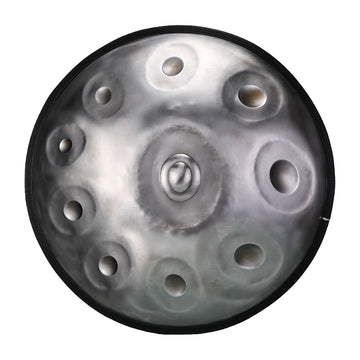
Unlike an acoustic model, an electronic handpan has no resonating body: the hollow chamber that amplifies sound. Sensors and digital technology powered by a battery or a mains socket produce its notes. To my knowledge, only four brands exist: Oval Handpan, Lumen, WavePan, and Neotone. Its biggest advantage is that you can change scales with a few button presses, moving from D Kurd to Low Pygmy, for example, although you’ll still have only 9 or 10 notes available in any one session.
Expect to pay a little over €1,500 on average, or €3,000 to €4,000 including VAT for a Neotone, which has no built-in speaker. Its battery lasts about 6 hours of playing. These brands also disappear quickly: the Spanish company behind Oval Handpan, launched in 2015, closed in 2018; Lumen is sold out; and WavePan has stopped providing updates. Reviews from actual customers are rare, since most Neotone videos are commercial partnerships.
I passed on the Neotone because of the uncertainty surrounding its maker. An electronic model may appeal to you if you want to compose music with effects by connecting it to a computer or mixing console. Otherwise, an acoustic handpan offers a more worry-free playing experience, and a simple microphone is enough for recording. If you’re undecided, read my take on electronic handpans.
What’s the best hang drum to buy today?
No single handpan surpasses every other one; several models are excellent. The best for you depends on its intended use. If you want to play with other musicians, for example, avoid 432 Hz models. My top pick is Instruments du Monde’s D Kurd handpan, an easy-to-play nine-note model in high-hardness stainless steel that requires little maintenance. It comes in 440 or 432 Hz, and you can return it within 30 days if it doesn’t suit you.
For deeper sounds, the Spacedrum Évolution Deep Sky by Metal Sounds measures 60 cm across, while most handpans measure 45–55 cm. It’s made to order, and the brand is reportedly experiencing financial difficulties. If your budget is tighter, I recommend a 9-, 10-, or 12-note D Kurd model for under €1,000, though its finish may be a little less refined. Japan’s nine-note Sonobe D Sabye starts at ¥275,000, or about €1,500 before import taxes.
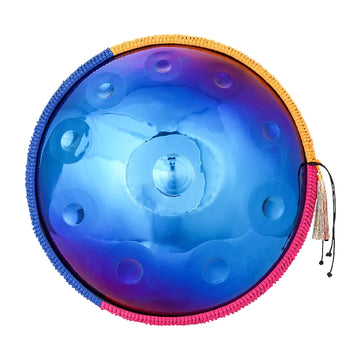
At the other end of the market, Israeli-made Yishama handpans can exceed €7,000 before import fees, while an electronic Neotone can cost more than €3,500. Ember Steel gives you longer sustain for slow playing, and a 45 cm handpan better suits children. I compare ten models in detail in my ranking of the best handpans for different uses.
How much does a handpan cost, and where can you buy one?
The price of a handpan is often your first question before buying an instrument of this value. It helps to know what a quality model really costs, why very low prices often conceal a problem, and whether buying new or used makes more sense. You’ll also discover alternatives for smaller budgets and learn where to find and try a handpan.
How much does a handpan cost, and why is it so expensive?
Entry-level models now start around €400, while the most expensive reach €3,000 or even €5,000. A first-generation PANArt Hang can sometimes exceed €10,000 as a collector’s item.
For a quality, handcrafted nine-note model in a common scale, budget around €1,000. Options raise the price: each additional note adds €100 to €200, and bottom notes on the lower shell cost extra too. A popular scale such as D Kurd keeps the price down, while a custom scale made to your specifications raises it. Steel matters as well: an Ember Steel model, whose notes ring for a particularly long time, costs nearly twice as much as a nitrided or standard stainless steel model.

Be careful: a high price doesn’t necessarily mean high quality. A model priced at €500 or less is likely mass-produced, with overly regular note circles that reveal machine-pressed metal rather than hand-hammered work. To learn how to recognise an artisan-made instrument, read what a handpan really costs and what justifies its price.
Is buying a cheap hang drum a good idea?
To me, an affordable handpan costs €600 to €1,000. Below that, finding one of acceptable quality becomes very risky, and I strongly advise against it. Two things determine its value: the steel used for both shells (DC04 or AISI 430 stainless steel for a well-made model) and the artisan’s hammering time.
The raw shells aren’t the largest expense. A pair of Ayasa upper and lower shells sells to makers for €110 to €160, depending on the steel. Hammering a handpan, however, takes at least 20 to 40 hours. Even with a Chinese worker paid minimum wage, about €3 an hour including employer costs, a quality instrument cannot feasibly sell for €150 or €200.
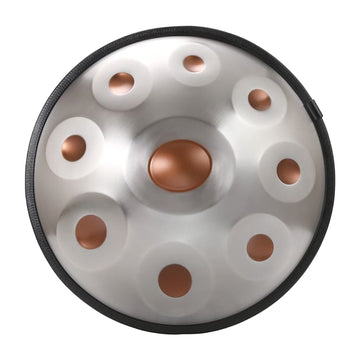
Before deciding, check the seller’s site. Look for complete company information, search its name with the word “reviews,” and check when its domain was created with a tool such as Whois; a site less than a year old is rarely a good sign. I trust the French company Instruments du Monde, which has sold handpans since 2021. An affordable model remains a good way to start, whether for a child or occasional playing. Starting on a smaller budget is better than having no instrument at all. I explain further in my guide to affordable handpans and their pitfalls.
Are handpans made in China good quality?
Not all handpans made in China are poor quality. As elsewhere, some are excellent and others are less so; the same is true of European and American models. Malte Marten’s Yatao brand, priced at €1,000 to €3,000, is made in Guangzhou. Many other brands, including Nebula, SELA, and NovaPan, are also made in China.
Lower Chinese prices aren’t due to the metal. Labour costs there are 6 to 7 times lower than in the West, and hammering time accounts for much of the price. The steel itself probably comes from China regardless of where an instrument is made, since the European Union now produces only about 7% of the world’s steel. Even so, you won’t find a quality Chinese handpan for under €500 once import fees and VAT are added, while convincing models are available around €1,000.
Have the tuning checked every 3 to 5 years, depending on how you play and store the instrument. For retuning by hammering to be possible, choose a shell 1 to 1.2 mm thick. To narrow your options, check the price, whether there’s a demonstration video, and the trial period. If that seems complicated, Instruments du Monde works with Chinese makers who have produced handpans for over 10 years and gives you 30 days to try one. I explain each point in my article on handpans made in China.
Is it better to buy a new or used pantam?
For your first instrument, I strongly recommend buying new from a trusted professional. A good-quality handcrafted model generally costs €1,000 to €2,000, but in return you benefit from the legal guarantee of conformity, which protects you for two years against defects and hidden faults (flaws you couldn’t see when the instrument arrived). You can also choose its scale and tuning reference precisely.
Buying used has advantages. On Leboncoin or eBay, a second-hand handpan sometimes sells for nearly half its original value, and, if the seller agrees, you can take it home right away. But misuse can warp the metal and detune its notes. Once you buy from a private seller, you have no recourse or warranty, and scams are common.
If you do find a promising deal, listen to the handpan in person, preferably with someone else, rather than relying on a video or the seller’s assurances. I advise beginners to save for a few more months and choose a guaranteed new model. The French company Instruments du Monde is a trusted seller that can help you choose. Find all my advice in this comparison of new and used handpans.
What can you choose instead of a handpan that costs too much or takes too long to get?
Cost, production time, and fragility are the three most common reasons to pass on a handpan. A quality model usually costs €800 to €3,000, and its 1 to 1.2 mm steel shell can go out of tune after a hard impact. A handpan also weighs about 4 kg and measures roughly 55 cm across.
The most obvious alternative is the tongue drum, a steel percussion instrument with tongues cut into the metal. Dennis Havlena devised it in 2007 from an empty gas cylinder because he couldn’t afford a handpan. With no note fields to hammer into shape, a quality model costs €200 to €350 and is available almost immediately. For travel or a gift, the kalimba, whose metal tines vibrate under your fingers, weighs about 300 g and starts at €39 for a decent model. The ocarina is another option; it’s tuned when made but fragile because it’s nearly always ceramic.
If relaxation is your main goal, a Tibetan singing bowl may suit you, although it mainly plays one note unless you gather several. Sometimes the best alternative is a stainless steel handpan under €1,000. It’s easier to care for than a nitrided model, and I recommend buying one from Instruments du Monde. I cover every option in my overview of handpan alternatives.
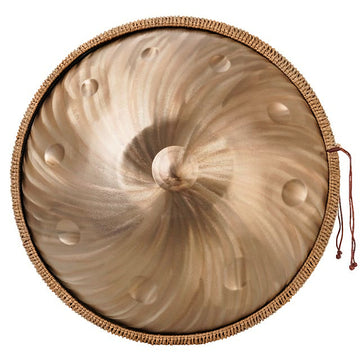
Where can you buy a quality handpan?
Just a few years ago, you had to persuade a maker to build you a handpan and then wait months; PANArt even requested letters from prospective buyers explaining why they wanted one. Today, a specialist handpan website is, in my view, the best option. It provides expert advice on scales, tuning, note counts, and materials. Reputable sites always allow a trial period with an exchange or refund, and the French company Instruments du Monde extends it to 30 days.
Budget around €1,000 to €2,000 for a quality handpan. General marketplaces can be a little cheaper, but they offer almost no advice. Before paying, check that the seller lists its company name, address, registration number, VAT number, and the person responsible for publishing the site in its legal information. If those details are missing, choose another seller.
At a physical shop, you can try an instrument and take it home immediately, but handpans are rare, selection is limited, and prices are often higher for the same quality. The purchase is final, however, and you can’t return it. Private sales on eBay or in Facebook groups also attract scammers, especially because an inexperienced buyer may not hear that an instrument is out of tune. Find guidance in my comparison of places to buy a handpan.
Where can you try a hang drum before buying it?
Trying a handpan before committing is wise because every note is tuned by hand, so two instruments in the same scale may sound different. Places to try them are scarce, though. The simplest route is often an online specialist: depending on where you live, you may have a legal right to return a like-new instrument within at least 14 days. I recommend Instruments du Monde, which gives you a 30-day at-home trial with no need to explain your decision.
You have other options too. Renting costs around €100 a month plus a security deposit equal to the instrument’s value, but the rental model may not be for sale. At a maker’s workshop, usually by appointment, you can try several models from the same artisan, who generally builds to order. Showrooms in Germany, Austria, and Switzerland bring several brands together. A one-day workshop costing €130 for up to 9 people can also let you try many handpans.

Once the instrument is in your hands, a well-tuned note should stay in tune even when struck firmly. Listen to the sustain too: it’s longer on stainless or Ember Steel than on warmer-sounding nitrided steel. Check for crosstalk, when one note makes its neighbours ring, and run a finger along the edge of the gü opening to make sure it isn’t sharp. I cover each place and each check in this guide to trying a hang drum before buying.
Handpan Makers Around the World
If you’re considering buying directly from an artisan, it helps to know where the workshops are. You’ll find them in Europe, North America, and Oceania, often run by one person. For each country, I’ll introduce the makers to know, the steel they use, their prices, and how long you might wait for your handpan.
Who makes handpans in France?
France has many workshops, but almost all are in villages or medium-sized towns away from major cities. Exceptions include Angel Handpan in Bordeaux and Mayura near Lyon. Some well-known brands aren’t French: PANArt is Swiss, Opsilon is German, and Yishama is Israeli.
The largest workshop is Metal Sounds, founded in 2011 in Verfeil near Toulouse. Its instruments are called Spacedrums. An eight-note model costs around €1,800 and usually takes three to four weeks; a chromatic model with all twelve semitones can reach €2,500. Aciel has made nine- to eleven-note nitrided and stainless steel handpans in Corlay, Côtes-d’Armor, since 2012, priced at €1,200 to €1,500. Mystical Steel in Périgord has worked only with stainless steel since 2023, tuning to 440 Hz by default or 432 Hz on request.
If you’re starting out and want to try several models, the Tympan workshop in Saint-Claud, Charente, welcomes visitors for that purpose. Bear in mind that a solo artisan often means a higher price, fewer choices, and a wait of several months, up to five months for Mayura’s Pantam Steel.
You’ll find each workshop and its region in my overview of French handpan makers, so you can spot the one nearest you.
Where can you find a handpan maker in Belgium?
If you live in Belgium, three workshops are available: AOS Handpans in Brussels, Telos Instruments in Ghent, and Art MelodiouS in Liège. AOS has brought together Olivier Trappeniers and Darren Dyke since 2015. Dyke spent six years with Ellie Mannette, considered the father of the modern steelpan from Trinidad.
The AOS artisans offer 50 cm and 53 cm shells in nitrided steel or Ember Steel, a treated stainless steel with long-ringing notes. Budget around €1,000 to €1,500 for an eight- or nine-note model, rising to €2,000 or €2,500 for models with more notes. You can request bottom notes on the lower shell. If you want a shorter wait, Telos Instruments, founded by Sander Hebbelinck in 2021, delivers its 53 cm nitrided handpans with at least eight notes in under three months.
To my knowledge, Belgium’s oldest workshop still operating is Art MelodiouS, founded by Jonathan Leroy in 2012. Its BePan starts at €1,600 for eight notes and takes 3 months to deliver; the Sylphe Pantam starts at €2,000 and takes 6 months to 1 year to make.
For these artisans’ scales and options, read my overview of Belgian workshops. It will help you choose the one that suits you.
Which artisans make hang drums in Switzerland?
The first Hang was created in Bern in 2000. Felix Rohner and Sabina Schärer, both steelpan tuners, introduced it at the Frankfurt Fair in 2001. Hang remains a PANArt trademark, and Switzerland now has just under ten handpan makers.
Among them, Maël Auteri of Zaora Instruments in Le Locle has made 53 cm shells from 1 mm nitrided steel since 2017. An eight-note model starts around €1,000 to €1,500. Jérémie Poux of Djillhi Instruments in Ponthaux nitrides his instruments in Switzerland using his own process to achieve very long sustain. His eight- or nine-note models cost around €1,500 to €2,000 with a case. Together, they opened Awen Handpan in Le Locle in April 2025, where you can try instruments by appointment. A custom nine-note model costs €2,500, plus €250 for each additional note, with a wait of about 3 months.
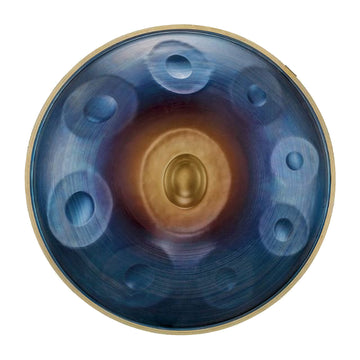
Pricier models are available from ARRA Handpan and Soma Sound Sculptures. At the latter, even the entry-level Nova is around €3,000 with a wait of about 2 months. Read my profiles of Swiss handpan makers to learn their stories and understand why the sound varies so much from workshop to workshop.
Which handpan workshops are in the United Kingdom?
Before the mid-2010s, British musicians had to import their instruments from Switzerland, the United States, or Spain. Since then, nearly ten workshops have opened, almost all in England and one in Scotland.
Tāla Handpans, founded by Daniel Comer in Frome in 2015, offers 55 cm models starting at €1,500. PeterPan Handpans in Darwen starts at €1,200 for the same size. Zephyr Handpans in Wickham charges €1,500 to around €3,000 for a 1 mm stainless steel instrument tuned to 440 or 432 Hz. Its maker, Dean Richardson, says the D Kurd scale in D minor, often considered ideal for beginners, is actually among the most demanding. For amplified playing, Meridian Handpans in Bristol has developed its own pickup system for hydroformed shells, which are shaped with liquid pressure.
Scotland’s only maker, Samadhi Soundscapes, has worked in Glasgow since 2012 with untreated DC04 or stainless steel, making 57 cm instruments. It says it built one for Coldplay’s Chris Martin. Acero in Warwickshire, meanwhile, makes instruments only to order and has virtually no stock.
Compare the workshops in my complete list of British handpan makers. It also includes a Bradford workshop that handles maintenance and retuning.

Is there a pantam maker in Ireland?
There’s just one: Jake McCarthy’s Dublin workshop, McCarthy Instruments. He began at the Irish Concertina Company, which makes concertinas, small, often hexagonal accordions. In 2016, he founded TUNG Drum Company to make tongue drums from exotic woods. He turned to handpans in 2018 and began selling his own in 2020 after two years of learning the craft.
His instruments measure 53 cm across and come in nitrided steel, stainless steel, or Ember Steel. His signature is a hardwood rim around the handpan, carved from sustainably sourced British wood. You can choose a standard or custom scale, add bottom notes, or select the “Songbird” series, designed to make composing melodies easier.
An entry-level eight-note model costs about €1,300, while models with more notes cost several thousand euros. Production takes 2 to 3 months, with a 10% deposit. Shipping is extra, and customers outside the European Union must also pay import and customs charges.
Visit my full profile of this Irish workshop to explore its concept series and see whether it can make the instrument you have in mind.
Who makes handpans in the United States?
The word handpan originated in the United States. Kyle Cox coined it when he began making instruments similar to the Hang. He founded Pantheon Steel in Farmington, Missouri, in 2004, making it the country’s first such workshop, and released his first Halo instruments around 2007. This nitrided steel model can have up to 12 notes and costs $3,000 to $3,500 with a hard case.
Today, roughly a dozen workshops make handpans in the United States. In Hawaii, David Galleher of Makai Instruments sells them for about $1,800 to $3,000, with production taking around two months. In North Carolina, Saraz Handpans, founded in 2011 by Mark Garner and his father, is among the oldest still active. Its models start near $2,000 and exceed $4,000 for the largest.
Colin Foulke of Xenith Handpans developed a shell hydroforming method and made it public, so many makers use it today. Jenny Robinson became the first woman in the world to lead a handpan company when she founded Isthmus Instruments in Madison in 2013. If your budget is tighter, an eight-note Acolyte starts around $1,199.
For workshops from Hawaii to Wisconsin, read my guide to American handpan makers. It details each model’s size and material.
Where are Canada’s handpan workshops?
Canada has very few handpan makers, far fewer than France, Germany, or the United States. Four workshops are worth knowing, each with its own speciality.
In Montreal, Jocsan Riviera of PANacea Sonora completes every step of his Boréal series himself and tunes it by ear without software. He works with Pierre-Olivier Bolduc, a handpan pioneer in Quebec and founder of Handpans Québec. Solos Handpans is the workshop of Jamaican-born Pepeto Pinto, a former steelpan player based since around 2014 in Winsloe near Charlottetown, Prince Edward Island. An instrument takes a few days to a month and costs C$2,000 to C$6,000.
Near Gatineau, former blacksmith Jean-François Bertrand of DOMEpan has made the raw-finish Tribal series and stainless steel Elite series since 2017. You can approve your handpan’s sound before he ships it, and many of his instruments are tuned around 432 Hz. Near Hamilton, Ontario, Luc Dupuis has hand-forged stainless steel PeacePans since 2013 without a pneumatic hammer and offers a lifetime tuning guarantee. They start around C$2,500; his stainless steel CanPan is intended to be more affordable.
Read about all four artisans in my roundup of Canadian handpan makers. You’ll see which ones repair or retune instruments.
Who makes hang drums in Australia?
To my knowledge, only three Australian workshops truly make handpans by hand: Hybrid Percussion, Celestial Sound, and MattOpan. Hybrid Percussion belongs to Matt Ledgar, who began making handpans in northern New South Wales, around Lismore and Mullumbimby, in 2015.
He offers the “Pi,” a nitrided steel model with a 530 mm shell and custom scales. After floods hit his Lismore workshop in late March 2017, he repaired it and resumed production. At around €1,100 depending on the note count, his handpans remain among Australia’s most affordable.
In Victoria’s Otways forest, Celestial Sound has made instruments with complete energy independence since 2018 and also provides maintenance and repairs. Around €1,500 buys a custom scale or a “Light” series model whose notes the maker selects. MattOpan, founded by Matt Ostila in Murwillumbah in 2017, makes everything in a soundproof room beneath his home. His 50 cm nitrided handpans come in 11 tunings for around €1,800. With little stock available, waits often run several weeks or even months.
Before deciding, read my overview of Australian handpan workshops for each maker’s scales and prices.
Are there handpan makers in New Zealand?
No handpan makers are currently based in New Zealand, although its local scene is lively. Players include Taylor Sol, Matt Reeves, and Gareth Killip, and the community gathers each year at the Kiwi Pan festival in Auckland.
Several factors explain the gap. With just over 5.3 million residents, New Zealand has at most a few hundred players, making a workshop hard to sustain. An artisan would need at least a press and a heat-treatment oven to harden the steel, then months or years to learn metalworking. Most makers now buy preformed half-shells, but no New Zealand factory makes them, unlike in Europe, so they would need to start with flat sheets. Nearby Australia, a few hours away by plane, already has handpan makers.
If you live in New Zealand, a trusted overseas retailer such as Instruments du Monde is therefore a better option. It covers all import costs with no hidden fees. For the full explanation, read my investigation into handpans in New Zealand. It will help you avoid unpleasant surprises when your instrument arrives.
How Do You Play the Hang Drum?
Once the instrument is in your hands, you’ll want to know how to draw beautiful melodies from it. Let’s look at the first techniques to learn, ways to take lessons, and how to read sheet music. We’ll also cover famous pieces, instruments that pair well with the handpan, and equipment for amplifying it.
How do you play the handpan well as a beginner?
To start well, sit on a fairly low chair, such as a camping chair, so your knees are slightly higher than your hips. Rest the handpan on your thighs, tilted a little towards your torso, with the lowest notes nearest you, as most players do. The motion isn’t really a strike: brush each note with a quick wrist movement and lift your finger immediately so it doesn’t dampen the vibration. Usually, your thumbs play the two closest notes, while your index and middle fingers handle the others. The last segment of your finger generally brushes the ridge between the tonefield and dimple; the ding is struck directly.
You can also add percussive strokes such as slaps and taks, or a finger roll, which plays the same note rapidly with two or three fingers. First, practise playing each note without looking. Then go up and down the scale before moving on to chords and rhythms. Ten minutes every day beats one two-hour session a week. Around twenty hours of regular practice are usually enough to become a capable player, although mastery takes months or years.
You can learn on your own without reading music, but I don’t recommend it: you’ll lose many hours when guidance is available for around €30. Find posture, striking techniques, and exercises in my step-by-step guide to playing the handpan.
Where can you take pantam lessons, and how good is Master the Handpan?
Born at PANArt in Switzerland between 1999 and 2000, the handpan is young and still not widely taught. If you live far from a major city, online lessons may be your best option. They cost less than in-person lessons and are just as effective. A general course consists of pre-recorded videos you can replay and follow at your own pace, though you can’t interact with the instructor. A private teacher costs around €40 an hour; you’ll find dozens on Superprof, including some who teach by webcam. Free lessons are mainly available through municipal workshops or festival masterclasses, where a recognised musician teaches a group.
In my opinion, Master the Handpan is the best online option for improving. French player David Charrier launched it in 2016. Its videos use an overhead camera, giving you the instructor’s view of the handpan. You can also learn techniques from Jeremy Nattagh and Sam Maher. Since merging with Handpan Dojo in 2024, it has offered the most courses. A subscription costs about €30 a month, or you can buy a single course with lifetime access. It doesn’t, however, offer much sheet music for familiar songs.
To compare your options, read my overview of online and in-person handpan lessons and my detailed review of Master the Handpan, which I tested for several months.
How do you read handpan sheet music or tablature?
Handpan sheet music has been simplified into a sequence of numbers with a few symbols borrowed from standard notation. You read it like a book, line by line from left to right. Bars, equal-length sections of the piece, are numbered above the bar lines. Tempo, given in beats per minute, sets the speed: at 60 beats per minute, each beat lasts one second.
Each number stands for a note, apart from the ding, marked “D.” The number “1” always means your instrument’s lowest surrounding note. In a bar, upper notes are played with the right hand, lower notes with the left, and notes at the same level together. A stem, the short line below a note, indicates duration: one stem represents one beat, while two connected stems indicate two quavers of half a beat each. Other letters mark percussive effects, such as F for a fist strike and S for a slap. Tablature shows which note to play on a diagram of the instrument, but it’s uncommon and indicates neither duration nor tempo.
That’s why I recommend learning to read sheet music instead. Every symbol is explained in detail to help you read handpan sheet music.
What are the best-known hang drum pieces?
There’s no official ranking, but view counts offer a useful guide. The best-known track remains “Once Again” by Hang Massive, with more than 64 million views. Released on 29 December 2011, its video was filmed in Bath with a Hang, the Swiss predecessor of the handpan. Manu Delago says his solo “Mono Desire” topped handpan videos in 2007. That video led Björk to ask him to play Hang on Biophilia. Today, the most-streamed tracks are often long meditation pieces, such as Malte Marten’s “Calming Meditation.” Among covers, Italian musician Mumi’s version of Metallica’s “Nothing Else Matters” has over 4 million views. Listen below:
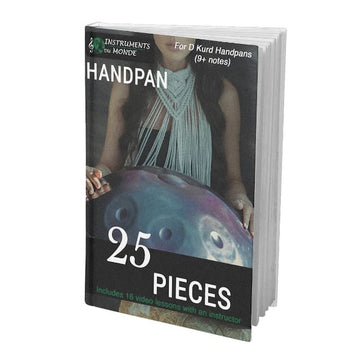
A handpan has a fixed scale, though, so it can play only the notes available in its tuning; you can’t play every song on one instrument. According to player Malte Marten, the ten-note D Kurd, the most common minor scale, is the world’s most-played model. In a collection of 25 pieces arranged for D Kurd, nine notes are enough for 12 songs, while the other 13 require at least ten.
For familiar songs, I therefore recommend a ten-note D Kurd, which lets you play every piece in that collection. Find the full list with videos among the most famous handpan pieces.
Which instruments pair best with the handpan?
No single instrument is its ideal partner, but several sound beautiful alongside a handpan for different reasons. The piano broadens the musical palette and adds varied rhythms, as Italian duo Giolì and Assia demonstrate. Acoustic and electric guitars add depth and harmonic support to soothing pieces. Percussionist Alexandre Lora performs as a duo with his guitarist brother.
The Australian didgeridoo is considered the world’s oldest wind instrument, and its low drone contrasts beautifully with the handpan’s gentle notes. Flutes create meditative moods: the bansuri, an Indian bamboo flute, the Native American flute, and the pan flute all pair well with it. A violin or cello also makes a harmonious partner. Musician Davide Friello has even made an entire album from such a pairing.
Try plenty of combinations. In my view, the best companion is simply a second handpan tuned differently. For more duet ideas, visit my guide to instruments that pair well with the handpan.
Which microphone should you choose to amplify or record a handpan?
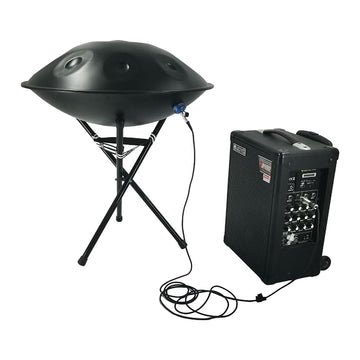
To amplify a handpan, choose a suitable microphone that you can connect to an equaliser and then a speaker. The four main types are contact microphones (or pickups), dynamic microphones, condenser microphones, and ribbon microphones. Attached to the shell with adhesive or a magnet, a contact microphone captures the metal’s vibrations directly. That makes it insensitive to surrounding noise and prevents feedback, the squeal produced when a microphone picks up sound from a speaker. Finding the right position can take several tries. In most cases, I recommend a contact microphone.
A dynamic microphone is sturdy, affordable, and suited to noisy spaces, but it captures less detail and must sit close to the handpan. Condenser and ribbon microphones give the most faithful sound, but they’re expensive and delicate, and often need 48-volt power, making them mainly studio options. To project the sound, a portable PA system with a battery or a powered speaker with a built-in amplifier will work; budget around €500 for a mid-range model. An equaliser or effects pedal is optional, though it lets you refine the sound or add reverb.
For recording, connect the microphone to a computer audio interface for a simple, affordable setup, or use a portable recorder that works anywhere but depends on batteries. My full microphone comparison will help you choose the right microphone for your handpan.
How Do You Care for and Transport Your Pantam?
Once you own a handpan, take care of it to preserve its sound for years. This steel musical instrument is vulnerable to impacts, heat, and moisture. Let’s look at how to tell if it’s out of tune, clean it, remove rust, choose worthwhile accessories, and take it on a plane.
How can you tell if your handpan is out of tune, and how do you get it retuned?
A handpan doesn’t need tuning when it arrives. Over time, however, it can drift out of tune, generally after 2 to 5 years depending on the model, steel, playing frequency, and storage conditions. Playing itself is the main cause: thousands of strikes gradually deform its 1 to 1.2 mm steel shell. Hard strikes, impacts, and heat also contribute. Keep it out of direct sun because the metal expands and contracts without returning to exactly the same shape.
To check the tuning, test each note with an electronic tuner, a device or app that shows the note and how accurately it’s pitched. Follow your handpan’s note diagram. If it uses 432 Hz tuning, make sure the tuner supports that reference; most default to 440 Hz. A difference of a few hertz, especially on higher notes, doesn’t by itself mean the instrument is out of tune.
If a note sounds wrong, stop playing it so the problem doesn’t worsen. Leave retuning to a professional; a beginner can’t do the job properly. It generally costs €100 to €300 by quote and takes a few days to several weeks if the shells must be separated. A handpan can’t be retuned into a different scale. Find my recommended workshop and how to request a quote in my guide to retuning a handpan.
How do you clean a hang drum and remove rust?
Hand sweat contains more than 98% water and some salt, enough to rust the metal quickly. That’s why a wipe with a soft cloth is essential after every session. Occasionally, clean more thoroughly with 70% rubbing alcohol on a dedicated cloth. Once clean, apply oil or wax to leave a protective layer on the steel. Wax lasts longer but leaves a thicker coating, so I recommend oil. I let it sit for 10 minutes, then wipe away the excess; otherwise, my hands slip on the surface.
Maintenance frequency depends mainly on the steel: roughly every 15 days for nitrided steel and monthly for stainless steel, depending on use and room humidity. A changing patina is normal on stainless steel but signals corrosion on nitrided steel. If rust has appeared, work in stages: alcohol, a damp abrasive sponge in small circles, a polishing cloth, and finally very fine steel wool with a little oil. Deeply embedded rust may remain permanently.
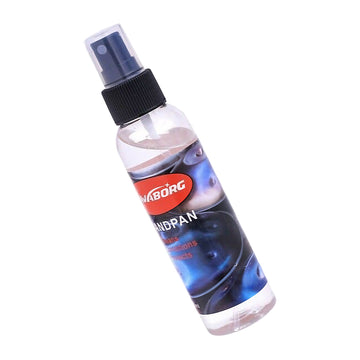
Never leave the instrument in direct sunlight or put it away damp in its case. For extended storage, leave it in the open or in a partly unzipped case with moisture-absorbing packets. My tutorial covers every step and tool for cleaning a handpan and removing rust.
Which handpan accessories are truly essential?
Most handpans arrive with a padded case, tripod, drumsticks, and cleaning cloth. Everything else depends on your needs. Microfibre cloths offer excellent value, and I recommend three: one for wiping, one for oiling, and one spare. Don’t overlook maintenance oil, which matters more than the other accessories, especially for nitrided steel.
Your thighs absorb vibrations, whereas a handpan on a stand can vibrate freely and sound clearer. A camping-chair-style tripod, however, muffles the gü with its fabric, so a three-stick stand is preferable.
If you’re a beginner, an instructional or sheet music book rarely costs more than €40, though handpan arrangements are scarce and mostly written for D Kurd. For frequent flights, a hard case protects better against impacts in the hold, but it weighs 5–7 kg and costs more. You can also get a jute braid to cushion impacts along the rim and microphones that attach magnetically to the shell. Gloves dampen the sound of a long-sustain stainless steel model. I review each accessory, along with those to avoid, in my handpan accessory guide.

Can you take a handpan into an aeroplane cabin?
A typical handpan measures 55 cm across and 25 cm high and weighs about 4 kg, or 5–6 kg with its case. Cabin baggage limits are often around 55 × 35 × 20 cm, sometimes just 40 × 30 × 20 cm under the seat on budget airlines. Strictly applied, those limits would never admit a standard handpan. Compare airline cabin baggage size limits before booking. Some travel handpans shrink to 45 cm and 3 kg, though fewer scales are available.
In practice, David Charrier has fitted his handpan into overhead lockers on 95% of the planes he’s flown on. Smaller aircraft with no more than two seats on each side of the aisle are thought to have lockers that are often too narrow. Arrive early and tell the check-in staff about your handpan. I also recommend a direct flight outside peak hours and priority boarding, which costs around €15 to €50.
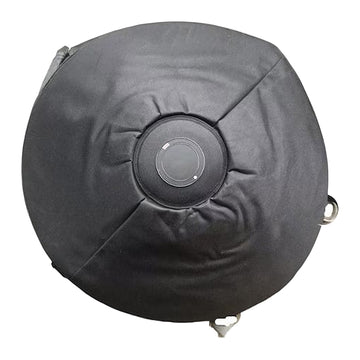
Both the cabin and hold are pressurised and temperature-controlled, so cold and altitude won’t detune the handpan. Protecting it from handling impacts matters most. In my view, a hard case with a rigid shell and thick foam offers the best value. Inspect the instrument as soon as you get off the plane, since some airlines allow only a few hours to report damage. Read my advice on flying with a handpan to prepare for a stress-free trip.
What Can the Handpan Bring to Your Life?
Whether you play or simply enjoy listening, it’s worth discovering what a handpan can bring to daily life. This musical instrument affects memory, stress, and our connection with others. It also fits naturally into yoga and meditation sessions. I’ll tell you where to hear it live at concerts and festivals and introduce the musicians who made it famous.
What are the hang drum’s benefits for body and mind?
Like any musical instrument, the hang drum keeps the brain active when played regularly. This is especially noticeable in children through improved memory and concentration. According to a Chilean study from October 2020, children who receive musical training remember more and pay closer attention, making instrument study a potential avenue for ADHD, or attention-deficit/hyperactivity disorder. Reading, comprehension, and maths skills benefit as well. The handpan also invites endless exploration of rhythms and sounds, nourishing creativity. For adults and older people, playing exercises memory and coordination and helps preserve cognitive functions that decline with age.
It also acts on stress. In 2020, the University of Amsterdam published a meta-analysis, which combines results from many studies, involving more than 12,000 participants. It concluded that music therapy, the use of music in care, produces results comparable to anti-stress medication without side effects. The analysis examined music generally, not the handpan specifically. Playing also brings you into a community where you learn to listen, cooperate, and show empathy, particularly when composing in a group. Festivals can help older adults break out of isolation too.
These benefits can come from any instrument, but the handpan stands out for its gentle, harmonious sound. For details of each study, read my guide to the handpan’s benefits for body and mind.
Does the handpan belong in yoga, meditation, and relaxation?
It’s a very good companion for yoga sessions. In a typical class, it’s especially useful during the delicate shift from poses to final relaxation, usually around the 45-minute mark. Unlike a recording, a musician in the room can adjust the volume, playing quietly during breathing exercises and stopping when the instructor speaks. A minor scale such as D Kurd with 9 or 10 notes is enough. Born in Switzerland, the handpan has no historical connection to Zen, a school of Japanese Buddhism. In the West, “Zen” commonly suggests calm, hence the label sometimes attached to the instrument. Practitioners also link notes to chakras, the body’s seven major energy centres. Science has not validated theories connecting notes and chakras, but that does not diminish the instrument’s role in a session.
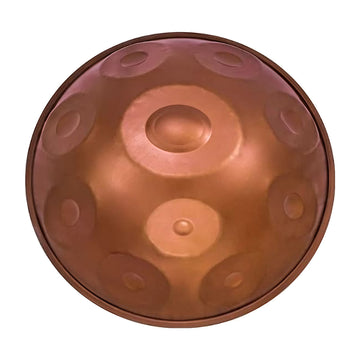
You don’t need to be a musician to meditate or relax with a handpan. Choose three or four notes, play in time with your breathing, and let each one fade. Three sessions of ten to twenty minutes a week are better than one hour-long session. The harmonious notes and absence of wrong notes make it well suited to this, even though no study has specifically examined handpans in meditation. Choose D Kurd in stainless or Ember Steel for longer sustain than nitrided steel.
For step-by-step help with a class, read my method for playing handpan during yoga. If calm is your main goal, see my tips for meditating and relaxing with a pantam.
Where can you hear the pantam live, at a concert or festival?
Handpan concerts are still fairly rare and often appear at festivals devoted to the instrument, which nearly always include performances. Europe alone has several dozen such festivals, the Americas have just as many, and Asia, Africa, and Oceania have a few. In France, Hangaout usually takes place in June in Condat-en-Combraille with pay-what-you-want tickets. I particularly like HONA on the Greek island of Naxos in late May or early June, though places are limited. You can also visit Pangonia near Berlin, PANTRIBE in Belgium, or the Swiss Handpan Festival in Wetzikon. Concerts, workshops, and jams follow one another throughout these events. Bring your handpan if you have one to get the most from them.
Outside festivals, follow artists on Facebook or Instagram for tour dates, watch local news for smaller events that may be free, or set email alerts on Eventbrite or Meetup. Some festivals and amateur concerts will even let you perform for an audience.
Keep up with upcoming shows using my tips for finding handpan concerts near you, and plan a trip with my list of handpan festivals in Europe and the Americas.
Who are the best-known handpan musicians?
Although the handpan is young, several musicians have brought it to a wide audience. The most popular is Hang Massive, a duo formed in 2010 that broke through with the “Once Again” video released in late 2011. German musician Malte Marten, said to have discovered the instrument in 2014, has posted handpan meditation videos on YouTube since 2022. French player David Charrier founded Master the Handpan in 2016, an online school with tens of thousands of students. Australian player Sam Maher drew attention with a video filmed in an empty New York City subway station.
Those are only a few names. I’ve put together twelve profiles of musicians and groups, with their stories and signature pieces, to inspire you to see them live. If you hope to reach that level someday, begin with a high-quality instrument, such as those sold by Instruments du Monde, then learn the playing techniques.
Get to know them in my selection of internationally known handpan players.
Treat Yourself to a Handpan and Escape Through Music Every Day
The handpan is a young musical instrument, first appearing in Switzerland in 2000 as the Hang. With proper care, it can accompany you for many years. Choosing its scale, number of notes, and material, learning to play, and keeping it in tune and free of rust all take some knowledge. This guide has shown you how it works, how much to budget, where to try one, and how it can bring calm and pleasure to your daily life.
Finding a trustworthy shop can still be difficult. First, check each site’s company and legal information to avoid unpleasant surprises. I recommend the French company Instruments du Monde, which has specialised in handpans since 2021 and gives you 30 days to try your instrument at home. You’ll have time to decide whether you love its sound before keeping it.
Explore their beautiful handpan collection by clicking the image below:


